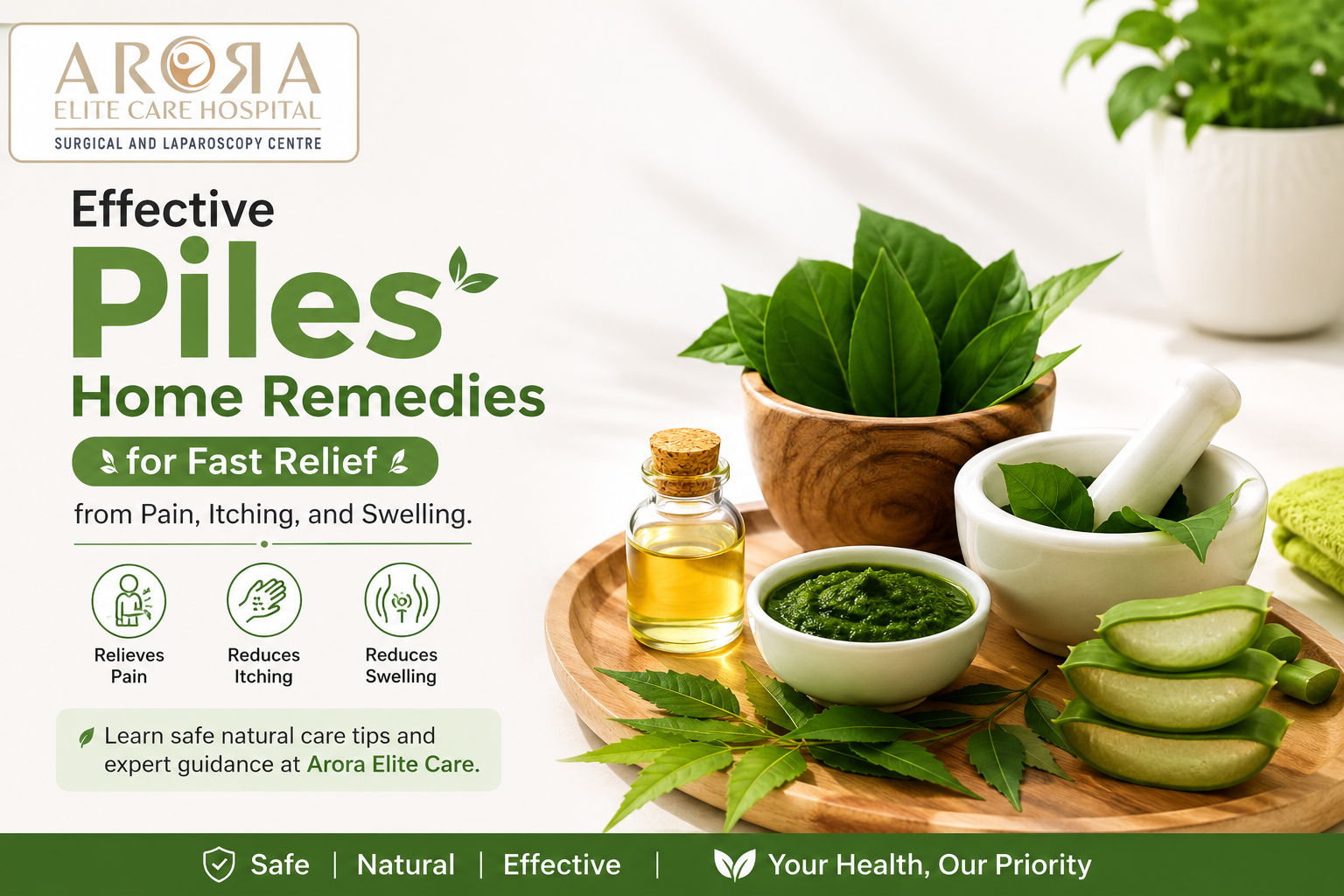
Reviewed for patient education by Dr. Hitesh Arora, Advanced Laparoscopic and General Surgeon at Arora Elite Care, Surat. Piles home remedies such as eating more fibre, drinking adequate fluids, avoiding straining and long toilet sitting, and using warm sitz baths can help relieve mild haemorrhoid symptoms. These measures mainly reduce constipation, irritation, and discomfort; they do not reliably eliminate larger or prolapsing piles. If symptoms persist after about a week of home care, or you have rectal bleeding, arrange a medical assessment.
Piles, also called haemorrhoids, are swollen blood vessels around the anus or in the lower rectum. They may cause itching, discomfort, swelling, a lump, or bright-red bleeding during or after a bowel movement.
When symptoms are mild, simple changes in diet and toilet habits can provide meaningful relief. The problem begins when people expect every advertised oil, herbal powder, cream, or internet remedy to make piles disappear permanently.
Effective piles home remedies focus mainly on making stools softer, reducing constipation, and avoiding unnecessary pressure during bowel movements.
They can help symptoms, but they cannot replace proper diagnosis when bleeding, persistent pain, significant prolapse, or recurrent symptoms occur.
Which Piles Home Remedies Actually Work?
The most useful home measures are increasing dietary fibre, drinking adequate fluids, avoiding straining, limiting unnecessary time on the toilet, and using warm sitz baths for symptom relief.
These approaches address some of the factors that can worsen haemorrhoid symptoms, especially constipation and repeated straining.
According to NIDDK, home management can include:
- Eating high-fibre foods
- Using a fibre supplement or stool softener when advised
- Drinking adequate water and other non-alcoholic fluids
- Avoiding straining during bowel movements
- Avoiding prolonged toilet sitting
- Using warm sitz baths for pain relief
The important distinction is between relieving symptoms and removing the haemorrhoid itself.
Home care may make bowel movements easier and reduce irritation. However, persistent bleeding, significant prolapse, or larger symptomatic piles may need medical treatment.
Which Remedies Do Nothing or Have Poor Evidence?
Be cautious with products that promise to permanently shrink or cure piles using oils, powders, herbal mixtures, or other unproven remedies. Symptom relief does not necessarily mean that the underlying haemorrhoid has disappeared.
Patients frequently encounter claims for:
- Special oils
- Herbal powders
- “Permanent cure” supplements
- Detox products
- Unverified topical preparations
- Remedies claiming to remove piles without diagnosis
Some products may temporarily soothe the skin, but that is different from evidence that they treat the haemorrhoid itself.
Over-the-counter haemorrhoid creams or suppositories can help relieve mild pain, itching, or swelling in some cases. They should still be used according to product instructions or professional advice rather than indefinitely.
NIDDK advises following up with a doctor if over-the-counter products do not relieve symptoms after about one week or cause side effects.
Do not let an unproven remedy delay medical assessment when you have persistent rectal bleeding, worsening symptoms, or a new lump.
How Do Fibre and Water Help Piles?
Fibre helps make stools softer and easier to pass, while adequate fluid intake helps fibre work effectively. Together, they can reduce constipation and the need to strain during bowel movements.
A useful piles diet should therefore focus on regular sources of dietary fibre.
Indian food options can include:
- Whole grains
- Oats
- Dal and other pulses
- Chickpeas
- Beans
- Vegetables
- Fruits
- Whole-wheat roti
- Other minimally processed high-fibre foods
Increase fibre gradually rather than making a very large change overnight, especially if your usual diet contains little fibre.
Drinking adequate water and other suitable fluids also matters. The amount required varies according to your health, activity, environment, and medical conditions.
Patients with kidney, heart, or other conditions that require fluid restriction should follow their doctor’s advice rather than simply increasing water intake.
A fibre supplement such as psyllium may also help some patients, but discuss the appropriate product and amount with a healthcare professional if you are unsure.
How Do You Take a Sitz Bath Correctly?
A warm sitz bath can temporarily ease pain and irritation associated with piles. It provides symptom relief rather than permanently removing the haemorrhoid.
A simple sitz bath can be done using a clean bathtub or a purpose-designed sitz bath container.
Use comfortably warm water rather than very hot water.
Sit in the warm water so the affected area is immersed. Afterwards, dry the area gently rather than rubbing it aggressively.
You generally do not need to add strong antiseptics, perfumes, or irritating substances unless a healthcare professional has specifically recommended something.
NIDDK lists sitting in warm water several times a day as a home measure that can help relieve haemorrhoid pain.
The NHS similarly recommends a warm bath for easing itching and pain.
A sitz bath for piles can therefore be useful for comfort, but repeated baths will not necessarily make a large prolapsing haemorrhoid disappear.
Which Foods Help and Which Can Make Piles Worse?
Foods that support soft, regular stools are generally more useful for piles than following a restrictive “piles diet.” Fibre-rich foods are particularly important when constipation and straining contribute to symptoms.
Foods to Include More Often
Try to include appropriate amounts of:
- Whole grains
- Oats
- Dal
- Beans and legumes
- Vegetables
- Fresh fruits
- Whole-wheat foods
- Other fibre-rich foods
NIDDK notes that high-fibre foods make stools softer and easier to pass and can help both treat and prevent haemorrhoids.
Foods to Limit When Constipation Is a Problem
If chronic constipation contributes to your symptoms, avoid relying heavily on foods with little or no fibre.
Examples can include:
- Chips
- Fast food
- Highly processed snacks
- Some prepared foods
- Large amounts of low-fibre foods
There is no need to eliminate every spicy food automatically simply because you have piles. Instead, pay attention to foods that consistently worsen your own bowel symptoms.
The main dietary goal is regular, comfortably soft stools without repeated straining.
Why Is Avoiding Straining So Important?
Straining during bowel movements increases pressure in the anal and rectal veins and can contribute to haemorrhoid symptoms. Improving stool consistency and toilet habits can reduce this pressure.
Try not to force a bowel movement when nothing is happening.
Likewise, avoid sitting on the toilet for unnecessarily long periods. Taking your phone into the bathroom and remaining seated long after the bowel movement has finished can extend toilet time unnecessarily.
NIDDK recommends both avoiding straining and avoiding prolonged toilet sitting as part of haemorrhoid treatment and prevention.
When you feel the natural urge to pass stool, try not to repeatedly delay it.
Good toilet habits are simple, but they are among the most useful parts of piles home treatment.
Does Ice Help Piles?
A cold pack may temporarily reduce discomfort, but it does not cure the haemorrhoid.
The NHS suggests using an ice pack wrapped in a towel to ease discomfort.
Never place ice directly against sensitive skin.
Use cold therapy as a short-term comfort measure rather than expecting it to shrink or permanently remove piles.
This is another example of why patients should distinguish between symptom relief and definitive treatment.
Piles Home Remedies: What Actually Helps?
| Remedy | Does It Help? | Evidence/Role | How to Use It Properly |
|---|---|---|---|
| Fibre | Yes | Helps soften stools and reduce straining | Increase fibre-rich foods gradually; consider a supplement if advised |
| Water/fluids | Yes | Supports softer stools and helps fibre work effectively | Maintain appropriate hydration unless medically restricted |
| Warm sitz bath | Yes, for symptoms | Can temporarily ease pain and irritation | Use comfortably warm water and gently dry afterwards |
| Avoiding straining | Yes | Reduces unnecessary pressure during bowel movements | Don’t force bowel movements or sit unnecessarily long on the toilet |
| Wrapped ice pack | May help discomfort | Provides temporary symptom relief | Wrap in a towel; never apply ice directly to skin |
| Oils/unproven powders | Evidence not established for curing piles | May delay appropriate treatment if relied on as a cure | Don’t substitute them for medical assessment when symptoms persist |
The table shows why the best piles home remedies are usually simple measures rather than expensive “miracle” products.
How Long Should You Try Home Treatment?
If symptoms are mild, you can begin with evidence-based home measures, but persistent symptoms should not be managed indefinitely without assessment. NIDDK advises seeing a doctor if haemorrhoid symptoms remain after one week of home treatment.
This does not mean every patient requires a procedure after seven days.
It means persistent symptoms deserve reassessment.
A doctor can determine whether the symptoms are actually caused by piles and whether further conservative treatment, medication, an office procedure, or surgery is appropriate.
If your symptoms continue, read when to see a doctor for piles rather than repeatedly switching between home remedies.
What Are the Signs Home Care Has Failed?
Home care may no longer be enough when symptoms persist, worsen, recur frequently, or significantly interfere with daily life. Rectal bleeding also deserves medical assessment rather than being automatically attributed to piles.
Arrange medical advice if:
- Symptoms remain after about a week of home treatment
- Bleeding occurs from the rectum
- Symptoms are getting worse
- Piles keep returning
- You notice an unusual change around the anus
- A lump remains persistently prolapsed
- Pain becomes significant
- You are uncertain whether the problem is actually piles
NIDDK specifically advises seeking a doctor’s help for rectal bleeding because other digestive conditions can produce similar symptoms.
Seek urgent care for severe anal pain with rectal bleeding, particularly when accompanied by abdominal pain, diarrhoea, or fever.
Heavy or non-stop bleeding also requires urgent medical attention.
When Should You See a Surgeon for Piles?
A surgical assessment becomes appropriate when symptoms persist despite conservative treatment, piles prolapse significantly, bleeding continues or recurs, or another anorectal condition needs to be excluded. Seeing a surgeon does not automatically mean having surgery.
A consultation helps establish the correct diagnosis.
Anal fissures, fistulas, abscesses, and other conditions can sometimes produce symptoms that patients mistake for haemorrhoids.
Depending on the diagnosis and severity, medical treatments for haemorrhoids can include office-based procedures such as rubber-band ligation, sclerotherapy, infrared treatment, or other interventions.
Larger or persistent haemorrhoids may require surgical treatment.
If you want to understand the available options, read about piles and fissure treatment in Surat and our comparison of stapler vs laser vs open piles surgery.
The most appropriate treatment depends on the type of haemorrhoid, degree of prolapse, symptoms, examination findings, previous treatment, and individual circumstances.
Piles Treatment at Arora Elite Care
At Arora Elite Care in Surat, Dr. Hitesh Arora evaluates piles and other anorectal conditions before recommending treatment. The goal is to identify the cause of symptoms and determine whether conservative care, an office procedure, or surgery is appropriate.
During consultation, the evaluation may consider:
- Rectal bleeding
- Pain or itching
- Constipation
- Prolapse
- Duration of symptoms
- Previous episodes
- Previous treatments
- Bowel habits
- Relevant medical conditions
Patients who have already tried piles home remedies should tell the doctor what they used, for how long, and whether symptoms improved.
This information can help guide the next step.
If symptoms persist or you are unsure whether you actually have piles, you can book an appointment at Arora Elite Care for an assessment.
Frequently Asked Questions
How Can I Shrink Piles Naturally at Home?
Home measures such as fibre, adequate fluids, avoiding straining, and warm sitz baths can improve mild symptoms and reduce constipation. However, they do not reliably make every haemorrhoid disappear. Persistent, bleeding, or prolapsing piles should be medically assessed rather than repeatedly treated with unproven home products.
How Long Do Piles Take to Heal on Their Own?
There is no single healing time because piles vary in type and severity. Some external haemorrhoid symptoms improve within several days, while persistent or prolapsing haemorrhoids may need medical treatment. If symptoms remain after about a week of home care, NIDDK recommends seeking medical advice.
Is a Sitz Bath Effective for Piles?
A warm sitz bath can help relieve pain and irritation from piles, making it a useful comfort measure. It does not necessarily shrink or permanently remove a haemorrhoid. Use comfortably warm water, avoid irritating additives unless advised, and gently dry the area afterwards.
Which Foods Should I Avoid with Piles?
Rather than following a long list of prohibited foods, focus on preventing constipation. Limit excessive amounts of low-fibre and highly processed foods if they make stools harder. Eat adequate fibre from whole grains, pulses, vegetables, and fruits, and maintain suitable fluid intake.
Is Bleeding from Piles Dangerous?
Piles can cause bright-red rectal bleeding, but bleeding should not automatically be assumed to come from haemorrhoids. Other digestive conditions can also cause rectal bleeding. Arrange medical assessment, particularly for new, persistent, recurrent, heavy, or unexplained bleeding or when other symptoms are present.
When Do Piles Need Surgery Instead of Home Care?
Not every persistent pile requires surgery. Medical procedures or surgery may be considered for significant prolapse, larger haemorrhoids, persistent bleeding, or symptoms that do not respond adequately to conservative treatment. A surgeon should examine the condition before deciding which treatment, if any, is appropriate.
The Key Point
The most useful piles home remedies are not miracle oils or powders. They are measures that improve bowel habits and reduce irritation: adequate fibre, suitable fluid intake, avoiding straining and prolonged toilet sitting, and warm sitz baths for symptom relief. These measures can be valuable for mild symptoms, but they have limits.
Do not continue self-treatment indefinitely when symptoms persist, piles repeatedly prolapse, or rectal bleeding occurs. Most importantly, do not assume every episode of rectal bleeding comes from piles. A medical assessment can confirm the diagnosis and determine whether you should continue conservative treatment or consider another option.