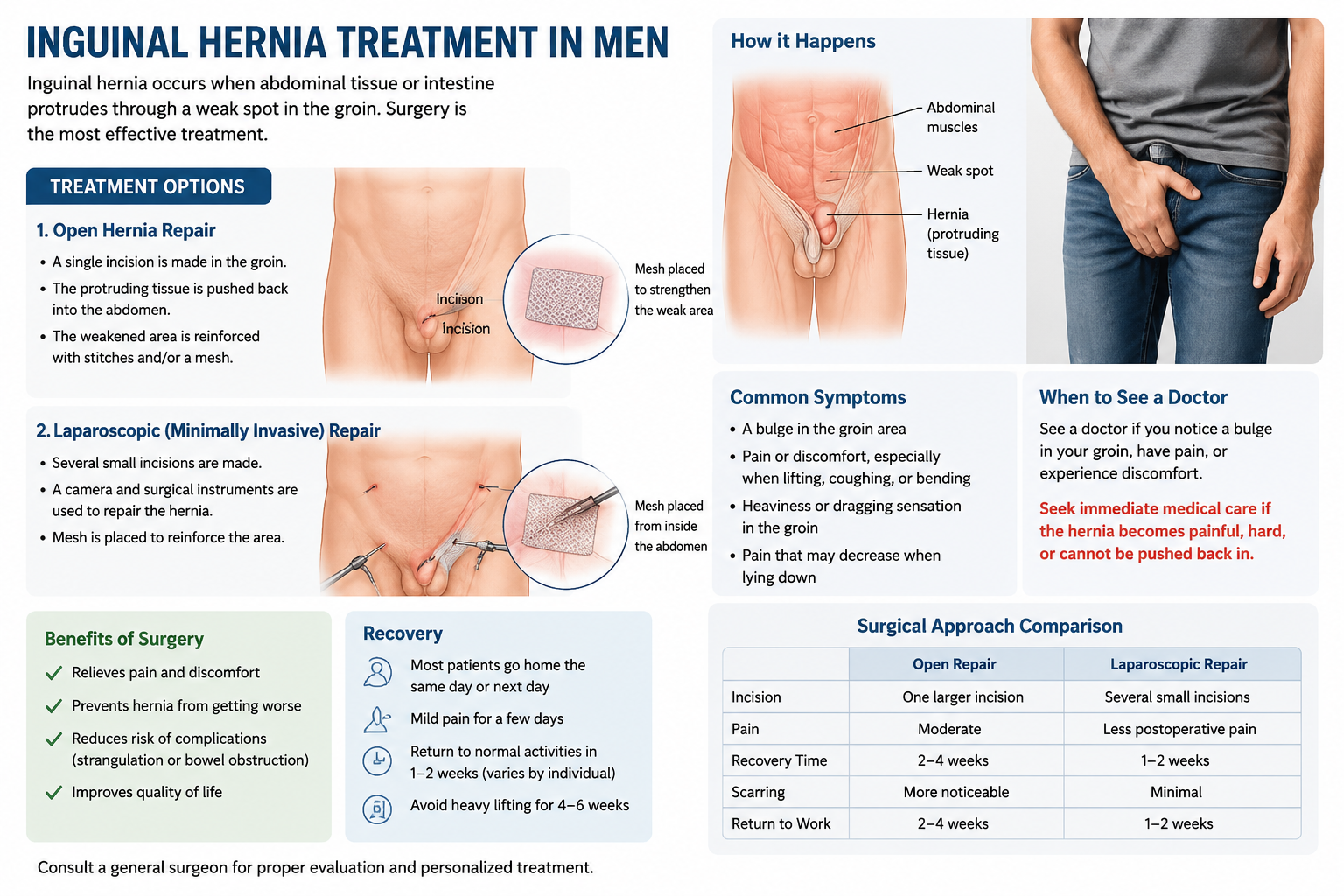
An Inguinal Hernia Treatment Men is one of the most common types of hernia seen in men. It happens when a part of the intestine or fatty tissue pushes through a weak spot in the lower abdominal wall, creating a visible bulge near the groin area.
Although it may begin with mild discomfort, an untreated inguinal hernia can become painful and may lead to serious complications over time. Early diagnosis and proper treatment are essential.
At Arora Elite Care, Dr. Hitesh Arora provides advanced hernia diagnosis and modern surgical treatment with a focus on faster recovery and long-term results.
What Is an Inguinal Hernia in Men?
An inguinal hernia develops when tissue pushes through a weak area in the muscles of the lower abdomen, specifically in the inguinal canal near the groin.
Men are significantly more likely to develop this condition because of the natural anatomy of the male inguinal canal, where the spermatic cord passes through the abdominal wall.
It often appears as:
- A visible bulge in the groin
- Pain while coughing or bending
- Pressure or heaviness in the lower abdomen
- Swelling near the testicle in some cases
- Burning or aching sensation around the bulge
The condition may affect one side or both sides of the groin.
Why Does an Inguinal Hernia Happen in Men?
Several factors can weaken the abdominal wall and increase pressure, leading to an inguinal hernia.
Common causes include:
1. Weak Abdominal Muscles
Some men are born with naturally weak abdominal tissues, increasing the risk over time.
2. Heavy Weight Lifting
Frequent lifting without proper support puts pressure on the abdominal wall.
3. Chronic Coughing
Persistent coughing caused by smoking or lung conditions repeatedly strains abdominal muscles.
4. Constipation and Straining
Repeated straining during bowel movements increases internal abdominal pressure.
5. Obesity
Excess body weight creates constant pressure on weakened muscle areas.
6. Aging
Muscles naturally weaken with age, making hernia development more common in older men.
7. Previous Surgery
Past abdominal surgeries can weaken surrounding tissues.
Common Symptoms of Inguinal Hernia Treatment Men
Symptoms can vary depending on the size and severity of the hernia.
Watch for:
- Visible groin bulge
- Pain when standing for long periods
- Discomfort during exercise
- Groin heaviness
- Pain while coughing or sneezing
- Swelling near the scrotum
- Burning sensation around the affected area
Seek immediate medical attention if you experience:
- Severe sudden pain
- Nausea or vomiting
- Bulge becoming hard and painful
- Inability to push the bulge back
These may indicate a strangulated hernia, which requires urgent surgery.
Procedure: How Is an Inguinal Hernia Treated?
A hernia usually does not heal naturally. Treatment depends on the size, symptoms, and overall health condition.
Conservative Monitoring
Small hernias with mild symptoms may be observed for some time.
Doctors may recommend:
- Avoiding heavy lifting
- Weight management
- Managing constipation
- Reducing abdominal strain
However, monitoring does not permanently fix the condition.
Surgical Treatment
Surgery is the most effective long-term solution.
At Arora Elite Care, treatment options include:
Open Hernia Surgery
A small Inguinal Hernia Treatment Men made near the hernia site, and the protruding tissue is repositioned. The weak muscle area is reinforced using surgical mesh.
Suitable for:
- Larger hernias
- Complex hernia cases
- Certain recurrent hernias
Laparoscopic Hernia Surgery
A minimally invasive procedure performed using small incisions and a camera-guided instrument.
Benefits include:
- Smaller incisions
- Less post-operative discomfort
- Faster healing
- Minimal scarring
- Earlier return to daily activities
This is one of the most preferred modern solutions for Inguinal Hernia Treatment Men.
Related Treatment: Hernia Surgery
Related Treatment: Laparoscopic Hernia Surgery
Recovery After Hernia Surgery
Recovery depends on the type of procedure performed and the patient’s overall health.
General recovery timeline:
First Few Days
Patients may experience mild soreness and discomfort around the surgical area.
Week 1
Walking is encouraged to improve circulation and healing.
Week 2–3
Light daily activities can gradually resume.
Week 4–6
Most patients return to their normal routine, depending on the healing progress.
During recovery:
- Avoid lifting heavy objects
- Follow the prescribed medication schedule
- Keep the incision clean
- Attend follow-up appointments
- Avoid strenuous exercise initially
Following proper post-surgery instructions helps reduce recurrence risk.
Why Choose Arora Elite Care for Inguinal Hernia Treatment Men?
Choosing the right surgeon directly affects surgical outcomes and long-term recovery.
At Arora Elite Care, patients receive advanced treatment under the care of Dr. Hitesh Arora.
Patients choose us because of:
- Advanced laparoscopic surgery options
- Specialized expertise in hernia procedures
- Personalized surgical planning
- Modern operation techniques
- Faster recovery protocols
- Focus on long-term surgical success
- Safe and patient-centered care
Our goal is to provide effective treatment while minimizing discomfort and recovery time.
When Should You Consult a Doctor?
Do not ignore symptoms if you notice:
- Groin swelling
- Persistent discomfort while standing
- Pain during exercise
- Increasing bulge size
- Repeated abdominal pressure pain
Early treatment prevents complications and reduces emergency surgery risk.
Consult Dr. Hitesh Arora for timely diagnosis and personalized treatment planning.
FAQs
Can an inguinal hernia heal without surgery?
No. Hernias usually do not heal naturally. Symptoms may be temporarily managed, but surgery provides permanent repair.
Is an inguinal hernia common in men?
Yes. Men are far more likely to develop inguinal hernias because of anatomical differences in the abdominal wall.
Is laparoscopic surgery better for men with inguinal hernia?
Laparoscopic surgery offers smaller incisions, less pain, quicker recovery, and minimal scarring for suitable patients.
How long does recovery take after hernia surgery?
Most patients gradually resume normal daily activities within a few weeks, depending on the surgical method used.
Can a hernia come back after surgery?
Recurrence is uncommon when surgery is performed properly and recovery guidelines are followed carefully.