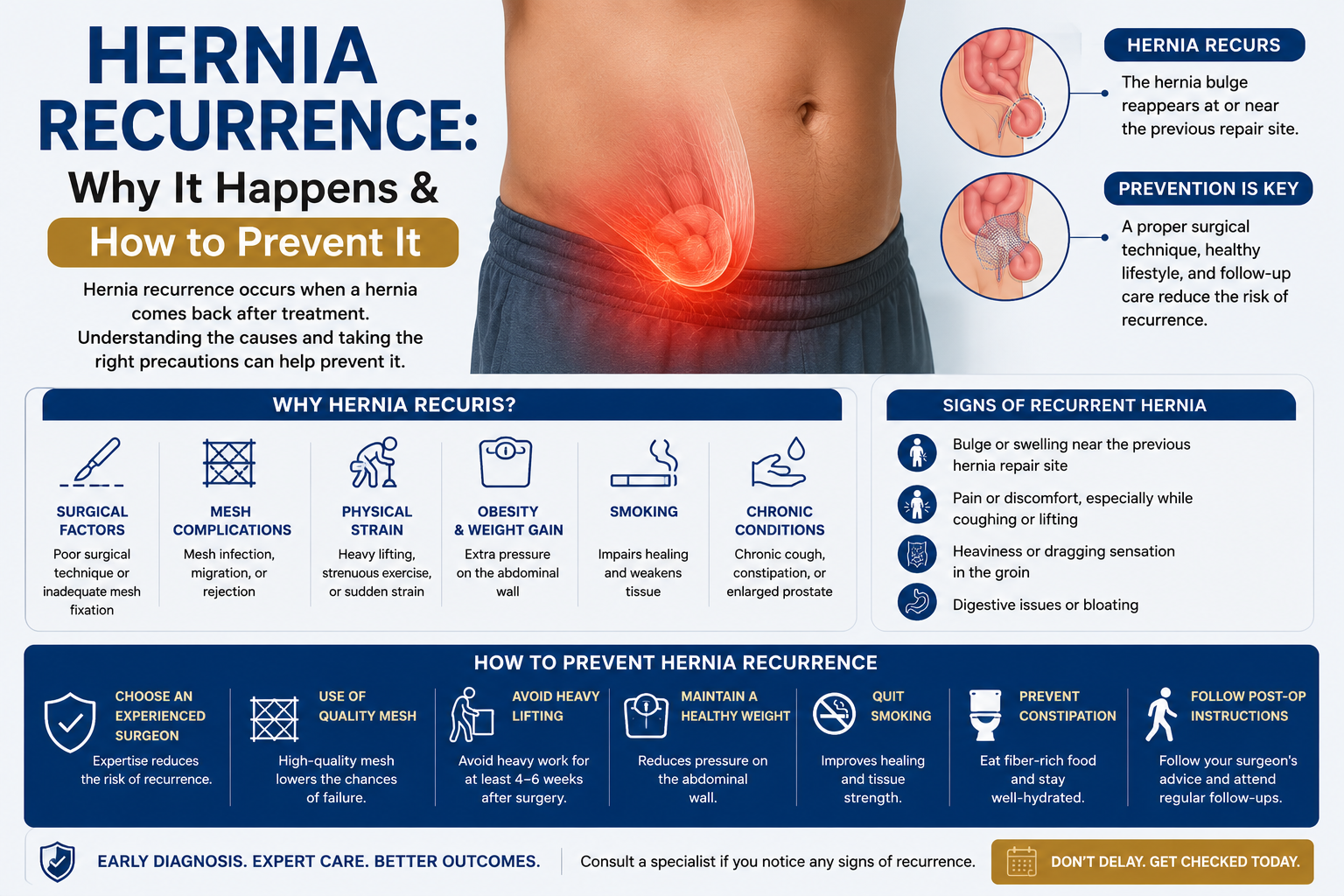
Hernia surgery is widely considered one of the most effective solutions for repairing weakened muscles or tissue defects in the abdominal wall. In most cases, patients recover successfully and return to normal activities without complications. However, some individuals experience hernia recurrence after surgery, where the hernia develops again after a previous repair procedure.
Understanding why a hernia returns, identifying risk factors early, and following the right recovery guidelines are essential for reducing long-term complications and maintaining successful surgical results.
At Arora Elite Care, Dr. Hitesh Arora provides advanced hernia treatment and personalized surgical care focused on improving recovery outcomes while reducing the risk of recurrence.
In this guide, we explain the causes of hernia recurrence, prevention strategies, recovery expectations, and when patients should seek expert medical consultation.
What Does Hernia Recurrence Mean?
Hernia recurrence happens when a hernia returns after it has already been repaired through surgery.
A hernia develops when internal tissue pushes through a weak area in the abdominal wall. Even after successful surgery, certain conditions may weaken the repaired area again, causing the hernia to reappear.
Recurrence may happen in several types of hernias, including:
- Inguinal hernia
- Umbilical hernia
- Ventral hernia
- Incisional hernia
- Femoral hernia
Although recurrence is uncommon with proper surgical care, several factors can increase risk.
Why Does Hernia Come Back After Surgery?
Patients frequently ask:
“Why did my Hernia Recurrence after Surgery?”
Several medical and lifestyle factors may contribute.
Weak Tissue Healing
Successful recovery depends heavily on proper healing of abdominal tissues after surgery.
Poor healing may happen because of:
- Weak connective tissue strength
- Delayed wound healing
- Poor nutritional recovery
- Reduced collagen strength around the repair site
If tissues fail to heal properly, the repaired area can weaken over time.
Early Heavy Physical Activity
Returning to physically demanding activities too early can place pressure on healing abdominal muscles.
Common risks include:
- Lifting heavy objects
- Gym exercises too early
- Sudden abdominal strain
- Excessive physical movement during recovery
Following recovery instructions is extremely important after surgery.
Chronic Pressure Inside the Abdomen
Constant abdominal pressure can affect long-term surgical repair.
Common causes include:
- Chronic coughing
- Long-term constipation
- Frequent straining during bowel movement
- Severe obesity creates internal pressure
Persistent pressure may weaken repaired tissue over time.
Smoking and Lifestyle Factors
Lifestyle habits directly influence surgical healing.
Risk factors include:
- Smoking
- Poor nutrition
- Uncontrolled weight gain
- Poor post-surgical care compliance
Healthy recovery habits help improve surgical success.
Large or Complex Hernias
Some hernias naturally carry a higher recurrence risk.
Examples include:
- Large abdominal wall hernias
- Previously repaired recurrent hernias
- Long-standing untreated hernias
- Complex incisional hernias
Advanced surgical planning becomes important in these cases.
Hernia Surgery Procedure and Long-Term Success
Modern Hernia Repair Surgery focuses on repairing weakened tissue while strengthening the abdominal wall to prevent future complications.
Treatment options generally include:
Open Hernia Surgery
Traditional surgery is performed through a direct incision over the affected area.
Benefits include:
- Effective tissue repair
- Suitable for larger hernia defects
- Direct access to the weakened tissue area
Laparoscopic Hernia Surgery
A minimally invasive technique performed through small incisions using specialized instruments.
Advantages include:
- Smaller incisions
- Less post-operative discomfort
- Faster recovery
- Lower infection risk in selected patients
- Earlier return to the daily routine
The treatment approach depends on the individual patient’s condition.
Recovery After Hernia Surgery
Recovery plays a major role in preventing recurrence.
Most patients experience:
- Mild discomfort for a few days
- Temporary activity restrictions
- Gradual return to normal routine
- Follow-up monitoring by the surgeon
- Progressive healing over several weeks
Ignoring recovery guidelines may increase recurrence risk significantly.
How to Prevent Hernia Recurrence after Surgery
Follow Post-Surgery Instructions Properly
Always follow your surgeon’s instructions regarding:
- Rest period
- Wound care
- Activity restrictions
- Medication schedule
- Follow-up appointments
Proper healing improves long-term surgical success.
Avoid Heavy Lifting During Recovery
Patients should avoid unnecessary abdominal strain.
Avoid:
- Weight lifting
- Carrying heavy bags
- Intense exercise
- Sudden strenuous movement
Recovery timelines vary for each patient.
Maintain Healthy Body Weight
Excess weight increases abdominal pressure.
Weight management helps:
- Reduce internal pressure
- Support better tissue healing
- Lower long-term recurrence risk
Healthy body weight supports surgical recovery.
Prevent Chronic Constipation
Repeated straining during bowel movement can stress healing tissues.
Helpful measures include:
- High fiber diet
- Adequate hydration
- Good digestive health management
Reducing strain helps protect repaired tissue.
Treat Persistent Cough Early
Constant coughing creates repeated pressure inside the abdomen.
Conditions requiring treatment include:
- Respiratory infections
- Allergy-related chronic cough
- Smoking-related lung irritation
Managing these conditions helps reduce recurrence risk.
Why Choose Arora Elite Care for Hernia Treatment?
Choosing an experienced surgeon directly impacts recovery success and long-term outcomes.
At Arora Elite Care, Dr. Hitesh Arora offers advanced diagnosis and modern hernia treatment focused on safe recovery and long-term surgical success.
Patients benefit from:
- Advanced hernia diagnosis
- Personalized surgical planning
- Minimally invasive surgical options
- Faster recovery-focused treatment
- Modern laparoscopic hernia procedures
- Long-term post-surgical monitoring
Expert care for hernia recurrence after surgery complications supports better patient recovery.
Conclusion
Although modern hernia surgery offers excellent long-term success, hernia recurrence after surgery can happen when healing tissues weaken or when recovery precautions are not followed properly. Understanding the causes of recurrence and following prevention strategies plays an important role in protecting surgical results.
At Arora Elite Care, Dr. Hitesh Arora provides expert hernia treatment, advanced surgical care, and personalized recovery guidance designed to help patients achieve safe recovery and reduce the risk of future hernia recurrence. Early diagnosis and expert care always lead to better long-term outcomes.
Frequently Asked Questions
How common is Hernia Recurrence after Surgery?
Recurrence rates vary depending on surgical technique, patient health, recovery compliance, and hernia complexity.
Can a hernia come back years after surgery?
Yes. Hernia recurrence may occur months or even years later if abdominal tissue weakens again.
Does laparoscopic surgery reduce recurrence risk?
In many patients, laparoscopic repair offers strong long-term outcomes when performed with proper surgical planning.
Can exercise cause hernia recurrence?
Heavy exercise too early after surgery may place pressure on healing tissue and increase recurrence risk.
Should a recurrent hernia be treated again?
Yes. Patients should seek immediate surgical evaluation if symptoms suggest recurrence.