
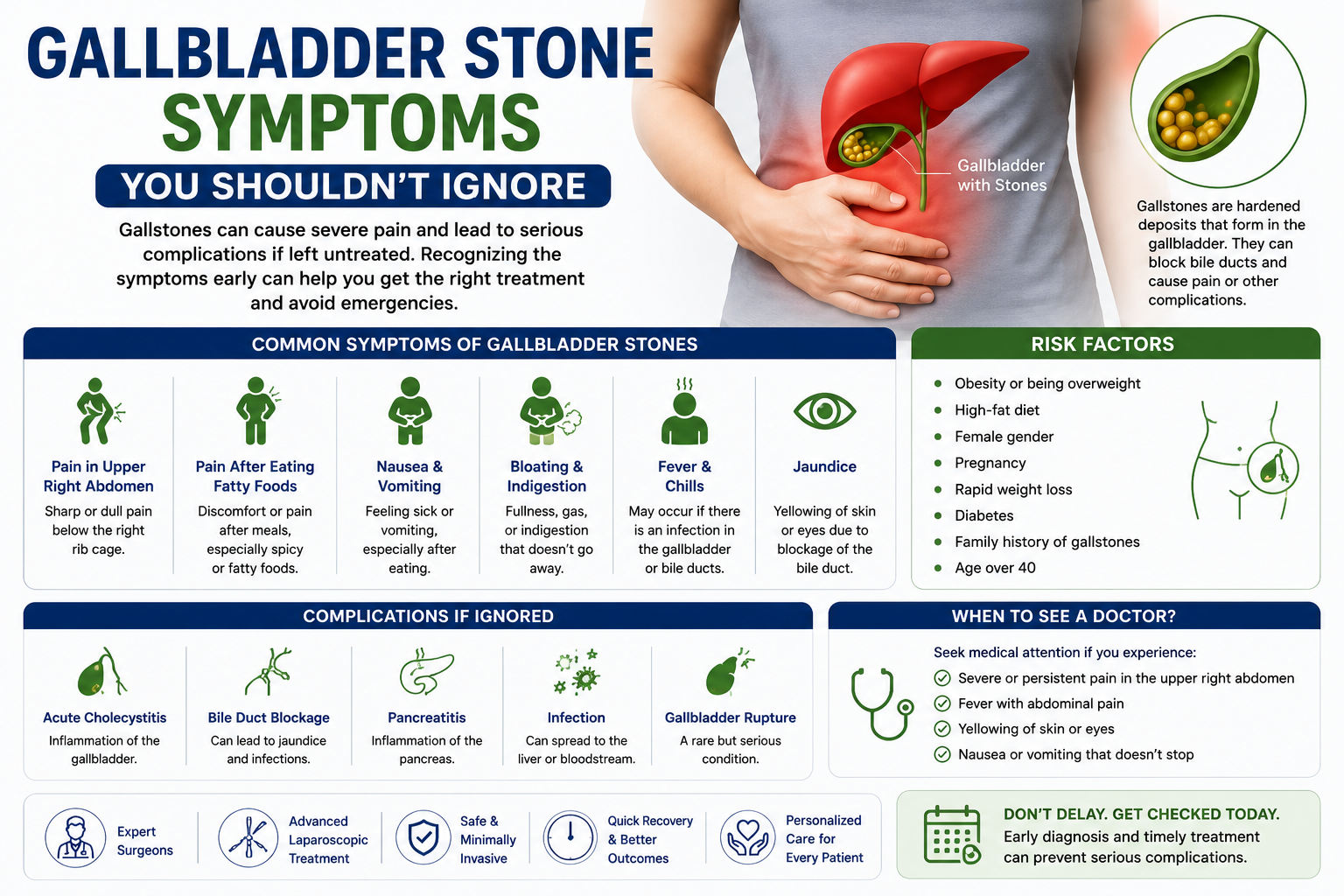
Gallbladder stones are a common digestive condition that develops when hardened deposits form inside the gallbladder, a small organ located beneath the liver. While some people may have gallstones without noticeable discomfort, others experience symptoms that can gradually worsen and affect daily life. Recognizing gallbladder stone symptoms early is important because untreated gallstones may lead to severe pain, infection, inflammation, or blockage of the digestive system.
At Arora Elite Care, Dr. Hitesh Arora provides advanced diagnosis and modern surgical treatment for gallbladder conditions, helping patients receive safe care and faster recovery through personalized treatment planning.
This guide explains common gallbladder stone symptoms, possible causes, treatment options, recovery expectations, and when patients should seek immediate medical attention.
What Are Gallbladder Stones?
Gallstones are hardened deposits that develop inside the gallbladder when substances in bile, such as cholesterol or bilirubin, become imbalanced.
The gallbladder stone symptoms bile, which helps digest fats. When stones form, they may block normal bile flow and trigger painful digestive symptoms.
Gallstones may vary in size and number. Some remain silent for years, while others suddenly cause significant pain and require immediate treatment.
What Causes Gallbladder Stones?
Many patients ask:
“Why do gallstones develop?”
Several factors may increase the risk.
Common causes include:
- High cholesterol levels in the bile
- Obesity or sudden weight gain
- Family history of gallstones
- Poor dietary habits with high-fat intake
- Diabetes and metabolic disorders
- Hormonal changes in some patients
- Liver-related bile imbalance
- Age-related digestive changes
Although some risk factors cannot be controlled, early diagnosis helps prevent complications.
8 Gallbladder Stone Symptoms You Should Never Ignore
Patients often do not recognize symptoms until complications begin. The following warning signs may indicate gallstones.
1. Sudden Pain in the Upper Right Abdomen
One of the most common symptoms is sharp pain in the upper right side of the abdomen.
This pain may:
- Start suddenly
- Increase after eating fatty meals
- Last for several minutes or hours
- Return repeatedly over time
Persistent pain requires evaluation.
2. Pain After Eating Heavy or Oily Food
The gallbladder works harder after consuming fatty meals.
As a result, patients may experience:
- Pain after eating fried food
- Discomfort after large meals
- Digestive heaviness after eating
This symptom is commonly overlooked.
3. Pain Spreading to Back or Shoulder
Gallbladder pain does not always stay localized.
Some patients notice pain radiating toward:
- Right shoulder
- Upper back
- Area between the shoulder blades
Referred pain is common during gallstone attacks.
4. Nausea and Vomiting
Digestive blockage caused by gallstones can trigger stomach discomfort.
Patients may experience:
- Frequent nausea
- Vomiting after meals
- Feeling unwell after eating heavy food
Persistent symptoms need attention.
5. Bloating and Indigestion
Gallstones may interfere with normal digestion.
Common digestive complaints include:
- Abdominal bloating
- Excess gas formation
- Feeling overly full quickly
- Difficulty digesting fatty meals
These symptoms are often mistaken for simple indigestion.
6. Fever During Gallbladder Infection
If stones block bile flow completely, infection may develop.
Warning signs include:
- Fever
- Chills
- Severe abdominal pain
- Increased tenderness around the abdomen
Immediate medical care may be required.
7. Yellowing of Skin or Eyes
Patients may develop jaundice when bile flow becomes blocked.
Signs include:
- Yellow eyes
- Yellow skin discoloration
- Dark urine in some cases
This can indicate a serious blockage.
8. Repeated Digestive Discomfort
Some patients experience ongoing mild symptoms rather than severe pain.
These may include:
- Frequent stomach discomfort
- Repeated digestive disturbance
- Discomfort after meals
- Persistent abdominal uneasiness
Repeated symptoms should never be ignored.
When Should You Seek Medical Treatment?
Patients commonly ask:
“When do gallstones become dangerous?”
Medical evaluation becomes important when:
- Severe abdominal pain develops
- Symptoms keep returning repeatedly
- Vomiting becomes frequent
- Fever accompanies abdominal pain
- Jaundice symptoms appear
- Daily eating becomes uncomfortable
Delaying treatment may increase the risk.
Gallbladder Stone Treatment Options
Treatment depends on symptoms, stone size, and overall patient health.
Medical Observation
Some small stones without symptoms may be monitored initially.
Doctors may recommend:
- Regular observation
- Dietary modifications
- Periodic medical evaluation
Not all gallstones require immediate surgery.
Laparoscopic Gallbladder Surgery
For symptomatic patients, Laparoscopic Cholecystectomy is commonly recommended.
Benefits include:
- Smaller incisions
- Less pain after surgery
- Faster recovery time
- Shorter hospital stay
- Reduced surgical trauma
It is one of the most commonly performed minimally invasive digestive surgeries.
Recovery After Gallbladder Surgery
Recovery depends on overall health and the surgical approach used.
Patients may experience:
- Mild discomfort initially
- Temporary dietary adjustments
- Gradual return to normal eating habits
- Light activity for the early recovery period
- Follow-up monitoring by the surgeon
Most patients recover within a few weeks.
Following medical advice supports better healing.
Why Choose Arora Elite Care?
Choosing an experienced surgeon improves treatment safety and recovery outcomes.
At Arora Elite Care, Dr. Hitesh Arora provides advanced diagnosis and modern laparoscopic surgical care focused on safe treatment and faster recovery.
Patients benefit from:
- Advanced gallbladder diagnosis
- Modern laparoscopic surgery options
- Personalized treatment planning
- Minimal pain recovery protocols
- Faster post-surgical recovery guidance
- Long-term digestive care support
Expert care reduces complications and improves surgical outcomes.
Conclusion
Ignoring early gallbladder stone symptoms can allow a simple digestive condition to progress into severe pain and serious complications. Recognizing warning signs early and seeking timely medical care helps patients avoid emergencies and long-term discomfort.
At Arora Elite Care, Dr. Hitesh Arora offers expert diagnosis and advanced laparoscopic treatment designed to help patients receive safe surgical care and smooth recovery. Early treatment often leads to better long-term digestive health outcomes.
Frequently Asked Questions
Can gallstones exist without symptoms?
Yes. Some patients have silent gallstones without noticeable symptoms for years.
Does every gallstone require surgery?
Not always. Treatment depends on symptoms, stone size, and medical evaluation.
Can gallstones cause back pain?
Yes. Pain may spread toward the back or right shoulder during gallstone attacks.
Is laparoscopic surgery safe for gallstones?
Yes. Laparoscopic surgery is commonly used and allows faster recovery in suitable patients.
What happens if gallstones are untreated?
Untreated gallstones may cause infection, bile blockage, severe pain, or digestive complications.
2 Comments
Life After Gallbladder Removal Diet: Indian Food Guide
September 15, 2026[…] is commonly performed for symptomatic gallstones and other gallbladder problems. Learn more about gallbladder stone symptoms and when they may require medical evaluation. The good news is that life after gallbladder removal […]
Gallbladder Stone Treatment: Symptoms and Surgery
September 20, 2026[…] You can learn more about common symptoms in our detailed guide to gallbladder stone symptoms. […]