
Abdominal pain is a common health concern, but in some cases, it can signal a serious medical emergency. One condition that often requires urgent medical attention is appendicitis. Many patients initially ignore the warning signs, assuming the pain will disappear naturally. Understanding appendicitis symptoms early is extremely important because delayed treatment can lead to severe complications. The appendix is a small organ attached to the large intestine, and when it becomes inflamed or infected, immediate medical evaluation may be necessary.
Patients who recognize appendicitis symptoms early often receive faster treatment and reduce the risk of complications. At Arora Elite Care, advanced general surgery treatment is provided by experienced surgeon Dr. Hitesh Arora, focusing on early diagnosis and timely surgical care.
Overview of Appendicitis
Appendicitis is a medical condition that occurs when the appendix becomes inflamed, swollen, or infected. The appendix is a small pouch located on the lower right side of the abdomen.
When the appendix becomes blocked, bacteria may multiply inside, causing infection and inflammation.
If treatment is delayed, the appendix may rupture, which can become a serious medical emergency.
Because symptoms often begin gradually, many people fail to recognize appendicitis symptoms during the early stages.
Early diagnosis significantly improves treatment outcomes.
What Causes Appendicitis?
Appendicitis usually develops when the appendix becomes blocked internally.
Several factors may contribute to blockage.
Common causes include:
- A hard stool is blocking the appendix opening
- Bacterial infection
- Digestive tract infection
- Swelling caused by inflammation
- Enlarged lymph tissue
- Rare intestinal obstruction
Once blockage occurs, pressure builds inside the appendix, increasing the risk of infection.
Understanding possible causes helps patients recognize appendicitis symptoms more quickly.
Common Appendicitis Symptoms
Recognizing appendicitis symptoms early can prevent complications.
Symptoms usually begin gradually and worsen over time.
The most common signs include:
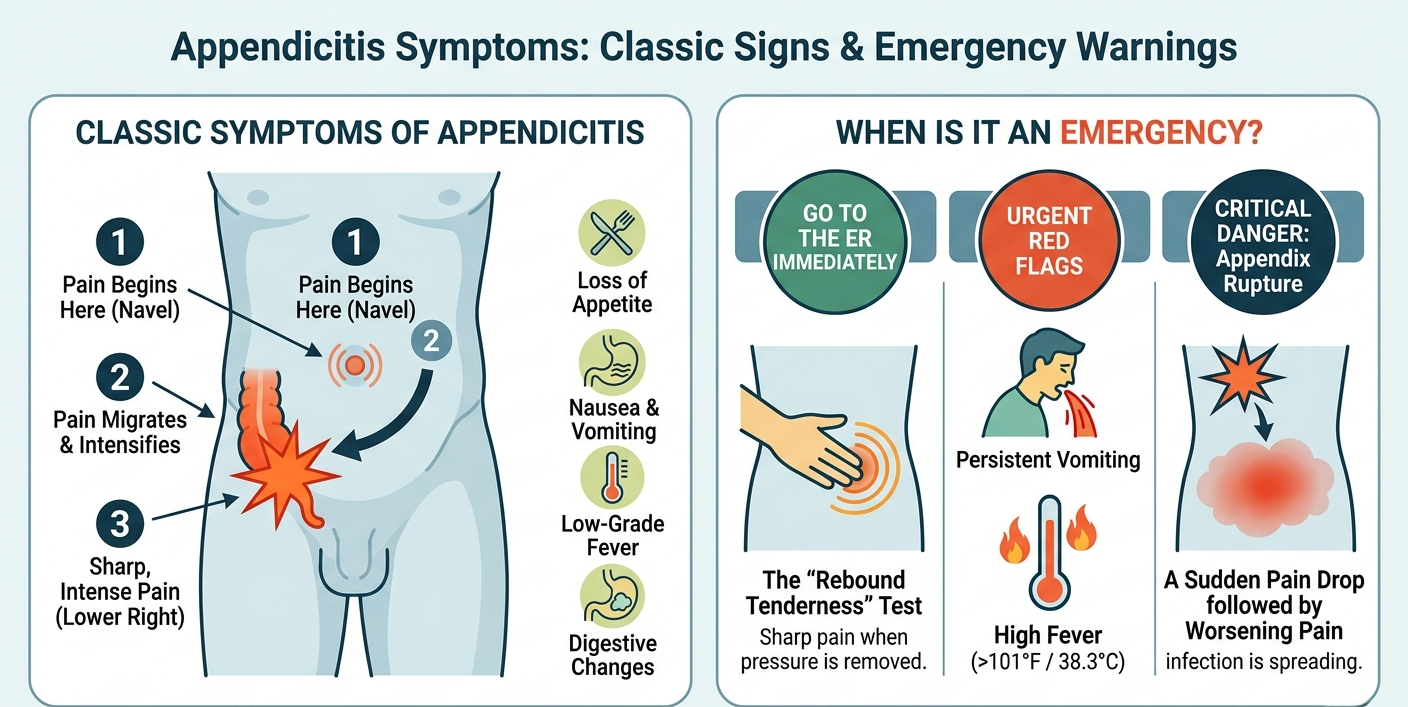
Pain Around the Belly Button
Pain often starts near the center of the abdomen around the belly button.
Initially, the pain may feel mild or uncomfortable.
Pain Moving to the Lower Right Abdomen
As inflammation worsens, pain often shifts toward the lower right side of the abdomen.
This is one of the most recognized appendicitis symptoms.
Pain usually becomes sharper with movement.
Loss of Appetite
Many patients suddenly lose interest in eating.
This often appears early during appendicitis.
Nausea and Vomiting
Patients frequently experience nausea after abdominal pain begins.
Vomiting may follow as inflammation increases.
Fever
A mild fever may develop as the body responds to infection.
A higher fever can indicate worsening inflammation.
Abdominal Swelling
Some patients notice bloating or abdominal discomfort.
Swelling can worsen if treatment is delayed.
Difficulty Walking Due to Pain
Movement, walking, coughing, or sudden body movements may increase pain.
This is a warning sign that a medical evaluation may be needed immediately.
When Do Appendicitis Symptoms Become an Emergency?
One of the most important questions patients ask is when abdominal pain becomes dangerous.
Certain appendicitis symptoms may indicate an urgent medical emergency.
Seek immediate medical attention if:
- Pain suddenly becomes severe
- Pain rapidly worsens in the lower right abdomen
- High fever develops
- Persistent vomiting continues
- The abdomen becomes very rigid or swollen
- Walking becomes difficult because of severe pain
- Pain becomes unbearable with movement
Delaying treatment can increase the risk of appendix rupture.
If the appendix ruptures, infection may spread inside the abdomen and become life-threatening.
Why Early Diagnosis Matters
Early diagnosis helps doctors treat appendicitis before complications develop.
Delayed treatment may lead to:
- Appendix rupture
- Internal infection
- Severe abdominal infection
- Increased recovery time
- More complex surgery
Recognizing appendicitis symptoms early significantly improves patient safety.
Patients should never ignore persistent abdominal pain.
How Doctors Diagnose Appendicitis
Doctors use several methods to confirm appendicitis.
Diagnosis usually includes:
Physical Examination
Doctors check abdominal tenderness and pain location.
Blood Tests
Blood tests help identify infection and inflammation.
Ultrasound Examination
Ultrasound helps visualize inflammation around the appendix.
CT Scan
CT scanning provides more detailed abdominal imaging when necessary.
Early diagnosis helps doctors determine whether urgent surgery is required.
Treatment for Appendicitis
Once appendicitis is confirmed, doctors choose treatment based on the severity of the condition, imaging findings, and whether complications are present. Surgery remains an established treatment, but doctors may consider antibiotics for carefully selected patients with uncomplicated appendicitis. Learn more about appendicitis treatment without surgery and when antibiotics may be an option.
If surgery is required, doctors usually remove the inflamed appendix through an appendectomy.
Laparoscopic Appendix Surgery
Modern appendicitis treatment commonly uses laparoscopic surgery.
Benefits include:
- Smaller incisions
- Reduced pain
- Faster recovery
- Shorter hospital stay
- Lower risk of complications
At Arora Elite Care, appendix surgery is performed by the experienced surgeon, Dr. Hitesh Arora, using modern minimally invasive surgical techniques.
Recovery After Appendix Surgery
Recovery depends on the severity of appendicitis and the type of surgery performed.
Most patients recover gradually over several stages.
First 24 Hours
Patients may experience:
- Mild abdominal discomfort
- Temporary weakness
- Limited movement initially
Most patients begin light walking shortly after surgery.
First Week Recovery
During early recovery:
- Pain gradually improves
- Energy levels improve
- Incisions begin healing
Heavy physical activity is usually avoided.
Two to Four Weeks Recovery
During this stage:
- Normal activity gradually resumes
- Surgical discomfort reduces
- Healing improves steadily
Recovery is often faster with laparoscopic surgery.
Why Patients Should Not Ignore Appendicitis Symptoms
Many patients assume stomach pain is temporary indigestion.
However, untreated appendicitis can quickly become dangerous.
Ignoring appendicitis symptoms may lead to:
- Appendix rupture
- Serious abdominal infection
- Emergency hospitalization
- More complex surgical treatment
- Longer recovery period
Seeking early medical evaluation can prevent serious complications.
Why Choose Arora Elite Care?
Choosing an experienced surgical center is extremely important for emergency surgical conditions.
At Arora Elite Care, patients receive advanced general surgery care focused on safety, fast diagnosis, and effective treatment planning.
The center offers:
- Advanced laparoscopic surgery
- Modern diagnostic facilities
- Emergency surgical evaluation
- Personalized treatment planning
- Post-operative recovery support
Treatment is provided by the experienced surgeon, Dr. Hitesh Arora, with patient safety as a priority.
Related Internal Resources
Patients searching for appendicitis symptoms often want to understand available treatment options, surgical expertise, and how quickly they can receive medical care. Learning about related services helps patients make informed healthcare decisions without delaying necessary treatment.
Explore related resources below for complete surgical guidance.
Explore Our Surgical Services
If you are experiencing abdominal pain or require advanced surgical treatment, explore our specialized healthcare services designed for faster diagnosis and effective treatment.
Meet Dr. Hitesh Arora
Understanding the experience of your surgeon is an important step before making any treatment decision. Learn more about experienced general and laparoscopic surgeon Dr. Hitesh Arora.
Book Your Consultation
If you are experiencing severe abdominal pain or suspect appendicitis, early medical consultation can help prevent serious complications and support timely treatment planning.
Conclusion
Recognizing appendicitis symptoms early can prevent serious medical complications and improve treatment outcomes.
While abdominal pain can occur for many reasons, persistent pain that worsens over time should never be ignored.
Because untreated appendicitis may lead to rupture and severe internal infection, early diagnosis and timely surgery remain extremely important.
At Arora Elite Care, advanced appendix surgery is performed by the experienced surgeon, Dr. Hitesh Arora, using modern minimally invasive treatment techniques focused on patient safety and faster recovery.
Frequently Asked Questions
What are the earliest appendicitis symptoms?
Early symptoms often include pain near the belly button, nausea, loss of appetite, and abdominal discomfort.
Where is appendicitis pain usually located?
Pain often begins around the belly button and later moves to the lower right abdomen.
Is appendicitis always an emergency?
If symptoms worsen quickly or severe pain develops, urgent medical treatment may be necessary.
Can appendicitis go away without surgery?
In most confirmed cases, surgery is commonly recommended to prevent complications.
Who performs appendix surgery at Arora Elite Care?
Appendix surgery is performed by experienced surgeon Dr. Hitesh Arora using modern surgical techniques.