The Minimally Invasive Surgery Benefits have changed how surgeons treat many common medical conditions. At Arora Elite Care, surgeons perform advanced procedures through small incisions using specialized instruments and high-definition cameras instead of making one large cut. As a result, patients often experience less pain, faster healing, shorter hospital stays, and better cosmetic outcomes.
Whether you need gallbladder surgery, hernia repair, appendix removal, or another general surgical procedure, understanding the minimally invasive surgery benefits can help you make an informed treatment decision. In this guide, we’ll explain how minimally invasive surgery works, its advantages over traditional open surgery, and when it may be the right option for you.
What Is Minimally Invasive Surgery and Its Benefits?
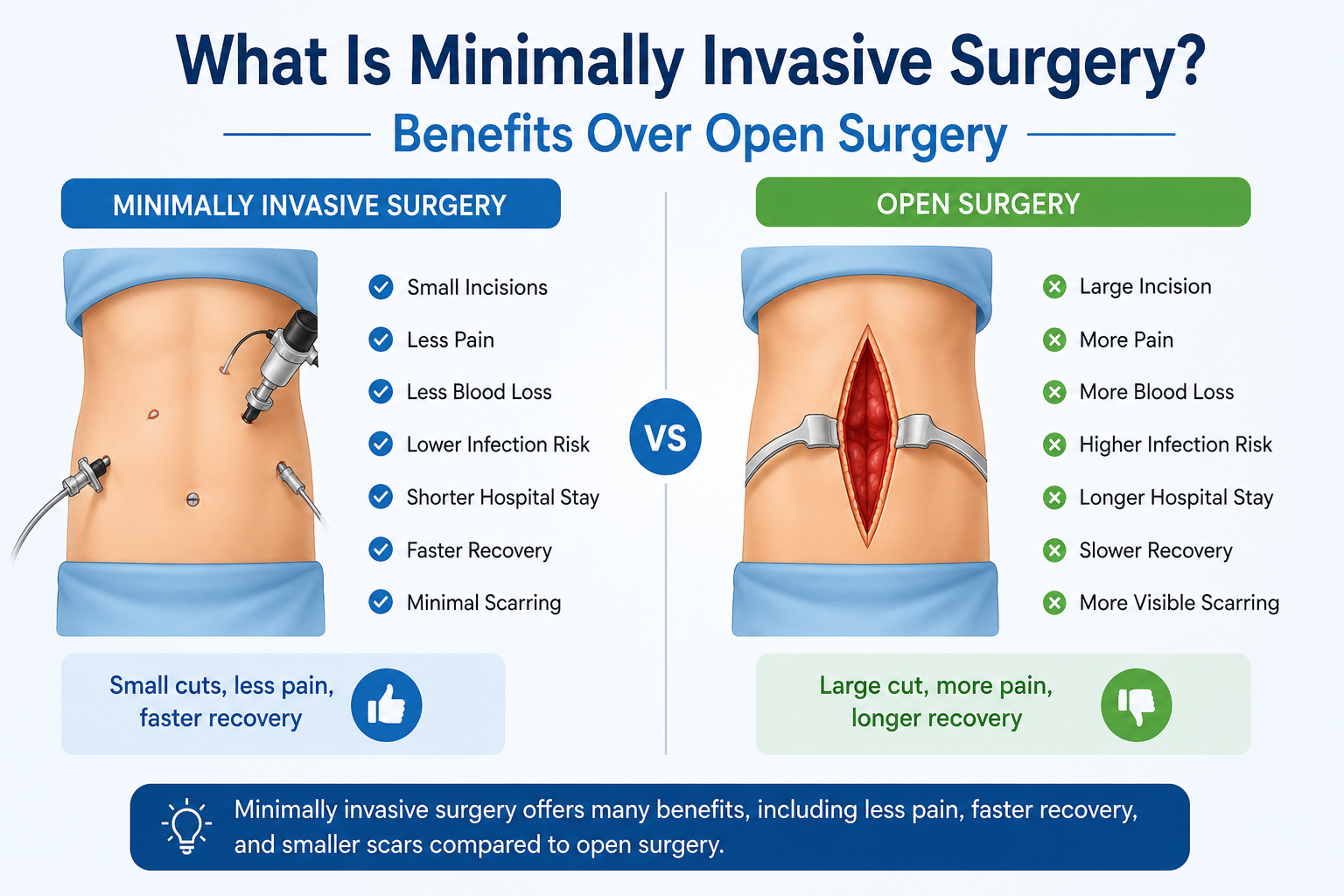
Minimally invasive surgery is an advanced surgical technique that allows surgeons to perform operations through several small incisions rather than one large surgical cut. A tiny high-definition camera, called a laparoscope, is inserted through one incision, while specialized instruments are introduced through the others.
The camera displays magnified images on a monitor, allowing the surgeon to perform the procedure with greater precision.
One of the biggest minimally invasive surgery benefits is that healthy muscles and tissues are disturbed much less than during open surgery. Consequently, patients usually recover more quickly and experience fewer postoperative complications.
How Do Minimally Invasive Surgery Benefits Improve Patient Recovery?
The procedure generally follows these steps:
- Small incisions are created.
- A tiny high-definition camera is inserted.
- Specialized surgical instruments are introduced.
- The surgeon operates while viewing magnified images.
- The instruments are removed.
- The small incisions are closed with sutures or surgical glue.
We perform most procedures under general anesthesia. Moreover, our team closely monitors patients throughout surgery to ensure safety.
Common Conditions Treated Using Minimally Invasive Surgery
Many general surgical conditions can be treated using minimally invasive techniques, including:
- Gallstones
- Gallbladder disease
- Hernia
- Appendicitis
- Lipoma
- Pilonidal sinus
- Hydrocele
- Certain gastrointestinal disorders
- Selected colorectal conditions
- Diagnostic abdominal procedures
However, the most suitable treatment depends on your medical condition, overall health, and your surgeon’s evaluation.
Top Minimally Invasive Surgery Benefits
1. Smaller Incisions
One of the most noticeable is the use of tiny incisions. Because the cuts are much smaller than those used in open surgery, there is significantly less damage to surrounding tissues.
As a result, patients usually experience better cosmetic outcomes after healing.
2. Less Pain After Surgery
Another important is reduced postoperative pain.
3. Faster Recovery
Among all the minimally invasive surgery benefits, faster recovery is often the most appreciated by patients.
In many cases, patients:
- Walk for a few hours
- Resume light activities sooner
- Return to work earlier
- Recover faster than after open surgery
Nevertheless, recovery varies depending on the type of procedure and the patient’s overall health.
4. Lower Risk of Infection
Smaller wounds expose less tissue to bacteria. Therefore, minimally invasive surgery generally carries a lower risk of wound infection compared with traditional open surgery.
Proper postoperative care remains essential for optimal healing.
5. Less Blood Loss
Another valuable benefit of minimally invasive surgery is that it reduces blood loss during the procedure.
Because surgeons work with magnified images and precise instruments, bleeding can often be controlled more effectively throughout the procedure.
6. Shorter Hospital Stay
One of the practical minimally invasive surgery benefits is a shorter hospital stay.
Many procedures are performed:
- Day-care surgery
- Overnight admission
- Short hospital stay
Consequently, patients can recover comfortably at home.
7. Smaller Scars
Since only small incisions are required, scars are generally much less noticeable.
For many patients, this cosmetic advantage is one of the most satisfying minimally invasive surgery benefits.
8. Lower Risk of Surgical Complications
Although every surgery carries some risk, the minimally invasive surgery benefits may include fewer wound-related complications, reduced bleeding, lower postoperative discomfort, and quicker wound healing.
However, every patient’s outcome depends on the procedure, medical history, and the surgeon’s expertise.
Minimally Invasive Surgery Benefits vs Open Surgery
| Feature | Minimally Invasive Surgery | Open Surgery |
|---|---|---|
| Incision Size | Small | Large |
| Pain | Usually Less | Usually More |
| Blood Loss | Lower | Higher |
| Hospital Stay | Shorter | Longer |
| Recovery | Faster | Slower |
| Scarring | Minimal | More Visible |
| Infection Risk | Generally Lower | Higher |
Although the minimally invasive surgery benefits are significant, open surgery may still be the safest option for certain complex or emergency conditions.
Who Can Benefit From Minimally Invasive Surgery?
Patients with the following conditions may benefit:
- Gallbladder stones
- Hernia
- Appendicitis
- Lipoma
- Pilonidal sinus
- Selected abdominal disorders
However, your surgeon will evaluate several factors before recommending surgery, including:
- Medical history
- Previous abdominal surgeries
- Overall health
- Body weight
- Disease severity
When Is Open Surgery Still Necessary?
Despite the many minimally invasive surgery benefits, some patients require traditional open surgery.
Open surgery may be recommended for:
- Severe trauma
- Extensive infection
- Large tumors
- Complex abdominal diseases
- Certain emergencies
- Dense scar tissue from previous operations
Ultimately, the safest surgical approach always depends on the patient’s condition.
Recovery Time: One of the Biggest Minimally Invasive Surgery Benefits
Recovery varies from patient to patient.
First 24 Hours
- Mild discomfort
- Early walking encouraged
- Gradual return to fluids
First Week
- Light daily activities
- Reduced pain
- Improved mobility
Two to Four Weeks
Most patients gradually return to work and normal daily routines according to their surgeon’s advice.
Furthermore, following postoperative instructions regarding wound care, medications, lifting, and exercise helps ensure a smooth recovery.
Why Choose Dr. Hitesh Arora for General Surgery in Surat?
Dr. Hitesh Arora provides patient-centered surgical care using modern laparoscopic techniques whenever appropriate. His goal is to maximize the minimally invasive surgery benefits while ensuring patient safety and excellent clinical outcomes.
Patients receive:
- Comprehensive consultation
- Personalized treatment planning
- Advanced laparoscopic procedures
- Detailed preoperative counseling
- Compassionate postoperative care
Final Thoughts on Minimally Invasive Surgery Benefits
The minimally invasive surgery benefits have transformed modern surgical care. Smaller incisions, less pain, quicker recovery, shorter hospital stays, reduced blood loss, and improved cosmetic outcomes make this approach the preferred choice for many common surgical conditions.
However, not every patient is an ideal candidate. Therefore, consulting an experienced general surgeon is essential to determine whether minimally invasive surgery or open surgery is the most appropriate option.
Frequently Asked Questions
What are the main minimally invasive surgery benefits?
The primary minimally invasive surgery benefits include smaller incisions, less pain, faster recovery, shorter hospital stays, reduced blood loss, lower infection risk, and minimal scarring.
Are minimally invasive surgery benefits better than open surgery?
For many routine surgical conditions, minimally invasive surgery offers several advantages. However, some complex or emergency cases may still require open surgery.
How long does recovery take after minimally invasive surgery?
Recovery depends on the procedure. Many patients return to light activities within a few days and resume normal routines within two to four weeks.
Does minimally invasive surgery leave scars?
Yes, but the scars are usually much smaller and less noticeable than those from traditional open surgery.
Is everyone eligible for minimally invasive surgery?
No. Eligibility depends on the patient’s condition, medical history, previous surgeries, and overall health. Your surgeon will determine the safest treatment approach.