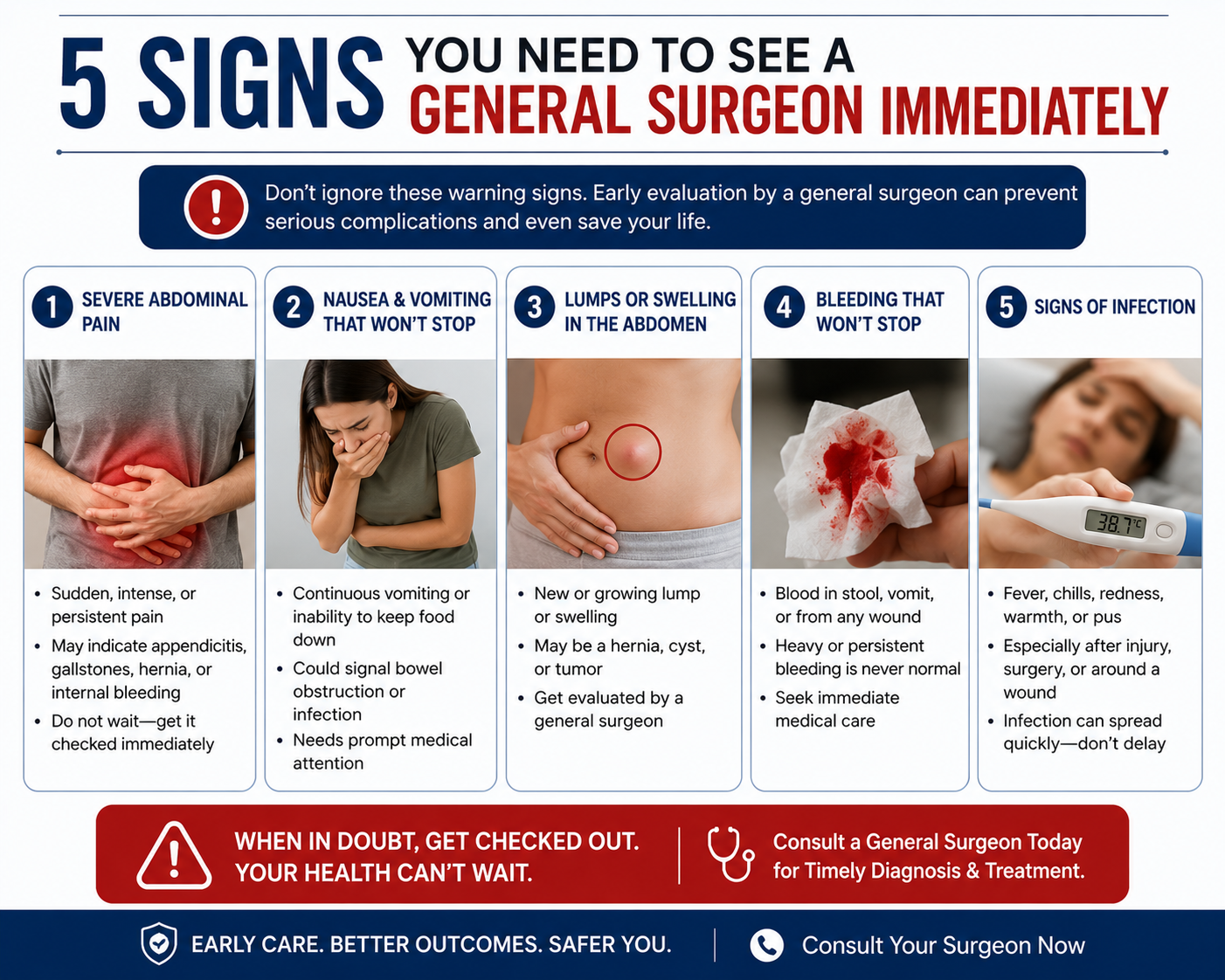
Knowing when to see a general surgeon is important when medical conditions start causing persistent pain, swelling, infection, digestive problems, or abnormal growths that may require surgical evaluation. Ignoring these warning signs can delay treatment and increase the risk of complications. At Arora Elite Care, early diagnosis and timely surgical consultation help patients receive the right treatment before conditions become more serious.
General surgeons manage a wide range of health problems involving the abdomen, skin, soft tissues, digestive system, hernias, gallbladder disease, piles, and many other conditions that may require surgical intervention.
Understanding the warning signs can help you decide when to see a general surgeon before a minor condition turns serious.
1. Persistent Abdominal Pain That Does Not Improve
One of the most common reasons patients visit a general surgeon is ongoing abdominal pain.
Occasional stomach discomfort may not be serious, but pain that continues for several days or becomes more severe can indicate underlying surgical conditions such as:
- Appendicitis
- Gallbladder stones
- Hernia complications
- Intestinal obstruction
- Infection inside the abdomen
If abdominal pain becomes severe, immediate medical evaluation becomes important because delaying treatment may increase complications.
At Arora Elite Care, surgeons carefully evaluate abdominal pain to identify the exact cause and recommend proper treatment.
2. A Lump or Swelling That Continues Growing
Any unusual lump, swelling, or bulge in the body should never be ignored.
In many cases, patients notice swelling in areas such as:
- Groin region
- Abdomen
- Neck
- Underarm
- Breast tissue
- Skin surface
Persistent swelling may indicate conditions such as:
- Hernia
- Lipoma
- Cysts
- Abscess formation
- Enlarged lymph nodes
- Soft tissue growth
A general surgeon can examine the swelling and determine whether medical treatment or minor surgical removal becomes necessary.
Early evaluation often prevents further complications.
3. Severe Pain During Bowel Movements or Rectal Bleeding
Many people ignore symptoms related to anal or rectal discomfort because of embarrassment.
However, severe pain during bowel movement or bleeding may indicate conditions that require surgical consultation.
Common conditions include:
- Hemorrhoids (Piles)
- Anal fissure
- Fistula in ano
- Pilonidal sinus
- Rectal abscess
Ignoring these symptoms may allow the condition to worsen over time.
If bleeding becomes frequent or pain increases significantly, consulting a general surgeon helps identify the cause and begin treatment early.
4. Gallbladder Pain After Eating Fatty Foods
Pain in the upper right abdomen after meals can sometimes indicate gallbladder disease.
Gallstones often develop silently for long periods but may begin causing symptoms such as:
- Sharp pain after eating oily food
- Nausea after meals
- Indigestion
- Vomiting
- Bloating sensation
- Pain radiating to the back or shoulder
When gallstones repeatedly cause pain, surgical removal of the gallbladder may become necessary.
At Arora Elite Care, advanced minimally invasive procedures help patients recover faster while reducing hospital stay duration.
5. Wounds, Infections, or Abscesses That Do Not Heal
Infections that continue worsening despite medication may require surgical treatment.
Common warning signs include:
- Skin abscess
- Recurrent boils
- Infected cysts
- Non-healing wounds
- Pus collection under the skin
- Increasing redness and swelling
Sometimes antibiotics alone do not fully resolve deep infections.
A general surgeon may need to drain infected tissue, remove damaged tissue, or treat the underlying cause to prevent infection from spreading.
Early treatment reduces pain and speeds recovery.
Why Early Surgical Consultation Matters
Many patients delay treatment because they assume surgery is only needed during emergencies.
In reality, early consultation helps doctors diagnose problems before conditions become more severe.
Benefits of early consultation include:
- Faster diagnosis
- Better treatment planning
- Reduced complications
- Less invasive treatment options
- Shorter recovery time
- Lower long-term treatment cost
Recognizing when to see a general surgeon early often improves treatment outcomes significantly.
Conditions Commonly Treated by General Surgeons
General surgeons commonly manage:
- Hernia repair
- Gallbladder stones
- Appendix surgery
- Lipoma removal
- Piles treatment
- Fissure treatment
- Fistula surgery
- Pilonidal sinus treatment
- Breast lump removal
- Skin cyst removal
- Abscess drainage
- Gastrointestinal surgical conditions
At Arora Elite Care, experienced surgeons provide accurate diagnosis and advanced treatment options based on the patient’s condition.
Why Choose Arora Elite Care?
At Arora Elite Care, patients receive advanced general surgery care using modern surgical techniques designed for safety, faster recovery, and improved outcomes.
The clinic focuses on:
- Personalized treatment planning
- Advanced laparoscopic surgery
- Experienced surgical expertise
- Faster recovery protocols
- Safe and patient-focused care
- Transparent consultation and treatment approach
Recognizing when to see a general surgeon early often prevents complications and helps patients receive timely treatment, allowing them to return to normal life faster.
Frequently Asked Questions
What symptoms indicate I When to see a General Surgeon?
Persistent abdominal pain, swelling, rectal bleeding, gallbladder pain, and non-healing infections often require surgical evaluation.
Can a general surgeon treat piles?
Yes, general surgeons commonly treat hemorrhoids, fissures, fistulas, and other anorectal conditions.
Is surgery always required after consultation?
No. The surgeon first evaluates the condition and recommends surgery only when medically necessary.
When should I seek urgent surgical consultation?
Severe abdominal pain, sudden swelling, infection with pus, or heavy rectal bleeding may require immediate medical attention.
Does laparoscopic surgery reduce recovery time?
Yes, minimally invasive laparoscopic surgery often allows faster healing and shorter hospital stay.