Proper wound care after surgery plays a major role in helping the body heal safely and reducing the risk of complications. After any surgical procedure, the body begins repairing tissues immediately, but the recovery process depends greatly on how well patients care for the surgical wound at home.
Poor wound care can increase the risk of infection, delayed healing, bleeding, swelling, or scar-related problems. At Arora Elite Care, Dr. Hitesh Arora provides patients with clear recovery instructions to support smooth healing and help minimize post-surgical complications.
Understanding how to care for the wound properly helps patients recover faster and return to normal activities safely.
Why Surgical Wound Care Matters During Recovery
After surgery, the incision area remains sensitive while tissues repair internally and externally. During this period, the wound needs protection from bacteria, unnecessary pressure, moisture imbalance, and accidental injury.
Good wound care helps:
- Prevent infection
- Reduce swelling and inflammation
- Promote faster tissue healing
- Lower scar-related complications
- Reduce pain during recovery
- Protect stitches or surgical dressings
Following proper wound care instructions improves overall surgical recovery significantly.
Keep the Surgical Area Clean and Dry
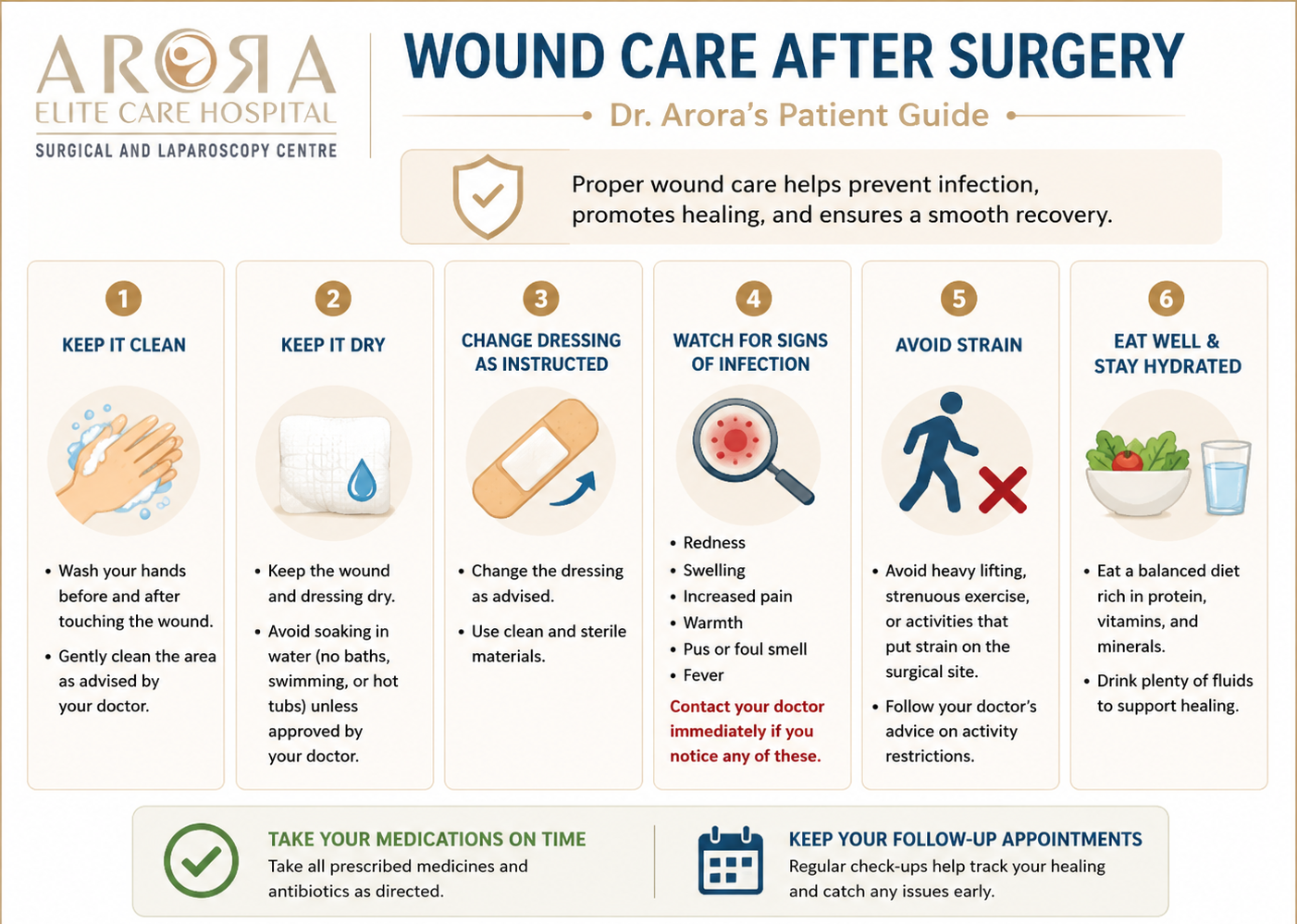
One of the most important steps in wound care after surgery is maintaining cleanliness around the operated area.
Patients should:
- Keep dressings clean at all times
- Avoid touching the wound unnecessarily
- Wash your hands before handling dressings
- Prevent dirt or sweat buildup near the incision
- Avoid exposing the wound to contaminated surfaces
Excess moisture can sometimes slow healing or create conditions for bacterial growth, so keeping the area dry often supports better recovery.
At Arora Elite Care, patients receive personalized dressing instructions based on the type of procedure performed.
Change Dressings Only as Instructed
Not every surgical wound requires frequent dressing changes.
Changing dressings too often may disturb the healing tissue and increase contamination risk. Patients should always follow their surgeon’s specific instructions regarding dressing care.
General dressing guidelines include:
- Use clean, sterile materials
- Replace dressings only when advised
- Never remove stitches without medical guidance
- Avoid pulling adhesive dressings forcefully
- Contact the surgeon if the dressing becomes soaked with blood or fluid
Proper dressing management protects healing tissues during the most sensitive recovery period.
Watch for Signs of Infection
One of the biggest concerns during wound care after surgery is infection prevention.
Patients should monitor the wound daily for warning signs.
Possible signs of infection include:
- Increasing redness around the incision
- Pus or abnormal fluid discharge
- Foul odor from the wound
- Increasing swelling
- Severe tenderness near stitches
- Fever after surgery
- Warm skin around the incision
- Persistent bleeding
If any of these symptoms develop, patients should seek immediate medical advice rather than waiting for the condition to worsen.
Early infection management often prevents serious complications.
Avoid Putting Pressure on the Surgical Area
Excess movement or pressure can interfere with tissue healing.
Depending on the type of surgery, patients may need to temporarily avoid certain physical activities.
This may include avoiding:
- Heavy lifting
- Gym workouts
- Sudden stretching movements
- Long-distance walking immediately after surgery
- Tight clothing over the surgical area
- Sleeping positions that place pressure on the wound
Limiting unnecessary strain helps stitches remain secure while tissues heal properly.
Recovery instructions vary depending on the procedure performed.
Follow Medication Instructions Carefully
Post-surgical medications support both comfort and healing.
Patients should follow prescribed medication schedules exactly as advised.
Common post-operative medications may include:
- Antibiotics for infection prevention
- Pain management medication
- Anti-inflammatory medication
- Topical wound care products
- Specialized dressings if needed
Skipping medication doses may affect recovery progress and increase discomfort during healing.
Always complete the prescribed medication course unless the surgeon recommends otherwise.
Maintain Proper Nutrition During Recovery
Nutrition directly affects tissue healing after surgery.
The body requires protein, vitamins, hydration, and essential nutrients to rebuild damaged tissues efficiently.
Helpful recovery nutrition includes:
- Protein-rich foods
- Fresh fruits and vegetables
- Adequate water intake
- Vitamin C-rich foods
- Iron-containing foods
- Balanced healthy meals
Poor nutrition can sometimes delay wound healing and weaken the immune response.
Supporting the body internally improves surgical recovery outcomes.
Avoid Smoking and Alcohol During Healing
Smoking and alcohol consumption can interfere with healing.
Nicotine affects blood circulation, reducing oxygen supply needed for tissue repair. Alcohol may interfere with medications and slow the natural healing response.
Avoiding both during the recovery period often helps:
- Improve circulation
- Support tissue repair
- Lower infection risk
- Reduce inflammation
- Improve overall recovery speed
Patients should follow recovery instructions strictly until the surgeon confirms proper healing.
Attend All Follow-Up Appointments
Even when recovery feels normal, follow-up appointments remain important.
During follow-up visits, the surgeon checks:
- Stitch healing progress
- Infection risk
- Swelling levels
- Tissue recovery progress
- Internal healing status
- Whether dressing changes are required
Skipping follow-up visits may allow hidden complications to go unnoticed.
At Arora Elite Care, regular follow-up helps ensure smooth recovery and early management if any concerns arise.
When to Contact Your Surgeon Immediately
While mild discomfort after surgery is common, some symptoms require urgent medical evaluation.
Seek immediate medical help if you experience:
- High fever
- Continuous wound bleeding
- Severe swelling
- Pus discharge
- Opening of stitches
- Severe pain that worsens suddenly
- Difficulty breathing after surgery
- Skin discoloration around the wound
Recognizing warning signs early can prevent serious complications.
Knowing proper wound care after surgery and understanding when to contact the surgeon helps patients recover more safely.
Why Patients Trust Arora Elite Care
At Arora Elite Care, patient recovery remains as important as the surgical procedure itself.
The clinic focuses on:
- Advanced surgical techniques
- Detailed post-surgery guidance
- Personalized recovery instructions
- Safe wound healing protocols
- Faster recovery planning
- Patient-centered surgical care
Proper recovery support(wound care after surgery) helps patients heal confidently after surgery.
Frequently Asked Questions
How long does a surgical wound take to heal?
Most wounds begin healing within a few weeks, but complete recovery depends on the type of surgery and individual health factors.
Can I shower after surgery?
This depends on the procedure and dressing type. Always follow your surgeon’s specific instructions.
What are the signs of wound infection after surgery?
Redness, swelling, pus discharge, fever, foul odor, and increasing pain may indicate infection.
Should I change my dressing daily?
Not always. Dressing changes depend on the surgeon’s instructions and the type of wound.
Why is wound care after surgery important?
Proper wound care reduces infection risk, promotes faster healing, and helps prevent complications during recovery.
1 Comment
Laparoscopic Surgery Recovery Time: A Day-by-Day Guide
September 22, 2026[…] our wound care after surgery guide for general postoperative wound […]