A hernia in a child can be worrying for parents, especially when a swelling or lump suddenly appears around the groin or belly button. The good news is that childhood hernias are commonly treated, and with timely medical evaluation, most children recover well. If you are searching for hernia treatment in children, it is important to understand why a hernia develops, what symptoms parents should watch for, when surgery may be recommended, and what recovery usually involves.
Overview: What Is a Hernia in Children?
A hernia occurs when tissue or part of an internal organ pushes through a weak area in the surrounding muscle or tissue.
In children, two commonly encountered types are:
- Inguinal hernia: A bulge develops in the groin and may sometimes extend toward the scrotum in boys.
- Umbilical hernia: A soft bulge appears around the belly button.
What Does a Hernia Look Like in a Child?
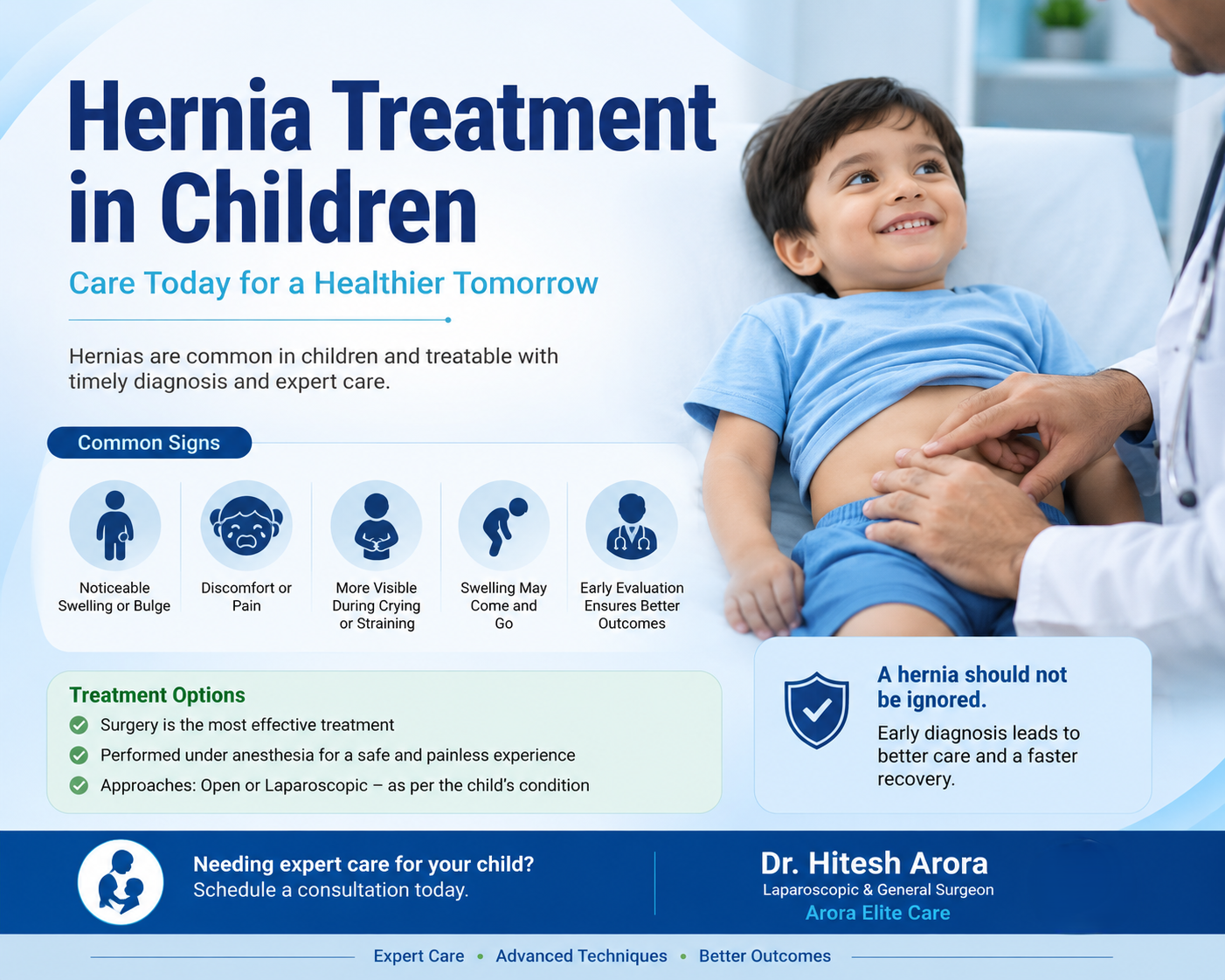
Parents may first notice a soft swelling or bulge. It can become more noticeable when the child:
- Cries
- Coughs
- Strains
- Stands or moves around
Not every lump is a hernia, so an examination by a qualified doctor is important for an accurate diagnosis.
Is a Hernia Painful for Children?
Some children may have a hernia without significant discomfort, while others can experience pain, tenderness, swelling, or irritability. In babies who cannot explain how they feel, parents may notice persistent crying, restlessness, discomfort, or difficulty settling. If these symptoms appear along with a noticeable bulge, parents should consult a doctor promptly for hernia treatment in children.
When Does a Hernia Need Urgent Medical Attention?
Parents should not ignore a hernia in their child. In some cases, the contents of the hernia can become trapped and cannot move back into the abdomen. Seeking timely hernia treatment in children can help doctors assess the condition and reduce the risk of potential complications.
Parents should seek prompt medical attention if the child develops symptoms such as:
- A painful or firm swelling
- A bulge that does not reduce or disappear
- Increasing tenderness or redness around the swelling
- Vomiting
- Abdominal discomfort or swelling
- Unusual or persistent crying in an infant
These symptoms require prompt medical assessment. A doctor can determine the appropriate hernia treatment in children based on the type of hernia, symptoms, and the child’s overall condition.
How Is a Hernia Diagnosed in Children?
Diagnosis usually begins with a clinical examination.
The doctor can check the swelling while the child relaxes and see if it becomes more noticeable when the child cries, coughs, or strains.
Depending on the individual case, additional investigations may sometimes be recommended if the diagnosis is uncertain or another condition needs to be ruled out.
Procedure: How Is Hernia in Children Treated?
The appropriate hernia treatment in children depends on the type of hernia, the child’s age, symptoms, and the doctor’s assessment.
For an inguinal hernia, surgical repair is commonly recommended because the opening generally does not close by itself and there is a risk of tissue becoming trapped.
Umbilical hernias can behave differently. Some may close naturally as a child grows, so the doctor may recommend observation in appropriate cases. Surgery may be considered when the hernia persists, is large, causes symptoms, or develops complications.
What Happens During Pediatric Hernia Surgery?
Hernia surgery aims to return the protruding tissue to its correct position and close the opening responsible for the hernia.
Can Hernia Surgery Be Performed Laparoscopically?
In selected pediatric cases, laparoscopic hernia surgery may be considered.
This minimally invasive approach uses small incisions and specialized instruments to repair the hernia. Whether it is appropriate depends on factors such as the child’s age, type of hernia, medical condition, and surgeon’s assessment.
Parents should discuss the advantages, limitations, and suitable surgical approach for their child’s specific condition with the treating surgeon.
Recovery: What Should Parents Expect After Surgery?
Recovery after an uncomplicated pediatric hernia repair is often relatively quick, although every child’s recovery is different.
Parents will receive instructions regarding:
- Wound care
- Bathing
- Pain medicines
- Food and fluids
- Physical activity
- Returning to school
- Follow-up appointments
Mild soreness or temporary swelling around the operated area may occur after surgery.
How Soon Can a Child Return to Normal Activities?
Many children gradually return to routine activities after surgery, but strenuous activity should be avoided until the surgeon says it is safe.
Rather than following a fixed timeline found online, parents should follow the specific post-operative instructions given for their child.
What Should Parents Watch for During Recovery?
Contact your child’s healthcare team if you notice concerning symptoms such as increasing pain, significant swelling or redness, persistent vomiting, fever, discharge from the wound, or anything else that seems unusual.
Why Timely Hernia Treatment Matters
One of the biggest concerns with certain childhood hernias, particularly inguinal hernias, is the possibility of the hernia becoming trapped.
Early diagnosis helps the surgeon evaluate the child and decide whether the child needs observation or planned surgical treatment.
It also gives parents time to understand the condition, procedure, anesthesia, recovery, and follow-up instead of waiting until an urgent problem develops.
Expert Hernia Care by Dr. Hitesh Arora
At Arora Elite Care, hernia patients are treated under the guidance of Dr. Hitesh Arora, an Advanced Laparoscopic and General Surgeon in Surat. His professional profile lists MBBS, MS (General Surgery), and FMAS qualifications and a record of 10,000+ successful surgeries. Arora Elite Care also states that its surgical practice has 15 years of experience in laparoscopic and related surgical fields.
Helping Your Child Through Hernia Treatment
Finding a lump on your child’s body can naturally cause concern. The most useful first step is to have it properly evaluated rather than trying to diagnose the swelling at home.
With appropriate diagnosis and timely hernia treatment in children, the doctor can determine whether your child needs observation, planned surgery, or more urgent care.
If you have noticed swelling around your child’s groin or belly button, consider arranging a surgical consultation for an accurate diagnosis and individualized treatment plan.
FAQs About Hernia in Children
Can a child’s hernia heal without surgery?
It depends on the type. Some umbilical hernias can close naturally as a child grows. Inguinal hernias generally require surgical assessment and are commonly repaired surgically.
What causes an inguinal hernia in a baby?
An inguinal hernia commonly develops when an opening that forms during fetal development does not close completely before or shortly after birth.
Is hernia surgery safe for children?
Pediatric hernia repair is a commonly performed procedure. However, every operation and anesthesia carries potential risks. Your surgeon and anesthesia team can explain the child’s individual risks and expected benefits.
Is laparoscopic surgery better for every child?
No. Laparoscopic repair may be suitable for some children, while an open approach may be recommended for others. The best technique depends on the individual case.
Can a hernia come back after surgery?
Recurrence can occur, although it is not expected in most uncomplicated repairs. Your surgeon can explain factors that may affect your child’s individual risk.