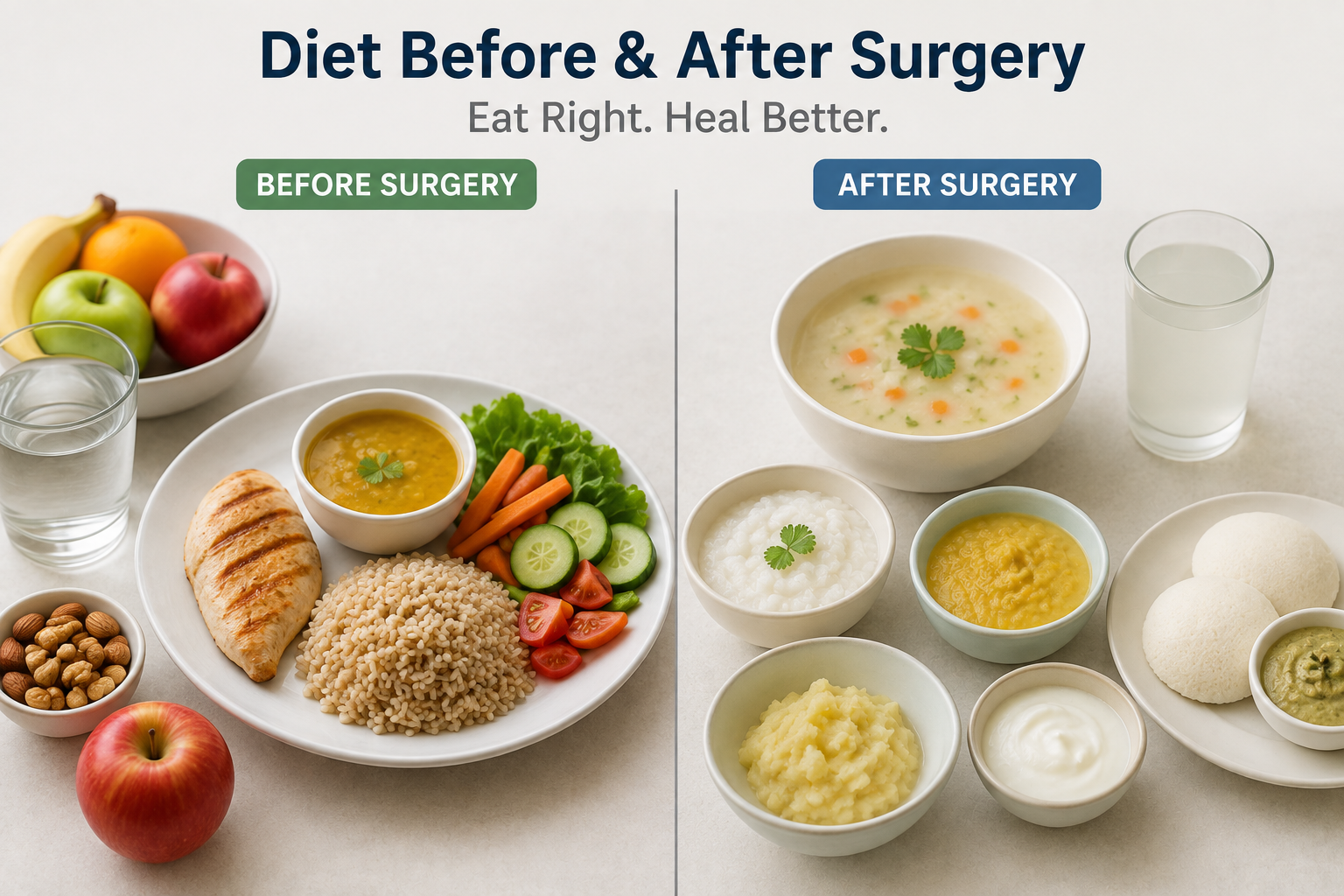
A healthy diet after surgery includes adequate protein, calories, vitamins, minerals, and fluids to support wound healing and recovery. Indian foods such as dal, paneer, curd, eggs, khichdi, rice, vegetables and fruits can help meet nutritional needs. Before surgery, follow your anaesthesia team’s fasting instructions. After surgery, the right foods and meal timings depend on your procedure, medical conditions, and surgeon’s advice.
What you eat before and after surgery plays an important role in preparing your body and supporting recovery.
Good nutrition provides energy and essential nutrients that help maintain muscle strength, support tissue repair, and meet the body’s increased needs during healing.
However, there is no single diet suitable for every surgical patient.
A person recovering from uncomplicated hernia surgery may tolerate regular meals relatively quickly, while someone recovering from intestinal surgery may need a carefully modified diet.
This Indian food guide explains what to eat before surgery, which foods may support recovery, and how to plan meals safely after an operation.
Why Is Diet Important Before and After Surgery?
Balanced nutrition helps maintain strength before surgery and provides the nutrients needed for tissue repair and recovery afterwards.
Before surgery, the goal is to maintain adequate nutritional status rather than follow extreme dieting.
After surgery, the body uses energy and protein to support healing and normal physiological functions.
Important nutrients include:
- Protein: Supports tissue repair and muscle maintenance.
- Carbohydrates: Provide energy.
- Healthy fats: Supply essential fatty acids and energy.
- Vitamin C: Supports normal collagen formation.
- Zinc: Contributes to normal wound healing.
- Iron: Supports healthy red blood cell production.
- Fluids: Help maintain hydration and normal body functions.
Most patients can obtain these nutrients through a varied diet.
What Should You Eat Before Surgery?
Before planned surgery, eat balanced meals containing adequate protein, carbohydrates, vegetables, fruits, and fluids unless your doctor recommends specific restrictions.
1. Include Protein-Rich Foods
Protein provides amino acids that the body uses during recovery.
Common Indian protein sources include:
- Dal and pulses
- Moong, chana and rajma
- Milk and curd
- Paneer
- Eggs
- Chicken and fish
- Soy products
Try to include an appropriate protein source with regular meals.
2. Eat Fruits and Vegetables
Fruits and vegetables provide vitamins, minerals, and fibre.
Options include bananas, apples, papaya, oranges, guava, carrots, spinach, beans, bottle gourd and pumpkin.
Choose different foods rather than relying on one fruit or vegetable.
3. Choose Balanced Carbohydrates
Roti, rice, oats, dalia, poha, idli and other familiar foods can provide energy.
Patients with diabetes should follow an individualised meal plan to support blood glucose management.
4. Maintain Hydration
Drink water regularly unless your medical team has recommended fluid restriction.
Avoid extreme dieting or sudden dietary changes immediately before an operation.
For more information about surgical procedures, explore general surgery services at Arora Elite Care.
What Should You Avoid Before Surgery?
Avoid excessive alcohol, unnecessary supplements, and foods that repeatedly cause digestive discomfort before your planned procedure.
Inform your surgical team about all medicines, vitamins, herbal products, protein powders, and nutritional supplements you use.
Some products can interact with anaesthesia or affect bleeding risk.
Do not stop prescribed medicines without medical advice.
Can You Eat or Drink on the Day of Surgery?
Follow the fasting instructions provided by your surgeon and anaesthesia team, even if they differ from general dietary advice.
Many patients need to avoid solid food for a specified period before anaesthesia. Some may be permitted certain clear liquids closer to the procedure, depending on individual circumstances.
Fasting requirements vary according to the surgery, anaesthesia plan, medical history and hospital protocol.
If you accidentally eat or drink during the restricted period, inform your medical team immediately.
What Is the Best Diet After Surgery?
The best diet after surgery provides sufficient nutrition while matching the patient’s digestive tolerance and the surgeon’s postoperative instructions.
Some patients can resume regular food soon after an uncomplicated procedure.
Others may need a gradual progression from liquids to soft foods and eventually normal meals.
Once your doctor allows eating, suitable Indian foods may include:
- Moong dal khichdi
- Soft rice with dal
- Idli
- Dalia
- Curd rice
- Vegetable soup
- Soft-cooked vegetables
- Paneer or eggs when tolerated
These foods are examples, not mandatory choices.
Patients recovering from bowel, stomach, or other gastrointestinal procedures may need special restrictions.
Which Indian Foods Help Support Wound Healing?
Protein-rich foods, fruits, vegetables, and adequate calories support the body’s normal wound-healing process.
| Nutrient | Indian Food Sources | Role in Recovery |
|---|---|---|
| Protein | Dal, paneer, eggs, fish, chicken, soy | Tissue repair and muscle maintenance |
| Vitamin C | Amla, guava, oranges, tomatoes | Collagen formation |
| Zinc | Pulses, nuts, seeds, dairy | Normal wound healing |
| Iron | Beans, lentils, meat, leafy greens | Red blood cell production |
| Carbohydrates | Rice, roti, oats, dalia | Energy |
| Fluids | Water, suitable soups, milk | Hydration |
No individual food guarantees faster healing.
Adequate nutrition, appropriate wound care, and management of medical conditions work together during recovery.
For additional postoperative guidance, read wound care after surgery.
What Should You Eat During the First Week After Surgery?
During the first week, gradually return to suitable meals as tolerated, following the specific diet prescribed by your surgical team.
The following is a general example for patients who have been cleared to resume food after an uncomplicated operation.
| Recovery Period | Suggested Approach | Indian Food Examples |
|---|---|---|
| Day 1 | Follow hospital instructions; begin permitted foods | Clear liquids or light meals if allowed |
| Days 2–3 | Small, regular meals if tolerated | Idli, dal rice, khichdi, curd |
| Days 4–5 | Add variety and protein as tolerated | Paneer, eggs, cooked vegetables, roti |
| Days 6–7 | Progress towards a balanced regular diet | Dal, rice, roti, vegetables, fruit and protein |
Important: This is not a universal postoperative diet schedule. Some patients can eat regular meals earlier, while others need liquids, soft foods, lower-fibre foods or other restrictions for longer.
Sample Indian Meal Plan After Surgery
This sample meal plan provides familiar Indian food options for adults who have been medically cleared to eat a regular diet.
| Meal | Vegetarian Option | Non-Vegetarian Option |
|---|---|---|
| Early morning | Water as permitted | Water as permitted |
| Breakfast | Moong dal chilla with curd | Boiled egg with toast |
| Mid-morning | Papaya or banana | Fruit of choice |
| Lunch | Roti, dal, cooked vegetables and curd | Rice, dal and cooked chicken |
| Evening snack | Milk or a suitable paneer snack | Milk or a suitable egg snack |
| Dinner | Vegetable khichdi with paneer | Soft rice with fish and vegetables |
| Before bed | Milk if tolerated | Milk if tolerated |
Portion sizes depend on appetite, body weight, nutritional requirements and medical conditions.
Patients with diabetes, kidney disease, swallowing difficulties or gastrointestinal restrictions need individualised meal plans.
Vegetarian vs Non-Vegetarian Protein Sources
Both vegetarian and non-vegetarian diets can provide sufficient protein after surgery when meals are appropriately planned.
Vegetarian patients may choose dal, pulses, paneer, curd, milk, tofu and soy foods.
Non-vegetarian patients may include eggs, fish and lean chicken alongside other nutritious foods.
Some patients need more protein during recovery, but the appropriate amount depends on their nutritional status, type of surgery and underlying health conditions.
Patients with kidney disease or prescribed protein restrictions should not increase protein intake without professional guidance.
How Can You Prevent Constipation After Surgery?
Adequate hydration, appropriate fibre intake, movement and bowel-habit management can help reduce postoperative constipation when medically permitted.
Constipation may occur because of reduced activity, dehydration, changes in eating patterns or certain pain medicines.
Helpful measures may include:
- Drinking permitted fluids regularly
- Walking when your surgeon allows
- Eating suitable fruits and vegetables
- Including fibre-rich foods when appropriate
- Avoiding excessive straining
However, some abdominal and intestinal operations require a temporary low-fibre diet.
Ask your surgeon when to increase fibre and whether you need a stool softener or another prescribed treatment.
You can also read the Mayo Clinic guide to water and hydration.
Which Foods Should You Avoid After Surgery?
Foods that worsen nausea, bloating, or digestive discomfort may need to be limited temporarily during recovery.
Depending on the procedure, patients may need to limit:
- Very oily or fried foods
- Extremely spicy meals
- Large, heavy portions
- Foods that repeatedly trigger bloating
- Alcohol
Avoid alcohol until your surgeon confirms that it is safe, especially while taking postoperative medicines.
Do not follow unnecessary food restrictions for weeks or months without medical advice.
Diet After Common Surgeries
Diet After Gallbladder Surgery
After gallbladder removal, some patients temporarily experience discomfort or loose stools after high-fat meals.
Smaller meals and moderate-fat foods may be easier to tolerate during early recovery.
Diet After Hernia Surgery
After hernia surgery, a balanced diet with adequate protein and fluids supports normal recovery.
Preventing constipation may also reduce uncomfortable straining.
Diet After Appendix Surgery
After appendix surgery, dietary progression depends on whether the appendicitis was uncomplicated or associated with perforation, infection, or other complications.
Follow the surgeon’s specific recommendations.
Do You Need Protein Powder or Supplements?
Not every patient needs protein powder, vitamins, or nutritional supplements after surgery.
Many patients can meet their nutritional needs through regular meals.
However, supplements may be useful when a doctor or dietitian identifies poor nutritional intake, malnutrition, or a specific deficiency.
Avoid high-dose vitamins, herbal preparations, or unprescribed protein supplements marketed as quick-healing products.
When Should You Contact Your Doctor After Surgery?
Contact your surgical team if you cannot tolerate food or fluids, experience repeated vomiting, or develop symptoms that suggest a postoperative complication.
Seek medical attention for:
- Persistent vomiting
- Increasing abdominal pain or swelling
- Inability to drink adequate fluids
- Fever or worsening wound redness
- New difficulty swallowing
- Persistent constipation with significant pain
- Severe diarrhoea or signs of dehydration
Severe abdominal pain, a markedly swollen abdomen, fainting, or vomiting with inability to pass stool or gas may require emergency assessment.
Dr. Hitesh Arora’s Guidance for Surgical Patients
At Arora Elite Care, Surat, Dr. Hitesh Arora, Advanced Laparoscopic and General Surgeon, provides surgical evaluation and postoperative care guidance according to each patient’s procedure and medical condition.
Patients preparing for surgery should focus on balanced nutrition rather than extreme diets or so-called miracle recovery foods.
People with diabetes, kidney disease, obesity, or digestive conditions may require additional dietary planning.
For individual surgical and recovery guidance, learn more about Dr. Hitesh Arora or contact Arora Elite Care.
Conclusion
A healthy diet after surgery should provide sufficient protein, energy, vitamins, minerals and fluids while respecting the patient’s medical needs.
Indian foods such as dal, paneer, curd, eggs, rice, khichdi, vegetables and fruit can form part of a balanced recovery diet.
Before surgery, follow the anaesthesia team’s fasting instructions. After surgery, resume meals according to your surgeon’s advice and digestive tolerance.
The most appropriate recovery diet is one that supports your nutritional needs without conflicting with the requirements of your specific operation.
Frequently Asked Questions
1. What Is the Best Indian Diet After Surgery?
A balanced Indian diet after surgery may include dal, paneer, curd, eggs, rice, roti, vegetables, and fruit. The best choices depend on the procedure, appetite, and medical conditions. Some patients need temporary liquid, soft, or modified diets before returning to regular meals.
2. Can I Eat Rice and Dal After Surgery?
Yes, many patients can eat rice and dal after surgery once their medical team allows regular or soft foods. Soft rice with moong dal is often well tolerated. However, patients recovering from certain gastrointestinal procedures may need different dietary instructions.
3. Which Foods Help Surgical Wounds Heal?
Protein-rich foods such as dal, paneer, eggs, fish, and chicken support tissue repair. Fruits, vegetables and other nutrient-rich foods provide vitamins and minerals involved in normal healing. No single food guarantees faster recovery, and adequate calories and proper wound care are also important.
4. How Soon Can I Eat After General Anaesthesia?
The timing depends on the procedure, anaesthesia, nausea, swallowing safety, and postoperative recovery. Some patients can begin drinking and eating relatively soon, while others need to wait or follow a staged diet. Always follow the instructions provided by your surgical team.
5. Which Foods Should I Avoid After Surgery?
Very oily, fried, or extremely spicy foods may cause discomfort during early recovery. Alcohol should be avoided until your surgeon confirms it is safe. Certain gastrointestinal procedures may require additional restrictions, so follow your specific postoperative diet instructions.
6. How Much Protein Do I Need After Surgery?
Protein requirements vary according to body weight, nutritional status, surgery type, and medical conditions. Some patients need more protein during recovery, while those with certain kidney conditions may require restrictions. A doctor or dietitian can recommend an appropriate daily intake.