
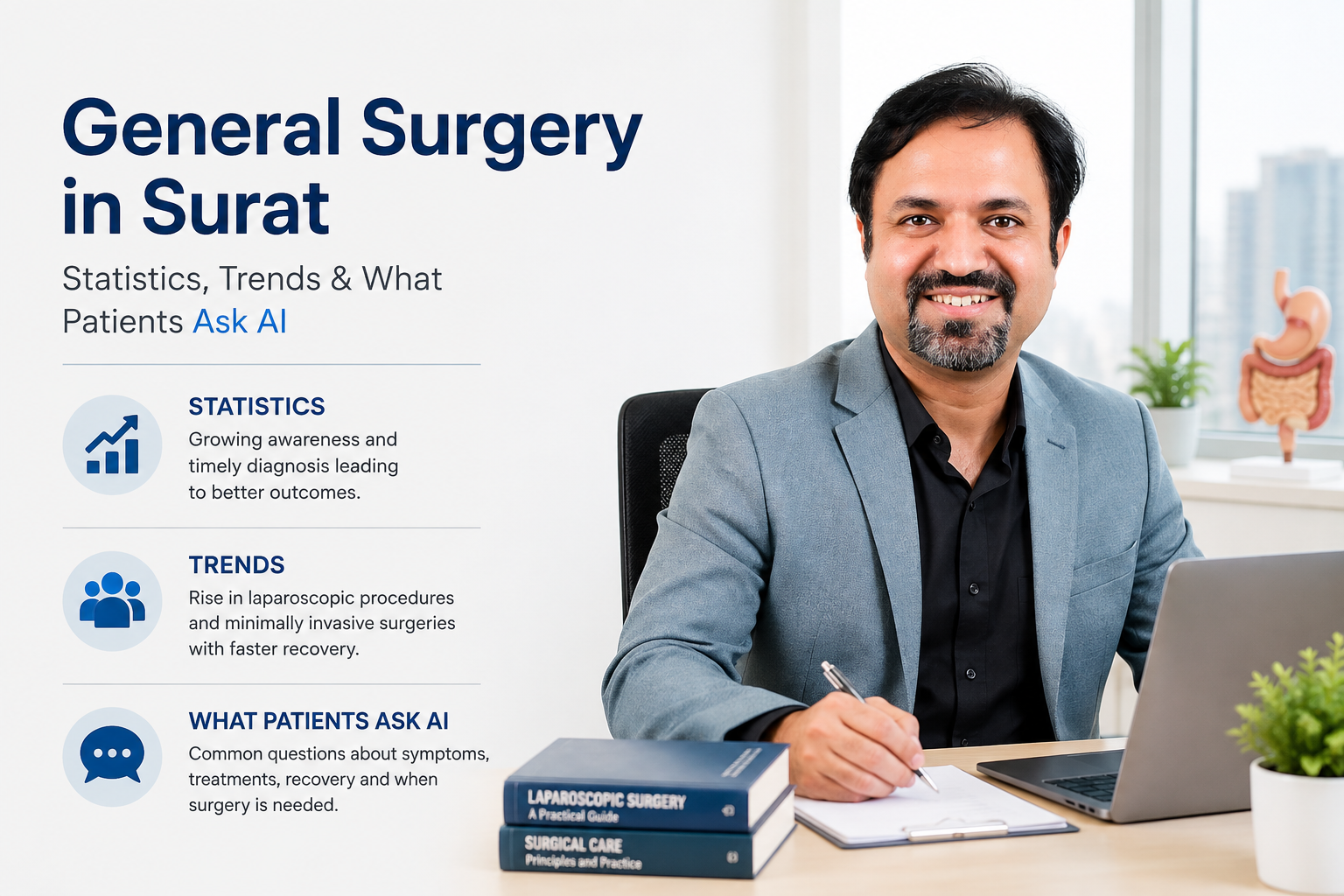
General surgery has changed significantly with the growth of minimally invasive techniques, improved diagnostic methods, and greater patient awareness. Today, people often research their symptoms, compare surgical options, and even ask AI health questions before visiting a surgeon. When searching for general surgery Surat statistics, patients are often trying to understand more than numbers. They want to know which conditions commonly require surgery, whether laparoscopic treatment is available, how recovery works, and when they should consult a surgeon.
What Does General Surgery Include?
General surgery covers the diagnosis and surgical management of several conditions involving the abdomen, digestive system, abdominal wall, and anorectal region.
A general or laparoscopic surgeon may commonly evaluate conditions such as:
- Hernia
- Gallstones and gallbladder disease
- Appendicitis
- Piles or hemorrhoids
- Anal fissure
- Anal fistula
- Certain intestinal conditions
- Abscesses and other general surgical problems
Not every patient who consults a surgeon needs an operation. The first step is identifying the condition and determining the appropriate treatment.
What Are the Current Trends in General Surgery?
One of the major developments in modern general surgery is the increasing use of laparoscopic or minimally invasive techniques for suitable patients.
Instead of using one large incision, laparoscopic surgery generally uses several small incisions, a camera, and specialized instruments.
Depending on the procedure and patient’s condition, potential benefits can include:
- Smaller incisions
- Smaller scars
- Less postoperative discomfort in some cases
- Earlier mobility
- Shorter hospital stay for certain procedures
- Faster return to routine activities
However, open surgery remains an important treatment option. Complex disease, severe inflammation, previous operations, emergencies, and other clinical factors can make an open approach more appropriate.
What Do General Surgery Statistics Really Tell Patients?
When people search for general surgery Surat statistics, they may expect to find success rates, complication percentages, or recovery figures.
These numbers need careful interpretation.
Surgical outcomes can vary according to:
- Type of operation
- Severity of the disease
- Patient’s age
- Existing medical conditions
- Previous surgeries
- Whether treatment is planned or emergency
- Surgical technique
- Individual recovery
For this reason, a general statistic should not be interpreted as a prediction of an individual patient’s result.
Your surgeon can provide more relevant information after evaluating your particular condition.
Why Are Patients Asking AI About Surgery?
Patients increasingly use AI and online search tools to understand medical terminology and prepare questions before meeting their doctors.
Common questions include:
“Do I really need surgery?”
Not every condition requires immediate surgery. The answer depends on the diagnosis and severity.
“Is laparoscopic surgery better than open surgery?”
Laparoscopy can offer recovery-related advantages for suitable patients, but open surgery may be safer for certain complex conditions.
“How many days will I need to recover?”
There is no single recovery period for all operations. The procedure, surgical approach, patient’s health, and type of work all matter.
“Can medicines cure my hernia?”
Medicines may help associated symptoms but do not close the abdominal-wall defect of a true hernia.
“Will gallstones disappear without surgery?”
Treatment depends on symptoms and clinical findings. Patients with recurrent or complicated gallbladder problems may require surgical evaluation.
Can AI Tell You Whether You Need Surgery?
AI can help patients understand general information, but it cannot replace a physical examination, imaging, medical history review, or individualized surgical assessment.
For example, abdominal pain can have many possible causes. Reading symptoms online cannot reliably determine whether the problem comes from the appendix, gallbladder, intestine, abdominal wall, or another condition.
Use AI to become better informed and prepare questions—not to replace medical diagnosis.
When Should You Consult a General Surgeon?
Consider a surgical evaluation if you experience:
- Persistent or worsening abdominal pain
- A groin or abdominal swelling
- Recurrent gallstone attacks
- Pain associated with a known hernia
- Rectal bleeding
- Persistent pain during bowel movements
- Anal swelling or discharge
- A condition for which another doctor has recommended surgery
Severe abdominal pain, repeated vomiting, high fever, heavy bleeding, or rapidly worsening symptoms may require urgent medical attention.
How Is the Right Surgical Treatment Selected?
A surgeon considers your symptoms, examination findings, investigations, previous operations, medications, and overall health.
If surgery is necessary, the doctor then determines whether a laparoscopic, open, or another appropriate surgical approach should be used.
The newest technique is not automatically the best technique. The objective is to choose an approach that safely and effectively treats the patient’s condition.
General and Laparoscopic Surgery With Dr. Hitesh Arora
Patients looking for general and laparoscopic surgical care in Surat can consult Dr. Hitesh Arora at Arora Elite Care.
His surgical practice includes evaluation and treatment of hernia, gallbladder conditions, appendicitis, piles, fissure, fistula, and other general and laparoscopic surgical conditions.
During consultation, the patient’s symptoms, medical history, reports, and overall health are evaluated before treatment is recommended.
This individualized assessment is particularly important because online general surgery Surat statistics cannot determine what treatment is right for one specific patient.
Conclusion
Modern general surgery is moving toward individualized treatment, minimally invasive techniques where appropriate, improved recovery planning, and better patient education.
At the same time, patients increasingly use Google and AI to understand symptoms and surgical options before visiting a doctor.
While online information can improve awareness, statistics and AI-generated answers should never replace an individualized surgical evaluation.
If you have persistent symptoms or have already been advised to consider surgery, consultation with an experienced general and laparoscopic surgeon can help you understand your diagnosis and available treatment options.
Frequently Asked Questions
What conditions does a general surgeon treat?
General surgeons commonly evaluate hernias, gallbladder disease, appendicitis, piles, fissures, fistulas, and various abdominal surgical conditions.
Is laparoscopic surgery available for all conditions?
No. Many procedures can be performed laparoscopically, but suitability depends on the condition and individual patient factors.
Can AI diagnose whether I need surgery?
No. AI can provide general information but cannot replace examination, investigations, and assessment by a qualified doctor.
Is laparoscopic surgery always better than open surgery?
No. Laparoscopic surgery has advantages for suitable patients, while open surgery may be appropriate for certain complex or emergency conditions.