
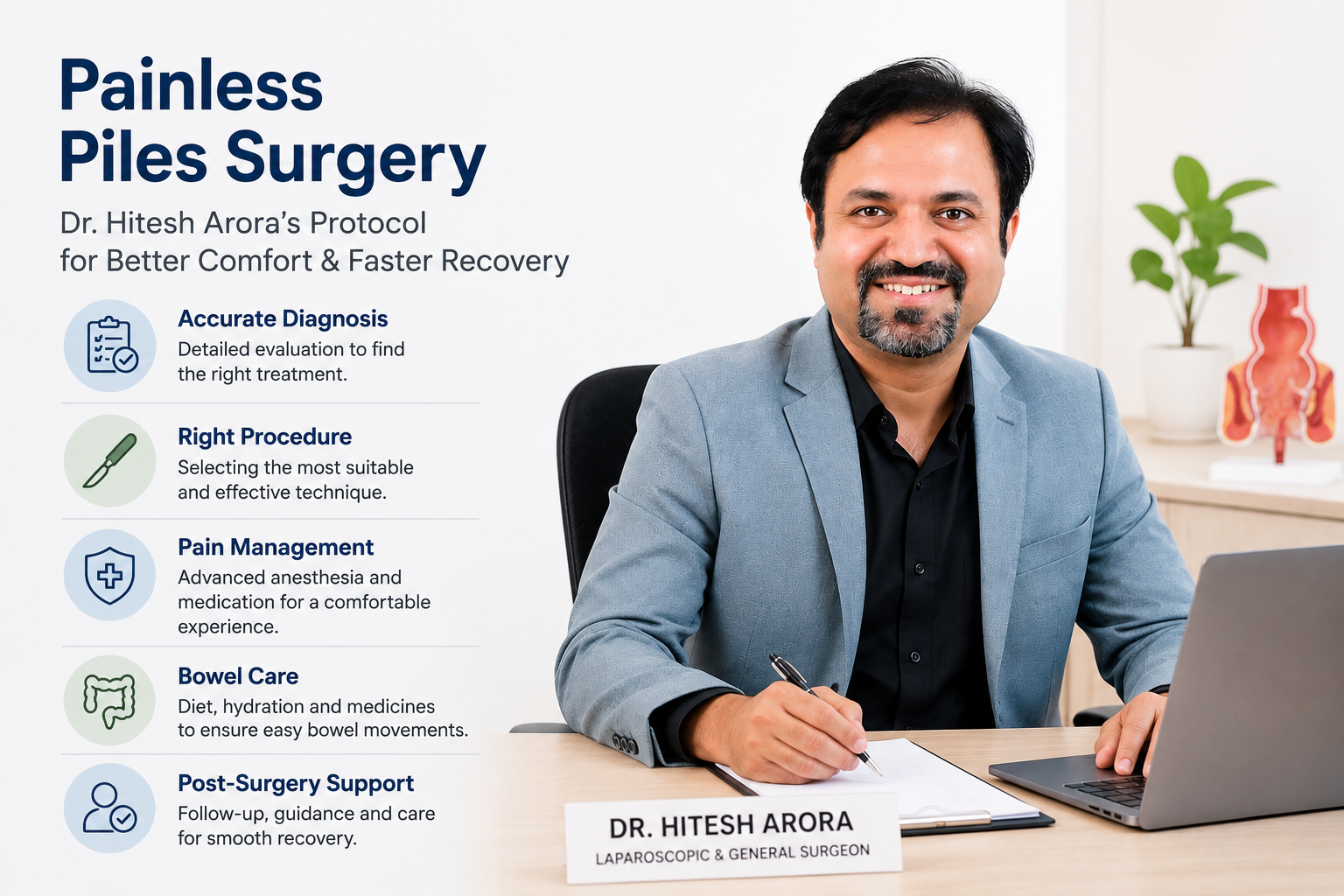
Piles, also known as hemorrhoids, can cause bleeding, discomfort, itching, swelling, and difficulty during bowel movements. Many patients delay seeing a surgeon because they worry that piles surgery will be extremely painful or require a long recovery. Modern treatment aims to reduce discomfort while treating the underlying problem appropriately. However, the term “painless piles surgery” should not be interpreted as a guarantee of absolutely no pain. The amount of discomfort depends on the type and grade of piles, procedure performed, individual pain tolerance, and recovery. Dr. Hitesh Arora’s painless piles surgery protocol focuses on proper diagnosis, selecting an appropriate treatment, pain management, and structured postoperative care.
Step 1: Confirm That the Problem Is Actually Piles
Rectal bleeding does not always mean piles.
Symptoms such as bleeding, pain, swelling, itching, or a lump near the anus may occur with different anorectal conditions. Therefore, treatment should begin with a proper evaluation rather than self-diagnosis.
The surgeon assesses symptoms, bowel habits, duration of the problem, previous treatment, and other relevant medical factors before deciding on treatment.
Step 2: Identify the Grade and Severity of Piles
Not every patient with piles requires surgery.
Treatment depends on factors such as:
- Grade and size of hemorrhoids
- Frequency of bleeding
- Prolapse during bowel movements
- Pain or discomfort
- Response to previous treatment
- Bowel habits
- Overall health
Mild cases may sometimes improve with dietary changes, medicines, better bowel habits, and constipation management.
Surgery or another procedure may be considered when symptoms remain troublesome, or the condition is more advanced.
Step 3: Choose the Appropriate Procedure
There is no single piles procedure that is ideal for every patient.
After examination, the surgeon determines which treatment is appropriate based on the type and severity of the condition.
The goal of a modern painless piles surgery protocol is not simply to choose a procedure because it is advertised as “painless.” The priority is to select an approach that appropriately treats the patient’s condition while minimizing unnecessary discomfort and supporting recovery.
Step 4: Plan Pain Management
Pain management begins before the patient leaves the hospital.
Depending on the procedure and individual requirements, the surgical team may use appropriate anesthesia and prescribe medicines to control postoperative discomfort.
Patients should take prescribed medicines according to instructions rather than waiting until discomfort becomes severe or taking additional medication without medical advice.
Step 5: Keep Bowel Movements Comfortable
Constipation and excessive straining can make recovery more uncomfortable.
After treatment, patients may receive advice regarding:
- Adequate fluids
- Fibre-containing foods when appropriate
- Fruits and vegetables
- Regular meals
- Stool-softening medicines when prescribed
- Avoiding excessive straining
The exact diet and medication plan should reflect the patient’s procedure and health condition.
Step 6: Follow Proper Post-Surgery Care
Recovery does not end when the procedure is completed.
Patients should follow instructions regarding hygiene, medicines, bowel movements, diet, activity, and follow-up appointments.
Depending on the procedure, gentle walking may be encouraged relatively early. Heavy lifting, strenuous exercise, and other activities may need temporary restriction.
Recovery time varies, so patients should follow individualized instructions instead of comparing themselves with someone else who underwent piles treatment.
Is Piles Surgery Completely Painless?
No responsible surgeon can guarantee that every patient will experience zero pain after surgery.
Modern techniques, appropriate anesthesia, careful procedure selection, and postoperative pain management may help reduce discomfort. However, some degree of soreness or discomfort can still occur.
Patients should therefore understand “painless piles surgery” as an approach focused on minimizing and managing discomfort, rather than promising a completely sensation-free recovery.
When Should You Consult a Surgeon for Piles?
Consider a surgical consultation if you experience:
- Repeated rectal bleeding
- Persistent anal swelling
- A lump that comes out during bowel movements
- Persistent pain or discomfort
- Difficulty passing stool
- Symptoms that continue despite treatment
- Recurrent piles problems
Heavy bleeding, severe worsening pain, fever, dizziness, or other concerning symptoms require prompt medical assessment.
Dr. Hitesh Arora’s Approach to Piles Treatment
At Arora Elite Care, Surat, Dr. Hitesh Arora, an Advanced Laparoscopic and General Surgeon, evaluates each patient’s symptoms and anorectal condition before recommending treatment.
His approach focuses on accurate diagnosis, appropriate procedure selection, patient comfort, postoperative pain management, bowel care, and recovery guidance. Rather than assuming that every patient requires the same piles procedure, treatment is planned according to the severity of the condition and individual medical needs.
Patients should also receive a clear explanation of why a particular procedure is recommended, what discomfort to expect, how recovery may progress, and what postoperative precautions they need to follow.
Conclusion
A modern painless piles surgery protocol involves much more than the surgical procedure itself. Proper diagnosis, assessment of piles severity, appropriate treatment selection, anesthesia, pain management, constipation prevention, and postoperative care all contribute to a more comfortable recovery.
If piles symptoms continue despite conservative treatment or repeatedly affect your daily life, an evaluation with Dr. Hitesh Arora can help determine whether a procedure is necessary and which treatment approach may be suitable.
FAQs
Is piles surgery completely painless?
No. Modern treatment can help minimize and manage discomfort, but completely pain-free recovery cannot be guaranteed.
Does every patient with piles need surgery?
No. Treatment depends on the grade, symptoms, severity, and response to conservative treatment.
How can discomfort after piles surgery be reduced?
Following prescribed pain medicines, maintaining comfortable bowel movements, avoiding straining, and following postoperative instructions can help.
Can piles return after treatment?
Recurrence can occur. Maintaining healthy bowel habits and addressing constipation may help reduce contributing factors.
When should I consult a piles surgeon?
Seek evaluation for persistent bleeding, prolapse, swelling, pain, recurrent symptoms, or symptoms that do not improve with initial treatment.