
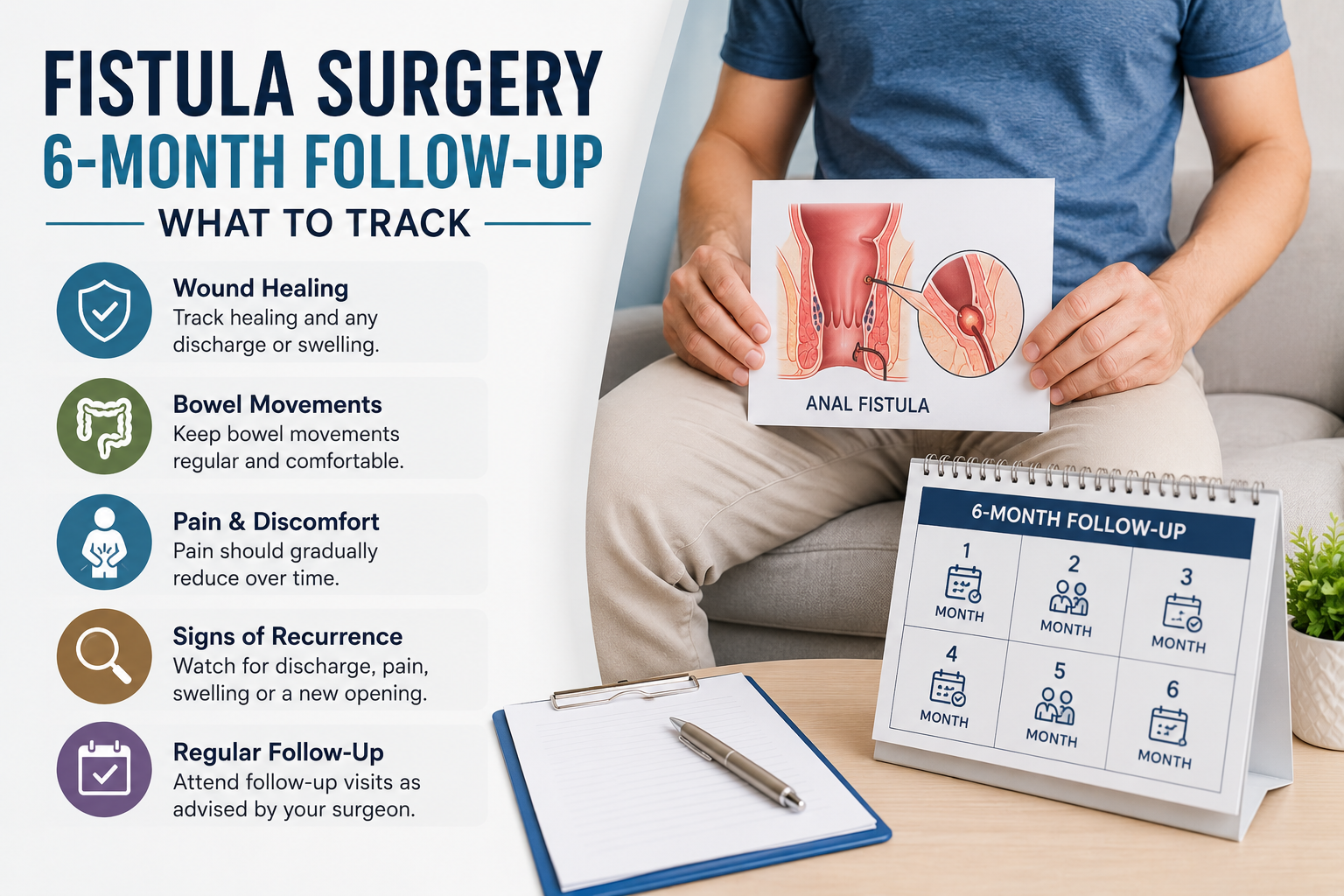
Recovery after anal fistula surgery does not end when the wound starts feeling better. Proper fistula surgery follow-up care helps your surgeon monitor wound healing, bowel habits, pain, discharge, and possible signs of recurrence.
Recovery varies according to the fistula’s location and complexity, the surgical procedure performed, existing health conditions, and individual healing. Therefore, patients should follow their surgeon’s specific instructions rather than compare their recovery with someone else’s.
Why Is Follow-Up Important After Fistula Surgery?
An anal fistula is an abnormal tract connecting the anal canal to the skin near the anus. Surgery aims to treat this tract while protecting surrounding structures as much as possible.
Regular follow-up allows your surgeon to check whether the surgical area is healing appropriately and whether symptoms are improving.
Follow-up is particularly important if you notice persistent discharge, increasing pain, swelling, fever, or symptoms similar to those you experienced before surgery.
What Should You Track During the First Few Weeks?
The early recovery period generally requires the closest attention.
1. Pain and Discomfort
Some discomfort after fistula surgery can occur. Over time, symptoms should generally become easier to manage as healing progresses.
Contact your surgeon if pain suddenly becomes severe, progressively worsens, or appears with fever or increasing swelling.
2. Wound Healing
Follow the wound-care instructions provided by your surgical team.
Depending on your procedure, your surgeon may advise specific cleaning, dressing, or hygiene measures. Avoid applying unprescribed creams, powders, or home remedies to the surgical area.
3. Discharge or Bleeding
A small amount of discharge or spotting may occur during recovery depending on the procedure and wound.
However, increasing discharge, pus-like drainage, foul smell, or significant bleeding requires medical assessment.
Track Your Bowel Movements
Comfortable bowel movements are an important part of fistula surgery follow-up care.
Constipation and excessive straining can make recovery more uncomfortable. Your doctor may recommend adequate hydration, suitable fibre intake, or stool-softening medicines when required.
Track changes such as:
- Persistent constipation
- Frequent loose stools
- Increasing pain during bowel movements
- New bleeding
- Difficulty passing stool
Do not start laxatives or other bowel medicines without appropriate advice if you have recently undergone surgery.
What Should You Monitor During Months 1–3?
As the wound continues to heal, patients may gradually return to normal activities according to their surgeon’s instructions.
During this period, monitor whether:
- Pain continues to decrease
- Discharge is reducing
- The wound is healing
- Bowel movements are comfortable
- Swelling has disappeared
- Normal activities are becoming easier
Follow-up appointments remain important even when you feel better, especially after treatment of a complex fistula.
Your surgeon may assess the healing area and determine whether additional care is required.
What Should You Track From Months 3–6?
By this stage, the focus increasingly shifts toward long-term healing and watching for recurrence.
Pay attention to any return of symptoms such as:
- Recurrent swelling near the anus
- Persistent or new discharge
- Repeated pain in the same area
- Formation of a new opening
- Pus or fluid drainage
- Fever associated with local swelling
These symptoms do not automatically mean the fistula has returned, but they should not be ignored.
Can an Anal Fistula Return After Surgery?
Recurrence is possible after fistula treatment.
The risk varies according to factors such as fistula complexity, branching tracts, previous treatment, underlying disease, and the procedure performed.
This is one reason why six-month follow-up can be useful. Your surgeon can assess symptoms and healing rather than relying only on how the area looks or feels to you.
When Should You Contact Your Surgeon Immediately?
Do not wait until a scheduled follow-up appointment if you develop concerning symptoms.
Seek medical advice for:
- High or persistent fever
- Rapidly increasing pain
- Significant bleeding
- Increasing redness or swelling
- Pus or foul-smelling discharge
- Difficulty passing urine or stool
- New painful swelling near the anus
- Symptoms that suddenly worsen after initially improving
Your surgeon can determine whether these symptoms represent normal postoperative changes or require treatment.
How Can You Support Recovery?
Follow the postoperative plan provided by your surgeon. General measures may include maintaining appropriate hygiene, drinking adequate fluids when medically allowed, avoiding constipation, taking prescribed medicines correctly, and gradually returning to physical activity.
Do not stop medicines early or start supplements and home remedies without discussing them with your healthcare team.
Diet and activity recommendations can vary according to the procedure and your individual health.
Fistula Follow-Up With Dr. Hitesh Arora
At Arora Elite Care, Surat, Dr. Hitesh Arora, an Advanced Laparoscopic and General Surgeon, provides evaluation and follow-up care for patients with anal fistula and other anorectal conditions.
Follow-up after fistula surgery focuses on wound healing, pain, bowel movements, discharge, infection warning signs, and possible recurrence. The frequency and duration of appointments depend on the type of fistula, procedure performed, and individual recovery.
Patients should attend recommended follow-ups even when recovery appears satisfactory, particularly after treatment of a complicated or recurrent fistula.
Conclusion
Good fistula surgery follow-up care extends beyond the first few days after an operation. Monitoring your wound, pain, discharge, bowel movements, swelling, and recurrence symptoms over the following months can help identify problems that require medical attention.
Keep your scheduled follow-up appointments and contact your surgeon sooner if symptoms worsen or return. Your surgeon can determine whether healing is progressing normally and whether additional treatment is necessary.
FAQs
How long should I follow up after fistula surgery?
The schedule varies according to the procedure and complexity of the fistula. Your surgeon may recommend follow-up over several weeks or months.
Is discharge normal after fistula surgery?
Some discharge may occur during healing, depending on the procedure. Increasing, foul-smelling, or pus-like discharge should be assessed.
Can fistula return after surgery?
Yes, recurrence is possible, particularly with complex fistulas. New swelling, pain, discharge, or an opening near the anus should be evaluated.
How can I avoid constipation after surgery?
Adequate fluids, appropriate fibre, and prescribed stool-softening medication may help when recommended by your surgeon.
Should I attend follow-up if I feel completely fine?
Yes, attend appointments recommended by your surgeon so healing can be assessed properly.