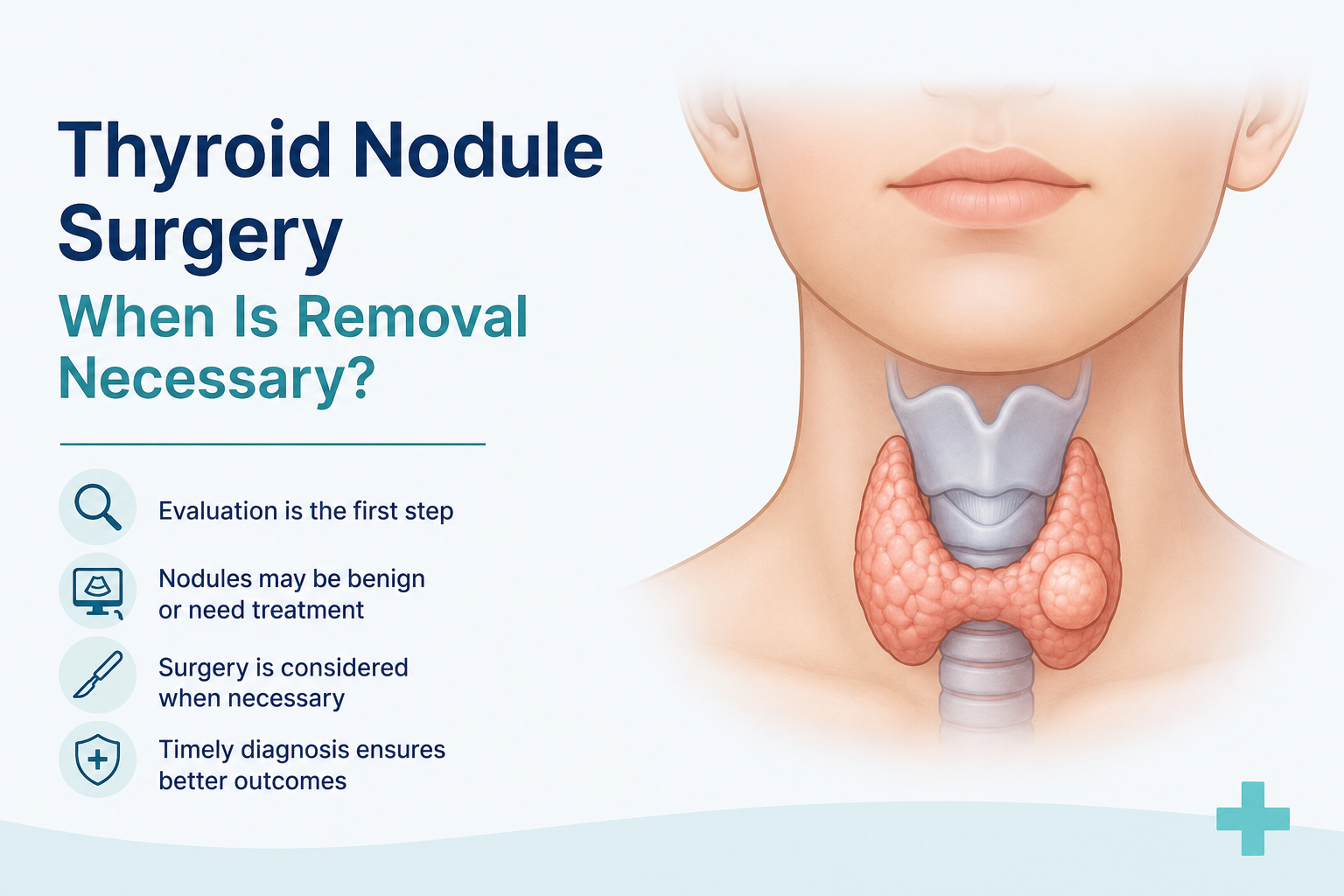
Thyroid surgery may be necessary when a thyroid nodule is cancerous or suspicious for cancer, causes swallowing or breathing difficulties, grows significantly, or produces excess thyroid hormone in selected cases. Surgery may remove one thyroid lobe or the entire thyroid gland, depending on the diagnosis. However, most benign thyroid nodules do not require surgery, and doctors can monitor them with appropriate follow-up. For patients researching thyroid surgery Surat, the first step is a proper medical evaluation to determine whether observation, further investigation, or surgical removal is appropriate.
Finding a thyroid nodule can feel worrying, but a thyroid nodule does not automatically mean you need surgery.
Many nodules are benign and cause no symptoms. Others may require additional testing or treatment depending on their size, ultrasound appearance, biopsy findings, and effects on nearby structures.
What Is a Thyroid Nodule?
A thyroid nodule is a lump or abnormal growth within the thyroid gland, which sits at the front of the neck.
The thyroid produces hormones that help regulate metabolism, energy use, and several important body functions.
Thyroid nodules may contain solid tissue, fluid, or a combination of both.
Most thyroid nodules are benign, and many do not cause noticeable symptoms.
However, some nodules may grow, produce excess thyroid hormones, or raise concerns about cancer.
Doctors evaluate nodules using clinical examination, thyroid function tests, ultrasound, and, when appropriate, fine-needle aspiration biopsy.
Learn more about the thyroid gland and its functions.
Does Every Thyroid Nodule Need Surgery?
No. Most thyroid nodules do not require surgery, particularly when testing suggests a benign condition and the nodule causes no significant symptoms.
Doctors may recommend monitoring when:
- Ultrasound findings suggest a low-risk nodule.
- Biopsy results support a benign diagnosis.
- The nodule does not cause swallowing or breathing problems.
- Thyroid hormone levels remain appropriately managed.
- The nodule shows no concerning changes during follow-up.
Monitoring may include repeat ultrasound, clinical examination, and additional tests when necessary.
Surgery becomes more relevant when the nodule causes symptoms, raises cancer concerns, or meets other clinical indications.
When Is Thyroid Nodule Removal Necessary?
Doctors may recommend thyroid nodule removal when tests suggest cancer, the nodule causes pressure symptoms, or other clinical findings support surgery.
1. Cancer or Suspicion of Cancer
If biopsy or imaging findings suggest thyroid cancer, the specialist team may recommend surgery.
The extent of surgery depends on the cancer type, size, spread, and individual clinical circumstances.
2. Large or Growing Thyroid Nodules
A nodule that continues to enlarge may require additional evaluation.
Size alone does not automatically determine the need for surgery.
Doctors also consider ultrasound features, biopsy results, symptoms, and growth patterns.
3. Difficulty Swallowing or Breathing
An enlarged thyroid gland or large nodule can press on nearby structures.
Symptoms may include:
- Difficulty swallowing
- Persistent neck pressure
- Breathing difficulty
- Visible neck swelling
- Discomfort when lying down
Significant compression can make surgery an appropriate treatment option.
4. Overactive Thyroid Nodules
Some nodules produce excessive thyroid hormones.
Treatment options may include radioactive iodine, medication, or surgery, depending on the diagnosis and patient-specific factors.
5. Uncertain Biopsy Results
Sometimes fine-needle aspiration does not clearly establish whether a nodule is benign or malignant.
The specialist may recommend repeat testing, molecular testing where available, observation, or diagnostic surgery depending on the overall risk.
Which Tests Are Needed Before Thyroid Surgery?
Before thyroid surgery, doctors evaluate thyroid function, nodule characteristics, and the risk of malignancy to plan appropriate treatment.
| Investigation | Purpose |
|---|---|
| Thyroid ultrasound | Evaluates nodule size, structure, and suspicious features |
| TSH blood test | Assesses thyroid function |
| Additional thyroid blood tests | Helps evaluate hormonal abnormalities when indicated |
| Fine-needle aspiration biopsy | Examines cells from nodules that meet biopsy criteria |
| Thyroid scan | May help evaluate an overactive nodule in selected patients |
| Voice or vocal cord assessment | May be necessary before surgery, particularly when voice symptoms or other risk factors exist |
Not every patient needs every test.
Your specialist will recommend investigations based on your symptoms, examination and previous results.
How Is Thyroid Surgery Performed?
During thyroid surgery, the surgeon uses general anaesthesia, makes an incision in the lower neck, and removes the affected thyroid tissue according to the treatment plan.
The procedure generally involves the following steps.
Step 1: Surgical Planning
The surgeon reviews ultrasound findings, biopsy results, thyroid function, and the patient’s medical history.
Step 2: Anaesthesia
The anaesthesia team administers general anaesthesia so the patient remains unconscious during the procedure.
Step 3: Thyroid Gland Removal
The surgeon makes an incision in the lower neck and carefully separates the thyroid tissue from nearby structures.
The surgeon takes precautions to protect the nerves involved in voice function and the parathyroid glands, which help regulate calcium levels.
Step 4: Wound Closure
After removing the planned thyroid tissue, the surgeon closes the incision and applies an appropriate dressing.
Step 5: Recovery and Monitoring
The healthcare team monitors breathing, bleeding, voice symptoms, and other postoperative concerns.
After some procedures, the team also checks calcium levels.
Thyroid Lobectomy vs Total Thyroidectomy
The main difference is how much of the thyroid gland the surgeon removes.
| Procedure | What the Surgeon Removes | Common Considerations |
|---|---|---|
| Thyroid lobectomy | One thyroid lobe, generally with the isthmus | Selected nodules or thyroid cancers confined to one side |
| Total thyroidectomy | The entire thyroid gland | Certain cancers, bilateral thyroid disease, or other indications |
| Observation | No thyroid tissue | Many benign nodules without significant symptoms |
The specialist selects the procedure based on the diagnosis, symptoms, thyroid function and individual risks.
What Are the Risks of Thyroid Surgery?
Thyroid surgery is an established treatment, but it carries risks that patients should understand before proceeding.
Potential complications include:
- Bleeding or neck haematoma
- Wound infection
- Temporary or persistent voice changes
- Injury to nerves involved in vocal cord movement
- Low calcium levels, particularly after total thyroidectomy
- Hypothyroidism requiring medication
- Anaesthesia-related complications
- Visible scarring
A neck haematoma can occasionally threaten breathing and requires immediate medical attention.
Your surgeon should explain the risks relevant to your planned procedure.
Can Thyroid Surgery Affect Your Voice?
Yes. Thyroid surgery can temporarily or, less commonly, permanently affect the voice because important nerves run close to the thyroid gland.
Some patients notice temporary hoarseness or voice fatigue after surgery.
These symptoms may result from irritation related to the breathing tube, tissue swelling, or effects on the nerves that control the vocal cords.
Persistent voice changes require medical assessment.
Tell your surgeon if you already have hoarseness, voice weakness, or difficulty speaking before surgery.
Will Thyroid Surgery Leave a Scar?
Yes. Conventional thyroid surgery usually leaves a scar on the lower front of the neck.
The surgeon generally places the incision along a natural skin crease when appropriate.
Scar appearance depends on:
- Incision length
- Skin characteristics
- Wound healing
- Surgical technique
- Individual tendency towards raised scars
- Postoperative complications
Scars often become less noticeable over time, but no surgeon can guarantee scar-free healing.
Follow your surgeon’s wound-care instructions and discuss scar management after the incision has healed.
How Long Does Recovery Take After Thyroid Surgery?
Many patients resume light daily activities within one to two weeks after uncomplicated thyroid surgery, although recovery varies according to the procedure and individual health.
During the first few days, patients may experience:
- Mild neck discomfort
- Temporary swallowing discomfort
- Soreness around the incision
- Neck stiffness
- Fatigue
Your surgeon will explain when you can resume work, exercise, lifting, and other activities.
Follow-up appointments help monitor wound healing, pathology results, and thyroid hormone function.
For general postoperative guidance, read wound care after surgery.
Thyroid Nodule Removed: What Happens Next?
After thyroid nodule removal, doctors review the pathology results, monitor recovery, and determine whether thyroid hormone treatment or additional follow-up is necessary.
1. Histopathology Examination
A pathologist examines the removed thyroid tissue to confirm the diagnosis.
The report helps determine whether the nodule was benign or malignant.
2. Thyroid Hormone Monitoring
Blood tests help doctors assess thyroid function after surgery.
Patients who retain one thyroid lobe may continue producing enough thyroid hormone, although some require medication.
3. Thyroid Hormone Replacement
Patients who undergo total thyroidectomy generally need lifelong levothyroxine.
The treating doctor adjusts the dose according to blood tests and individual needs.
4. Calcium Monitoring
After total thyroidectomy, the medical team may monitor calcium levels because surgery can temporarily or permanently affect parathyroid function.
Symptoms such as tingling around the mouth, tingling in the fingers, or muscle cramps should be reported promptly.
5. Voice and Wound Follow-Up
The surgeon checks wound healing and asks about voice changes or swallowing difficulties.
Persistent symptoms may require further assessment.
6. Additional Treatment if Cancer Is Found
If histopathology confirms thyroid cancer, the specialist team reviews the cancer type and risk features.
Some patients require further surgery, radioactive iodine, or structured surveillance.
Others may need no additional immediate treatment beyond follow-up.
Will You Need Thyroid Medicine After Surgery?
Patients who undergo total thyroidectomy generally need lifelong thyroid hormone replacement. Patients who undergo thyroid lobectomy may or may not need medication.
After total thyroid removal, the body can no longer produce thyroid hormones.
Doctors prescribe levothyroxine to replace the missing hormone.
After lobectomy, the remaining thyroid tissue may produce sufficient hormone.
Regular thyroid function tests help determine whether treatment is necessary.
Never start, stop, or change thyroid medication without medical advice.
When Should You Contact Your Doctor After Thyroid Surgery?
Contact your surgical team if you experience concerning voice changes, fever, wound problems, or symptoms of low calcium.
Seek immediate emergency care for:
- Breathing difficulty
- Rapidly increasing neck swelling
- Significant bleeding
- Severe difficulty swallowing
Contact your doctor promptly for persistent hoarseness, fever, increasing wound redness, discharge, tingling around the mouth, or muscle cramps.
Follow the specific emergency and discharge instructions provided by your treating hospital.
When Should You Consult a Thyroid Surgeon in Surat?
Consult an appropriately experienced thyroid surgeon when your investigations suggest that a thyroid nodule may require removal.
Medical assessment is particularly important when you notice:
- A new or enlarging neck lump
- Persistent neck pressure
- Difficulty swallowing
- Voice changes
- Breathing difficulties
- Suspicious ultrasound or biopsy results
Initial evaluation may involve a physician or endocrinologist.
If surgery becomes necessary, ask about the surgeon’s specific experience with thyroid procedures.
Bring previous ultrasound reports, thyroid blood tests, biopsy results, and relevant medical records to your appointment.
Thyroid Surgery Consultation at Arora Elite Care, Surat
Patients researching thyroid surgery Surat can seek information about thyroid nodule evaluation and available surgical services.
Dr. Hitesh Arora is an Advanced Laparoscopic and General Surgeon associated with Arora Elite Care in Surat.
Before proceeding with thyroid surgery, patients should confirm the treating surgeon’s specific thyroid surgery training, procedural experience, and the hospital’s available facilities.
A consultation should review the nodule’s diagnosis, ultrasound and biopsy findings, symptoms, thyroid function and appropriate treatment options.
For appointment enquiries, contact Arora Elite Care.
Conclusion
A thyroid nodule does not automatically mean you need surgery.
Doctors can monitor many benign nodules, while others may require removal because of suspicious findings, confirmed cancer, pressure symptoms or other clinical concerns.
If you are considering thyroid surgery Surat, start with an accurate diagnosis and an individualised treatment plan.
Understanding the procedure, possible voice changes, scar formation, recovery, and long-term hormone requirements can help you make an informed decision.
Frequently Asked Questions
1. Does Every Thyroid Nodule Need Surgery?
No. Most thyroid nodules are benign, and many do not require surgery. Doctors may recommend monitoring with ultrasound and clinical follow-up. Surgery becomes more relevant when the nodule causes symptoms, raises cancer concerns, or meets other treatment criteria.
2. What Size Thyroid Nodule Requires Removal?
There is no single size at which every thyroid nodule requires surgery. Doctors consider ultrasound features, biopsy findings, growth, symptoms, and other risk factors. A large nodule may need removal if it causes pressure symptoms or raises clinical concerns.
3. Is Thyroid Surgery Painful?
Surgeons generally perform thyroid surgery under general anaesthesia, so patients do not feel pain during the operation. Mild neck soreness, swallowing discomfort, and stiffness may occur afterwards. The healthcare team provides appropriate pain management during recovery.
4. Can Thyroid Surgery Change My Voice?
Yes. Temporary hoarseness or voice fatigue can occur after thyroid surgery. Less commonly, injury to nerves controlling the vocal cords can cause persistent voice changes. Inform your surgeon about any existing voice problems and report ongoing hoarseness after surgery.
5. Will I Need Lifelong Thyroid Medicine After Surgery?
Patients who undergo total thyroidectomy generally require lifelong thyroid hormone replacement. After thyroid lobectomy, some patients produce enough hormone with the remaining thyroid tissue, while others need medication. Blood tests help determine the appropriate treatment.
6. How Long Does Recovery Take After Thyroid Surgery?
Many patients return to light daily activities within one to two weeks after uncomplicated thyroid surgery. Full recovery varies according to the procedure, medical conditions, and individual healing. Follow your surgeon’s instructions about work, exercise, wound care, and follow-up appointments.