A hiatal hernia occurs when part of the stomach moves upward through the diaphragm into the chest. Some people have few or no symptoms, while others experience acid reflux, heartburn, regurgitation, bloating, or discomfort after meals. A hiatal hernia diet foods to avoid plan mainly focuses on reducing foods and eating habits that trigger reflux. Diet may help control symptoms, but it does not repair the hernia itself. Patients with persistent or severe symptoms need medical evaluation to determine whether medicines or further treatment may be necessary.
What Is a Hiatal Hernia?
The diaphragm separates the chest from the abdomen. The esophagus passes through a small opening in the diaphragm before connecting to the stomach.
A hiatal hernia develops when part of the stomach moves through this opening into the chest.
Common symptoms may include:
- Heartburn
- Acid reflux
- Regurgitation
- Upper abdominal or chest discomfort
- Bloating after meals
- Difficulty swallowing in some patients
- Feeling unusually full after eating
Because these symptoms can occur with other digestive conditions, persistent symptoms require proper diagnosis.
What Foods Can You Eat With a Hiatal Hernia?
There is no single diet that works for everyone. The goal is to choose nutritious foods that are less likely to trigger your reflux symptoms.
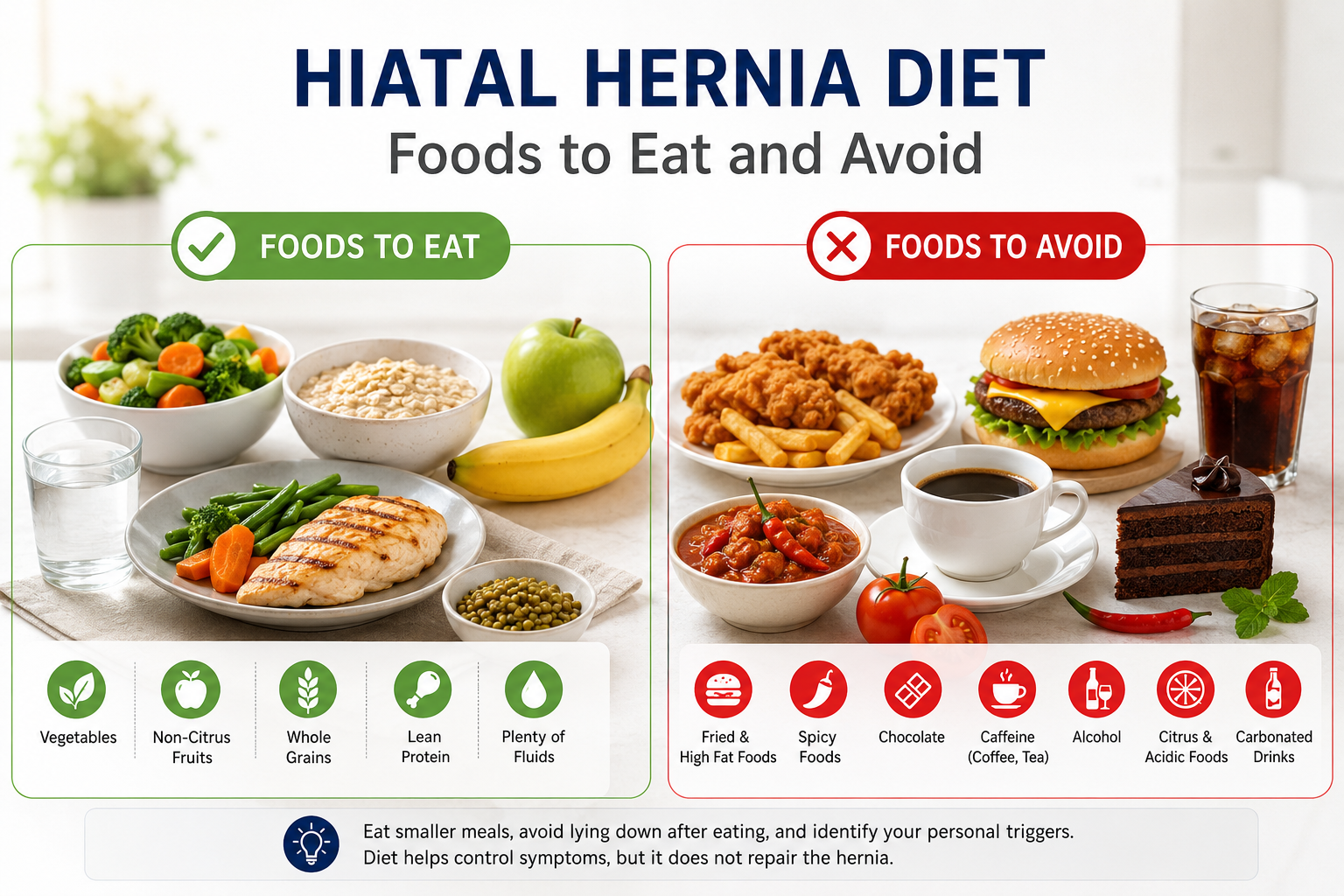
1. Vegetables
Vegetables are generally good choices, particularly when you prepare them without excessive oil or spicy sauces.
Options may include carrots, beans, spinach, bottle gourd, pumpkin, cucumber, and other vegetables you tolerate comfortably.
2. Non-Citrus Fruits
Some people find less-acidic fruits easier to tolerate. Options can include:
- Banana
- Melon
- Pear
- Apple
Your personal tolerance matters because food triggers differ between patients.
3. Whole Grains
Oats, whole-grain roti, brown rice, and other whole grains may form part of a balanced diet.
4. Lean Protein
Choose protein sources that do not require heavy frying. Examples include dal, pulses, low-fat dairy when tolerated, eggs, fish, and lean chicken.
Cooking methods such as steaming, boiling, grilling, or baking may be preferable to deep frying.
Hiatal Hernia Diet: Foods to Avoid or Limit
When considering hiatal hernia diet foods to avoid, focus on foods that personally worsen heartburn or reflux rather than unnecessarily eliminating entire food groups.
Common triggers can include:
- Fried and high-fat foods
- Very spicy meals
- Chocolate
- Coffee and other caffeinated drinks
- Alcohol
- Peppermint
- Tomato-based foods
- Citrus fruits or juices
- Carbonated drinks
Not every item will trigger symptoms in every patient. Keeping a simple food-and-symptom diary can help identify your individual triggers.
How Should You Eat With a Hiatal Hernia?
How and when you eat can matter as much as what you eat.
Try eating smaller meals rather than very large portions. Large meals can increase stomach fullness and may worsen reflux in some people.
Avoid lying down immediately after eating. Allowing approximately 2–3 hours between your last meal and lying down or going to bed may help reduce nighttime reflux.
Eating slowly and avoiding overeating can also help.
If nighttime reflux remains troublesome, your doctor may recommend additional measures based on your symptoms.
Can Diet Cure a Hiatal Hernia?
No. Diet cannot physically repair a hiatal hernia. Dietary and lifestyle changes primarily aim to reduce associated symptoms such as heartburn and acid reflux. Some patients manage symptoms successfully with lifestyle changes and medicines. Others may require further evaluation if symptoms persist despite appropriate treatment. This distinction is important because feeling better after changing your diet does not necessarily mean the hernia has disappeared.
When Is Diet Not Enough?
Consult a doctor if symptoms occur frequently, interfere with daily activities, or continue despite dietary changes and prescribed medicines.
Seek prompt medical attention for concerning symptoms such as persistent difficulty swallowing, repeated vomiting, gastrointestinal bleeding, unexplained weight loss, severe or worsening chest or abdominal pain, or significant breathing difficulty.
A doctor may recommend investigations to confirm the diagnosis and understand the severity of the condition.
Does a Hiatal Hernia Require Surgery?
Most people with a hiatal hernia do not automatically require surgery.
Doctors generally consider the severity of symptoms, type and size of the hernia, response to medical treatment, and presence of complications before discussing an operation.
When surgery becomes appropriate, the surgeon may use a minimally invasive approach in suitable patients to reposition the stomach and repair the diaphragmatic opening. The exact procedure depends on the patient’s condition.
Hiatal Hernia Consultation in Surat
Patients with persistent hiatal hernia or reflux-related symptoms can consult Dr. Hitesh Arora at Arora Elite Care for surgical evaluation. The consultation can include a review of symptoms, previous investigations, response to medicines, and overall health to determine whether continued conservative management or surgical treatment requires consideration.
For patients exploring hernia treatment, an individualized evaluation is more useful than relying only on a generic diet because diet can control certain symptoms but cannot correct the anatomical hernia.
Conclusion
A practical hiatal hernia diet foods to avoid approach focuses on identifying reflux triggers while maintaining balanced nutrition. Fried and high-fat meals, very spicy foods, chocolate, caffeine, alcohol, and other individual triggers may worsen symptoms, while vegetables, less-acidic fruits, whole grains, and lean proteins may be easier to tolerate.
Eat smaller meals, avoid lying down soon after eating, and track foods that worsen your symptoms. If dietary changes do not provide adequate relief, seek medical evaluation to determine whether medicines, further investigations, or surgical treatment may be appropriate.
FAQs
What foods should I avoid with a hiatal hernia?
Common reflux triggers include fried or fatty foods, very spicy meals, chocolate, caffeine, alcohol, and certain acidic foods. Individual triggers vary.
Can a hiatal hernia heal with diet?
No. Diet can help manage reflux symptoms but cannot physically repair a hiatal hernia.
Is banana good for a hiatal hernia?
Bananas are less acidic than many fruits and may be well tolerated by some people. Your individual response matters.
Should I eat smaller meals with a hiatal hernia?
Smaller meals may help reduce stomach fullness and reflux symptoms compared with very large meals.
When should I see a surgeon?
Consider surgical evaluation when symptoms remain significant despite appropriate conservative treatment or when your doctor identifies complications or another indication for surgery.