
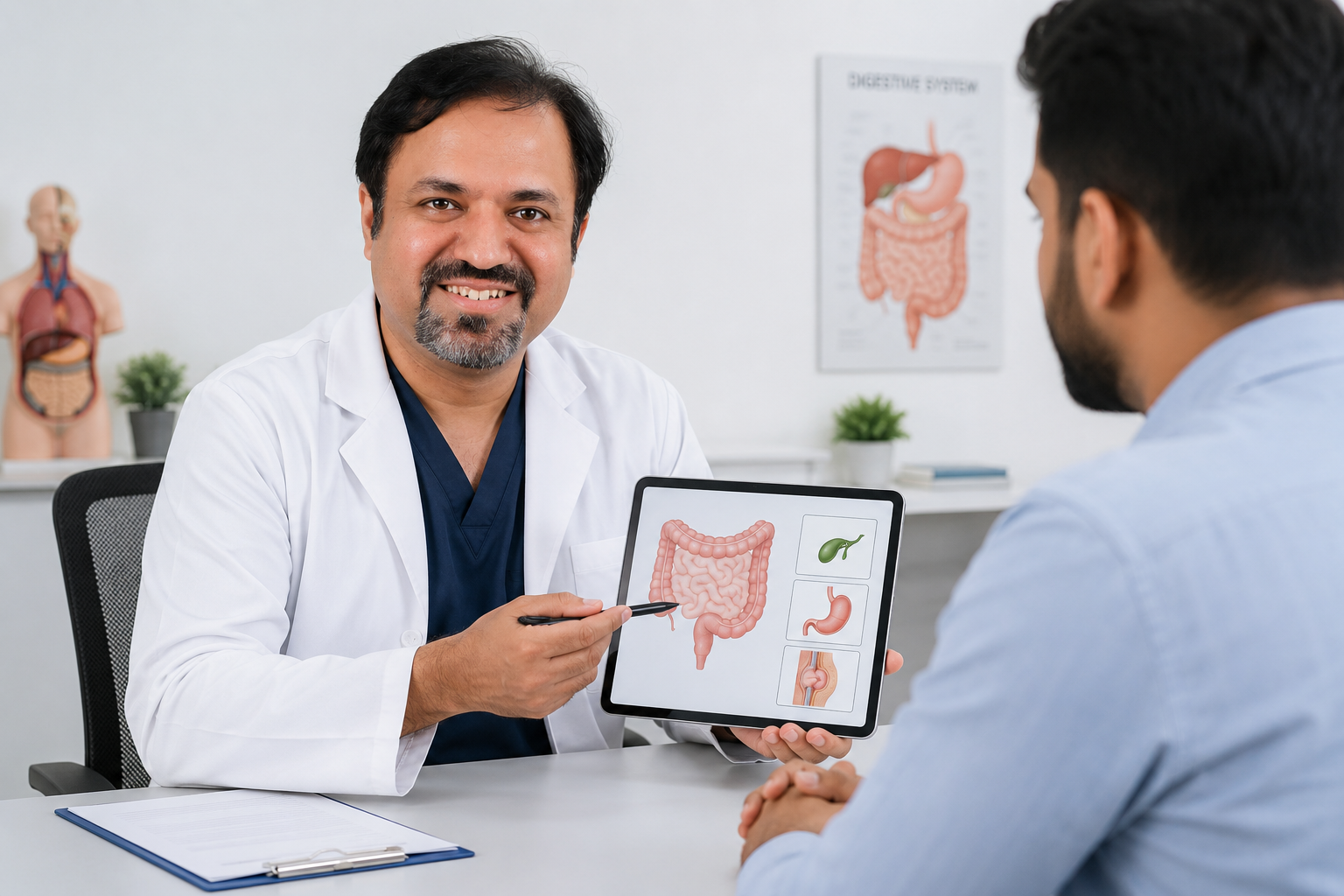
A general surgeon diagnoses and treats conditions that may require surgical care, including hernias, gallbladder disease, appendicitis, piles, fissures, fistulas, and several abdominal and soft-tissue conditions. Their role does not begin and end in the operating room. General surgeons also evaluate symptoms, decide whether surgery is necessary, prepare patients for procedures, and guide recovery afterward. Understanding what does a general surgeon do can help patients know when to seek a surgical consultation and what to expect during treatment.
What Does a General Surgeon Do?
A general surgeon evaluates medical conditions that may require an operation. The surgeon reviews symptoms, performs a clinical examination, studies diagnostic reports, and determines whether conservative treatment or surgery offers the appropriate approach.
Their responsibilities can include:
- Diagnosing surgical conditions
- Reviewing blood tests and imaging
- Deciding whether surgery is necessary
- Discussing treatment options
- Performing surgical procedures
- Managing care before surgery
- Monitoring recovery after surgery
- Identifying and managing surgical complications
Importantly, consulting a general surgeon does not automatically mean you need an operation. A surgeon may recommend observation, medicines, lifestyle changes, or further investigations when surgery is unnecessary.
What Conditions Does a General Surgeon Treat?
General surgery covers a broad range of conditions. The exact scope varies according to the surgeon’s training and experience.
Hernias
A hernia occurs when tissue pushes through a weak area in the abdominal wall. General surgeons commonly evaluate inguinal, umbilical, incisional, and other abdominal-wall hernias.
Patients may notice a lump, heaviness, discomfort, or pain that increases during lifting, coughing, or straining.
Gallbladder Conditions
Gallstones can sometimes cause repeated upper abdominal pain, nausea, inflammation, or other complications.
When symptoms or complications make surgery appropriate, a general or laparoscopic surgeon may recommend gallbladder removal.
Appendicitis
Appendicitis causes inflammation of the appendix and often requires urgent medical assessment. A surgeon evaluates the patient’s symptoms, examination findings, and investigations before determining treatment.
Piles, Fissure and Fistula
General surgeons with relevant anorectal experience may also manage conditions such as:
- Piles or hemorrhoids
- Anal fissure
- fistula
- Anal abscess
Because these conditions can cause similar symptoms, including pain or rectal bleeding, accurate diagnosis should come before treatment.
What Surgeries Does a General Surgeon Perform?
The procedures a general surgeon performs depend on their qualifications, training, hospital facilities, and areas of expertise.
Common procedures may include hernia repair, gallbladder surgery, appendix surgery, and selected anorectal procedures.
Modern general surgery also includes minimally invasive techniques. In suitable cases, surgeons can perform operations using a laparoscopic approach, which uses a camera and specialized instruments through small incisions.
However, laparoscopic surgery is not automatically the right choice for every patient. The surgeon considers the diagnosis, disease severity, previous operations, overall health, and other clinical factors before selecting an approach.
What Is the Difference Between a General Surgeon and a Laparoscopic Surgeon?
A general surgeon describes the doctor’s broad surgical specialty, while laparoscopic surgery describes a minimally invasive surgical technique.
A general surgeon who has additional training and experience in minimally invasive procedures may perform laparoscopic operations.
For example, surgeons can use laparoscopic techniques for selected hernia, gallbladder, appendix, and abdominal procedures.
The best technique depends on the individual condition rather than simply choosing the newest surgical method.
When Should You See a General Surgeon?
You may need a general surgical consultation when another doctor identifies a condition that could require surgery or when you experience persistent symptoms such as:
- A groin or abdominal lump
- Recurrent gallstone-related symptoms
- Persistent abdominal pain
- Suspected appendicitis
- Rectal bleeding
- Persistent anal pain
- Recurrent anal swelling or discharge
- A wound, lump, or surgical condition requiring assessment
Sudden severe abdominal pain, persistent vomiting, heavy bleeding, high fever, or rapidly worsening symptoms may require urgent medical attention.
What Happens During a General Surgery Consultation?
During your consultation, the surgeon first discusses your symptoms, their duration, previous treatments, medications, and medical history.
The surgeon may then perform a physical examination and review existing tests such as ultrasound, CT scans, MRI, blood investigations, or other relevant reports.
If you need surgery, the surgeon should explain the procedure, expected benefits, possible risks, alternatives, anesthesia, hospital stay, and recovery process before you make a treatment decision.
What Does Recovery After General Surgery Involve?
Recovery differs according to the operation and the patient’s health.
Postoperative care may include pain management, wound care, diet instructions, physical activity guidance, medicines, and scheduled follow-up appointments.
Patients should follow their surgeon’s advice about returning to work, driving, exercise, and heavy lifting rather than using another patient’s recovery timeline as a guide.
General and Laparoscopic Surgical Care With Dr. Hitesh Arora
Patients looking for a general surgeon in Surat can consult Dr. Hitesh Arora at Arora Elite Care, Surat. Dr. Hitesh Arora is an Advanced Laparoscopic and General Surgeon with 15+ years of experience, an M.S. Gold Medalist, and holds an FMAS (Fellowship in Minimal Access Surgery). His profile also reports experience across 10,000+ surgical procedures.
His practice includes evaluation of conditions such as hernia, gallbladder disease, appendicitis, and common anorectal problems. Rather than recommending surgery solely based on symptoms, the consultation focuses on establishing the diagnosis and determining an appropriate treatment approach for the individual patient.
Conclusion
So, what does a general surgeon do? A general surgeon diagnoses surgical conditions, determines whether an operation is necessary, performs appropriate procedures, and manages care before and after surgery.
Their work can cover hernias, gallbladder disease, appendicitis, anorectal conditions, and several other surgical problems. If persistent symptoms suggest a surgical condition, an evaluation with an appropriately experienced surgeon can help clarify the diagnosis and next steps.
FAQs
Does seeing a general surgeon mean I need surgery?
No. A general surgeon first evaluates your condition and may recommend observation, medicines, further tests, or surgery depending on the diagnosis.
Can a general surgeon perform laparoscopic surgery?
Yes, general surgeons with appropriate training and experience in minimally invasive surgery can perform laparoscopic procedures.
Does a general surgeon treat hernias?
Yes. Hernia diagnosis and surgical repair commonly fall within general surgery.
Can a general surgeon treat piles and fistulas?
General surgeons with relevant anorectal experience may evaluate and treat piles, fissures, fistulas, and related conditions.
What should I bring to a surgical consultation?
Bring relevant medical reports, imaging, blood tests, previous treatment records, and a list of medicines you currently take.
1 Comment
Anxiety Before Surgery Tips: How to Stay Calm
September 9, 2026[…] If you are unsure about the role of a surgeon before, during, and after an operation, you can also read What Does a General Surgeon Do?. […]