
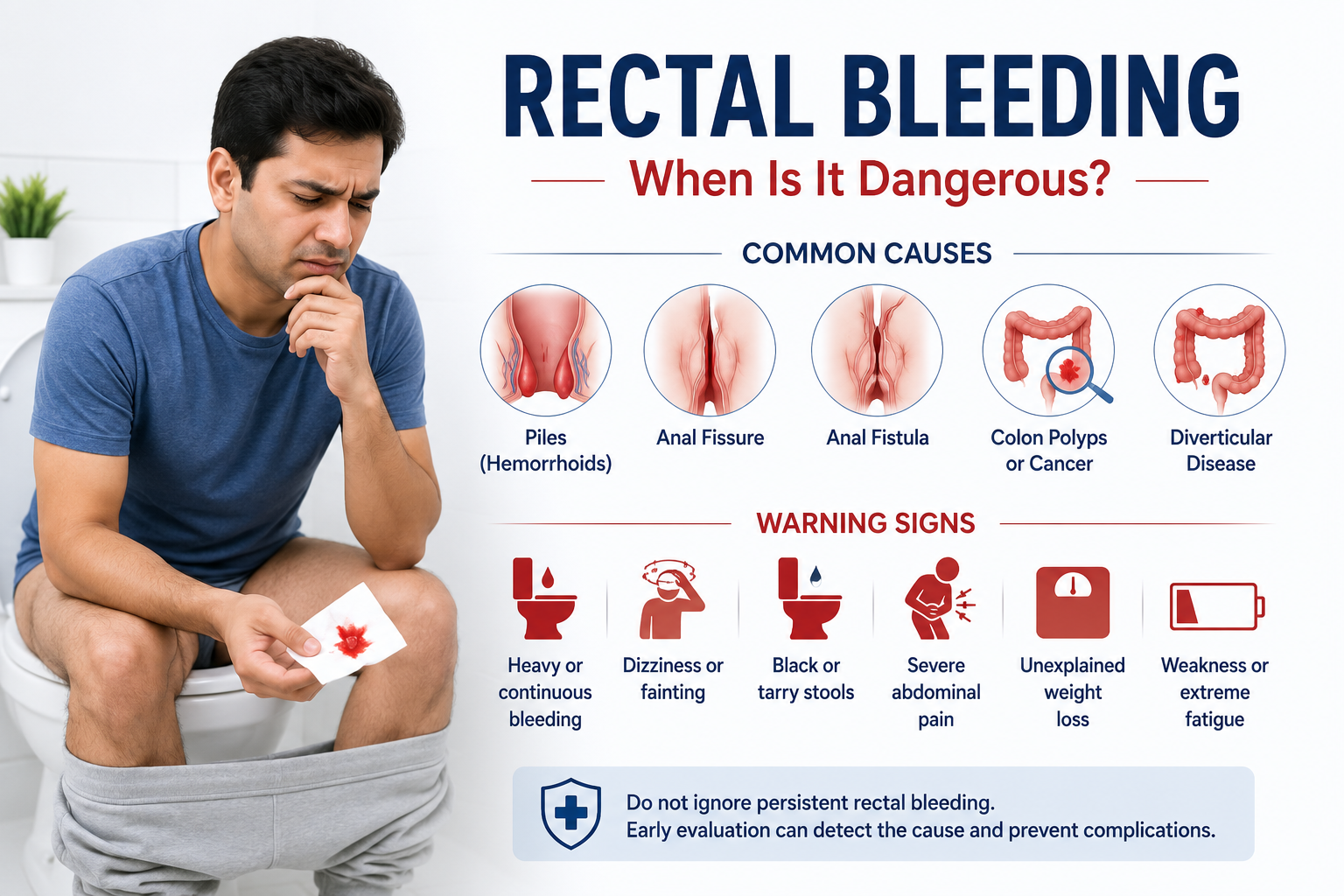
Seeing blood after a bowel movement can be alarming. Rectal bleeding causes range from common conditions such as piles and anal fissures to inflammatory bowel disease, polyps, diverticular disease, and colorectal cancer. The amount and appearance of blood, associated symptoms, age, medical history, and frequency of bleeding all help determine its significance.
A small amount of bright red blood may come from a minor anorectal condition, but persistent, unexplained, recurrent, or heavy rectal bleeding needs medical evaluation. Do not automatically assume that bleeding is due to piles.
What Are the Common Causes of Rectal Bleeding?
Rectal bleeding causes can originate from the anus, rectum, colon, or another part of the digestive tract. Common causes include:
1. Piles or Hemorrhoids
Piles are swollen blood vessels in or around the anus. They commonly cause bright red bleeding during or after a bowel movement. Some patients also experience itching, swelling, discomfort, or prolapse.
2. Anal Fissure
An anal fissure is a small tear in the lining of the anal canal. It often causes sharp pain during bowel movements along with bright red blood, particularly after passing a hard stool.
3. Anal Fistula or Abscess
An anal fistula more commonly causes recurrent swelling, pain, and pus discharge, but inflammation or irritation around the area may sometimes accompany bleeding.
4. Bowel Conditions
Bleeding can also occur with conditions affecting the colon or rectum, including inflammation, diverticular disease, polyps, and colorectal tumors.
Because different conditions can produce similar symptoms, examination plays an important role in identifying the cause.
When Is Rectal Bleeding Dangerous?
Rectal bleeding causes requires more attention when it becomes heavy, recurrent, persistent, or is accompanied by other concerning symptoms.
Seek urgent medical attention if you experience:
- Heavy or continuous bleeding
- Dizziness, fainting, or marked weakness
- Black or tar-like stools
- Severe abdominal pain
- Vomiting blood
- Rapidly worsening symptoms
You should also arrange medical evaluation for bleeding associated with unexplained weight loss, persistent changes in bowel habits, increasing fatigue, or repeated episodes without a known diagnosis.
These symptoms do not necessarily mean that you have a serious disease, but they warrant proper assessment.
How Do Doctors Diagnose Rectal Bleeding?
A doctor first asks about the colour and amount of blood, frequency of bleeding, bowel habits, pain, constipation, medications, medical history, and other symptoms.
A physical examination may help identify piles, fissures, or other anorectal problems.
Depending on the findings, the doctor may recommend additional investigations. These can include blood tests, examination of the anal canal and rectum, or endoscopic tests that allow doctors to inspect parts of the bowel.
The investigations required vary from patient to patient. Age, symptoms, family history, amount of bleeding, and examination findings can influence the decision.
How Do Doctors Treat Rectal Bleeding?
Treatment focuses on the underlying cause rather than bleeding alone.
For example, patients with constipation-related fissures may benefit from measures that keep stools soft, along with appropriate medical treatment.
Piles may initially respond to dietary changes, bowel-habit modification, medicines, or office-based procedures. Persistent or advanced piles may require surgical treatment.
An anal fistula generally requires surgical assessment because treating symptoms alone does not remove an established fistula tract.
Conditions affecting the colon or rectum require treatment according to the specific diagnosis.
Therefore, using medicines for “piles” without confirming the cause can delay the correct treatment.
Can You Prevent Rectal Bleeding?
Not every cause of Rectal bleeding is preventable. However, healthy bowel habits may reduce bleeding related to constipation, straining, piles, or fissures.
Helpful habits include:
- Eating adequate fibre when medically appropriate
- Drinking sufficient fluids
- Staying physically active
- Avoiding excessive straining
- Responding to the natural urge to pass stool
- Avoiding prolonged sitting on the toilet
If bleeding continues despite these measures, do not keep treating it at home without medical advice.
When Should You See a Surgeon?
Consult a doctor or surgeon if you experience repeated rectal bleeding, significant anal pain, a prolapsing lump, recurrent swelling, pus discharge, or symptoms that do not improve with initial treatment.
A surgical consultation does not automatically mean you need surgery. The first goal is to identify the condition. Your surgeon can then determine whether conservative treatment, further investigation, a minor procedure, or surgery is appropriate.
Rectal Bleeding Evaluation With Dr. Hitesh Arora in Surat
Patients experiencing rectal bleeding or other anorectal symptoms can consult Dr. Hitesh Arora at Arora Elite Care, Surat. Dr. Hitesh Arora is an Advanced Laparoscopic and General Surgeon with 15+ years of surgical experience, an M.S. Gold Medalist, and holds an FMAS (Fellowship in Minimal Access Surgery).
An evaluation can help determine whether symptoms relate to piles, fissure, fistula, or another condition and whether the patient needs conservative treatment, additional investigations, or surgical care.
Conclusion
Rectal bleeding causes can range from common anorectal conditions to more significant digestive diseases. Piles and fissures frequently cause bright red bleeding, but patients should not assume that every episode of bleeding comes from piles.
Seek medical attention for persistent or recurrent bleeding. Heavy bleeding, dizziness, fainting, black stools, severe pain, or marked weakness require prompt medical attention. An accurate diagnosis helps ensure that treatment addresses the actual cause rather than only controlling the symptom.
FAQs
Is bright red rectal bleeding always piles?
No. Piles commonly cause bright red bleeding, but fissures and several other conditions can also cause it. A doctor can determine the cause.
Can constipation cause rectal bleeding?
Hard stools and straining can contribute to anal fissures and piles, which may cause bleeding.
When should I worry about blood in my stool?
Seek medical evaluation for persistent, recurrent, unexplained, or heavy bleeding, especially when it occurs with weight loss, bowel-habit changes, weakness, or significant pain.
Can rectal bleeding stop without treatment?
Minor bleeding may stop temporarily, but this does not identify or eliminate its cause. Recurrent or unexplained bleeding requires evaluation.
Which doctor should I consult for rectal bleeding?
A doctor can perform an initial assessment. For suspected piles, fissures, fistulas, or other anorectal surgical conditions, a general surgeon with relevant experience can provide further evaluation.