Written and medically reviewed by Dr. Hitesh Arora, Advanced Laparoscopic and General Surgeon, Arora Elite Care, Surat. Dr. Arora has 15+ years of surgical experience. Acid reflux commonly causes burning behind the breastbone, a sour taste or regurgitation, and symptoms that may worsen after meals or when lying down. A hiatal hernia can contribute to reflux, but reflux can occur without a hernia, and a hiatal hernia can exist without reflux. Surgery is considered for selected patients rather than automatically when medicines stop working. Occasional acidity after a heavy meal is common. Repeated acid reflux symptoms, however, deserve more attention, especially when they disturb sleep, keep returning after treatment, cause difficulty swallowing, or require frequent medication.
One common question is whether persistent reflux means you have a hiatal hernia. The two conditions often occur together, but they are not the same condition. Understanding that difference is important because most reflux does not require surgery.
What Is Acid Reflux and What Causes It?
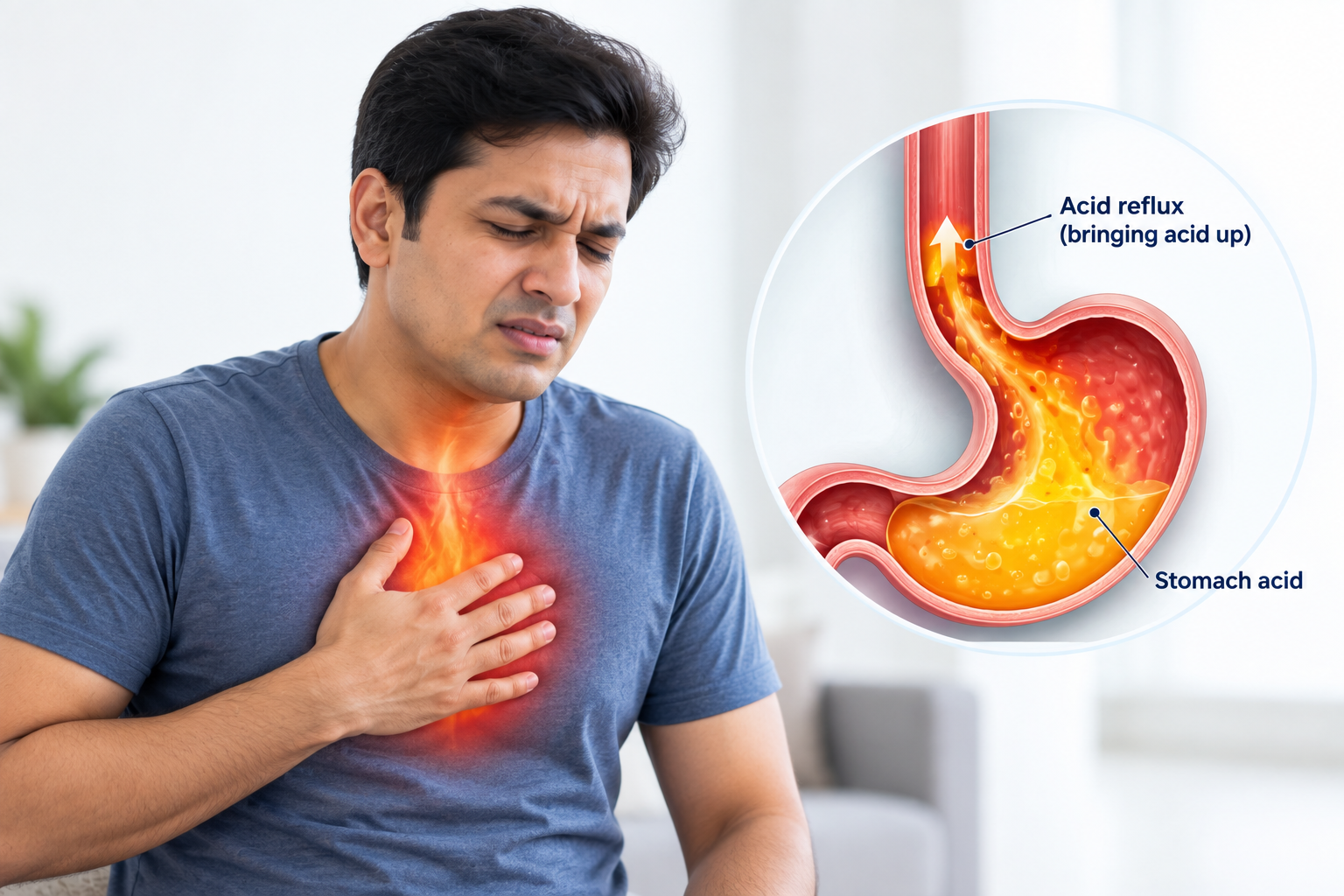
Acid reflux happens when stomach contents travel back into the oesophagus, the tube connecting your mouth to your stomach. When reflux keeps recurring and causes troublesome symptoms, doctors may diagnose gastro-oesophageal reflux disease, or GERD/GORD.
A muscular valve at the lower end of the oesophagus normally helps prevent stomach contents from travelling upward. When this barrier does not work effectively, reflux can occur.
Several factors can contribute to or worsen symptoms, including excess weight, smoking, pregnancy, some medicines, certain foods and drinks, and a hiatal hernia.
Large meals and eating close to bedtime can also make symptoms more noticeable in some people.
What Are the Symptoms of Acid Reflux?
The two classic acid reflux symptoms are heartburn and an unpleasant sour or acidic taste in the mouth. Symptoms often become worse after eating, while lying down, or when bending over.
Other symptoms can include:
- food or acidic fluid coming back into the throat
- recurrent cough or hiccups
- hoarseness
- bad breath
- bloating
- nausea
Some patients mainly experience regurgitation rather than burning.
Chest discomfort needs particular caution. Do not automatically assume chest pain comes from acidity. New, severe or unexplained chest pain, especially with breathlessness, sweating, dizziness or pain spreading to the arm, jaw or back, needs urgent medical assessment.
What Is a Hiatal Hernia?
A hiatal hernia occurs when part of the stomach moves upward through the opening in the diaphragm and into the chest. Some people have no symptoms, while others develop reflux, heartburn, regurgitation or swallowing problems.
The diaphragm separates the chest from the abdomen. The oesophagus normally passes through an opening in it before joining the stomach.
When part of the stomach moves through this opening, the normal anti-reflux mechanism can become less effective.
However, an important distinction is:
Hiatal hernia does not automatically mean GERD, and GERD does not automatically mean hiatal hernia. Both conditions can occur independently or together.
That is why persistent symptoms need proper assessment rather than self-diagnosis.
You can also read our guide to foods to avoid with a hiatal hernia.
How Do You Know If Reflux Is Caused by a Hiatal Hernia?
Symptoms alone cannot reliably confirm that a hiatal hernia is causing reflux. Your doctor may use your history, examination and selected tests such as upper GI endoscopy, reflux monitoring or other investigations when necessary.
Frequent reflux, regurgitation and symptoms that worsen after meals or while lying down can occur with or without a hiatal hernia.
The investigation therefore needs to answer two separate questions:
- Is clinically significant reflux occurring?
- Is a structural problem such as a hiatal hernia contributing to it?
This distinction becomes particularly important before anti-reflux surgery.
Acid Reflux, Hiatal Hernia and Treatment at a Glance
| Symptom or situation | Possible explanation | First step | When surgery may be considered |
|---|---|---|---|
| Occasional heartburn after meals | Intermittent acid reflux | Lifestyle changes and appropriate medical advice | Usually not required |
| Frequent heartburn and sour taste | GERD/GORD | Clinical assessment and acid-reducing treatment | If appropriately investigated symptoms remain troublesome despite treatment |
| Reflux with a known hiatal hernia | GERD associated with hiatal hernia | Lifestyle measures, medicines and assessment | Selected patients with persistent significant symptoms or complications |
| Difficulty swallowing | Reflux complication or another oesophageal condition | Medical assessment, often further investigation | Depends on diagnosis |
| Persistent symptoms despite treatment | GERD, hiatal hernia or another disorder | Reassess diagnosis and consider testing | If objective findings and patient factors support surgery |
| Severe chest pain | Reflux or non-digestive cause, including potentially serious conditions | Urgent assessment when appropriate | Only after the actual cause is established |
When Is Endoscopy Needed?
Not everyone with acid reflux needs an endoscopy. Doctors may recommend upper GI endoscopy when symptoms suggest complications or another condition, or when symptoms do not improve despite appropriate medicines and lifestyle changes.
During upper GI endoscopy, the doctor passes a thin flexible camera through the mouth to examine the oesophagus, stomach and first part of the small intestine. Biopsies can also be taken when necessary.
Endoscopy may help identify inflammation of the oesophagus, a hiatal hernia and other upper digestive conditions.
However, endoscopy is not the only reflux test. When doctors need objective evidence of reflux, oesophageal pH monitoring can measure acid reaching the oesophagus. NIDDK describes pH monitoring as the most accurate method for detecting stomach acid in the oesophagus.
Patients in Surat can learn more about endoscopy testing at Arora Elite Care.
When Do Acidity Tablets Stop Being the Answer?
Acid-reducing medicines can control GERD effectively for many patients, and needing long-term treatment does not automatically mean you need surgery. Reassessment becomes important when symptoms remain uncontrolled, repeatedly return, or the diagnosis is uncertain.
Proton pump inhibitors, commonly called PPIs, reduce stomach acid and form an important part of GERD treatment.
Patients sometimes assume that taking a PPI for a long time is automatically unsafe. That is too simplistic. NIDDK notes that researchers continue to study some potential effects of long-term or high-dose PPI use and advises discussing individual risks and benefits with a doctor.
The more useful question is:
Why do you still need the medicine, and is it controlling the problem adequately?
Further assessment may be appropriate when you have persistent symptoms despite appropriate treatment, symptoms that quickly recur when treatment stops, troublesome regurgitation, swallowing difficulty, unexplained weight loss, vomiting or evidence of complications.
Do not stop a prescribed PPI suddenly simply because you have taken it for a long time. Discuss the treatment plan with your doctor.
What Is Fundoplication Surgery?
Fundoplication is an anti-reflux operation in which the surgeon uses the upper part of the stomach to reinforce the lower oesophageal area and reduce reflux. Surgeons commonly perform the procedure laparoscopically in appropriately selected patients.
If a significant hiatal hernia is present, the surgeon can repair the enlarged opening in the diaphragm as part of the operation.
Fundoplication does not simply “remove acidity.” It aims to improve the mechanical barrier that prevents stomach contents from flowing back into the oesophagus.
NIDDK states that doctors may recommend surgery when GERD symptoms do not improve with lifestyle measures and medicines, or when a patient wishes to avoid long-term GERD medicines after appropriate evaluation. Surgery also has its own potential complications, so doctors weigh these against the expected benefit.
Before surgery, some patients need investigations beyond endoscopy, such as reflux monitoring or tests that assess oesophageal function. The exact work-up depends on the clinical situation.
When Should You See a Specialist?
See a specialist when acid reflux becomes frequent, severe, difficult to control, or associated with warning symptoms. Persistent symptoms deserve diagnosis rather than repeated self-treatment with acidity medicines.
Seek medical assessment if you experience:
- difficulty or pain while swallowing
- repeated vomiting
- unexplained weight loss
- blood in vomit
- persistent upper abdominal pain
- reflux that remains severe despite appropriate treatment
These symptoms can require investigation for causes other than uncomplicated reflux.
Chest pain also deserves caution because heart-related pain can sometimes be mistaken for indigestion or reflux.
Care at Arora Elite Care
At Arora Elite Care, Surat, patients with persistent reflux or suspected hiatal hernia can undergo surgical assessment to determine whether they need further investigation, continued medical treatment, or consideration of an anti-reflux procedure.
Dr. Hitesh Arora is an Advanced Laparoscopic and General Surgeon with 15+ years of surgical experience.
The aim of consultation is not to recommend surgery for every patient with acidity. It is to determine what is causing the symptoms and whether surgery has a meaningful role.
Patients with oesophageal symptoms can also read about oesophageal disease treatment in Surat.
For persistent reflux, suspected hiatal hernia or questions about surgical treatment, patients can contact Arora Elite Care for an appointment.
Frequently Asked Questions
Is daily acidity medicine safe long term?
Many people use acid-reducing medicines such as PPIs long term when clinically appropriate. Long-term treatment should still be reviewed periodically so your doctor can confirm the indication, dose, and benefits. Do not stop prescribed medication without medical advice simply because you have been taking it for a long time.
What Is the Difference Between Acidity and Acid Reflux?
“Acidity” is a common non-medical term people use for burning, indigestion, or sourness. Acid reflux specifically means stomach contents travel upward into the oesophagus. Frequent troublesome reflux may be diagnosed as GERD or GORD. Similar symptoms can also occur with other digestive conditions, so persistent symptoms need assessment.
Can a Hiatal Hernia Be Cured Without Surgery?
Many hiatal hernias do not require surgery. Lifestyle measures and medicines can control associated reflux symptoms, although they do not physically repair the hernia itself. Doctors generally consider surgery for selected patients with persistent severe symptoms, complications, or other appropriate indications after investigation.
What Foods Trigger Acid Reflux?
Triggers differ between people. Commonly reported examples include fatty or spicy foods, coffee, chocolate, tomatoes, and alcohol. Rather than unnecessarily eliminating many foods, identify what consistently triggers your own symptoms. Smaller meals and avoiding food close to bedtime may also help reduce reflux.
Is Endoscopy Painful?
Upper GI endoscopy involves passing a thin flexible camera through the mouth into the upper digestive tract. Patient comfort measures vary by centre and individual circumstances. Discuss sedation and throat-numbing options beforehand. The test allows doctors to examine the oesophagus and stomach and take small biopsies when necessary.
Can Acid Reflux Cause Chest Pain Like a Heart Attack?
Acid reflux can cause burning or discomfort behind the breastbone, so symptoms may sometimes feel similar to other causes of chest pain. Never assume new or severe chest pain is only acidity. Chest pain with breathlessness, sweating, dizziness, or spreading pain needs urgent medical assessment to exclude a heart-related cause.
The Key Point About Persistent Acid Reflux
Most acid reflux symptoms do not lead directly to surgery. Lifestyle measures and appropriate medicines control symptoms for many people.
A hiatal hernia can contribute to reflux, but finding a hernia does not automatically prove it is responsible for every symptom. Likewise, persistent reflux does not automatically mean a hiatal hernia is present.
When symptoms remain troublesome despite treatment, the next step is usually better diagnosis, not automatically stronger tablets or immediate surgery. Endoscopy, reflux testing, and specialist assessment can clarify the cause and identify the smaller group of patients who may benefit from fundoplication or hiatal hernia repair.