
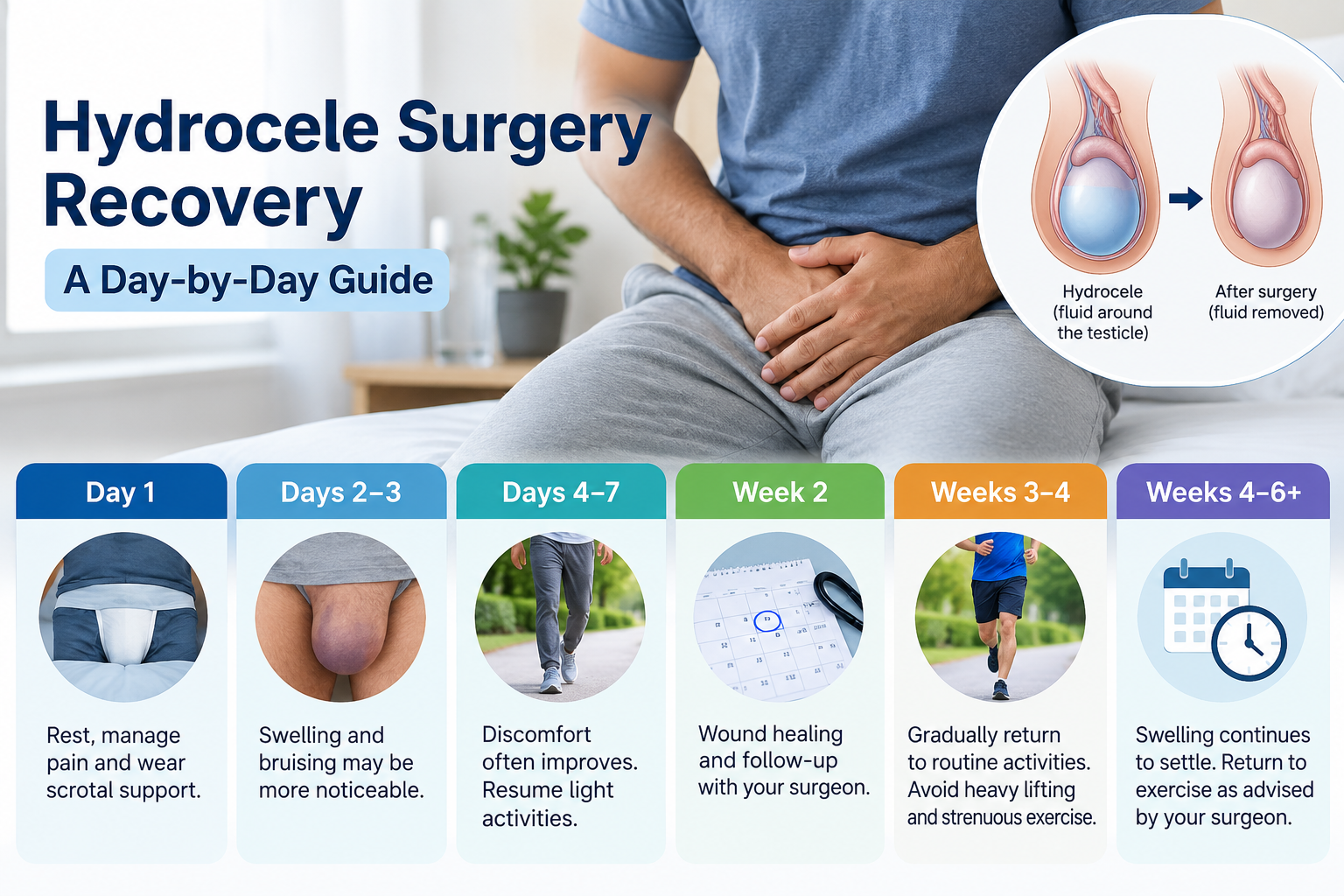
Hydrocele surgery recovery usually takes a few weeks, although swelling and firmness around the scrotum may take longer to settle completely. Many patients can resume light daily activities within several days, while strenuous exercise, cycling, and heavy lifting may need to be avoided for approximately two to four weeks or longer, depending on the operation and the surgeon’s advice.
A hydrocele is a collection of fluid around a testicle that causes swelling of the scrotum. Surgery, called hydrocelectomy, removes or repairs the fluid-filled sac to treat the condition.
Understanding what happens during recovery can help patients manage discomfort, care for the surgical wound, and recognise symptoms that need medical attention.
Hydrocele Surgery Recovery Time: What to Expect
Recovery is different for every patient. The size of the hydrocele, surgical technique, wound healing, overall health and postoperative complications can all influence recovery.
Hydrocele Surgery Recovery Timeline
| Recovery Period | What You May Experience | General Advice |
|---|---|---|
| Day 1 | Mild to moderate pain, swelling and bruising | Rest, take prescribed medicines, and support the scrotum |
| Days 2–3 | Swelling and bruising may become more noticeable | Continue wound care and take short walks as tolerated |
| Days 4–7 | Discomfort often begins to improve | Gradually resume light activities |
| Week 2 | Improved mobility; some swelling may remain | Attend follow-up and avoid activities restricted by your surgeon |
| Weeks 3–4 | Many patients return towards their usual routine | Resume exercise or lifting only after medical clearance |
| Weeks 4–6 | Continued reduction in swelling and tenderness | Monitor healing and report persistent or worsening symptoms |
| Beyond 6 weeks | Residual firmness or swelling may continue to settle | Seek reassessment if recovery is not progressing |
Important: This timeline is a general guide, not a fixed schedule. Follow your own surgeon’s postoperative instructions.
Day 1: The First 24 Hours After Hydrocele Surgery
During the first day, patients may experience discomfort, swelling, and mild bruising around the operated area.
The surgical team may recommend:
- Resting at home after discharge
- Taking prescribed pain medicines
- Wearing supportive underwear or a scrotal support
- Keeping the wound clean and dry according to instructions
- Avoiding strenuous activity
- Having a responsible adult available after general anaesthesia, if advised
Some patients are discharged on the same day, while others may need observation depending on their condition and procedure.
Avoid driving while affected by anaesthesia, sedating pain medication, or discomfort that prevents safe control of a vehicle.
Days 2–3: Managing Swelling and Discomfort
Swelling after hydrocele surgery is common during the first few days.
The scrotum may look bruised or feel heavier than expected.
This does not necessarily mean the hydrocele has returned. Postoperative inflammation and small amounts of fluid or blood within the tissues can contribute to swelling.
To support recovery:
- Wear the recommended scrotal support.
- Take prescribed medication as directed.
- Walk gently for short periods.
- Avoid prolonged standing if it increases discomfort.
- Use a cold pack only if your surgeon recommends it, with a cloth barrier and limited application time.
- Avoid applying creams or powders to the incision unless prescribed.
Contact your surgical team if pain or swelling increases rapidly rather than gradually improving.
Days 4–7: Returning to Light Daily Activities
By the end of the first week, many patients notice some improvement in discomfort.
You may be able to perform light activities such as walking around the house and completing simple daily tasks.
However, avoid:
- Heavy lifting
- Running
- Gym workouts
- Cycling
- Activities that put pressure on the scrotum
- Sexual activity until cleared by your surgeon
Some patients may be able to return to non-physical work within several days to about a week, while others need more time.
The decision should depend on comfort, wound healing, and medical advice.
Week 2: Wound Healing and Follow-Up
During the second week, pain and bruising often continue to improve.
However, the scrotum may still appear swollen or feel firm.
If stitches were used, they may be dissolvable or may require removal, depending on the surgical technique.
A follow-up appointment allows the surgeon to assess:
- Incision healing
- Swelling
- Signs of infection
- Pain control
- Activity restrictions
- Any concerns about fluid accumulation
Do not remove stitches, dressings, or drains yourself unless specifically instructed.
Weeks 3–4: Gradually Resuming Routine Activities
Many patients are significantly more comfortable by the third or fourth week.
Depending on healing, the surgeon may allow a gradual return to exercise and other physical activities.
Avoid assuming that the absence of pain means the tissues have completely healed.
Heavy lifting, strenuous workouts, and contact sports may still need to be restricted.
If your job involves physical labour, discuss your return-to-work plan with your surgeon.
Weeks 4–6 and Beyond: When Does Swelling Disappear?
Swelling after hydrocele surgery may take several weeks to resolve, and some patients experience residual firmness or swelling for longer.
Larger hydroceles and more extensive procedures may involve a longer healing period.
The important question is whether symptoms are gradually improving.
Persistent swelling does not always mean surgical failure, but new, increasing, or prolonged swelling should be evaluated.
Your surgeon may recommend an examination or ultrasound if the findings suggest a fluid collection, haematoma, recurrence, or another complication.
How Much Swelling Is Normal After Hydrocele Surgery?
Mild to moderate swelling and bruising are common after hydrocelectomy.
The scrotum may initially appear larger than expected because of postoperative inflammation.
Normal Healing vs Warning Signs
| Common Recovery Changes | Symptoms Requiring Medical Assessment |
|---|---|
| Mild swelling that gradually improves | Rapidly increasing swelling |
| Bruising around the incision | Expanding, tense or very painful swelling |
| Mild tenderness | Severe or worsening pain |
| Small amount of early wound spotting | Persistent bleeding or pus discharge |
| Temporary firmness | Increasing redness, warmth, or fever |
If swelling becomes severe or is accompanied by sudden intense pain, seek urgent medical care.
How to Reduce Swelling After Hydrocele Surgery
Postoperative swelling generally improves as tissues heal.
Helpful measures may include:
- Scrotal support: Wear supportive underwear as advised to reduce movement and discomfort.
- Rest with gentle movement: Avoid strenuous activity while taking short walks to maintain circulation.
- Medication: Take prescribed pain relief or other medicines according to instructions.
- Cold compresses: Use only when approved by your surgeon, without placing ice directly on the skin.
- Follow-up: Attend scheduled appointments to ensure swelling is resolving appropriately.
Do not attempt to drain the swelling or massage the surgical area.
Wound Care After Hydrocele Surgery
Proper wound care helps reduce the risk of infection and supports healing.
Follow the instructions given at discharge, including when you may shower and when dressings should be changed.
General precautions include keeping the incision clean, avoiding friction, and not soaking the wound in a bathtub or swimming pool until permitted.
If a drain was placed, follow the specific instructions for its care and removal.
Read more about wound care after surgery.
What Should You Eat After Hydrocele Surgery?
There is no special diet that guarantees faster healing after hydrocele surgery.
A balanced diet can support general recovery.
Suitable Indian foods may include dal, roti, rice, vegetables, fruit, curd and appropriate protein sources.
Drink sufficient fluids unless you have been advised to restrict them.
If pain medicines cause constipation, ask your doctor about fibre, hydration and safe stool-softening measures. Avoid excessive straining during bowel movements.
For additional guidance, read diet before and after surgery.
When Can You Return to Work, Exercise and Sexual Activity?
The timing depends on your symptoms, job requirements, and surgical recovery.
| Activity | General Guidance |
|---|---|
| Gentle walking | Often encouraged early, as tolerated |
| Desk-based work | Sometimes possible within several days to 1–2 weeks |
| Driving | When you can drive safely and are no longer affected by sedating medicines |
| Heavy lifting | Often restricted for approximately 2–4 weeks or longer |
| Running and gym exercise | Resume gradually after surgical clearance |
| Cycling | Avoid until pressure and movement are comfortable and your surgeon permits it |
| Sexual activity | Resume when healing is adequate, and your surgeon advises it is safe |
These are general expectations rather than permission to resume an activity on a specific day.
What Are the Possible Complications of Hydrocele Surgery?
Hydrocelectomy is commonly performed, but complications can occur.
Possible risks include:
- Infection
- Bleeding or haematoma
- Persistent swelling
- Wound-healing problems
- Recurrence of the hydrocele
- Persistent discomfort
- Injury to nearby structures, including those associated with the testicle, although this is uncommon
- Anaesthesia-related complications
Your surgeon should explain the risks relevant to your health and procedure.
When Should You Contact Your Surgeon?
Contact your surgical team promptly if you develop fever, increasing redness, pus discharge, worsening pain, increasing swelling, or persistent wound bleeding.
Seek emergency medical care for severe sudden scrotal pain, uncontrolled bleeding, fainting, breathing difficulty, or rapidly worsening illness.
Do not wait for a scheduled follow-up if concerning symptoms develop.
Can Hydrocele Return After Surgery?
Yes. Hydrocele recurrence is possible, although surgery is generally intended to provide lasting treatment.
A new fluid collection may develop in some patients.
However, swelling soon after surgery does not automatically indicate recurrence.
A clinical examination, and sometimes an ultrasound, can help distinguish postoperative swelling from recurrent hydrocele or other causes.
Patients exploring treatment options can also read about hydrocele treatment without surgery.
Hydrocele Surgery and Recovery Guidance in Surat
Patients considering surgery for a hydrocele can seek an appropriate surgical or urological evaluation.
At Arora Elite Care, Surat, Dr. Hitesh Arora is an Advanced Laparoscopic and General Surgeon, an M.S. Gold Medalist and FMAS-qualified surgeon.
The suitability of hydrocele surgery, choice of specialist, and postoperative plan should be confirmed during consultation.
Patients can discuss their symptoms, examination findings, available treatment options, and expected recovery.
Learn more about hydrocele surgery in Surat.
Clinic: Arora Elite Care
Address: Solaris Kode 202–203, VIP Road, Surat, Gujarat 395007
Conclusion
Hydrocele surgery recovery is usually gradual, with discomfort improving over the first one to two weeks and many patients returning to routine activities over several weeks.
Swelling after hydrocele surgery can take longer to settle and does not necessarily indicate a complication.
Wearing appropriate support, following wound-care instructions, avoiding strenuous activities and attending follow-up appointments can help patients recover safely.
If pain, swelling, redness, or discharge worsens, contact your surgeon promptly.
Frequently Asked Questions
1. How Long Is Hydrocele Surgery Recovery Time?
Many patients return to light activities within several days and gradually resume their normal routine over two to four weeks. Complete resolution of swelling and firmness may take longer. Recovery varies according to the procedure and individual healing.
2. Is Swelling Normal After Hydrocele Surgery?
Yes. Some scrotal swelling and bruising are common after surgery. They should generally improve over time. Rapidly increasing swelling, severe pain, fever or redness requires medical evaluation.
3. How Many Days Should I Rest After Hydrocele Surgery?
Patients commonly need several days of relative rest, with gentle walking as tolerated. The exact duration depends on discomfort, the operation, and the surgeon’s instructions. Prolonged complete bed rest is not usually necessary.
4. When Can I Walk Normally After Hydrocele Surgery?
Gentle walking is often encouraged soon after surgery when medically safe. Walking comfortably may take several days, depending on swelling and pain. Avoid activities that increase discomfort.
5. When Can I Exercise or Lift Weights After Hydrocele Surgery?
Heavy lifting and strenuous exercise are often restricted for approximately two to four weeks or longer. Resume these activities only after your surgeon confirms that healing is adequate.
6. How Do I Know if Hydrocele Surgery Is Healing Properly?
Signs of expected healing include gradually improving pain, decreasing swelling, a healing incision, and better mobility. Increasing pain, fever, pus discharge, significant bleeding, or rapidly worsening swelling should be reported to your surgical team.