
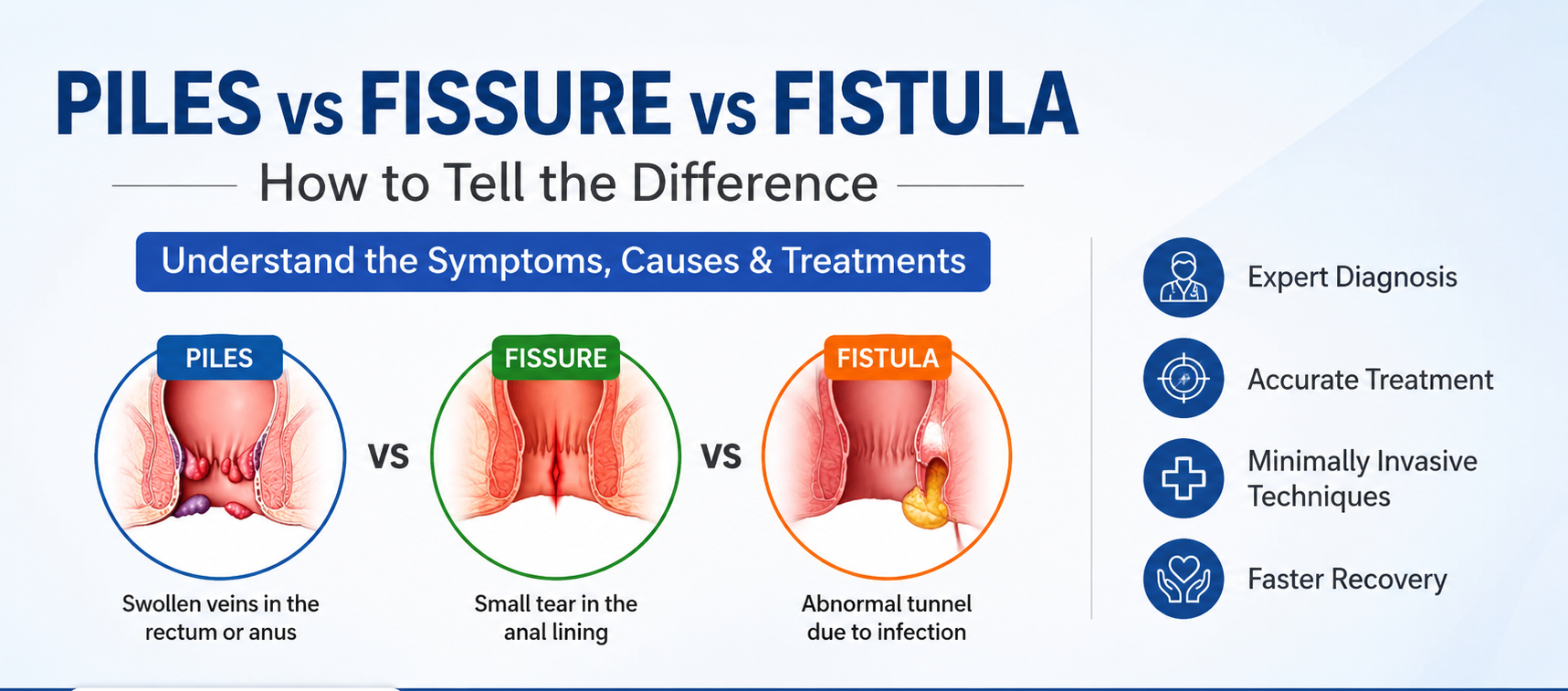
Anorectal diseases like difference between piles fissure fistula are often confused because they cause pain, discomfort, and bleeding in the same region. However, they are completely different medical conditions requiring different treatments.
Understanding the difference between piles fissure fistula helps patients get the right diagnosis and avoid complications.
At Arora Elite Care, patients receive advanced and accurate diagnosis under the expert care of Dr. Hitesh Arora, using modern, minimally invasive techniques for fast recovery.
What Are Piles (Hemorrhoids)?
Piles are swollen and inflamed blood vessels in the rectum or anus that can cause discomfort and bleeding.
Symptoms of Piles
- Painless bleeding during bowel movements
- Itching or irritation
- Swelling or lump near anus
- Mild to moderate pain while sitting
Causes of Piles
- Chronic constipation
- Straining during stool
- Low fiber diet
- Pregnancy
- Sedentary lifestyle
What Is an Anal Fissure?
An anal fissure is a small tear in the lining of the anus that leads to severe pain during bowel movements.
Symptoms of Fissure
- Sharp, burning pain while passing stool
- Bright red bleeding
- Pain lasting after bowel movement
- Visible crack in anal skin
Causes of Fissure
- Hard stools
- Constipation
- Excess straining
- Diarrhea episodes
What Is a Fistula?
A fistula is an abnormal tunnel that forms between the anal canal and the skin near the anus, usually due to infection.
Symptoms of Fistula
- Continuous pus or blood discharge
- Pain and swelling
- Recurrent abscess
- Itching and irritation
- Foul-smelling discharge
Causes of Fistula
- Untreated anal abscess
- Infection in anal glands
- Inflammatory bowel disease
- Surgical complications
Key Differences Between Piles, Fissure, and Fistula
| Feature | Piles | Fissure | Fistula |
|---|---|---|---|
| Nature | Swollen veins | Tear in skin | Infection tunnel |
| Pain | Mild | Severe sharp pain | Moderate persistent pain |
| Bleeding | Common | Common | Sometimes |
| Discharge | No | No | Yes (pus) |
| Cause | Pressure in veins | Hard stool trauma | Infection |
| Condition Type | Vascular | Wound | Infectious |
Simple Way to Understand the Difference
- Piles → Blood vessel swelling
- Fissure → Skin tear causing pain
- Fistula → Infection tunnel with discharge
Although symptoms may overlap, proper examination is necessary to confirm the difference between piles fissure fistula condition.
When to Choose Treatment?
You should consult a specialist if you experience:
- Persistent bleeding
- Severe pain during stool
- Pus or discharge
- Swelling near anus
- Symptoms lasting more than a few days
Early treatment prevents complications and ensures faster recovery.
Treatment at Arora Elite Care
At Arora Elite Care, treatment depends on severity and condition type:
Treatment Options
- Medication for early-stage piles and fissures
- Laser treatment for piles and fistula
- Minimally invasive procedures
- Dietary and lifestyle correction
All procedures are performed under expert supervision of Dr. Hitesh Arora, ensuring safe and effective outcomes.
Why Choose Arora Elite Care?
- Advanced laser proctology treatment
- Accurate diagnosis using modern tools
- Minimal pain procedures
- Faster recovery time
- Experienced specialist care
Conclusion
Understanding the difference between piles fissure fistula is essential for early diagnosis and effective treatment. While symptoms may appear similar, each condition has a distinct cause and treatment approach.
For expert care and advanced treatment, visit Arora Elite Care under Dr. Hitesh Arora for safe, precise, and minimally invasive solutions.
FAQs
1. What is the main difference between piles, fissure, and fistula?
Piles are swollen veins, fissures are tears in the anal lining, and fistulas are infected tunnels.
2. Which is more painful: piles, fissure, or fistula?
Fissures are usually the most painful due to sharp tearing pain during bowel movements.
3. Can piles turn into fissure or fistula?
No, they are different conditions, but poor hygiene or untreated infections can worsen symptoms.
4. Is surgery needed for all three conditions?
Not always. Mild cases can be treated with medicines, while advanced cases may need laser or surgery.
5. Which doctor treats piles, fissure, and fistula?
A proctologist or colorectal specialist like Dr. Hitesh Arora at Arora Elite Care.
1 Comment
Safe Piles During Pregnancy Treatment | Arora Elite Care
September 11, 2026[…] If you are unsure whether symptoms represent piles or another anorectal problem, read about the difference between piles, fissure and fistula. […]