
piles surgery recovery time , also known as hemorrhoids, can cause significant discomfort including pain, bleeding, itching, and swelling that interfere with daily life. When medications and lifestyle changes are not effective, surgery may be recommended for long-term relief.
One of the most common concerns patients have is: “What is the recovery time after piles surgery?”
Understanding the recovery timeline helps you prepare mentally and physically, manage expectations, and heal more comfortably.
At Arora Elite Care, patients receive complete guidance throughout their recovery journey—from surgery to full healing.
What Affects Piles Surgery Recovery Time?
piles surgery recovery time is different for every patient. Several factors influence healing speed, including:
- Type of surgery performed
- Severity of hemorrhoids
- Overall health condition
- Post-operative care and hygiene
- Diet and bowel habits
- Individual healing response
Most patients notice gradual improvement within a few weeks, especially after minimally invasive procedures.
Common Types of Piles Surgery
Different treatment options are used depending on the severity of the condition:
Laser Piles Surgery
A minimally invasive procedure that uses laser energy to shrink hemorrhoidal tissue with minimal pain and faster recovery.
Hemorrhoidectomy
A traditional surgical procedure where large or severe hemorrhoids are removed completely.
Stapler Surgery
A stapling device is used to reposition hemorrhoidal tissue and reduce blood flow to the affected area.
Your surgeon will recommend the most suitable option based on your condition.
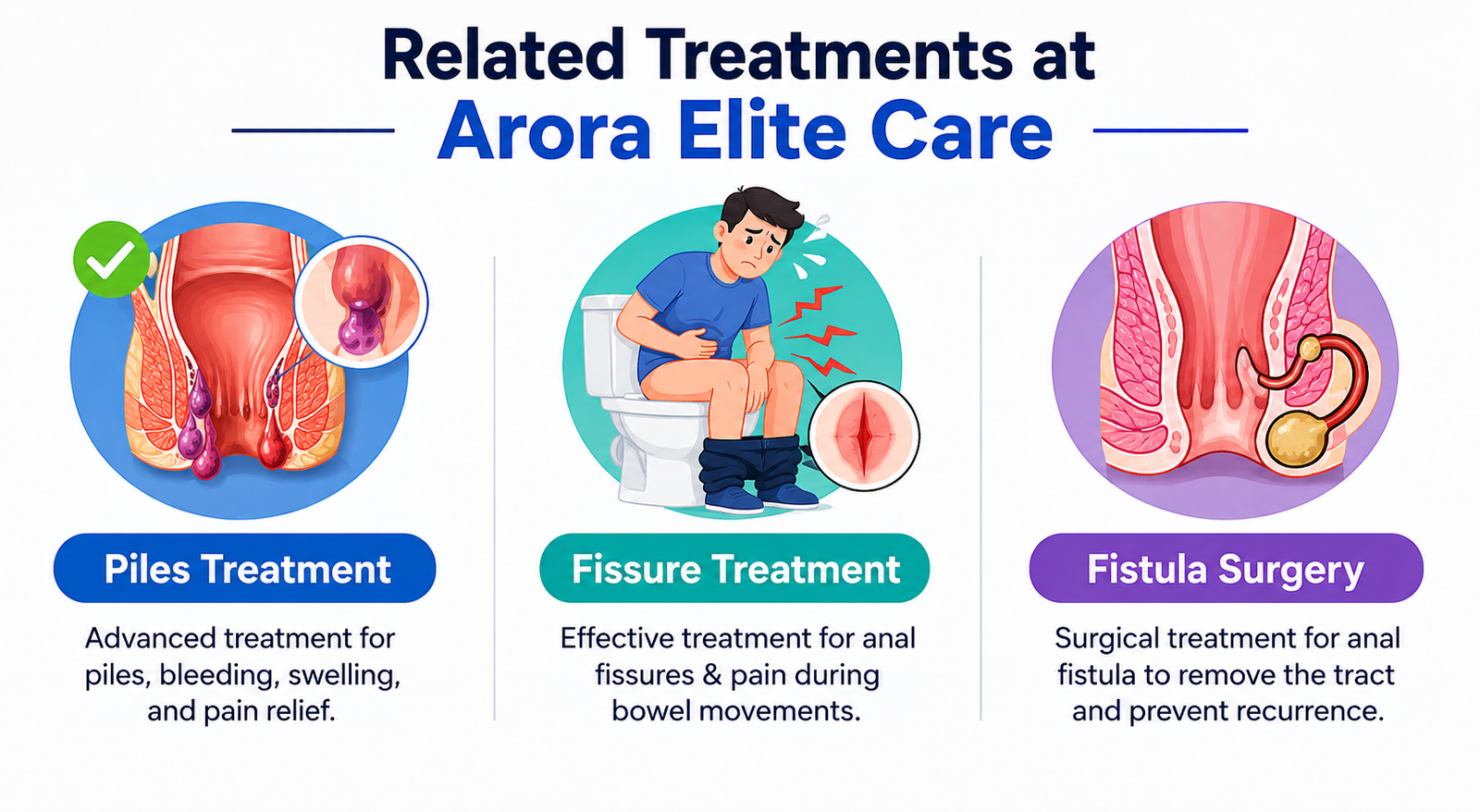
Related Treatments at Arora Elite Care
Piles Treatment
Piles (hemorrhoids) are swollen blood vessels in the rectal area that can cause pain, bleeding, itching, and discomfort. Treatment depends on severity and may include medications, lifestyle changes, laser treatment, or minimally invasive surgery. Advanced procedures help reduce pain and promote faster recovery.
Fissure Treatment
An anal fissure is a small tear in the lining of the anus, often caused by hard stools or constipation. It leads to sharp pain during bowel movements and sometimes bleeding. Early treatment with medicines, diet correction, and in some cases surgery helps in complete healing and prevents recurrence.
Fistula Surgery
An anal fistula is an abnormal tunnel between the anal canal and surrounding skin, usually formed due to infection. It may cause pus discharge, pain, and repeated infections. Surgery is often required to remove the tract and prevent recurrence, with modern techniques ensuring better healing and outcomes.
Piles Surgery Recovery Timeline (Week by Week)
First 24–48 Hours After Surgery
Immediately after surgery, it is normal to experience:
- Mild to moderate pain or discomfort
- Swelling in the anal region
- Minor bleeding or spotting
- Difficulty during the first bowel movement
Care tips:
- Take prescribed medicines regularly
- Drink plenty of fluids
- Rest adequately
- Follow dietary instructions strictly
Week 1: Initial Healing Phase
During the first week, healing begins and symptoms gradually improve.
You may experience:
- Reduced pain compared to initial days
- Mild swelling
- Discomfort during bowel movements
- Improved mobility
Helpful tips:
- Eat high-fiber foods
- Avoid constipation
- Take warm sitz baths if advised
- Stay well hydrated
Patients undergoing laser surgery may resume light activities sooner.
Week 2: Noticeable Improvement
By the second week:
- Pain reduces significantly
- Swelling continues to decrease
- Walking and daily activities become easier
Most patients can:
- Return to desk-based work
- Resume light household tasks
- Start gentle walking exercises
Heavy lifting should still be avoided.
Week 3–4: Significant Recovery
At this stage:
- Discomfort becomes minimal
- Bowel movements improve
- Energy levels return
- Reduced dependence on pain medication
Most patients return to near-normal daily life.
Week 5–6: Near Full Recovery
By this time:
- Surgical area is mostly healed
- Normal bowel habits return
- Minimal or no discomfort remains
Follow-up visits may be scheduled to ensure proper healing.
Beyond 6 Weeks
Some patients with severe or extensive surgery may take longer for complete recovery.
Long-term healing focuses on preventing recurrence through lifestyle improvements.
How to Speed Up Recovery After Piles Surgery
Eat a High-Fiber Diet
Include:
- Fruits
- Vegetables
- Whole grains
- Pulses and legumes
Fiber helps soften stools and reduces strain.
Stay Hydrated
Drink enough water daily to support smooth bowel movements.
Avoid Straining
Do not force bowel movements, as it can delay healing.
Follow Medical Advice
Take medications exactly as prescribed by your doctor.
Maintain Hygiene
Keep the area clean to prevent infection and promote healing.
Normal Symptoms During Recovery
These symptoms are usually temporary:
- Mild pain
- Light bleeding
- Itching
- Swelling
- Fatigue
They gradually reduce as healing progresses.
Warning Signs You Should Not Ignore
Contact your doctor if you experience:
- Excessive bleeding
- Severe or worsening pain
- Fever
- Difficulty urinating
- Signs of infection
Early treatment prevents complications.
Why Choose Dr. Hitesh Arora?
At Arora Elite Care, patients receive advanced and personalized care for piles and other anorectal conditions.
Key benefits include:
- Accurate diagnosis and evaluation
- Modern laser and surgical techniques
- Personalized treatment plans
- Pain-focused recovery approach
- Complete post-operative support
- Long-term follow-up care
The goal is not only treatment but also comfortable and lasting recovery.
Preventing Piles After Surgery
To reduce recurrence risk:
- Eat a fiber-rich diet
- Drink plenty of water
- Exercise regularly
- Avoid prolonged sitting
- Maintain healthy bowel habits
- Avoid straining during bowel movements
Conclusion
Piles surgery recovery time varies depending on the type of procedure and individual healing ability. Most patients recover within 2 to 6 weeks, with noticeable improvement starting within the first few days—especially after laser surgery.
Following proper diet, hygiene, medication, and doctor guidance ensures a smoother and faster recovery.
If you are experiencing symptoms of piles or need expert consultation, Dr. Hitesh Arora at Arora Elite Care can provide advanced and personalized treatment options for long-term relief.
FAQs
How long does piles surgery recovery take?
Most patients recover within 2–6 weeks depending on the procedure.
Is laser piles surgery recovery faster?
Yes, laser surgery generally offers quicker healing and less pain.
When can I return to work?
Desk work may resume within a few days to 2 weeks.
Is pain normal after surgery?
Yes, mild pain is normal and gradually reduces.
Can piles return after surgery?
Yes, but healthy lifestyle habits significantly reduce the risk.
1 Comment
Stapler Surgery for Piles: Laser vs Open Compared
September 24, 2026[…] a detailed postoperative timeline, read our piles surgery recovery time guide, which explains recovery from the first 24 to 48 hours through the following […]