If you are wondering when to see doctor for piles, you are not alone. Piles, also known as hemorrhoids, affect millions of people and are one of the most common anorectal conditions. Many individuals ignore symptoms such as itching, bleeding, or discomfort because they feel embarrassed or assume the problem will go away on its own. While mild piles may improve with lifestyle changes, there are situations where professional medical care becomes necessary.
According to Dr. Hitesh Arora, a specialist in proctology at Arora Elite Care, early diagnosis and treatment can help prevent complications and provide faster relief from symptoms. Knowing when to see doctor for piles can help you avoid unnecessary discomfort, receive timely treatment, and return to your normal routine more quickly. Early medical evaluation is especially important because symptoms of piles can sometimes resemble other conditions such as anal fissures, fistulas, polyps, or colorectal disorders.
When to See Doctor for Piles: Understanding the Condition
Piles are swollen and enlarged veins located in the lower rectum or around the anus. Similar to varicose veins in the legs, these veins become enlarged due to increased pressure in the rectal area.
Piles are generally classified into two main types:
Internal Piles
Internal piles develop inside the rectum and may not cause pain initially. However, they can cause bleeding during bowel movements and may eventually prolapse outside the anus.
External Piles
External piles occur under the skin around the anal opening. They are more likely to cause pain, swelling, itching, and discomfort.
Many people delay treatment because symptoms seem manageable. However, understanding when to see doctor for piles is important to prevent worsening of the condition.
Common Causes of Piles
Several lifestyle and health factors can increase the risk of developing piles.
Chronic Constipation
Frequent straining during bowel movements places pressure on rectal veins and contributes to hemorrhoid formation.
Low-Fiber Diet
A diet lacking fruits, vegetables, and whole grains can result in hard stools and constipation.
Prolonged Sitting
Sitting for extended periods, particularly on the toilet, increases pressure on the anal region.
Obesity
Excess body weight increases pressure on pelvic and rectal veins.
Pregnancy
Hormonal changes and increased abdominal pressure make piles common during pregnancy.
Heavy Lifting
Repeated heavy lifting can contribute to increased pressure in the lower rectal area.
Symptoms That May Indicate Piles
Recognizing symptoms early can help determine when to see doctor for piles before complications develop.
Common symptoms include:
- Bright red bleeding during bowel movements
- Anal itching
- Swelling around the anus
- Pain while sitting
- Pain during bowel movements
- A lump near the anal opening
- Mucus discharge
- Feeling that the bowel has not emptied completely
While some symptoms may appear mild, persistent or worsening symptoms should never be ignored.
When to See Doctor for Piles: Important Warning Signs
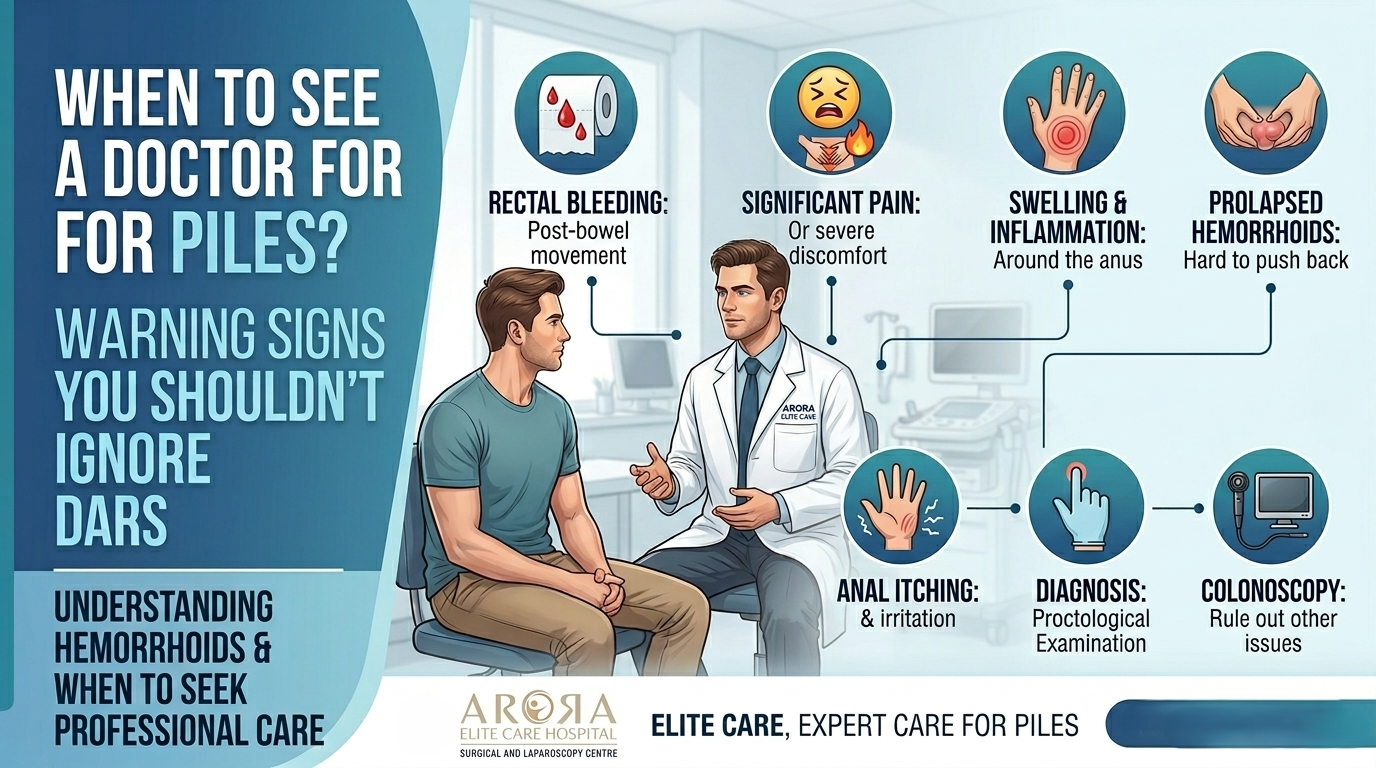
Many people ask whether they should continue home remedies or seek medical help. The following situations indicate that it is time to consult a specialist.
Persistent Rectal Bleeding
One of the most important reasons when to see doctor for piles is ongoing rectal bleeding.
Small amounts of bright red blood may occur with hemorrhoids, but repeated bleeding should always be evaluated. Other digestive conditions can also cause rectal bleeding, making professional assessment essential.
Severe Pain
Although internal piles may not always be painful, severe pain can indicate a thrombosed external hemorrhoid or another anorectal condition.
If pain interferes with sitting, walking, sleeping, or daily activities, you should seek medical attention.
Prolapsed Piles
Internal piles can sometimes protrude outside the anus. Initially, they may return inside naturally, but advanced prolapsed piles often require treatment.
This is a common reason patients search for when to see doctor for piles because prolapse can become increasingly uncomfortable over time.
Recurring Symptoms
If piles continue returning despite dietary changes and home remedies, professional treatment may be needed.
Recurring symptoms often indicate underlying issues that require specialist evaluation.
Large or Painful Lump
A painful lump near the anus may indicate a thrombosed hemorrhoid, which develops when blood clots form within external piles.
Prompt treatment can help reduce pain and prevent complications.
Changes in Bowel Habits
Unexpected changes in bowel habits should always be investigated, particularly when accompanied by bleeding or discomfort.
Symptoms Affecting Daily Life
When piles begin affecting work, exercise, travel, sleep, or personal comfort, it is time to seek expert care.
What Happens When You See Doctor for Piles?
Many patients feel anxious about their first consultation. However, evaluation is usually quick and straightforward.
Your doctor may perform:
- Medical history review
- Physical examination
- Digital rectal examination
- Proctoscopy
- Anoscopy if required
These assessments help determine the severity of the condition and rule out other anorectal diseases.
Treatment Options After You See Doctor for Piles
The appropriate treatment depends on the grade and severity of hemorrhoids.
Lifestyle and Dietary Changes
For mild cases, doctors often recommend:
- Increasing fiber intake
- Drinking more water
- Regular physical activity
- Avoiding prolonged sitting
- Maintaining healthy bowel habits
These measures can help reduce symptoms and prevent recurrence.
Medications
Prescription medications may help control:
- Pain
- Swelling
- Itching
- Inflammation
Medications are often combined with dietary modifications for better results.
Minimally Invasive Procedures
When symptoms persist, minimally invasive procedures may be recommended.
These include:
- Rubber band ligation
- Sclerotherapy
- Infrared coagulation
Such treatments are usually performed on an outpatient basis with minimal downtime.
Advanced Piles Surgery
For large, prolapsed, or recurrent hemorrhoids, surgery may provide the most effective long-term solution.
Modern surgical techniques offer:
- Faster recovery
- Reduced discomfort
- Minimal hospital stay
- Improved patient outcomes
You may also explore related treatments such as:
Recovery After Piles Treatment
Recovery varies depending on the treatment method used. Most patients can resume normal activities within one or two days.
Recovery After Surgery
Patients may experience mild discomfort for several days. Following postoperative instructions helps ensure smooth healing.
Helpful recovery tips include:
- Drinking plenty of fluids
- Eating a high-fiber diet
- Avoiding constipation
- Taking prescribed medications
- Attending follow-up appointments
Most patients notice significant improvement in symptoms after treatment.
Can Piles Be Prevented?
Although piles cannot always be prevented, certain lifestyle changes can reduce your risk.
Prevention Tips
- Eat fiber-rich foods daily
- Drink adequate water
- Exercise regularly
- Avoid straining during bowel movements
- Limit prolonged sitting
- Maintain a healthy weight
- Respond promptly to the urge to pass stool
Healthy bowel habits play an important role in preventing hemorrhoids.
Conclusion
Understanding when to see doctor for piles can help prevent complications and improve your quality of life. While mild symptoms may respond to home care, persistent bleeding, severe pain, prolapsed hemorrhoids, recurring symptoms, or large painful lumps should always be evaluated by a specialist.
Arora Elite Care offers Modern piles treatments are safe, effective, and designed to provide lasting relief. Seeking professional help early often leads to quicker recovery and better outcomes.
FAQs
When should I see a doctor for piles?
You should see a doctor for piles if you experience persistent bleeding, severe pain, prolapsed hemorrhoids, recurring symptoms, or a painful anal lump.
Can piles heal without treatment?
Mild piles may improve with dietary changes and lifestyle modifications. However, persistent symptoms often require medical treatment.
Is bleeding from piles dangerous?
Bleeding may occur with piles, but any rectal bleeding should be evaluated to rule out other conditions.
What is the best treatment for piles?
Treatment depends on severity. Options range from lifestyle changes and medications to minimally invasive procedures and surgery.
How do doctors diagnose piles?
Diagnosis usually involves medical history, physical examination, and specialized anorectal evaluation when necessary.