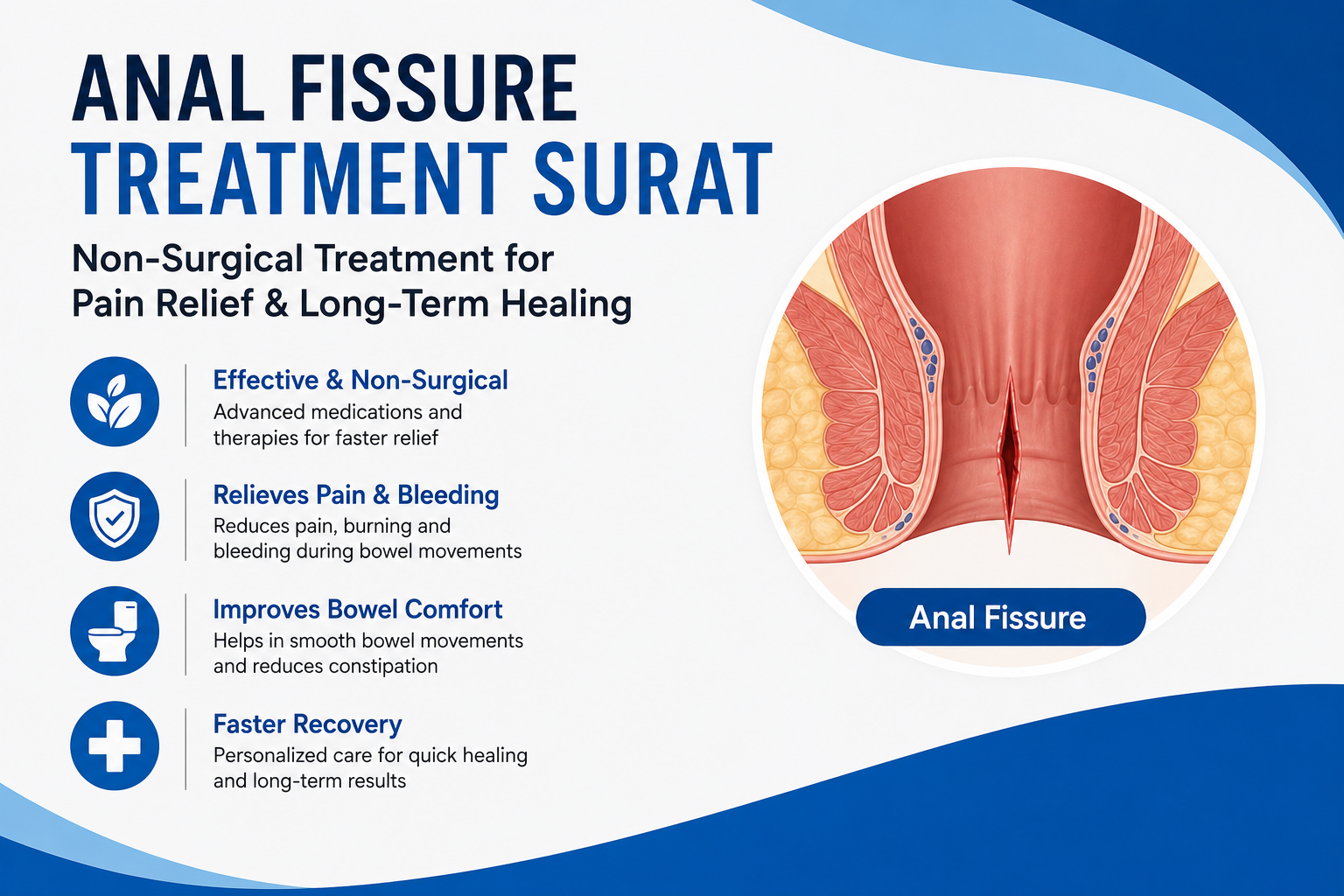
Anal fissure treatment Surat depends on the type of fissure, its severity, and how well it responds to initial treatment. Most acute anal fissures heal with a fibre-rich diet, adequate fluids, stool-softening medicines and warm sitz baths. Chronic anal fissures may need prescription creams, Botox injections or surgery such as lateral internal sphincterotomy (LIS).
An anal fissure is a small tear in the lining of the anal canal. It can cause sharp pain during bowel movements, burning discomfort, and bright red bleeding.
Many patients confuse anal fissures with piles or delay medical consultation because they feel uncomfortable discussing the symptoms.
At Arora Elite Care in Surat, patients can consult Dr. Hitesh Arora, an Advanced Laparoscopic and General Surgeon, for an assessment of persistent anorectal symptoms.
This guide explains acute and chronic fissures, available treatments, recovery timelines, surgery risks, and treatment costs.
What Is an Anal Fissure?
An anal fissure is a small tear in the thin tissue lining the anal canal.
The tear commonly develops when hard stools or excessive straining stretch the anal lining.
Even a small fissure can cause significant discomfort because the affected area contains sensitive nerve endings.
Some patients develop spasms in the internal anal sphincter muscle. These spasms increase pressure and may reduce blood flow, making healing more difficult.
Is an Anal Fissure Different From Piles?
Yes. Although both conditions can cause pain or bleeding, they affect different tissues.
- Anal fissure: A tear in the lining of the anal canal.
- Piles: Enlarged or symptomatic vascular cushions in or around the anus.
- Anal fistula: An abnormal tunnel connecting the anal canal with nearby skin.
A medical examination helps distinguish these conditions.
Learn more about piles treatment in Surat.
Acute vs Chronic Anal Fissure: What Is the Difference?
An acute fissure is a recent tear, usually present for less than six weeks. A chronic fissure generally lasts longer than six weeks or shows signs of delayed healing.
| Factor | Acute Anal Fissure | Chronic Anal Fissure |
|---|---|---|
| Duration | Usually less than 6 weeks | Typically more than 6 weeks |
| Appearance | Fresh, shallow tear | May have thickened edges or a skin tag |
| Pain | Sharp pain during bowel movements | Persistent or recurring pain |
| Bleeding | Occasional bright red bleeding | Bleeding may recur |
| Initial treatment | Fibre, fluids, sitz baths and stool softening | Bowel care and prescription ointments |
| Additional treatment | Usually unnecessary | Botox or surgery in selected cases |
| Healing | Often improves with conservative treatment | May require further medical care |
Not every chronic fissure needs surgery. Doctors usually recommend appropriate medical treatment before considering an operation.
For a detailed discussion of persistent fissures, read Chronic Anal Fissure: What to Do When Creams Stop Working.
What Causes Anal Fissures?
Constipation, hard stools and excessive straining are common causes of anal fissures.
Other contributing factors include:
- Passing large or hard stools
- Repeated diarrhoea
- Childbirth-related stretching
- Anal trauma
- Increased anal sphincter tension
- Inflammatory bowel disease, including Crohn’s disease
Most typical fissures develop in the posterior midline of the anal canal.
Multiple fissures, unusual fissure locations or wounds that do not heal may require further investigation.
According to the Cleveland Clinic, anal fissures commonly cause pain and bleeding during bowel movements.
What Are the Symptoms of an Anal Fissure?
Common symptoms include:
- Sharp or tearing pain while passing stool
- Burning discomfort after bowel movements
- Bright red blood on toilet paper
- Anal muscle spasms
- Fear of passing stool because of pain
- A visible tear near the anal opening
- A small skin tag in some chronic cases
Pain may continue for several minutes or hours after a bowel movement.
Important: Rectal bleeding does not always indicate an anal fissure. Piles, inflammation and other bowel conditions can also cause bleeding.
Can an Anal Fissure Heal Without Surgery?
Yes. Many acute anal fissures heal without surgery when patients keep their stools soft, reduce straining and follow appropriate treatment.
Doctors usually begin with conservative care.
1. Eat Fibre-Rich Foods
Fibre helps soften stools and makes bowel movements easier.
Useful foods include:
- Whole-wheat rotli
- Dal and legumes
- Green vegetables
- Fruits
- Oats
- Jowar and bajra
- Other whole grains
Increase fibre gradually to minimise bloating.
2. Drink Adequate Fluids
Adequate fluid intake supports normal bowel movements.
Patients with medical conditions that require fluid restriction should follow their doctor’s advice.
3. Use Stool Softeners When Recommended
Doctors may prescribe stool-softening medicines or recommend fibre supplements to reduce straining.
4. Take Warm Sitz Baths
Sit in comfortably warm water for approximately 10–15 minutes.
Warm sitz baths may help relax anal muscles and reduce discomfort.
Avoid excessively hot water.
5. Improve Toilet Habits
Avoid prolonged toilet sitting and excessive straining.
Respond to the natural urge to pass stool rather than repeatedly delaying bowel movements.
These measures remain important even if patients later require prescription medicines or surgery.
Which Creams and Medicines Help Treat Anal Fissures?
Doctors may prescribe topical medicines that relax the internal anal sphincter, reduce pressure and support healing.
Diltiazem Cream
Diltiazem helps relax the internal anal sphincter.
Doctors commonly consider it for chronic fissures.
Some patients may experience local irritation.
Nitroglycerin Ointment
Nitroglycerin, also called glyceryl trinitrate or GTN, relaxes the anal sphincter and may improve blood flow.
However, it can cause headaches, dizziness and low blood pressure.
It can also interact dangerously with certain medicines, including some erectile dysfunction treatments.
Nifedipine Ointment
Topical nifedipine is another calcium-channel blocker that may help reduce sphincter pressure.
Doctors select the preparation according to the patient’s symptoms and medical history.
Pain-Relieving Medicines
A doctor may recommend suitable pain relief or short-term topical local anaesthetic.
However, pain-relieving medicines do not necessarily heal the underlying fissure.
Do not use prescription fissure creams without medical advice. Treatment duration, dosage and possible interactions require individual assessment.
When Is Botox Used for Anal Fissure Treatment?
Botox injections may help selected patients with chronic anal fissures by temporarily relaxing the internal anal sphincter.
Doctors may consider Botox when prescription ointments do not provide sufficient improvement or when surgery is not preferred.
How Does Botox Work?
A clinician injects botulinum toxin into the anal sphincter muscle.
The medicine temporarily reduces muscle tension, which may improve blood flow and support healing.
What Are the Limitations?
Botox does not guarantee healing.
Possible limitations include:
- Persistent symptoms
- Recurrence after the effect wears off
- Need for repeat treatment
- Temporary changes in gas or stool control
The treating surgeon should explain the benefits, alternatives and risks before recommending an injection.
Laser vs LIS Surgery: Which Is Better for Anal Fissures?
Lateral internal sphincterotomy (LIS) is an established surgical treatment for selected chronic anal fissures. Laser-based treatments vary in technique, and evidence supporting some approaches remains less established.
| Factor | Laser-Based Treatment | LIS Surgery |
|---|---|---|
| Technique | Depends on the specific laser procedure | Controlled division of part of the internal anal sphincter |
| Main purpose | Varies by technique | Reduces excessive sphincter pressure |
| Suitable patients | Depends on diagnosis and procedure | Selected chronic fissures resistant to medical treatment |
| Evidence | Varies between techniques | Well-established surgical option |
| Recovery | Depends on the procedure | Light activities often resume within days |
| Risks | Healing failure, recurrence and procedure-specific complications | Bleeding, infection and possible changes in bowel control |
| Long-term results | Depend on the technique | Generally effective in appropriately selected patients |
Laser surgery is not automatically painless, safer or more effective than LIS.
Patients should ask their surgeon which specific technique they recommend and why.
What Is Lateral Internal Sphincterotomy?
Lateral internal sphincterotomy is an operation that reduces excessive internal anal sphincter tension to support healing of a chronic fissure.
During LIS, the surgeon divides a controlled portion of the internal sphincter muscle.
This reduces resting pressure and may improve blood flow around the fissure.
Who May Need LIS Surgery?
A surgeon may recommend LIS when:
- A chronic fissure persists despite appropriate medical treatment.
- Pain significantly affects daily activities.
- Symptoms repeatedly return.
- Clinical examination supports surgical treatment.
- The expected benefits outweigh individual risks.
LIS is not appropriate for every patient.
People with existing bowel-control problems, previous sphincter injuries, certain childbirth-related injuries or inflammatory bowel disease may require different approaches.
What Are the Risks?
Possible risks include:
- Bleeding
- Infection
- Pain
- Delayed healing
- Persistent or recurrent fissure
- Temporary or lasting changes in control of gas or stool
The surgeon should assess bowel-control risks before recommending surgery.
When Does an Anal Fissure Need Surgery?
Doctors usually consider surgery when a chronic anal fissure remains painful or unhealed despite an appropriate course of conservative and prescription treatment.
Surgery may become an option when:
- Symptoms continue beyond the expected healing period.
- Prescription creams fail to provide sufficient improvement.
- Recurrent fissures affect daily activities.
- Examination findings indicate a persistent chronic fissure.
- The patient’s expected benefits outweigh the risks.
Doctors should base the decision on a clinical assessment, not symptom duration alone.
How Long Does Recovery Take After Fissure Treatment?
Recovery depends on the treatment, severity of the fissure and individual healing.
| Treatment | General Recovery Expectations |
|---|---|
| Diet and stool softening | Symptoms may improve within days; healing often takes several weeks |
| Prescription creams | Usually require several weeks of treatment |
| Botox injection | Routine activities may resume quickly; healing takes additional time |
| LIS surgery | Many patients resume light activities within days; complete healing may take several weeks |
| Laser-based treatment | Recovery varies according to the technique |
These timelines are general estimates rather than guaranteed outcomes.
How Can You Support Recovery?
- Keep stools soft.
- Eat a balanced, fibre-rich diet.
- Drink adequate fluids.
- Avoid excessive straining.
- Take prescribed medicines correctly.
- Maintain gentle anal hygiene.
- Follow activity restrictions after surgery.
- Attend follow-up appointments.
Read our guides on diet before and after surgery and wound care after surgery.
What Is the Cost of Anal Fissure Treatment Surat?
The cost of anal fissure treatment Surat depends on the condition’s severity, required medicines, investigations, procedure, and hospital charges.
| Treatment | Cost Considerations |
|---|---|
| Consultation | Doctor’s assessment and examination charges |
| Prescription medicines | Type and duration of treatment |
| Botox injection | Medicine, procedure and facility charges |
| LIS surgery | Surgeon, anaesthesia, operating theatre and hospital charges |
| Laser-based procedure | Technique, equipment and facility charges |
Actual costs require confirmation with the clinic.
What Factors Affect Surgery Costs?
- Type of procedure
- Anaesthesia
- Operating theatre charges
- Hospital stay
- Medicines and investigations
- Additional treatment requirements
- Follow-up care
Patients should request an itemised estimate before treatment.
Insurance coverage depends on policy terms, exclusions, waiting periods and insurer approval.
When Should You Seek Medical Attention?
Consult a doctor if anal pain or bleeding persists, repeatedly returns or does not improve with appropriate care.
Seek urgent medical attention if you experience:
- Heavy rectal bleeding
- Fainting or severe dizziness
- Fever with increasing anal pain or swelling
- Severe worsening pain
- Significant weakness or illness
These symptoms may indicate a condition requiring prompt medical assessment.
Consult Dr. Hitesh Arora for Anal Fissure Treatment in Surat
Patients seeking fissure treatment in Surat can arrange a consultation at Arora Elite Care.
Dr. Hitesh Arora is an Advanced Laparoscopic and General Surgeon associated with the clinic.
During a consultation, the doctor can:
- Review symptoms and medical history.
- Examine the affected area.
- Distinguish acute fissures from chronic fissures.
- Assess previous treatments.
- Discuss appropriate medical or surgical options.
- Explain expected recovery and possible risks.
The treatment plan should reflect the patient’s symptoms, examination findings, and individual health needs.
Clinic: Arora Elite Care
Address: Solaris Kode 202–203, VIP Road, Surat, Gujarat 395007
Book a Surgery Consultation in Surat
Conclusion
Anal fissures can cause significant discomfort, but many patients improve without surgery.
A fibre-rich diet, adequate fluids, stool-softening measures and prescription creams often help acute fissures and some chronic fissures heal.
Persistent chronic fissures may require additional treatment, including Botox injections or lateral internal sphincterotomy in selected cases.
If you need anal fissure treatment Surat, consult a qualified surgeon for an accurate diagnosis and an individual treatment plan.
Frequently Asked Questions
1. Can an Anal Fissure Heal Without Surgery?
Yes. Many acute fissures heal with fibre, fluids, stool softening, and appropriate medicines. Some chronic fissures also respond to prescription ointments. Persistent cases may need further treatment.
2. Which Cream Is Best for Anal Fissure Treatment?
Doctors may prescribe topical diltiazem, nifedipine, or nitroglycerin. The best option depends on the patient’s medical history, symptoms, other medicines, and possible side effects.
3. Is Laser Treatment Better Than LIS Surgery?
Not necessarily. LIS has established evidence for selected chronic fissures. Laser-based procedures vary in technique and supporting evidence. A surgeon should explain the expected benefits and risks of each approach.
4. How Long Does an Anal Fissure Take to Heal?
Many acute fissures heal over several weeks with appropriate care. Chronic fissures may take longer and sometimes require prescription medicines or surgery.
5. Can an Anal Fissure Return After Surgery?
Yes. A fissure can recur after treatment. LIS generally offers durable healing in appropriately selected patients, but no treatment guarantees permanent success.
6. When Should I Consult a Surgeon for an Anal Fissure?
Consult a surgeon if pain or bleeding persists, symptoms repeatedly return, or appropriate medical treatment does not help. Seek urgent care for heavy bleeding, fainting, fever with swelling, or severe worsening pain.
1 Comment
Post-Diwali Digestive Health Problems: Warning Signs
September 10, 2026[…] For persistent fissure-related symptoms, patients can review the clinic’s information about Anal Fissure Treatment in Surat. […]