
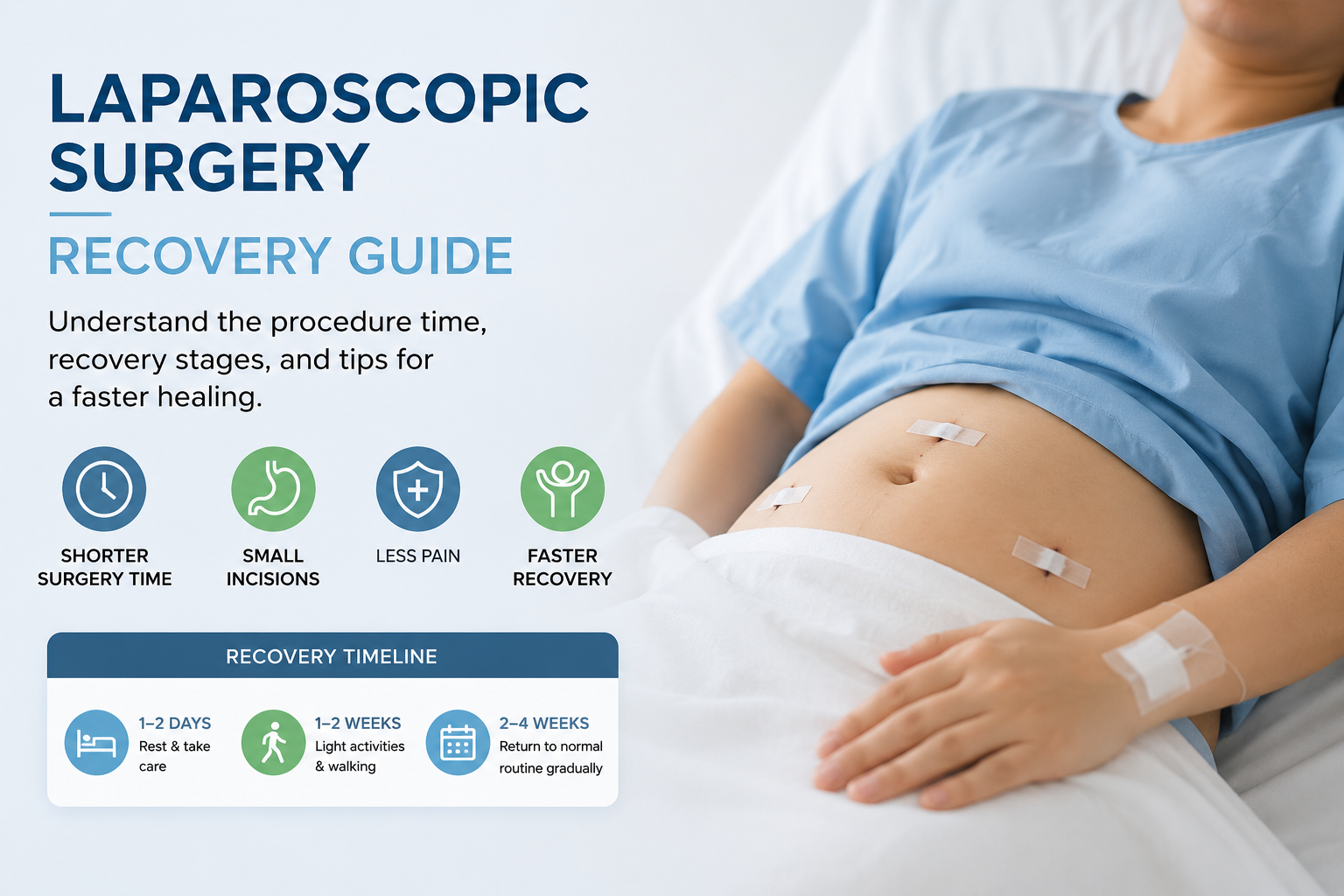
Laparoscopic surgery has transformed modern surgical care by offering a minimally invasive alternative to traditional open surgery. Patients today frequently search for laparoscopic surgery recovery time because understanding the recovery process helps them prepare physically and mentally before treatment.
Compared to open surgery, laparoscopic procedures generally involve smaller incisions, reduced pain, faster healing, and shorter hospital stays. However, recovery time varies depending on the type of surgery performed and the patient’s overall health condition.
At Arora Elite Care, advanced laparoscopic procedures are performed with a patient-focused approach designed to support safe surgery and smoother recovery under the expertise of experienced surgeon Dr. Hitesh Arora.
Laparoscopic Surgery
Laparoscopic surgery, often called minimally invasive surgery, is a modern surgical technique where surgeons perform operations using very small incisions instead of one large cut.
During the procedure, a thin instrument called a laparoscope is inserted through a small incision. The laparoscope contains a camera that allows surgeons to view internal organs on a monitor while performing surgery.
This surgical approach is commonly used for:
- Gallbladder surgery
- Appendix surgery
- Hernia surgery
- Gastrointestinal surgery
- Gynecological procedures
- Diagnostic abdominal procedures
Because tissue damage is limited, the laparoscopic surgery recovery time is usually faster compared to traditional surgery.
How Long Does Laparoscopic Surgery Take?
One of the most common questions patients ask is how long the procedure itself takes.
Average procedure time may vary:
- Simple laparoscopic procedures: 30 to 60 minutes
- Gallbladder removal surgery: 45 to 90 minutes
- Appendix surgery: 30 to 90 minutes
- Hernia repair surgery: 45 to 120 minutes
- Complex abdominal procedures: Longer, depending on complexity
The actual surgery time depends on the patient’s condition, surgical planning, and the complexity of the procedure.
While surgery duration matters, most patients are more concerned about the laparoscopic surgery recovery time after the procedure.
How Laparoscopic Surgery Is Performed
Understanding the procedure helps patients better prepare for surgery.
The process generally includes several steps.
Step 1: Anesthesia Administration
Patients receive anesthesia so the procedure can be performed safely and comfortably.
Step 2: Small Incisions
The surgeon creates a few small incisions in the abdominal area.
Step 3: Camera Insertion
A laparoscope with a camera is inserted through one incision to provide internal visualization.
Step 4: Surgical Procedure
Specialized instruments are inserted through additional incisions to perform the surgery.
Step 5: Closing Incisions
Once the procedure is completed, the small incisions are closed carefully.
Because incisions are much smaller, laparoscopic surgery recovery time is generally shorter compared with open surgery.
Laparoscopic Surgery Recovery Time
The biggest advantage of minimally invasive surgery is faster recovery.
However, laparoscopic surgery recovery time varies depending on the procedure performed, the patient’s age, overall health, and whether complications are present.
General recovery usually follows several stages.
First 24 Hours After Surgery
During the first day, patients may experience:
- Mild pain around incision sites
- Temporary bloating caused by surgical gas
- Mild fatigue after anesthesia
- Limited mobility for a few hours
Most patients begin walking within a short period after surgery.
Recovery During the First Week
Within the first week, patients generally notice gradual improvement.
Common recovery experiences include:
- Reduced abdominal discomfort
- Improved mobility
- Decreased swelling around the incision area
- Better energy levels
Doctors usually recommend avoiding heavy physical activity during this stage.
Recovery After Two to Four Weeks
For many patients, laparoscopic surgery recovery time improves significantly within two to four weeks.
During this phase:
- Incisions continue healing
- Normal activities gradually resume
- Pain reduces considerably
- Energy levels improve steadily
Some patients recover sooner, depending on the type of surgery performed.
Full Recovery Period
Complete recovery depends on the exact procedure.
In many cases:
- Minor laparoscopic procedures recover faster
- More complex surgeries may require additional healing time
- Full recovery can range from a few weeks to longer, depending on the procedure
Proper post-operative care helps improve long-term recovery.
Factors That Affect Laparoscopic Surgery Recovery Time
Every patient heals differently.
Several factors influence laparoscopic surgery recovery time.
Type of Surgery
Complex procedures generally require longer healing.
Overall Health Condition
Patients in good health often recover faster.
Age
Recovery speed may vary depending on age and general fitness.
Presence of Medical Conditions
Diabetes or chronic health conditions may affect healing speed.
Following Medical Instructions
Following post-surgery care instructions helps reduce complications.
Tips for Faster Recovery After Laparoscopic Surgery
Patients can support better healing by following proper recovery habits.
Helpful recovery practices include:
Stay Hydrated
Proper hydration supports healing.
Walk Regularly
Light walking improves circulation and prevents stiffness.
Eat a Balanced Diet
Nutritious food helps tissue repair.
Avoid Heavy Physical Activity
Strenuous activity may delay healing.
Follow Follow-Up Appointments
Regular medical evaluation helps monitor recovery progress.
These habits can positively affect laparoscopic surgery recovery time.
Why Choose Arora Elite Care?
Choosing an experienced surgical center is important for both successful treatment and smooth recovery.
At Arora Elite Care, patients receive advanced surgical care using modern minimally invasive techniques designed to improve patient comfort and recovery outcomes.
The center offers:
- Advanced laparoscopic procedures
- Modern surgical infrastructure
- Personalized surgical planning
- Safe treatment protocols
- Comprehensive post-operative care
Procedures are performed under the supervision of experienced laparoscopic surgeon Dr. Hitesh Arora, focusing on patient safety and better recovery outcomes.
Related Surgical Treatments
Patients exploring minimally invasive surgery often look for procedures related to abdominal treatment.
Related treatment options include:
- Laparoscopic Surgery
- Gallbladder Surgery
- Appendix Surgery
Understanding different surgical options helps patients make informed healthcare decisions.
Conclusion
Modern minimally invasive procedures have made surgery safer and recovery easier for many patients. Understanding laparoscopic surgery recovery time helps patients know what to expect before treatment and how to prepare for healing afterward.
Because recovery depends on the procedure type, overall health, and proper post-operative care, choosing an experienced surgical center is extremely important.
At Arora Elite Care, advanced laparoscopic procedures are performed under the experienced surgeon Dr. Hitesh Arora, focusing on precision, patient safety, and faster recovery.
Frequently Asked Questions
How long is the laparoscopic surgery recovery time?
Recovery time varies depending on the procedure, but many patients begin normal activities within a few weeks.
Is laparoscopic surgery safer than open surgery?
Laparoscopic surgery often involves smaller incisions, less pain, and faster recovery compared to traditional open surgery.
How long does laparoscopic surgery usually take?
Many laparoscopic procedures take between 30 minutes and 2 hours, depending on complexity.
Can I walk after laparoscopic surgery?
Most patients begin light walking shortly after surgery, depending on medical advice.
Does laparoscopic surgery have a faster recovery time?
Yes. One major advantage of minimally invasive surgery is shorter laparoscopic surgery recovery time compared to open surgery.