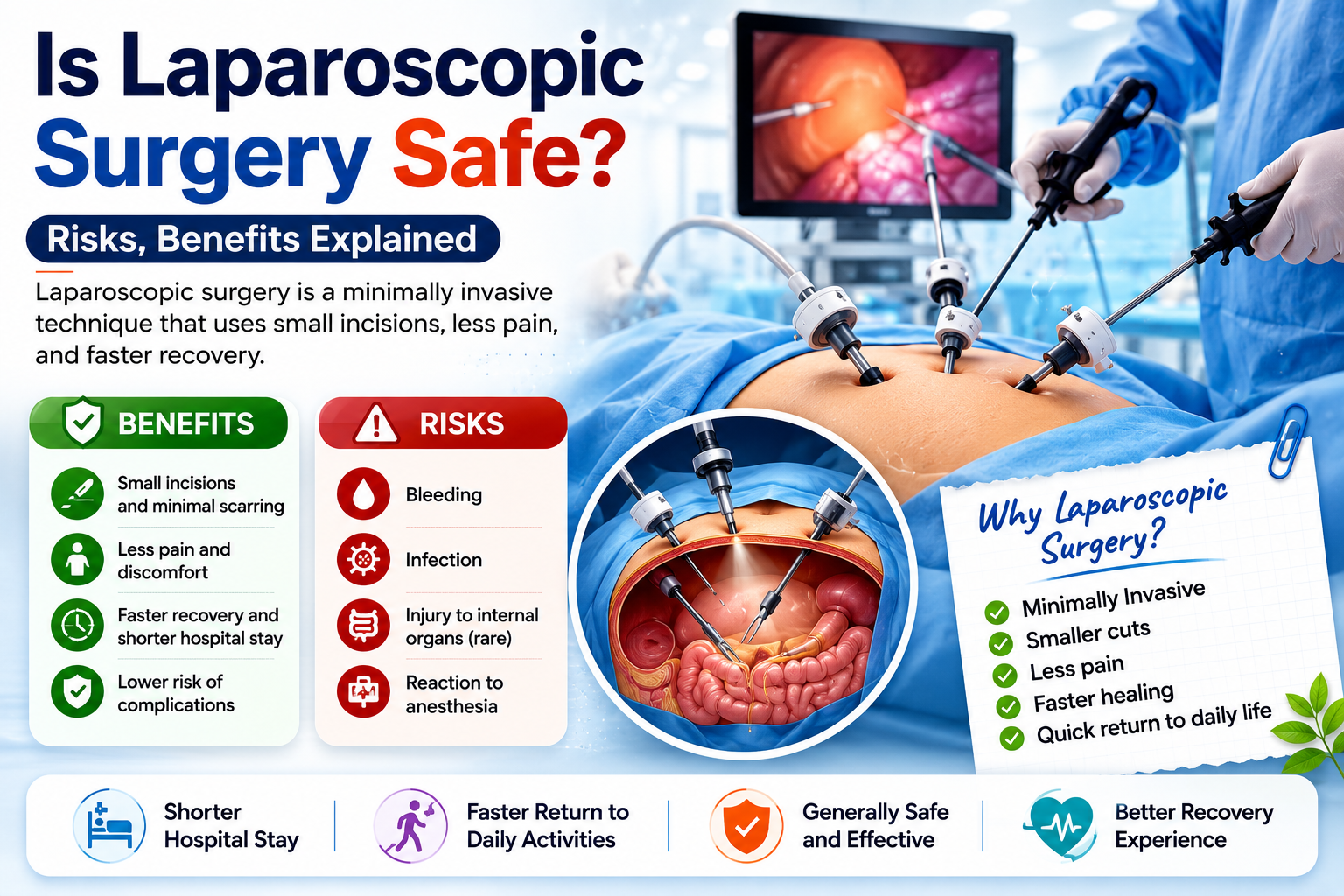
When doctors recommend surgery, one of the first concerns patients usually have is whether the procedure is safe and how difficult recovery may be afterward. This is why many people search online to better understand laparoscopic surgery risks and benefits before making any healthcare decisions.
Laparoscopic surgery has become one of the most widely used modern surgical techniques because it allows surgeons to perform procedures using smaller incisions instead of the large cuts used in traditional open surgery.
Because every surgery involves both advantages and possible risks, understanding the procedure helps patients make informed decisions before consultation.
At Arora Elite Care, advanced minimally invasive procedures are performed under the expertise of experienced surgeon Dr. Hitesh Arora, with patient safety as a top priority.
Laparoscopic Surgery
Laparoscopic surgery is a minimally invasive surgical technique where doctors perform procedures using very small incisions instead of one large surgical opening.
A thin surgical instrument called a laparoscope is inserted through a small incision. The laparoscope contains a camera that allows surgeons to see internal organs on a monitor while performing surgery.
This technique is commonly used for:
- Gallbladder surgery
- Appendix surgery
- Hernia surgery
- Gastrointestinal procedures
- Gynecological surgeries
- Diagnostic abdominal procedures
Because smaller incisions are used, recovery is often faster than traditional surgery.
How Is Laparoscopic Surgery Performed?
Understanding the procedure helps patients better understand laparoscopic surgery risks and benefits.
The procedure generally follows several stages.
Step 1: Anesthesia Administration
Patients receive anesthesia so surgery can be performed safely and comfortably.
Step 2: Small Surgical Incisions
A few small incisions are created in the abdominal area.
Step 3: Camera Placement
A laparoscope is inserted through one incision to provide internal visualization.
Step 4: Surgical Procedure
Specialized instruments are inserted through additional incisions to perform the required procedure.
Step 5: Closing the Incisions
After surgery is completed, the small incisions are closed carefully.
This approach helps minimize tissue damage and improve recovery outcomes.
Benefits of Laparoscopic Surgery
Understanding the positive side of treatment is an important part of evaluating laparoscopic surgery risks and benefits.
Patients often experience several advantages.
Smaller Surgical Incisions
Small incisions generally mean reduced visible scarring compared with open surgery.
Faster Recovery Time
Patients often return to normal activity faster than with traditional surgery.
Less Post-Surgical Pain
Smaller incisions usually reduce pain after surgery.
Reduced Blood Loss
Minimally invasive surgery often lowers the risk of excessive bleeding.
Shorter Hospital Stay
Many patients spend less time in the hospital compared with open surgery.
Faster Return to Daily Activities
Recovery usually allows a quicker return to work and normal routine.
These benefits have made laparoscopic procedures widely preferred in modern surgery.
Risks of Laparoscopic Surgery
Although the procedure is considered safe in many cases, understanding Laparoscopic Surgery risks and benefits requires patients to know possible complications as well.
Like all surgeries, some risks may exist.
Possible risks include:
Temporary Pain and Discomfort
Mild discomfort around incision sites may occur during early recovery.
Infection Risk
Every surgical procedure carries a small risk of infection.
Internal Bleeding
In rare cases, internal bleeding may occur during or after surgery.
Reaction to Anesthesia
Some patients may temporarily experience side effects related to anesthesia.
Injury to Nearby Organs
Depending on the procedure, surrounding internal structures may occasionally be affected.
Temporary Bloating
Gas used during surgery may cause temporary abdominal bloating.
Although complications are uncommon, discussing surgical risks with a doctor remains important.
Recovery After Laparoscopic Surger
The Recovery is one of the biggest reasons patients prefer minimally invasive procedures.
Recovery usually happens in stages.
First 24 Hours
Patients may experience:
- Mild pain
- Temporary fatigue
- Limited movement initially
- Minor bloating sensation
Most patients begin walking soon after surgery.
First Week Recovery
During early recovery, patients often notice:
- Reduced discomfort
- Better mobility
- Healing around incision sites
- Improved energy levels
Heavy physical activity is usually avoided during this stage.
Recovery During Two to Four Weeks
During this phase:
- Surgical discomfort reduces significantly
- Normal activities gradually resume
- Healing improves steadily
- Energy levels continue improving
Recovery speed depends on both procedure type and patient health condition.
How Doctors Decide If Laparoscopic Surgery Is Safe for You
Many patients worry whether surgery is truly necessary for their condition.
Before recommending treatment, doctors evaluate several important factors.
This usually includes:
- Severity of the medical condition
- Age of the patient
- Previous medical history
- Existing health conditions such as diabetes or hypertension
- Previous surgical history
- Overall physical fitness
This medical evaluation helps determine whether laparoscopic surgery is the safest treatment option.
Understanding these factors helps patients better understand laparoscopic surgery risks and benefits before treatment planning.
Questions Patients Should Ask Before Surgery
Before undergoing any surgery, patients should understand the procedure clearly.
Important questions include:
Why is surgery being recommended?
Understanding the reason helps patients make informed decisions.
Are there alternative treatment options?
Some medical conditions may have alternative treatment approaches.
What risks are involved?
Knowing possible complications helps set realistic expectations.
How long will recovery take?
Recovery understanding helps patients prepare mentally and physically.
What precautions should I follow after surgery?
Following proper post-surgery care improves recovery outcomes.
Asking these questions helps patients feel more confident before a consultation.
Why Understanding Risks and Benefits Matters Before Surgery
Many patients focus only on treatment without understanding both the advantages and possible complications.
Learning about laparoscopic surgery risks and benefits helps patients:
- Reduce fear related to surgery
- Understand recovery expectations
- Prepare for post-operative care
- Ask better questions during consultation
- Make informed medical decisions
Better-informed patients usually feel more confident when discussing surgery with a specialist.
Why Choose Arora Elite Care?
Choosing the right surgical center is important for both safety and recovery quality.
At Arora Elite Care, patients receive advanced minimally invasive surgical care using modern treatment techniques focused on safety and precision.
The center offers:
- Advanced laparoscopic procedures
- Modern surgical technology
- Personalized treatment planning
- Safe surgical protocols
- Comprehensive post-operative care
Procedures are performed under the experienced surgeon, Dr. Hitesh Arora, with a strong focus on patient safety and smooth recovery.
Related Surgical Treatments
Patients researching minimally invasive procedures often explore related surgeries.
Related treatments include:
- Laparoscopic Surgery
- Gallbladder Surgery
- Appendix Surgery
Learning about related procedures helps patients better understand available treatment options.
Conclusion
Modern minimally invasive procedures have significantly improved surgical safety and patient recovery experience.
Understanding laparoscopic surgery risks and benefits helps patients make informed healthcare decisions before treatment.
While laparoscopic surgery offers advantages such as faster recovery, smaller incisions, reduced pain, and shorter hospital stay, patients should also understand the possible risks associated with any surgery.
At Arora Elite Care, advanced laparoscopic procedures are performed under the experienced surgeon Dr. Hitesh Arora with patient safety, surgical precision, and faster recovery as core priorities.
Frequently Asked Questions
Is laparoscopic surgery safer than open surgery?
In many cases, laparoscopic surgery offers smaller incisions, reduced pain, and faster recovery compared with traditional open surgery.
What are the main benefits of laparoscopic surgery?
Benefits usually include faster healing, smaller scars, reduced pain, and shorter hospital stays.
What are the possible risks of laparoscopic surgery?
Possible risks include infection, temporary discomfort, bleeding, anesthesia reaction, and rare injury to nearby organs.
How long does recovery take after laparoscopic surgery?
Recovery varies depending on procedure type, but many patients recover faster compared with open surgery.
Does laparoscopic surgery always have fewer complications?
Although generally safe, every surgery carries some level of risk depending on the patient’s health and procedure complexity.