
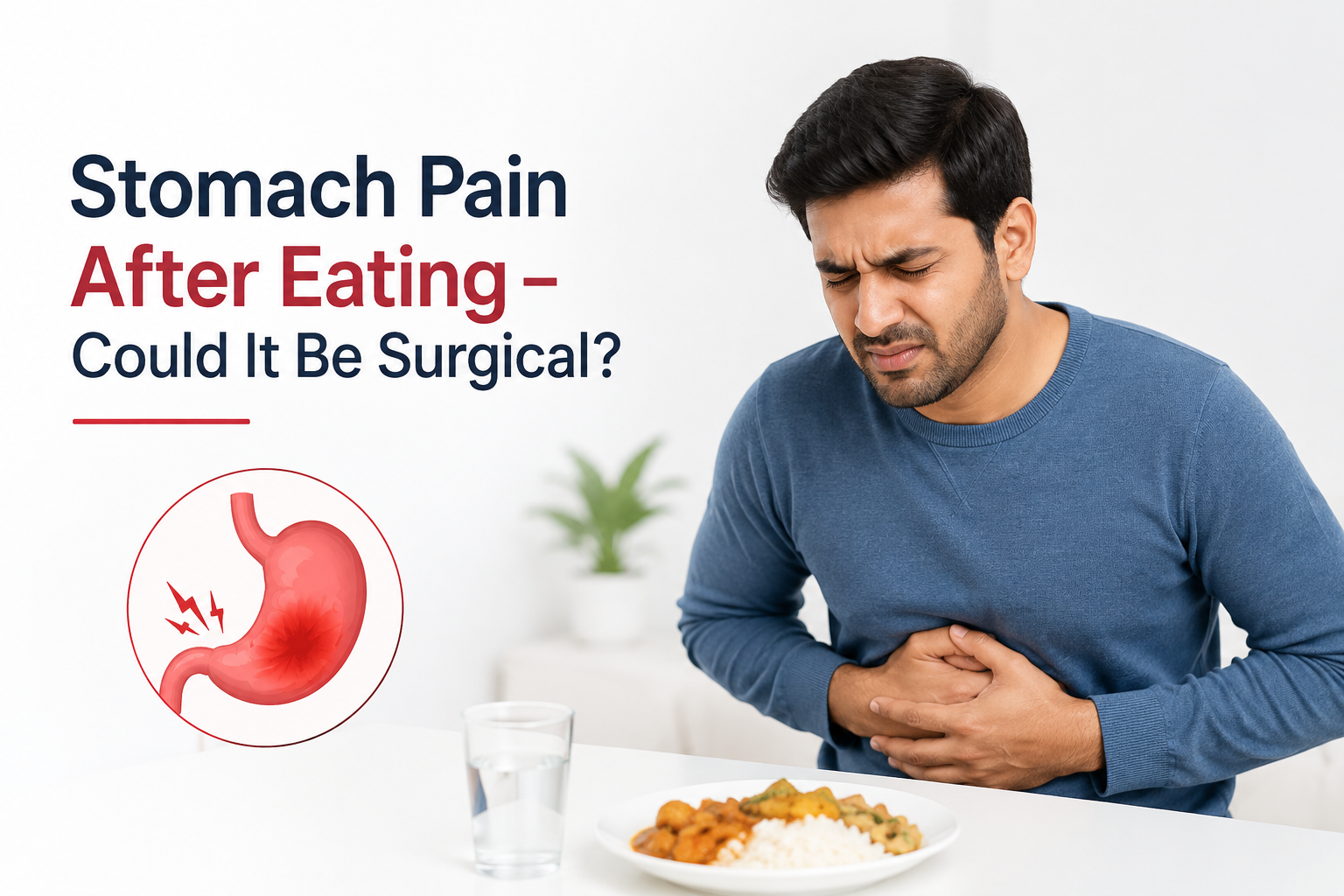
Stomach pain after eating can happen because of indigestion, acid reflux, gallstones, stomach ulcers, or other digestive conditions. Most cases do not require surgery, but certain pain patterns especially severe pain in the upper-right abdomen, repeated attacks after fatty meals, or pain associated with vomiting and fever may indicate a condition that needs urgent medical evaluation.
The location, severity, duration, and timing of pain can help doctors identify its cause.
Some conditions improve with medicines and dietary changes, while others, such as symptomatic gallstones or certain hernia complications, may require surgical treatment.
Understanding the warning signs can help you decide when to consult a doctor or surgeon.
Why Does Stomach Pain Occur After Eating?
After eating, the stomach produces acid and digestive juices to break down food. The gallbladder releases bile to help digest fats, while the intestines move food through the digestive tract.
Problems affecting these organs can cause abdominal discomfort after meals.
Common causes include:
- Indigestion or functional dyspepsia
- Acid reflux or GERD
- Gallstones
- Gastritis
- Peptic ulcers
- Food intolerance
- Constipation or bloating
- Certain hernias
- Pancreatic or intestinal conditions
Doctors consider the pain’s location, duration, associated symptoms, and medical history before recommending treatment.
What Does the Location of Stomach Pain After Eating Mean?
The location of abdominal pain can provide clues about the possible cause.
| Pain Location | Possible Causes | Typical Symptoms |
|---|---|---|
| Upper-right abdomen | Gallstones or gallbladder inflammation | Pain after meals, nausea, sometimes pain toward the back |
| Upper-middle abdomen | Indigestion, gastritis, ulcers, or pancreatic conditions | Burning, discomfort, nausea |
| Upper abdomen or behind the breastbone | Acid reflux or hiatal hernia | Heartburn, sour burps, regurgitation |
| Around the belly button | Intestinal conditions or some hernias | Cramping, bloating or a visible bulge |
| Lower abdomen | Bowel or other abdominal conditions | Cramps, bowel changes or persistent pain |
These patterns overlap, and the location of pain does not confirm a diagnosis.
Severe, persistent or worsening abdominal pain requires medical assessment.
1. Gallstones: A Possible Surgical Cause of Pain After Eating
Gallstones are an important cause of repeated upper-abdominal pain, particularly after meals.
The gallbladder stores bile, which helps digest dietary fats.
Gallstones can sometimes block the gallbladder outlet, causing an episode of biliary pain.
Common Gallstone Symptoms
Patients may experience:
- Pain in the upper-right or upper-middle abdomen
- Pain after eating, sometimes following a fatty meal
- Discomfort spreading toward the right shoulder or back
- Nausea or vomiting
- Episodes lasting approximately 30 minutes to several hours
Gallstone pain can also occur without an obvious food trigger.
When Is Gallbladder Surgery Needed?
Not everyone with gallstones requires an operation.
However, patients with repeated symptoms or gallstone-related complications may be advised to undergo gallbladder removal.
Laparoscopic cholecystectomy is a commonly used surgical treatment for symptomatic gallstones.
Learn more about gallbladder surgery and treatment in Surat.
Patients can also read our guide to gallbladder stone symptoms to understand the common warning signs.
2. Gastritis and Stomach Ulcers
Gastritis refers to inflammation of the stomach lining, while a peptic ulcer is a sore in the lining of the stomach or upper small intestine.
These conditions may cause pain or discomfort after eating.
Common Symptoms
- Burning or aching in the upper abdomen
- Nausea
- Bloating
- Early fullness
- Discomfort related to meals
Do Stomach Ulcers Require Surgery?
Most uncomplicated ulcers are treated with medicines and, when appropriate, treatment for H. pylori infection.
Surgery is generally reserved for serious complications, such as perforation, uncontrolled bleeding, or obstruction, when other treatments are insufficient or unsuitable.
Emergency warning: Sudden severe abdominal pain, a rigid abdomen, vomiting blood, or black, tarry stools require urgent medical attention.
3. Acid Reflux and Hiatal Hernia
Acid reflux occurs when stomach contents move backward into the oesophagus.
It can cause burning discomfort after meals, especially when lying down.
A hiatal hernia occurs when part of the stomach moves upward through the diaphragm.
Some hiatal hernias contribute to acid reflux.
Common Symptoms
- Heartburn after meals
- Sour burps
- Regurgitation
- Burning behind the breastbone
- Discomfort when lying down
Most patients with reflux improve with lifestyle changes and appropriate medicines.
Surgery may be considered in selected patients with objectively confirmed GERD or certain symptomatic hiatal hernias.
Read our acid reflux symptoms guide for more information.
Patients with a hiatal hernia may also benefit from reviewing our hiatal hernia diet and foods to avoid guide.
4. Hernias and Abdominal Pain After Meals
A hernia occurs when tissue or an organ pushes through a weakened area of muscle or connective tissue.
Not every hernia causes pain after eating.
However, some abdominal wall hernias may cause discomfort associated with abdominal pressure or physical activity.
A visible bulge near the abdomen or groin can be an important clue.
When Can a Hernia Become Dangerous?
A hernia may require urgent treatment if it becomes trapped or loses its blood supply.
Warning signs include:
- Sudden severe pain near a hernia
- A painful bulge that cannot be pushed back
- Persistent vomiting
- Abdominal swelling
- Inability to pass stool or gas
These symptoms may indicate bowel obstruction or strangulation.
Seek emergency medical attention if these symptoms occur.
5. Pancreatic Conditions
The pancreas helps produce digestive enzymes and hormones.
Inflammation of the pancreas, called pancreatitis, can cause severe upper-abdominal pain.
Possible Symptoms
- Significant upper-abdominal pain
- Pain spreading toward the back
- Nausea or vomiting
- Pain that worsens after eating
- Fever in some cases
Pancreatitis requires medical evaluation and sometimes hospital treatment.
Gallstones are one possible cause of acute pancreatitis.
When pancreatitis is caused by gallstones, doctors may recommend gallbladder removal after appropriate assessment and stabilisation.
Read our gallstone pancreatitis guide for more information.
How Can You Tell If Stomach Pain After Eating May Need Surgery?
Pain after meals does not automatically mean that surgery is necessary.
However, some symptoms suggest that a structural or complicated abdominal condition may be present.
| Symptom Pattern | Possible Concern | Recommended Action |
|---|---|---|
| Repeated upper-right abdominal pain after meals | Symptomatic gallstones | Arrange medical evaluation |
| Severe upper-abdominal pain with vomiting | Gallbladder, pancreatic, or other acute abdominal condition | Seek urgent assessment |
| Sudden severe pain with a rigid abdomen | Possible perforation or another emergency | Emergency medical care |
| Painful, irreducible hernia bulge | Possible trapped or strangulated hernia | Emergency medical care |
| Persistent pain with unexplained weight loss | An underlying digestive condition | Prompt medical evaluation |
| Heartburn without warning signs | Acid reflux or another non-emergency cause | Discuss appropriate treatment with a doctor |
Only a qualified medical professional can determine whether an operation is necessary.
When Should You See a Doctor for Stomach Pain After Eating?
Arrange a medical consultation if:
- Pain repeatedly occurs after meals
- Symptoms are becoming more frequent
- Pain interferes with eating or sleeping
- Nausea or vomiting keeps returning
- You experience unexplained weight loss
- You have difficulty swallowing
- Symptoms continue despite appropriate treatment
A doctor can assess whether the problem is digestive, gallbladder-related, pancreatic, or associated with another condition.
When Is Stomach Pain an Emergency?
Seek urgent medical attention if you experience:
- Sudden or severe abdominal pain
- Persistent vomiting
- Fever with significant abdominal pain
- Yellowing of the skin or eyes
- Vomiting blood
- Black, tarry stools
- A rigid or severely tender abdomen
- A painful hernia bulge that cannot be reduced
Chest pain accompanied by breathlessness, sweating, or pain spreading to the arm or jaw also requires emergency assessment.
Do not assume serious symptoms are caused by acidity or indigestion.
How Do Doctors Diagnose Stomach Pain After Eating?
The doctor first reviews the symptoms and performs a physical examination.
Depending on the suspected cause, investigations may include:
Abdominal Ultrasound
Ultrasound is commonly used to evaluate gallstones and other abdominal conditions.
Blood Tests
Blood tests may help assess inflammation, liver function, pancreatic enzymes, or other relevant findings.
Upper GI Endoscopy
Endoscopy may be recommended when symptoms suggest ulcers, persistent reflux, or another upper digestive tract condition.
CT Scan
A CT scan may be needed when doctors suspect certain abdominal complications or need more detailed imaging.
Not every patient requires every test.
Investigations should be selected according to the symptoms and examination findings.
Treatment Options for Stomach Pain After Eating
Treatment depends on the underlying diagnosis.
Lifestyle and Dietary Changes
For some digestive conditions, doctors may recommend:
- Eating smaller meals
- Avoiding foods that repeatedly trigger symptoms
- Reducing large, high-fat meals when appropriate
- Avoiding lying down immediately after eating
- Maintaining adequate hydration
- Following a balanced diet
These measures may reduce symptoms but cannot treat every underlying cause.
Medicines
Medicines may be prescribed for acid reflux, ulcers or other diagnosed digestive conditions.
Treatment should be based on the cause rather than repeated self-medication.
Surgical Treatment
Surgery may be necessary for selected conditions, including:
- Repeated symptomatic gallstones
- Certain complicated hernias
- Perforated ulcers
- Selected reflux or hiatal hernia conditions
- Certain gallstone-related complications
The surgeon evaluates the diagnosis, severity, treatment alternatives, and individual risks before recommending an operation.
For more information about minimally invasive procedures, read our guide to keyhole surgery.
Surgical Consultation for Stomach Pain at Arora Elite Care, Surat
Persistent or recurring abdominal pain after eating should not be ignored.
At Arora Elite Care, Surat, patients can consult Dr. Hitesh Arora, an Advanced Laparoscopic and General Surgeon, for evaluation of abdominal conditions that may require surgical treatment.
A consultation may involve reviewing symptoms, examination findings, and existing test reports.
The surgeon may recommend additional investigations or appropriate specialist care depending on the suspected cause.
Not every patient with stomach pain needs surgery.
The aim is to identify the cause and recommend suitable treatment.
Clinic: Arora Elite Care
Address: Solaris Kode 202–203, VIP Road, Surat, Gujarat 395007
Conclusion
Stomach pain after eating can result from several conditions, including indigestion, acid reflux, gallstones, ulcers, and hernias.
Most causes do not require an operation.
However, repeated upper-right abdominal pain, severe abdominal discomfort, persistent vomiting, or other warning signs may indicate a condition that needs urgent medical assessment.
A proper diagnosis helps determine whether lifestyle changes, medicines, or surgery are appropriate.
Frequently Asked Questions
1. Why Does My Stomach Hurt After Eating?
Stomach pain after eating can result from indigestion, acid reflux, gastritis, ulcers, gallstones or other digestive conditions. The location, timing and severity of pain help doctors identify possible causes.
2. Can Gallstones Cause Stomach Pain After Eating?
Yes. Gallstones can cause upper-right or upper-middle abdominal pain, sometimes after fatty meals. The pain may spread toward the back or right shoulder and can last from approximately 30 minutes to several hours.
3. When Is Stomach Pain After Eating a Surgical Problem?
Surgery may be required for conditions such as symptomatic gallstones, certain complicated hernias or perforated ulcers. However, symptoms alone cannot determine whether surgery is necessary.
4. Can Acid Reflux Cause Stomach Pain After Meals?
Yes. Acid reflux can cause burning discomfort in the upper abdomen or behind the breastbone, especially after meals or when lying down. Persistent symptoms should be evaluated by a doctor.
5. What Tests Are Needed for Stomach Pain After Eating?
Doctors may recommend an abdominal ultrasound, blood tests, endoscopy or CT scan depending on the suspected cause. Not every patient needs all these investigations.
6. When Should I Go to the Hospital for Stomach Pain?
Seek emergency care for sudden severe pain, persistent vomiting, vomiting blood, black stools, jaundice with significant abdominal pain or a painful hernia that cannot be reduced.
Excerpt
Stomach pain after eating may be caused by gallstones, ulcers, reflux, or hernias. Learn which symptoms suggest a possible surgical condition and when to seek medical attention.