
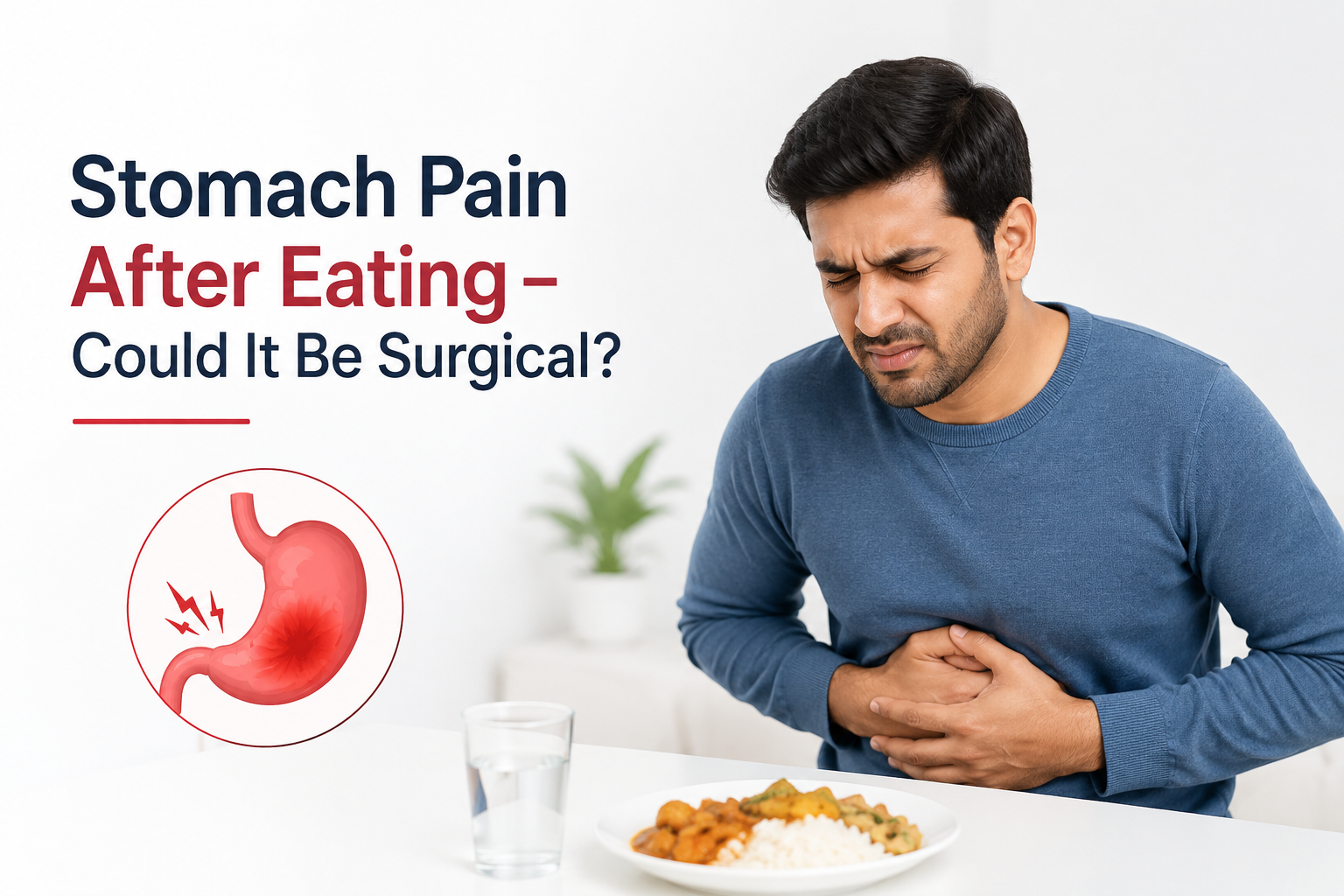
Stomach pain after eating surgery needed is a common question that can occur for many reasons, ranging from indigestion to conditions requiring surgery. While occasional discomfort after a heavy meal is usually not serious, persistent or severe pain after eating should never be ignored.
One of the most common questions patients ask is:
“How do I know if my stomach pain after eating needs surgery?”
The answer depends on the underlying cause. Certain digestive conditions improve with medication and lifestyle changes, while others may require surgical treatment to prevent complications.
In this guide, we’ll explain the possible causes, warning signs, available treatments, and when it’s time to consult a general surgeon.
Why Does My Stomach Hurt After Eating?
Pain after meals happens when food stimulates the digestive system. When the gallbladder, stomach, intestine, or appendix becomes inflamed or develops a blockage, eating can trigger pain.
The discomfort may occur:
- Immediately after eating
- Within 30–60 minutes
- Several hours later
- Only after fatty or spicy foods
Understanding the timing and location of the pain helps doctors identify the cause.
Common Causes of Stomach Pain After Eating
1. Gallstones (Gallbladder Disease)
One of the most common surgical causes.
Typical symptoms include:
- Discomfort in the upper right abdomen
- Pain after fatty meals
- Pain spreading to the back or right shoulder
- Nausea or vomiting
If gallstones repeatedly cause symptoms, laparoscopic gallbladder removal may be recommended.
2. Hernia
A hernia can become painful after meals because increased abdominal pressure causes tissue to push through a weakened muscle.
Symptoms include:
- Visible swelling
- Pain while eating or bending
- Discomfort during lifting
Many hernias require surgical repair.
3. Appendicitis
Although appendicitis pain usually starts near the belly button and moves to the lower right abdomen, eating can sometimes worsen the discomfort.
Emergency evaluation is required if appendicitis is suspected.
4. Intestinal Obstruction
A blockage in the intestine may cause:
- Severe cramping
- Vomiting
- Abdominal swelling
- Inability to pass stool or gas
This condition often requires urgent medical attention and sometimes emergency surgery.
5. Stomach Ulcers
Ulcers may cause burning pain after eating.
Most ulcers are treated medically, but complications such as bleeding or perforation may require surgery.
6. Acid Reflux (GERD)
Acid reflux commonly causes:
- Burning chest pain
- Sour taste
- Upper abdominal discomfort
Most patients improve with medications and lifestyle changes. Surgery is reserved for selected cases.
When Could Surgery Be Needed?
Not every patient with stomach pain needs surgery.
However, surgery may be recommended if the pain is caused by:
- Gallstones
- Hernia
- Appendicitis
- Intestinal obstruction
- Perforated ulcer
- Certain gastrointestinal tumors
- Complicated diverticular disease
The treatment depends entirely on the diagnosis.
Warning Signs You Should Never Ignore
Seek immediate medical attention if your stomach pain is accompanied by:
- Severe or worsening abdominal pain
- Persistent vomiting
- Fever
- Blood in vomit or stool
- Yellowing of the eyes or skin (jaundice)
- A swollen, hard abdomen
- Inability to pass stool or gas
- Fainting or dizziness
These symptoms may indicate a medical emergency.
How Is the Cause Diagnosed?
Your doctor may recommend:
- Physical examination
- Blood tests
- Ultrasound
- CT scan
- Endoscopy
- X-rays (if needed)
These investigations help identify whether surgery is necessary or if medical treatment is sufficient.
Treatment Options
Treatment depends on the underlying cause.
Non-Surgical Treatment
Many conditions improve with:
- Dietary changes
- Medications
- Acid-suppressing therapy
- Antibiotics (when indicated)
- Lifestyle modifications
Surgical Treatment
If surgery is needed, many procedures can now be performed laparoscopically using small incisions.
Common laparoscopic surgeries include:
- Gallbladder removal
- Hernia repair
- Appendix removal
- Certain intestinal procedures
Benefits of minimally invasive surgery often include:
- Smaller incisions
- Less postoperative pain
- Faster recovery
- Shorter hospital stay
- Earlier return to daily activities
Recovery After Surgery
Recovery depends on the type of operation performed.
Many patients undergoing laparoscopic surgery can:
- Walk within a few hours
- Return home within 24–48 hours (for suitable procedures)
- Resume office work in about one to two weeks
- Return to normal activities gradually as advised by their surgeon
Following postoperative instructions helps support healing and recovery.
Can Stomach Pain After Eating Be Prevented?
Some digestive conditions can be reduced by:
- Eating balanced meals
- Limiting very fatty foods
- Staying hydrated
- Avoiding smoking
- Maintaining a healthy weight
- Treating digestive problems early
While prevention isn’t always possible, early diagnosis can help avoid complications.
Why Choose Dr. Hitesh Arora for General Surgery in Surat?
If your stomach pain after eating is frequent, severe, or linked to a condition that may require surgery, consulting an experienced surgeon is essential.
Dr. Hitesh Arora, Advanced Laparoscopic & General Surgeon at Arora Elite Care, provides evaluation and treatment for a wide range of abdominal and gastrointestinal conditions, including gallbladder disease, appendicitis, hernias, and other surgical disorders.
At Arora Elite Care, every patient receives a thorough evaluation to identify the underlying cause of abdominal pain before recommending treatment. When surgery is appropriate, minimally invasive laparoscopic techniques are used whenever suitable to support a smoother recovery, less postoperative discomfort, and an earlier return to daily life.
Why Patients Trust Arora Elite Care
- Experienced Advanced Laparoscopic & General Surgeon
- Expertise in gallbladder, appendix, hernia, and gastrointestinal surgery
- Modern laparoscopic surgical facilities
- Personalized treatment plans
- Evidence-based surgical care
- Comprehensive support from diagnosis to recovery
If you’re experiencing persistent stomach pain after eating, an early consultation can help identify the cause and determine the most appropriate treatment.
Frequently Asked Questions
Is stomach pain after eating always serious?
No. It can result from indigestion, food intolerance, or acid reflux. However, persistent or severe pain should be evaluated by a doctor.
Can gallstones cause pain only after meals?
Yes. Gallbladder pain often occurs after eating, especially following fatty meals.
Which doctor should I consult for stomach pain after eating?
Start with a physician or gastroenterologist. If a surgical condition such as gallstones, appendicitis, or hernia is suspected, a general surgeon may be involved in your care.
Will every gallstone require surgery?
No. Surgery is usually recommended when gallstones cause symptoms or complications.
Is laparoscopic surgery safe?
Laparoscopic surgery is a widely used minimally invasive technique for many abdominal conditions. Whether it’s appropriate depends on the individual’s diagnosis and overall health.
Conclusion
Stomach pain after eating is often caused by common digestive issues, but it can also be an early sign of a condition that requires surgical treatment. Persistent pain, especially when associated with fever, vomiting, jaundice, or severe abdominal tenderness, should never be ignored.
Seeking timely medical evaluation can help identify the cause early and ensure you receive the most appropriate treatment, whether that’s medication, lifestyle changes, or surgery. Early diagnosis often leads to better outcomes and may help prevent more serious complications.