
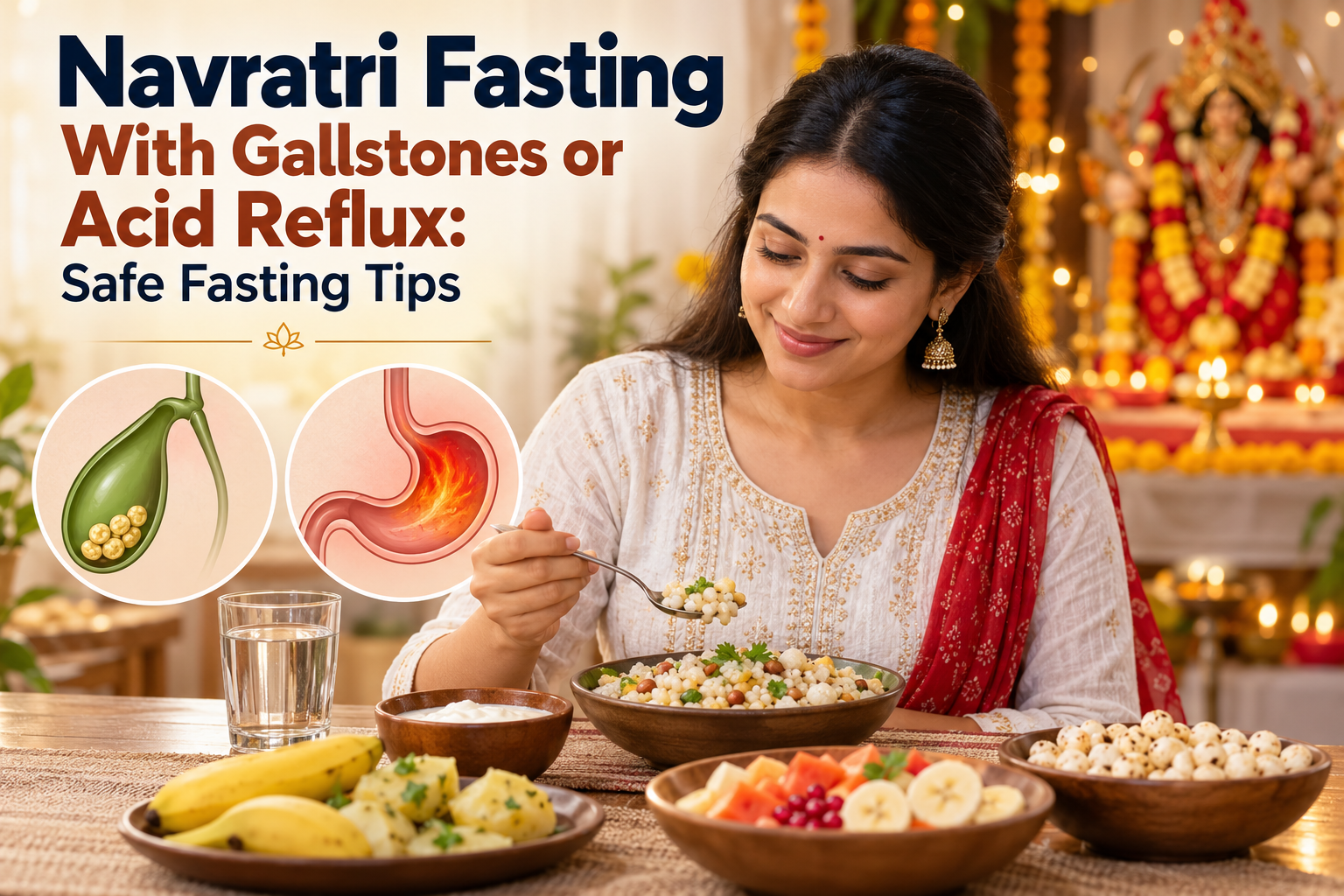
Navratri is a time of devotion, celebration, and fasting. During Sharad Navratri, from 11 to 19 October 2026, many devotees follow special dietary practices, avoid regular meals, or eat only selected vrat-friendly foods. Navratri fasting acidity can become troublesome when people consume large meals after fasting, eat fried foods, or follow eating patterns that trigger their reflux symptoms. People with gallstones may also experience abdominal discomfort after heavy meals.
However, if you have gallstones, acidity, or gastroesophageal reflux disease (GERD), fasting may require additional precautions.
At Arora Elite Care in Surat, Dr. Hitesh Arora provides general and laparoscopic surgical care, including the assessment and treatment of gallbladder conditions.
Understanding how fasting affects digestion can help you make informed decisions before beginning your Navratri vrat.
Key Takeaways
- Prolonged fasting may not be suitable for people with symptomatic gallstones.
- Large, oily meals can trigger gallbladder pain or worsen acid reflux.
- Smaller, balanced vrat meals may be better tolerated than one heavy meal.
- Drink adequate water whenever your fasting practice permits.
- Persistent abdominal pain, vomiting, fever, or jaundice requires medical attention.
- Consult your doctor before fasting if you have recurring gallbladder attacks or uncontrolled reflux.
Can You Fast During Navratri If You Have Gallstones?
Fasting with gallstones may be possible for some people, but safety depends on whether the gallstones are causing symptoms. People experiencing navratri fasting acidity along with gallbladder discomfort should take additional precautions during fasting.
Gallstones are hardened deposits that form inside the gallbladder, an organ that stores bile and supports fat digestion.
When you eat, especially foods containing fat, the gallbladder contracts to release bile. If a stone obstructs the gallbladder outlet, this contraction may cause pain.
Long periods without food can reduce gallbladder emptying. Repeated prolonged fasting or severe calorie restriction, particularly when associated with rapid weight loss, may increase the risk of gallstone formation.
People with gallstones who experience recurring pain or Navratri fasting acidity should seek medical advice before beginning prolonged fasting.
If you have been diagnosed with gallstones, understanding the available treatment options is important. Learn more about gallbladder surgery and treatment in Surat at Arora Elite Care.
Why Can Navratri Fasting Make Acidity Worse?
Navratri vrat acidity is often associated with changes in eating patterns rather than fasting alone.
1. Long Gaps Between Meals
An empty stomach does not automatically cause acid reflux. However, changing meal schedules may worsen discomfort in some people, particularly when followed by overeating.
2. Fried Vrat Foods
Sabudana vada, fried potatoes, puri, and heavily fried snacks contain significant amounts of fat.
High-fat foods can aggravate reflux symptoms and may trigger gallbladder pain in susceptible individuals.
3. Excess Tea or Coffee
Some people drink several cups of tea or coffee to manage hunger during fasting.
Caffeine can trigger heartburn in certain individuals, especially those already experiencing reflux.
4. Heavy Meals Before Bed
Eating a large meal late at night and lying down shortly afterward can increase acid reflux.
People with GERD should generally finish eating at least three hours before bedtime.
If you frequently experience burning in the chest, sour burps, or discomfort after eating, read about acid reflux symptoms and warning signs to understand when medical evaluation may be needed.
What Are the Best Navratri Fasting Foods for Gallstones and Acidity?
Choosing lighter meals can help reduce digestive discomfort. However, no particular vrat food can guarantee the prevention of a gallbladder attack.
The following options may be suitable when prepared with minimal oil and tolerated individually.
| Vrat Food | Healthier Preparation |
|---|---|
| Sabudana khichdi | Small portion with limited oil and peanuts |
| Samak rice | Boiled or lightly cooked |
| Boiled sweet potato | Plain, without heavy seasoning |
| Banana | Small portion if well tolerated |
| Papaya | Fresh and ripe |
| Plain curd | Low-fat, if dairy does not trigger symptoms |
| Makhana | Dry-roasted with minimal oil |
| Lauki | Lightly cooked, according to fasting rules |
Important: Food tolerance varies. People with reflux should avoid personally identified triggers, while those with symptomatic gallstones may need a more specific dietary plan.
7 Safe Navratri Fasting Tips for Gallstones and Acid Reflux
1. Avoid Prolonged Fasting Without Medical Advice
People with known gallstones, repeated abdominal pain, or uncontrolled GERD should discuss their fasting plans with a doctor.
If your religious practice permits, consider smaller meals at suitable intervals instead of complete food restriction.
2. Limit Fried and High-Fat Foods
Fried vrat snacks may be tempting, but they can make digestive symptoms worse.
Choose roasted, boiled, or lightly cooked alternatives whenever possible.
3. Stay Hydrated
Drink water regularly if your fasting rules allow it.
Dehydration can contribute to headaches, dizziness, and weakness. People observing water-free fasts should discuss their individual health risks with a clinician.
4. Eat Smaller Portions
Breaking a fast with a large meal may lead to bloating, heaviness, or reflux.
Begin with a modest portion and eat slowly.
5. Avoid Your Personal Acidity Triggers
Common reflux triggers include caffeine, spicy foods, citrus fruits, mint, and high-fat meals.
Not everyone reacts to the same foods, so focus on your own symptoms.
If you experience frequent heartburn or have a diagnosed hiatal hernia, explore this guide on hiatal hernia diet and foods to avoid for additional dietary precautions.
6. Do Not Lie Down Immediately After Eating
Remain upright after meals and avoid eating within three hours of bedtime.
This is particularly useful for people experiencing nighttime acid reflux.
7. Continue Prescribed Medicines
Do not stop, skip, or change prescribed medicines to accommodate fasting without consulting your doctor.
Some medicines require food, while others have specific timing instructions.
Gallbladder Pain After Fasting: What Are the Warning Signs?
Gallbladder pain after fasting may occur when a person breaks the fast with a heavy or fatty meal, although fasting itself is not always the direct cause.
Typical symptoms of a gallbladder attack include:
- Pain in the upper-right abdomen
- in the upper-middle abdomen
- Pain spreading toward the back or right shoulder
- Nausea or vomiting
- Discomfort after fatty meals
Seek urgent medical attention if abdominal pain is severe or lasts several hours, or if it occurs with fever, repeated vomiting, or jaundice.
These symptoms may indicate gallbladder inflammation, bile duct obstruction, or another serious medical condition.
Do not assume persistent abdominal pain is simply acidity.
Acid Reflux vs Gallbladder Pain: How Can You Tell the Difference?
| Symptom | Acid Reflux | Gallbladder Pain |
|---|---|---|
| Main discomfort | Burning chest or upper abdomen | Upper-right or central abdominal pain |
| Common trigger | Large meals, lying down, certain foods | Often fatty or heavy meals |
| Other symptoms | Sour taste, regurgitation | Nausea, pain radiating to the back |
| Duration | Variable | Often 30 minutes to several hours |
| Evaluation | Clinical assessment; tests when needed | Ultrasound and other tests as needed |
Symptoms can overlap. A doctor may recommend further examination to identify the underlying cause. New or unexplained chest pain, especially with breathlessness, sweating, or pain spreading to the arm or jaw, requires emergency assessment.
When Should You Consult a Gallbladder Specialist in Surat?
Consult a healthcare professional before Navratri fasting if you experience repeated gallbladder attacks, persistent upper-abdominal pain, severe acidity, difficulty swallowing, or frequent vomiting.
At Arora Elite Care, Surat, Dr. Hitesh Arora assesses gallbladder conditions and provides appropriate surgical treatment when indicated.
Depending on your symptoms, evaluation may include an abdominal ultrasound, blood tests, or additional investigations.
Patients with symptomatic gallstones may require laparoscopic gallbladder removal. Dietary changes can sometimes reduce symptoms, but they do not reliably eliminate existing stones.
Conclusion: Celebrate Navratri Without Ignoring Digestive Health
Navratri is a meaningful spiritual occasion, but fasting should never come at the expense of your health.
If you have gallstones or recurring acid reflux, choose a fasting approach that suits your medical condition. Avoid excessively fatty meals, stay hydrated when permitted, and seek professional guidance when symptoms occur.
Planning to fast during Navratri but worried about gallbladder pain or acidity?
Consult Dr. Hitesh Arora at Arora Elite Care, Surat, for an individual assessment and guidance on gallbladder-related symptoms.
Frequently Asked Questions
1. Can I fast during Navratri if I have gallstones?
People with silent gallstones may be able to follow modified fasting practices after medical consultation. However, those experiencing recurring gallbladder attacks should avoid prolonged fasting without a doctor’s advice.
2. Does Navratri fasting increase acidity?
Fasting does not necessarily cause acidity in everyone. However, large meals after long gaps, fried foods, caffeine, and late-night eating may worsen existing acid reflux symptoms.
3. Can fasting cause gallbladder pain?
Gallbladder attacks often occur after heavy or fatty meals. Prolonged food restriction also affects gallbladder emptying. People with symptomatic gallstones should consult a doctor before fasting.
4. Which Navratri foods are better for acid reflux?
Lightly cooked samak rice, boiled sweet potato, banana, and low-fat curd may be suitable if individually tolerated. Avoid fried snacks and foods that consistently trigger your symptoms.
5. Is sabudana khichdi safe for gallstones?
Sabudana khichdi may be tolerated when prepared with limited oil and eaten in moderate portions. However, adding excessive ghee, oil, or peanuts increases its fat content and may provoke symptoms.
6. When should I stop fasting and seek medical help?
Stop fasting and seek medical assessment if you develop significant abdominal pain, persistent vomiting, or worsening symptoms. Severe or prolonged abdominal pain, fever, or jaundice requires urgent medical attention.