
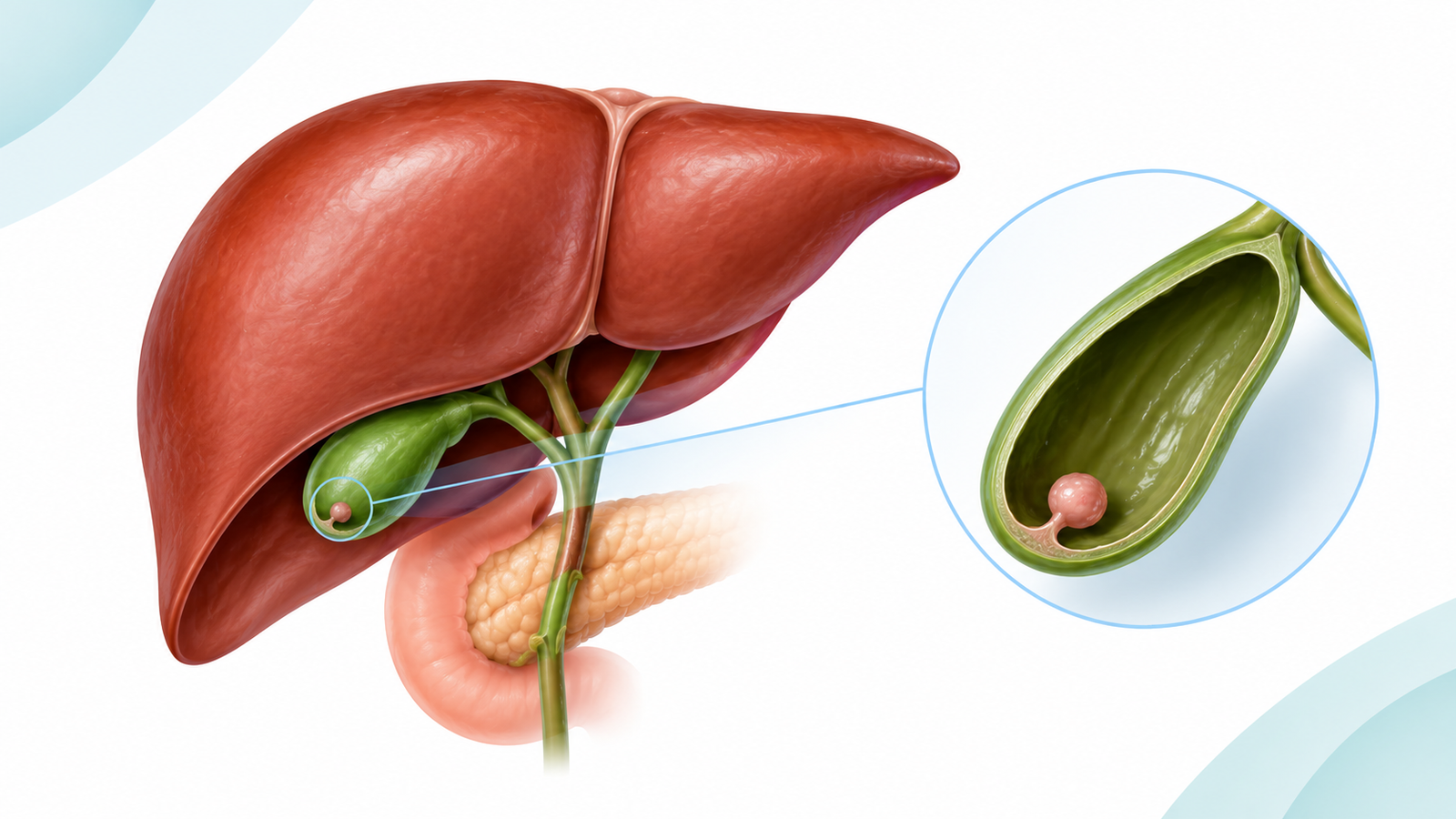
A gallbladder polyp is a small growth that develops on the inner lining of the gallbladder. Many gallbladder polyps are harmless and do not require surgery. However, larger polyps, certain ultrasound findings, and specific risk factors may increase concern and require further evaluation. Understanding the size of the polyp and the recommended follow-up can help you make informed decisions about treatment.
At Arora Elite Care, patients considering gallbladder treatment can discuss their ultrasound findings, symptoms, and surgical options with an experienced general surgeon. The right approach depends on the individual patient’s condition rather than polyp size alone.
What Is a Gallbladder Polyp?
The gallbladder is a small organ located beneath the liver. It stores bile, which helps the body digest fats. A gallbladder polyp is a growth that projects from the inner wall into the gallbladder cavity.
Polyps can develop for different reasons. Many are cholesterol deposits or other non-cancerous changes. A smaller proportion may be adenomas, which can have the potential to become cancerous.
Importantly, finding a polyp does not automatically mean that you have cancer.
What Causes Gallbladder Polyps?
The exact cause depends on the type of polyp. Some common possibilities include:
- Cholesterol deposits: These are common and are not true tumours.
- Inflammation: Changes associated with chronic irritation may produce polyp-like growths.
- Adenomas: These are less common growths that require careful assessment because some may have malignant potential.
- Other gallbladder conditions: Certain benign changes can resemble polyps on ultrasound.
Not every gallbladder polyp has an identifiable cause. Therefore, doctors focus on its size, appearance, associated gallbladder changes, and any relevant risk factors when deciding whether monitoring or surgery is appropriate.
What Symptoms Can Gallbladder Polyps Cause?
Most gallbladder polyps do not cause noticeable symptoms. They are frequently detected during routine abdominal ultrasound examinations.
When symptoms occur, they may include:
- Pain or discomfort in the upper right side of the abdomen.
- Discomfort after meals, particularly fatty meals.
- Nausea or indigestion.
However, these symptoms are not specific to polyps. Gallstones, inflammation, and other digestive conditions can cause similar problems. A doctor should assess whether the polyp is actually responsible before recommending surgery for symptom relief.
Seek urgent medical attention if you develop severe or persistent abdominal pain, fever, repeated vomiting, or yellowing of the skin or eyes.
What Gallbladder Polyp Size Requires Surgery?
The gallbladder polyp size for surgery is an important consideration, but there is no single measurement that determines treatment for every patient. Doctors also assess the polyp’s shape, growth, symptoms, and individual risk factors.
The following points summarise commonly used European joint guideline recommendations.
Polyps measuring 10 mm or more
Doctors generally recommend cholecystectomy, or gallbladder removal, for polyps measuring 10 mm or larger if the patient is fit for surgery and agrees to the procedure.
This recommendation reflects the greater concern associated with larger polyps. Nevertheless, the surgeon will review the ultrasound findings and overall health before making a final decision.
Polyps measuring 6 to 9 mm
These polyps may need surgery if additional risk factors are present. Factors considered in the European guidelines include age over 60 years, primary sclerosing cholangitis, Asian ethnicity, and a sessile polyp or associated focal gallbladder wall thickening.
If these risk factors are absent, monitoring with ultrasound may be appropriate instead of immediate surgery.
Polyps measuring 5 mm or smaller
Very small polyps are generally less concerning. Under the European guidelines, follow-up is usually unnecessary for polyps measuring 5 mm or less when no additional risk factors are present.
If risk factors exist, the doctor may recommend follow-up imaging. Other professional guidelines use different thresholds depending on the polyp’s ultrasound appearance, so recommendations can vary between patients and clinical settings.
These measurements are guides rather than a substitute for an individual medical assessment.
When Can a Gallbladder Polyp Be Monitored?
Not every gallbladder polyp needs removal. Monitoring is often appropriate when the polyp is small, the ultrasound appearance is reassuring, and there are no concerning risk factors.
Depending on the findings, your doctor may recommend repeat ultrasound examinations at specific intervals. For example, the European joint guidelines recommend follow-up at 6 months, 1 year, and 2 years for certain small polyps.
If the polyp grows, reaches a size that warrants surgery, or develops concerning features, the treatment plan may change. A growth of 2 mm or more during the recommended follow-up period should be assessed alongside the current size and individual risk factors.
Keep copies of previous ultrasound reports so your doctor can compare measurements over time.
How Is a Gallbladder Polyp Diagnosed?
Abdominal ultrasound is the primary investigation used to detect gallbladder polyps. It helps the doctor assess their size, number, shape, and relationship to the gallbladder wall.
The evaluation may involve:
- Medical history: The doctor asks about symptoms, previous diagnoses, and relevant risk factors.
- Ultrasound review: The polyp’s size and appearance are assessed, along with any gallstones or gallbladder wall changes.
- Comparison with earlier scans: Previous reports can help identify changes in size or appearance.
- Additional investigations when needed: Selected patients may need specialist imaging or further evaluation if the ultrasound findings are uncertain.
Routine additional imaging is not necessary for every patient. The choice depends on whether further information would change the treatment decision.
What Does Gallbladder Polyp Treatment Involve?
The appropriate gallbladder polyp treatment depends on the findings and the patient’s overall health.
1. Observation and follow-up
Small, low-risk polyps may only require observation or scheduled ultrasound examinations. This approach avoids an unnecessary operation while allowing doctors to reassess changes when appropriate.
2. Surgical consultation
Larger polyps, concerning imaging features, relevant risk factors, or symptoms that may be related to gallbladder disease warrant a discussion with a surgeon.
3. Gallbladder removal
When surgery is indicated, the usual treatment is cholecystectomy. It is commonly performed using laparoscopic surgery, which involves small incisions and a camera. The suitability of this technique depends on the patient’s condition and surgical findings.
Removing the gallbladder is different from simply removing the polyp. The surgeon will explain the reasons for the recommended procedure, potential risks, and expected recovery before obtaining informed consent.
For more information about specialist care, visit a gallbladder surgeon in Surat.
What Happens After Gallbladder Removal?
Most patients can digest food normally after gallbladder removal because the liver continues to produce bile. Instead of being stored in the gallbladder, bile flows directly into the small intestine.
Recovery depends on the surgical technique, general health, and whether complications occur. Patients are usually advised to gradually return to normal activities according to their surgeon’s instructions.
Some people experience temporary bloating, loose stools, or changes in digestion after surgery. Persistent or severe symptoms should be discussed with a doctor.
If gallstones are also present, your surgeon can explain how they affect the diagnosis and treatment plan. Read more about gallbladder stone treatment.
When Should You Consult a Surgeon?
Arrange a medical assessment if your ultrasound report identifies a gallbladder polyp, particularly if it measures 10 mm or more, has grown, or is associated with concerning features.
A consultation is also important if you have persistent upper abdominal discomfort or risk factors that may influence the need for surgery. Do not assume that every polyp requires removal, but do not ignore recommended follow-up appointments either.
At Arora Elite Care, patients can discuss their investigation reports and available treatment options to understand the next appropriate step.
Frequently Asked Questions
1. Is a gallbladder polyp dangerous?
Most gallbladder polyps are benign, particularly when they are small. However, larger polyps and certain risk factors may increase concern. Your doctor will assess the ultrasound findings to determine whether monitoring or surgery is appropriate.
2. What is the gallbladder polyp size for surgery?
European joint guidelines generally recommend considering gallbladder removal for polyps measuring 10 mm or more in suitable patients. Polyps measuring 6 to 9 mm may also need surgery when specific risk factors are present. Individual assessment is essential.
3. Can gallbladder polyps disappear naturally?
Some polyp-like findings may disappear on follow-up ultrasound, particularly when the original finding was related to cholesterol deposits or another benign change. If a previously identified polyp is no longer visible, your doctor can determine whether further monitoring is necessary.
4. Can gallbladder polyps become cancerous?
Some types of polyps, particularly certain adenomas, may have malignant potential. However, most small gallbladder polyps are benign. Size, shape, growth, and other risk factors help guide further assessment.
5. Can I live normally with a gallbladder polyp?
Yes. Many people with small, low-risk gallbladder polyps continue their normal activities without surgery. Follow your doctor’s advice regarding ultrasound monitoring, and seek assessment if new or persistent symptoms develop.
Conclusion
A gallbladder polyp is a small growth that develops on the inner lining of the gallbladder. Many gallbladder polyps are harmless and do not require surgery. However, larger polyps, certain ultrasound findings, and specific risk factors may require further evaluation. Understanding the polyp’s size and recommended follow-up can help you make informed treatment decisions.
At Arora Elite Care, Surat, Dr. Hitesh Arora, an experienced general and laparoscopic surgeon, evaluates gallbladder conditions and helps patients understand their treatment options. The appropriate approach depends on the polyp’s size, ultrasound findings, risk factors, and the patient’s overall health.