
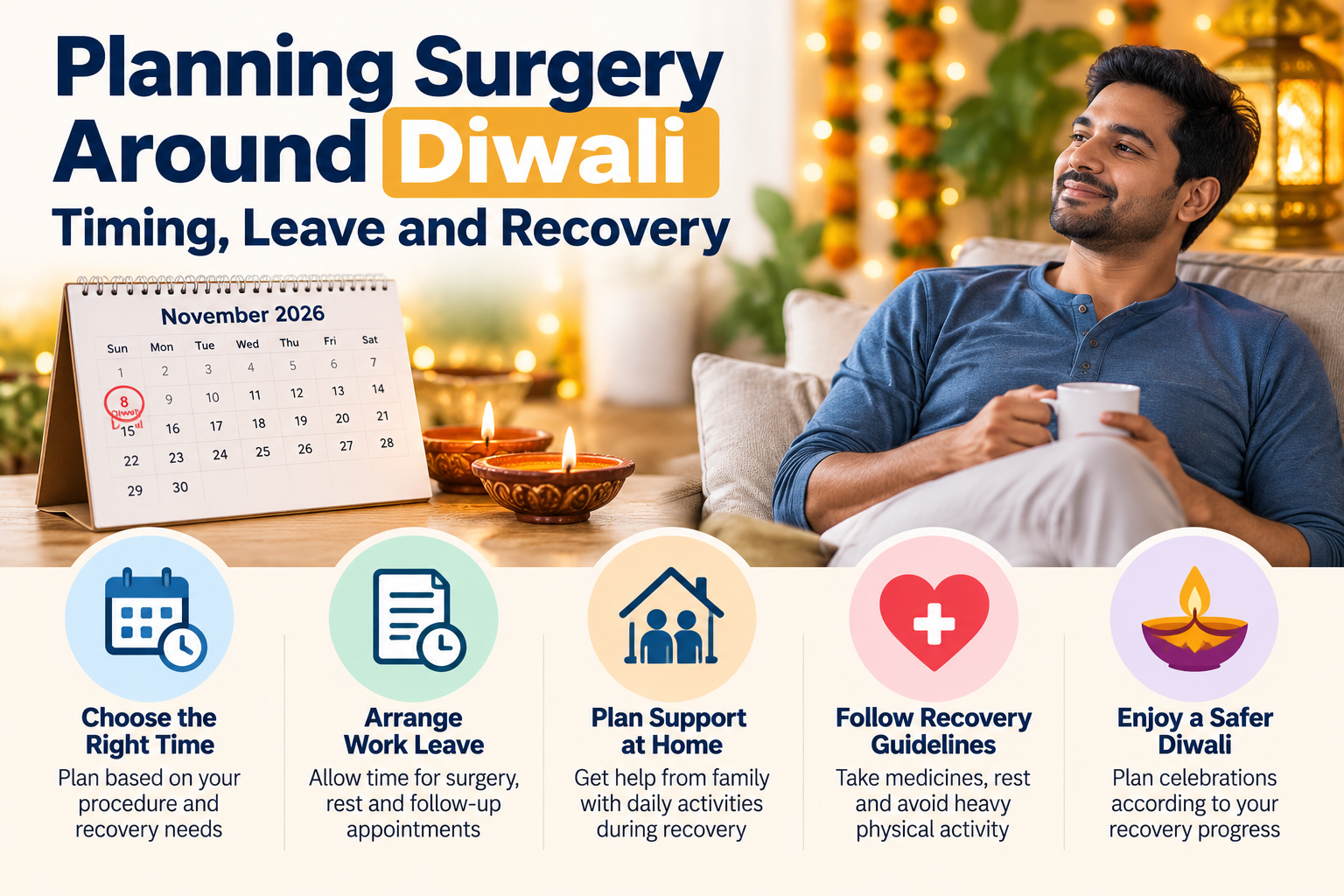
Planning surgery before Diwali can help patients organise work leave, family support and recovery time. However, the right time for an operation depends on the medical condition, surgical procedure, and expected healing period—not simply the festival calendar.
In 2026, Diwali falls on 8 November, making late October and early November an important planning period for patients considering elective surgery.
Some people prefer to undergo surgery before the festival, while others plan treatment afterward. Both approaches may be reasonable when the condition is stable, and the surgeon considers a delay safe.
At Arora Elite Care, Surat, Dr. Hitesh Arora, Advanced Laparoscopic and General Surgeon, helps patients understand surgical preparation and recovery requirements.
Is It Safe to Plan Surgery Before Diwali?
Yes. Patients can schedule planned surgery before Diwali when their medical condition and recovery requirements allow it.
However, not every operation follows the same recovery timeline.
A minor day-care procedure may require only a short period of rest, while hernia repair, gallbladder surgery or other abdominal operations may need additional recovery time.
Before selecting a date, consider:
- The urgency of the medical condition
- The type of surgery
- Expected hospital stay
- Time away from work
- Travel requirements
- Family responsibilities
- Follow-up appointments
- Availability of help at home
Your surgeon should help determine whether the proposed date is appropriate.
What Is the Best Time for Planned Surgery Before Diwali?
The best time for planned surgery is when you can complete the necessary tests, undergo the operation and recover without rushing back into demanding activities.
There is no universal rule that surgery must take place a certain number of days before Diwali.
General Recovery Planning Guide
| Procedure | Possible Early Recovery Period | Planning Considerations |
|---|---|---|
| Minor day-care surgery | Several days | Arrange transport and short-term assistance |
| Laparoscopic gallbladder surgery | Often 1–2 weeks before returning to desk work | Avoid heavy activity until cleared |
| Uncomplicated laparoscopic hernia repair | Often 1–2 weeks for desk work, sometimes sooner | Lifting restrictions depend on the repair |
| Open or complex abdominal surgery | Several weeks or longer | Allow additional time for wound healing and follow-up |
| Anal fistula surgery | Several weeks for wound healing | Ongoing wound care may continue through the festival |
These estimates are general and should not determine your surgical date without medical assessment.
Read our laparoscopic surgery recovery time guide for more information about postoperative healing.
How Much Leave Should You Take for Surgery?
The amount of leave depends on the procedure and the physical demands of your job.
Patients with desk-based jobs may return sooner than those who perform heavy manual labour.
Plan Your Leave Around Three Stages
1. Before surgery
Allow time for consultation, investigations, anaesthesia assessment and any necessary medical optimisation.
2. Surgery and initial recovery
Arrange leave for the operation, hospital discharge and early postoperative rest.
3. Follow-up and return to work
Keep time available for wound checks, dressing changes and medical review.
If you work in manufacturing, construction, retail or another physically demanding occupation, discuss lifting and standing requirements with your surgeon.
Avoid choosing a return-to-work date based only on the end of the Diwali holiday.
Can You Celebrate Diwali After Surgery?
Many patients can participate in light family celebrations after uncomplicated surgery, provided they feel comfortable and follow their surgeon’s advice.
However, recovery should remain the priority.
Patients may need to avoid:
- Lifting heavy gift boxes or decorations
- Prolonged standing during celebrations
- Repeated bending or strenuous house cleaning
- Long-distance travel soon after surgery
- Activities that place pressure on a healing wound
- Skipping medicines or follow-up appointments
If you feel tired or experience discomfort, reduce your activity and rest.
How to Manage Recovery During Diwali
Festival preparations can disrupt normal routines.
A few practical steps can help patients manage recovery.
1. Arrange Help With Household Work
Ask family members to manage heavy cleaning, shopping, lifting and decorations.
Avoid putting unnecessary strain on the operated area.
2. Follow Your Postoperative Diet
Eat according to the instructions for your specific operation.
Some patients may need smaller meals or temporary dietary adjustments.
Avoid excessive eating if it worsens nausea, bloating or discomfort.
3. Take Medicines on Time
Continue prescribed medicines according to the discharge instructions.
Do not skip doses because of travel or celebrations.
4. Protect the Surgical Wound
Follow wound-cleaning and dressing instructions.
Avoid exposing the wound to dust, smoke or other irritants.
5. Keep Follow-Up Appointments
Confirm the clinic’s availability around festival holidays.
Arrange postoperative reviews before travelling or attending distant celebrations.
6. Avoid Unnecessary Physical Strain
Gentle walking is often helpful after surgery, but strenuous exercise and heavy lifting may require restrictions.
Follow your surgeon’s advice about returning to normal activities.
Should You Delay Surgery Until After Diwali?
Some elective procedures can safely wait until after the festival, but others should not be postponed without medical advice.
For example, a patient with a stable condition and no concerning symptoms may have flexibility when choosing an operation date.
However, delaying treatment can be risky when symptoms suggest complications.
Do not postpone medical evaluation if you experience:
- Severe or worsening abdominal pain
- Persistent vomiting
- Fever with significant abdominal pain
- Yellowing of the skin or eyes
- A painful hernia that cannot be pushed back
- Significant bleeding
- Symptoms of bowel obstruction
These symptoms may require urgent medical attention.
Festival plans should never take priority over a possible surgical emergency.
What Should You Prepare Before Booking Surgery?
Before confirming your surgery date, discuss the following with your surgeon:
- Why the operation is necessary
- Whether delaying treatment is safe
- Expected hospital stay
- Estimated recovery period
- Work and lifting restrictions
- Driving and travel precautions
- Required tests
- Medication adjustments
- Follow-up arrangements
- Availability of family support
Patients with diabetes, heart disease or other medical conditions may require additional preparation.
A clear plan helps reduce last-minute difficulties during the festival period.
Surgery Consultation Before Diwali at Arora Elite Care, Surat
Patients considering surgery before Diwali can consult Dr. Hitesh Arora, Advanced Laparoscopic and General Surgeon, at Arora Elite Care, Surat.
During the consultation, the doctor can assess the surgical condition, explain treatment options and discuss recovery expectations.
Patients can also clarify whether they should schedule surgery before or after the festival.
The appropriate decision depends on medical urgency, individual health and the planned procedure. Book a Surgery Consultation in Surat
Conclusion
Planning surgery before Diwali requires balancing medical needs with adequate recovery time.
Patients should consider work leave, household responsibilities, travel, postoperative restrictions and follow-up appointments before selecting a date.
Some elective operations can wait until after the festival, but potentially serious symptoms require timely assessment.
Discuss your plans with a qualified surgeon to choose a medically appropriate schedule.
Frequently Asked Questions
1. Is It Safe to Have Surgery Before Diwali?
Yes. Planned surgery can take place before Diwali when the patient’s medical condition, preparation and expected recovery allow it. The surgeon should determine whether the timing is appropriate.
2. How Many Days Before Diwali Should I Schedule Surgery?
There is no fixed number of days. Minor procedures may require a short recovery, while abdominal operations may need several weeks. Choose the date according to the procedure and your surgeon’s advice.
3. Can I Travel During Diwali After Surgery?
Travel depends on the type of operation, recovery progress and journey length. Long trips soon after surgery may increase discomfort and other risks. Ask your surgeon before travelling.
4. Can I Do Diwali Cleaning After Surgery?
Avoid heavy cleaning, lifting and strenuous activity until your surgeon confirms that you can resume them safely. Light household tasks may be possible depending on your recovery.
5. Can I Return to Work Immediately After Diwali?
Your return-to-work date depends on the operation, pain levels and job requirements. Desk-based work may be possible sooner than physically demanding work.
6. Should I Postpone My Surgery Until After Diwali?
Some non-urgent operations can safely wait, but delaying treatment may be risky for certain conditions. Ask your surgeon whether postponement is medically appropriate.