
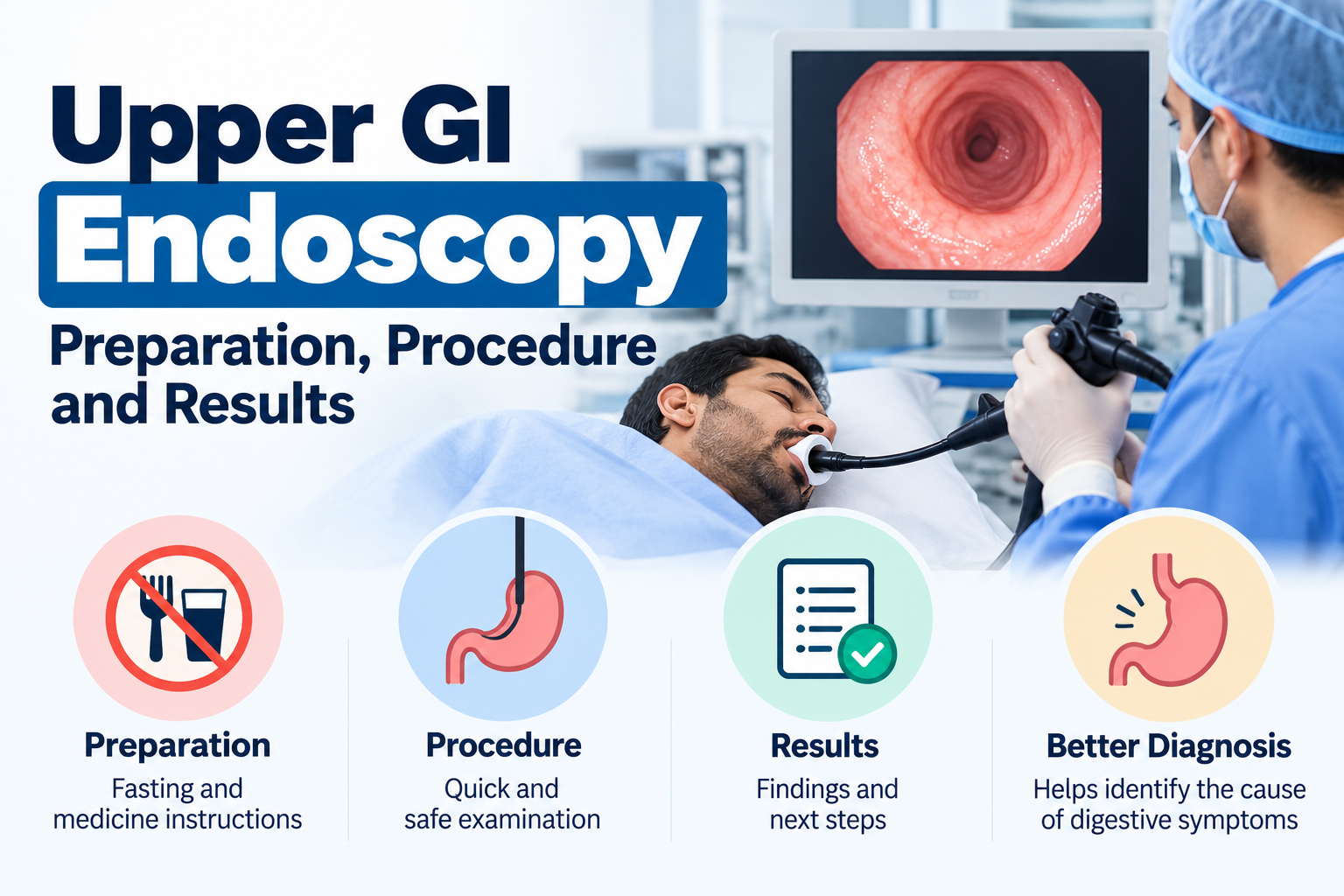
Endoscopy preparation usually involves fasting before the test, reviewing your medicines, and following instructions from your healthcare team. An upper gastrointestinal (GI) endoscopy is a procedure in which a doctor uses a thin, flexible camera to examine the oesophagus, stomach and the first part of the small intestine.
The procedure commonly takes approximately 10–20 minutes, although biopsies or additional treatment may take longer. Many patients return home the same day.
Upper GI endoscopy can help investigate persistent acidity, difficulty swallowing, upper-abdominal pain, unexplained vomiting, and certain digestive problems.
At Arora Elite Care, Surat, patients can consult Dr. Hitesh Arora, Advanced Laparoscopic and General Surgeon, for assessment of upper digestive symptoms and appropriate investigation.
This guide explains how to prepare for an endoscopy, what happens during the test, whether it is painful, and how to understand the results.
What Is an Upper GI Endoscopy?
An upper GI endoscopy is a diagnostic procedure used to examine the upper digestive tract with a flexible camera.
It is also called:
- Upper gastrointestinal endoscopy
- Upper GI scope
- Gastroscopy
- Oesophagogastroduodenoscopy (OGD or EGD)
The endoscope is a thin, flexible tube with a camera and light at its tip.
The doctor passes it through the mouth to examine the:
- Oesophagus (food pipe)
- Stomach
- Duodenum (first part of the small intestine)
During the procedure, the doctor may take small tissue samples called biopsies or perform certain treatments when necessary.
Why Do Doctors Recommend an Endoscopy Test?
Doctors may recommend upper GI endoscopy when symptoms suggest a condition affecting the oesophagus, stomach or duodenum.
Common reasons include:
- Persistent or troublesome acid reflux
- Difficulty or pain while swallowing
- Repeated upper-abdominal pain
- Persistent nausea or vomiting
- Suspected stomach or duodenal ulcers
- Unexplained iron-deficiency anaemia
- Vomiting blood or black stools
- Unexplained weight loss with digestive symptoms
Endoscopy may help identify inflammation, ulcers, narrowing, bleeding and other abnormalities.
Not everyone with occasional acidity needs an endoscopy.
For more information about reflux-related symptoms, read our acid reflux symptoms guide.
How to Prepare for an Upper GI Endoscopy
Proper endoscopy preparation helps the doctor examine the digestive tract clearly and reduces the risk of complications.
Follow the instructions provided by your hospital, as fasting and medication requirements may vary.
Step 1: Follow the Fasting Instructions
The stomach should be empty before an upper GI endoscopy.
Patients should avoid solid food for approximately 6–8 hours before the procedure, as their healthcare team advises.
Depending on the hospital’s protocol, sedation plan, and individual risk factors, the medical team may allow clear liquids closer to the test.
Always ask your healthcare team when you should stop drinking water before the procedure.
Follow the exact fasting instructions provided by your endoscopy team.
Step 2: Tell the Doctor About Your Medicines
Before the procedure, inform your doctor if you take:
- Blood-thinning medicines
- Aspirin or other antiplatelet medicines
- Diabetes medicines or insulin
- Medicines affecting stomach emptying
- Regular pain medicines
- Any other prescription or over-the-counter medicines
Never stop prescribed medicines without medical advice.
Step 3: Share Your Medical History
Tell the endoscopy team about:
- Heart or lung disease
- Diabetes
- Previous reactions to anaesthesia or sedation
- Allergies
- Pregnancy or possible pregnancy
- Sleep apnoea
- Previous digestive surgery
These details help the team plan the procedure safely.
Step 4: Arrange Transportation
If you receive intravenous sedation, you will usually need someone to accompany you home.
You should not drive, operate machinery, or make important decisions for the period specified by the medical team, commonly 24 hours after sedation.
If the procedure is performed without sedation, restrictions may differ.
Step 5: Ask About Biopsy or Additional Procedures
Sometimes the doctor may take a small biopsy during endoscopy.
Biopsies can help identify inflammation, infection, or other tissue changes.
A biopsy does not automatically mean cancer is suspected.
Ask your doctor whether additional testing may be needed.
Endoscopy Preparation Checklist
| Before the Test | What to Do |
|---|---|
| Fasting | Follow the hospital’s food and fluid restrictions |
| Medicines | Review all regular medicines with the doctor |
| Diabetes | Ask for an individual fasting and medication plan |
| Medical history | Report allergies and relevant health conditions |
| Transportation | Arrange an escort if sedation is planned |
| Documents | Bring relevant reports and prescription details |
What Happens During the Endoscopy Procedure?
The endoscopy procedure involves passing a flexible camera through the mouth to examine the upper digestive tract.
Step 1: Initial Assessment
The healthcare team confirms your medical history, fasting status, and consent.
Your blood pressure, pulse, and oxygen levels may be checked.
Step 2: Throat Numbing or Sedation
A local anaesthetic throat spray may be used to reduce discomfort.
Some patients also receive intravenous sedation to help them relax.
The choice depends on the procedure, medical history, and available facilities.
Step 3: Positioning
You will usually lie on your left side.
A mouth guard may be placed to protect your teeth and the endoscope.
Step 4: Inserting the Endoscope
The doctor gently passes the flexible endoscope through your mouth and into the oesophagus.
The camera transmits images to a monitor.
The doctor examines the lining of the oesophagus, stomach and duodenum.
Step 5: Biopsy if Required
Small tissue samples may be collected when necessary.
The procedure may also be used for certain treatments, such as controlling bleeding or widening a narrowed area.
Step 6: Recovery and Discharge
After the examination, the doctor gently removes the endoscope.
The healthcare team monitors patients who received sedation until they recover and can safely go home.
Most patients complete routine diagnostic procedures as day-care visits.
Is Endoscopy Painful?
Upper GI endoscopy is generally not considered a painful procedure, but it can cause temporary discomfort.
Some patients experience:
- Gagging or throat discomfort
- A sensation of pressure
- Mild bloating
- Burping
- Temporary throat soreness
Throat spray and sedation can improve comfort.
If a biopsy is taken, patients usually do not feel the tissue sample being collected.
The experience varies depending on the patient and the type of sedation used.
Discuss anxiety or previous difficulties with endoscopy before the test.
How Long Does an Endoscopy Take?
A routine diagnostic upper GI endoscopy commonly takes approximately 10–20 minutes.
However, the total hospital visit is longer because of preparation, monitoring, and recovery.
If biopsies or additional treatments are required, the examination may take more time.
Patients receiving sedation may need additional observation before discharge.
What Can Upper GI Endoscopy Detect?
Endoscopy allows direct examination of the upper digestive tract.
Possible findings include:
| Finding | What It Means |
|---|---|
| Oesophagitis | Inflammation of the oesophagus |
| Gastritis | Inflammation of the stomach lining |
| Peptic ulcer | A sore in the stomach or duodenal lining |
| Hiatal hernia | Part of the stomach moves upward through the diaphragm |
| Oesophageal narrowing | A narrowed area that may affect swallowing |
| Bleeding lesion | A possible source of digestive bleeding |
| Abnormal tissue | An area that may require biopsy and further testing |
A normal endoscopy does not rule out every digestive condition.
When Will You Receive Your Endoscopy Results?
The doctor can often explain the visual findings shortly after the procedure.
If the doctor collects biopsies, the laboratory usually needs additional time to analyse the samples and prepare the results.
The doctor may explain:
- Whether the examination revealed inflammation or ulcers
- If the doctor collected a biopsy
- Whether you need further testing
- Which medicines or treatments you should take
- Whether you need a follow-up appointment
If you received sedation, you may not remember all the information clearly.
Ask your doctor for a written report and clear follow-up instructions.
What Should You Do After an Endoscopy?
After a routine upper GI endoscopy, some patients experience mild bloating or throat soreness.
Your healthcare team will tell you when it is safe to eat and drink.
If throat-numbing spray was used, wait until the numbness has worn off and swallowing is safe.
After sedation, follow restrictions on driving, alcohol, machinery, and important decisions.
Warning Signs After Endoscopy
Seek urgent medical attention if you develop:
- Severe or worsening chest or abdominal pain
- Difficulty breathing
- Vomiting blood
- Black, tarry stools
- Persistent vomiting
- Fever with significant pain
- Difficulty swallowing that is severe or worsening
Serious complications are uncommon, but prompt assessment is important.
Are There Risks Associated With Endoscopy?
Upper GI endoscopy is generally safe, but it carries some risks.
Possible complications include:
- Temporary throat discomfort
- Bloating
- Reactions to sedation
- Bleeding, particularly after certain interventions
- Aspiration
- Rare perforation of the digestive tract
The risk depends on the patient’s health and whether the procedure is diagnostic or therapeutic.
Your doctor should explain the relevant risks before obtaining consent.
Upper GI Endoscopy Test in Surat at Arora Elite Care
Patients experiencing persistent upper digestive symptoms may require specialist assessment and diagnostic investigations.
At Arora Elite Care, Surat, Dr. Hitesh Arora, Advanced Laparoscopic and General Surgeon, evaluates gastrointestinal symptoms and discusses appropriate diagnostic and treatment options.
Patients can learn more about the endoscopy test in Surat, including when the examination may be recommended.
Conclusion
Endoscopy preparation is an important step in making an upper GI examination safe and effective.
Most patients need to fast, review their medicines, and follow instructions about sedation and transportation.
The procedure usually takes only a short time and can help identify inflammation, ulcers, bleeding, and other upper digestive conditions.
If you have persistent reflux, difficulty swallowing, or unexplained upper-abdominal symptoms, consult a qualified medical professional to determine whether an endoscopy is appropriate.
Frequently Asked Questions
1. How Many Hours Should I Fast Before Endoscopy?
Patients are commonly asked to avoid solid food for approximately 6–8 hours before an upper GI endoscopy. Clear liquid instructions vary according to the hospital, sedation plan and individual health. Always follow the instructions provided by your endoscopy team.
2. Is Upper GI Endoscopy Painful?
Endoscopy is generally not painful, but it can cause gagging, throat discomfort or temporary bloating. Throat spray or sedation may help improve comfort.
3. How Long Does an Endoscopy Procedure Take?
A routine diagnostic upper GI endoscopy commonly takes approximately 10–20 minutes. Additional time is required for preparation and recovery, especially when sedation is used.
4. Can I Eat After an Endoscopy?
Most patients can resume eating and drinking after the healthcare team confirms it is safe. If throat-numbing spray was used, wait until swallowing has returned to normal.
5. What Diseases Can an Endoscopy Detect?
Upper GI endoscopy may identify oesophagitis, gastritis, ulcers, hiatal hernias, narrowing, bleeding lesions and abnormal tissue requiring biopsy. Additional tests may be necessary for certain conditions.
6. Can I Go Home the Same Day After Endoscopy?
Yes. Most routine diagnostic upper GI endoscopies are day-care procedures. If sedation is given, patients usually need an escort home and must follow post-sedation restrictions.
Excerpt
Learn about upper GI endoscopy preparation, fasting requirements, the endoscopy procedure, pain, results, and recovery. A patient-friendly guide from Arora Elite Care, Surat.