
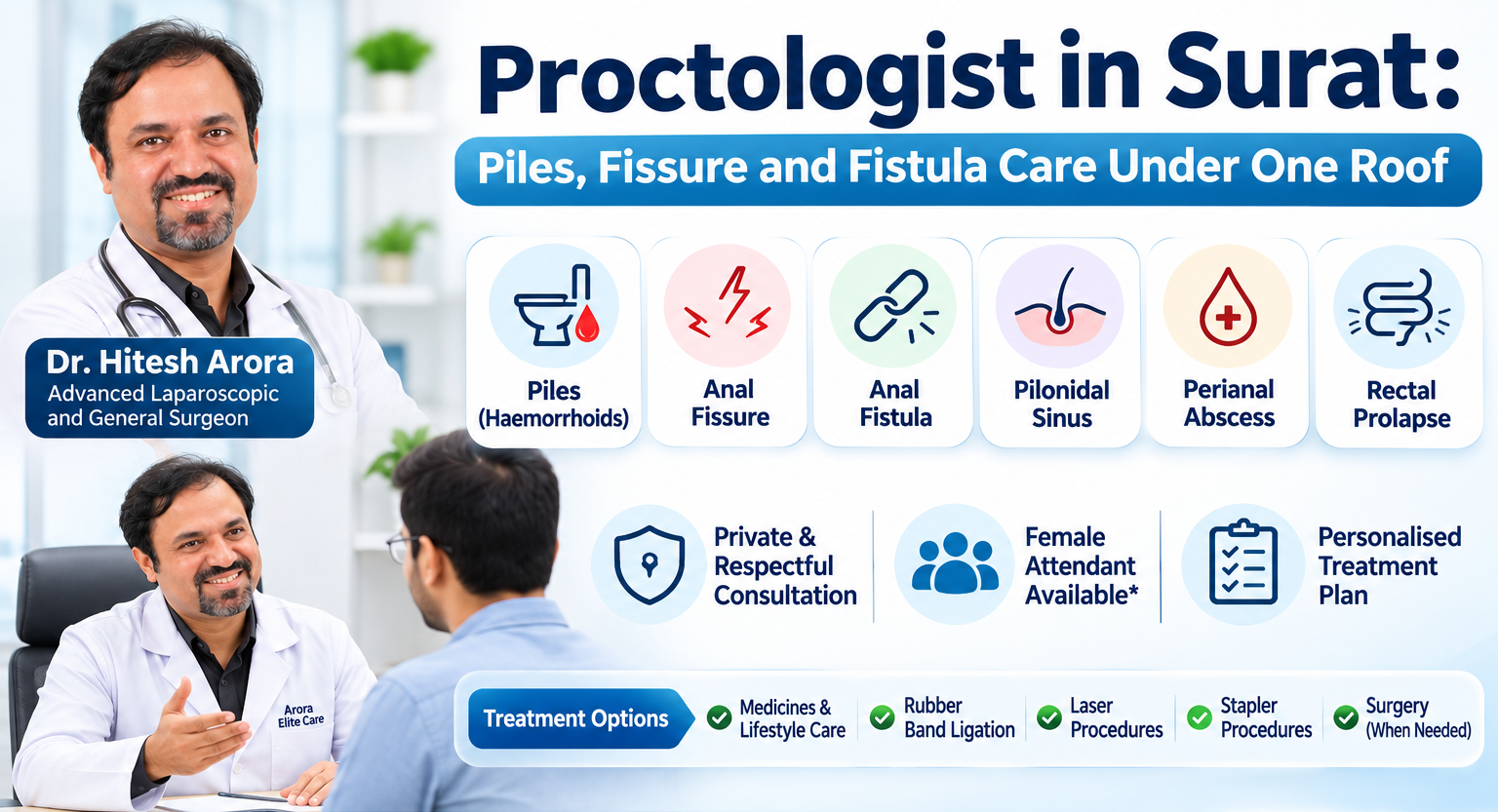
A proctologist in Surat evaluates and treats conditions affecting the anus and rectum, including piles, anal fissures, fistulas, abscesses, and rectal bleeding. At Arora Elite Care, Surat, patients can consult Dr. Hitesh Arora for surgical assessment, diagnosis and appropriate treatment options, depending on their condition.
Many people delay seeking medical advice because they feel embarrassed about anorectal symptoms. However, persistent pain, bleeding, swelling, or discharge deserves proper evaluation.
Therefore, understanding what a proctologist does and what happens during a consultation can help patients seek care with greater confidence.
What Does a Proctologist Treat?
A proctologist is a doctor who focuses on conditions affecting the anus, anal canal and rectum.
For this reason, patients may also search for an anorectal surgeon in Surat or a proctology clinic when they experience symptoms such as:
- Pain during bowel movements
- Bleeding from the rectum
- Swelling or a lump near the anus
- Persistent anal itching or irritation
- Pus or discharge near the anal opening
- Recurrent painful swelling
- Difficulty passing stools
- Tissue protruding from the anus
However, these symptoms can have several causes.
For example, rectal bleeding may occur with haemorrhoids, fissures, inflammation or other bowel conditions.
Therefore, a doctor should establish the diagnosis rather than assume that every anorectal symptom results from piles.
Proctologist vs Colorectal Surgeon
Patients sometimes use these terms interchangeably.
However, a proctologist generally focuses on anorectal conditions, while a colorectal surgeon has specialist surgical training involving the colon, rectum and anus.
Furthermore, the exact training and scope of practice depend on the doctor’s qualifications.
Read our guide to proctologist vs colorectal surgeon for a detailed comparison.
Conditions We Treat: Piles, Fissure, Fistula, Pilonidal Sinus, Abscess and Rectal Prolapse
Different anorectal conditions may produce similar symptoms. However, they require different treatment approaches.
1. Piles (Haemorrhoids)
Piles are swollen vascular cushions in or around the anal canal that may cause bleeding, discomfort, itching or prolapse.
Common symptoms include:
- Bright red bleeding during bowel movements
- Swelling around the anus
- Itching or irritation
- A lump that protrudes during straining
However, not every patient with piles needs surgery.
Instead, treatment may include dietary changes, bowel habit advice, medicines, office-based procedures or surgery, depending on severity.
For condition-specific information, visit our piles doctor in Surat page.
2. Anal Fissure
An anal fissure is a small tear in the lining of the anal canal.
As a result, it commonly causes sharp pain during or after bowel movements and may produce small amounts of bright red bleeding.
Initially, treatment may involve stool-softening measures, topical medicines and other therapies.
However, persistent fissures sometimes require a procedure after appropriate assessment.
Learn more about fissure treatment in Surat.
3. Anal Fistula
An anal fistula is an abnormal tunnel connecting the anal canal to the skin near the anus.
Consequently, symptoms may include:
- Recurrent swelling
- Pus or fluid discharge
- Pain near the anus
- Repeated abscess formation
Unlike some other anorectal conditions, most anal fistulas require a procedure for lasting healing.
Therefore, the surgeon selects treatment according to the fistula’s anatomy, complexity and involvement of the anal sphincter muscles.
Explore our fistula surgery in Surat page.
4. Pilonidal Sinus
A pilonidal sinus usually develops in the skin near the cleft between the buttocks.
It may cause:
- Pain while sitting
- Recurrent swelling
- Discharge from a small skin opening
- Local infection or abscess formation
The treatment approach depends on the severity, recurrence and presence of infection.
In some cases, patients need a procedure to drain an abscess or treat persistent sinus disease.
5. Perianal Abscess
A perianal abscess is a collection of pus near the anus.
As a result, patients may experience severe pain, swelling, redness or fever.
In many cases, an abscess requires prompt drainage.
Moreover, antibiotics alone may not adequately treat a drainable abscess.
Therefore, patients should seek timely medical assessment rather than attempt to drain the swelling themselves.
6. Rectal Prolapse
Rectal prolapse occurs when part or all of the rectal wall protrudes through the anus.
Patients may notice:
- Tissue coming out of the anus
- Mucus discharge
- Difficulty controlling bowel movements
- A feeling of incomplete evacuation
Treatment depends on the type of prolapse, symptoms and overall health.
Accordingly, a surgeon can assess whether conservative management or an operation is appropriate.
Your First Visit: Questions, Privacy and Examination
Many patients feel nervous before their first anorectal consultation.
However, knowing what to expect can make the appointment easier.
1. Discussion of Symptoms
During the consultation, the doctor may ask about:
- Pain or bleeding
- Duration of symptoms
- Bowel movements and constipation
- Swelling or discharge
- Previous treatment
- Current medicines
- Relevant medical conditions
- Family history when appropriate
Therefore, patients should describe their symptoms accurately, even if the subject feels uncomfortable.
2. Privacy During Consultation
Anorectal examinations involve sensitive areas of the body.
For this reason, the medical team should explain the examination, obtain consent and protect the patient’s privacy.
Additionally, patients can ask questions before the examination and request that the doctor stop if they feel uncomfortable.
3. Physical Examination
Depending on the symptoms, the doctor may recommend:
- External inspection of the anal area
- Digital rectal examination
- Anoscopy or proctoscopy
- Additional investigations when clinically necessary
However, not every patient needs every examination.
Therefore, the doctor should explain why a particular examination is appropriate.
4. Will the Examination Be Painful?
Some examinations may cause temporary discomfort.
In particular, patients with an acute fissure, abscess or severe pain may find certain examinations difficult.
In such cases, the doctor can adapt the assessment according to the patient’s symptoms and tolerance.
5. Can Women Request a Female Attendant?
Patients can request a chaperone or attendant during an intimate examination.
However, Arora Elite Care must confirm the availability of a female attendant before this service is advertised as guaranteed.
Therefore, patients who prefer a female chaperone should contact the clinic before their appointment to discuss arrangements.
Treatments Available: Laser, Stapler, Banding and Surgery
Treatment depends on the diagnosis, severity and individual medical requirements.
Importantly, a proctology consultation does not automatically mean the patient needs surgery.
Lifestyle and Medical Treatment
Some conditions improve with appropriate non-surgical management.
For example, the doctor may recommend:
- Increasing dietary fibre
- Drinking adequate fluids
- Avoiding excessive straining
- Improving bowel habits
- Prescribed medicines
- Warm sitz baths when appropriate
Ultimately, the treatment plan should address the diagnosed condition.
Rubber Band Ligation
Rubber band ligation is an office-based procedure used for selected internal haemorrhoids.
During the procedure, the doctor places a small band around the haemorrhoidal tissue to reduce its blood supply.
However, it is not suitable for every type or grade of haemorrhoid.
Laser Procedures
Surgeons may use laser-based techniques for selected anorectal conditions.
Nevertheless, laser treatment is not automatically appropriate for every patient.
Therefore, the doctor should explain the expected benefits, limitations, alternatives and recurrence risks.
Stapled Procedures
Stapled haemorrhoidopexy is an option for selected patients with prolapsing internal haemorrhoids.
However, it is not appropriate for all haemorrhoid patterns, and patients should discuss its benefits and risks with the surgeon.
Conventional Surgery
Some conditions require conventional surgical treatment.
For example, procedures include selected haemorrhoid operations, fistulotomy, abscess drainage, and procedures for rectal prolapse.
Additionally, for complex fistulas, surgeons may consider seton placement or other sphincter-preserving techniques.
Ultimately, the most suitable approach depends on the clinical findings.
Clinic confirmation required: Verify which laser, stapled, banding and other procedures Arora Elite Care currently provides before publishing them as available services.
When to See a Proctologist Urgently
Some anorectal symptoms require prompt medical attention.
Therefore, seek urgent assessment if you experience:
- Severe or rapidly worsening anal pain
- Painful swelling accompanied by fever
- Heavy or persistent rectal bleeding
- Dizziness, fainting or weakness with bleeding
- A rapidly spreading infection around the anus
- Severe pain with difficulty passing urine
- Protruding rectal tissue that becomes very painful or cannot be reduced
In particular, heavy bleeding, fainting or signs of severe infection may require emergency department care rather than a routine clinic appointment.
Do Not Ignore Repeated Rectal Bleeding
Although piles commonly cause bright red rectal bleeding, other conditions can produce similar symptoms.
Furthermore, patients with persistent bleeding, unexplained weight loss, changes in bowel habits or anaemia may require additional investigation.
Therefore, early medical assessment helps identify the underlying cause and guide appropriate treatment.
Proctology Consultation at Arora Elite Care, VIP Road, Surat
Patients looking for a proctologist in Surat can contact Arora Elite Care for an anorectal surgical consultation.
During the consultation, Dr. Hitesh Arora, Advanced Laparoscopic and General Surgeon, evaluates surgical conditions and discusses treatment options according to the patient’s diagnosis.
Clinic Details
Clinic: Arora Elite Care
Doctor: Dr. Hitesh Arora
Speciality: Advanced Laparoscopic and General Surgeon
Address: Solaris Kode, 202–203, VIP Road, Beside Shyam Mandir, Surat, Gujarat – 395007
Areas Served: Patients come from Vesu, Adajan, Athwa, Piplod, Citylight, Pal and surrounding areas of Surat.
Book in Surat: Contact Arora Elite Care to schedule a consultation.
During the appointment, patients can discuss their symptoms, examination requirements and appropriate treatment options.
Frequently Asked Questions
1. Is a Proctologist the Same as a Piles Doctor?
A proctologist evaluates several conditions affecting the anus and rectum, including piles, fissures, fistulas, abscesses and rectal prolapse. A doctor who treats piles may also manage other anorectal conditions, depending on their qualifications and clinical expertise.
2. Is the Examination Painful?
An anorectal examination may cause temporary discomfort, especially when the patient has a painful fissure or abscess. The doctor should explain the examination, obtain consent and adapt the assessment according to the patient’s symptoms.
3. Can a Woman Request a Female Attendant?
Yes. A woman can request a female chaperone or attendant for an intimate examination. However, availability varies between clinics. Contact Arora Elite Care before the appointment to confirm whether a female attendant can be arranged.
4. Do I Need a Referral to See a Proctologist?
Many patients can arrange a direct consultation without a referral. However, some insurance plans or hospital arrangements may have specific requirements. Contact the clinic to confirm appointment procedures.
Conclusion
A proctologist in Surat helps patients evaluate and manage anorectal conditions such as piles, fissures, fistulas, pilonidal sinus, abscesses and rectal prolapse.
Therefore, persistent bleeding, pain, swelling or discharge should not be ignored.
Ultimately, the right treatment depends on an accurate diagnosis, the severity of the condition, and individual medical needs.
For an anorectal surgical assessment, contact Arora Elite Care, Surat, to arrange a consultation with Dr. Hitesh Arora.