
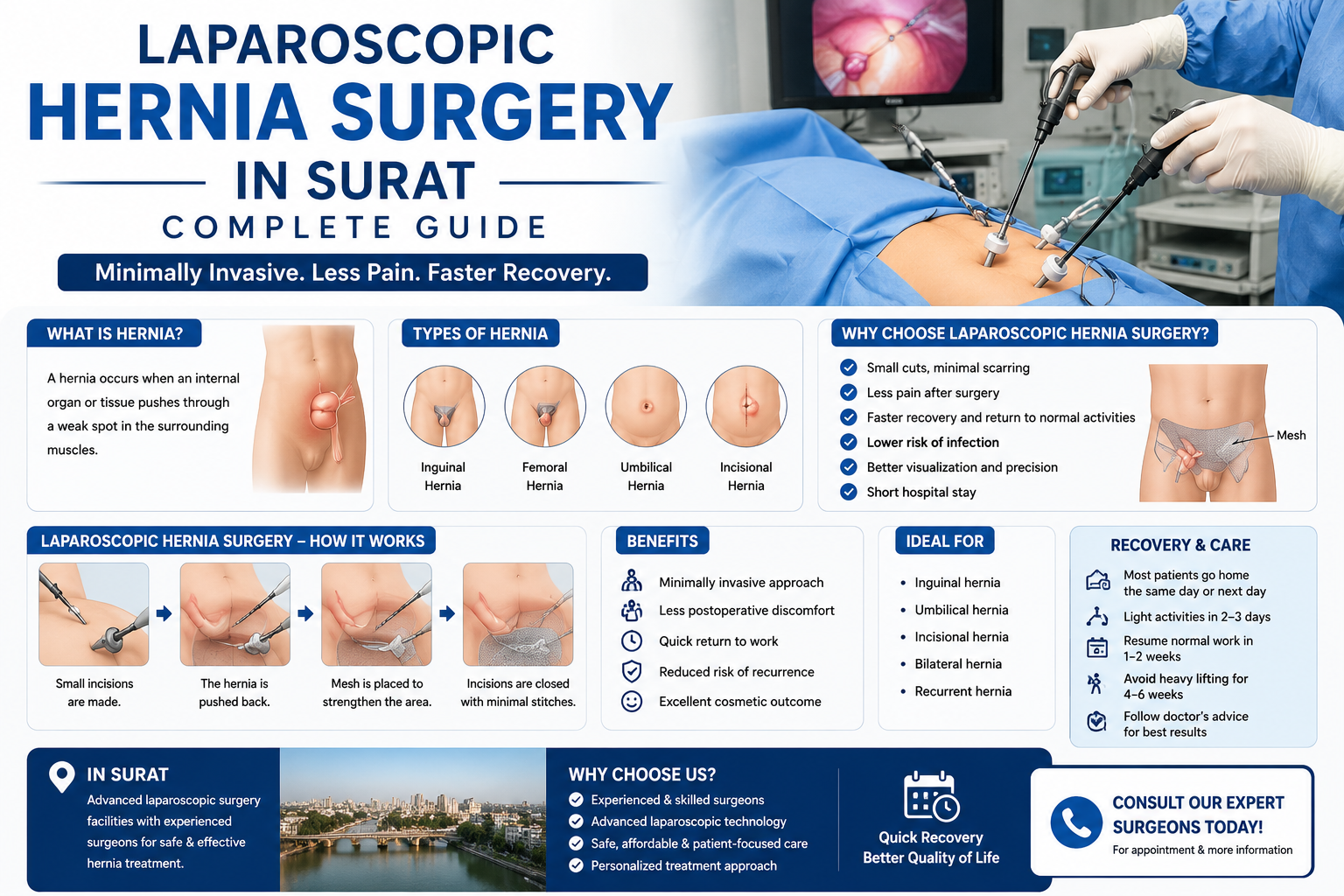
Hernia surgery in Surat can repair a weakened area in the abdominal wall that allows tissue or part of an organ to bulge through. Laparoscopic hernia repair uses small incisions and a camera to help the surgeon repair the defect. At Arora Elite Care, Dr. Hitesh Arora evaluates inguinal, umbilical, and incisional hernias and discusses suitable treatment options based on the hernia type, symptoms, and the patient’s overall health.
What Is a Hernia?
A hernia develops when tissue, fat, or part of an organ pushes through a weak spot in the surrounding muscle or connective tissue. You may notice a bulge in the groin, near the belly button, or around an old surgical scar.
Common symptoms include:
- A visible lump in the abdomen or groin
- Pain or discomfort while coughing, lifting, or straining
- A feeling of pressure or heaviness
- Swelling that becomes more noticeable when standing
- Discomfort that increases during physical activity
Some hernias cause few symptoms at first. However, an adult hernia generally does not close on its own, so a surgical assessment can help you understand whether monitoring or repair is appropriate.
Seek emergency medical care if a hernia suddenly becomes very painful, hard, or impossible to push back, particularly with vomiting, abdominal swelling, fever, or difficulty passing stool or gas. These symptoms may indicate a trapped hernia or loss of blood supply to the affected tissue.
Which Types of Hernia Can Surgeons Repair?
The surgical approach depends on the hernia’s location, size, symptoms, and complexity.
1. Inguinal Hernia
An inguinal hernia develops in the groin. It is more common in men and may cause a bulge or discomfort during coughing, lifting, or exercise. Surgeons may use open repair or laparoscopic techniques such as TAPP or TEP, depending on the patient’s condition.
2. Umbilical Hernia
An umbilical hernia develops near the belly button. Small, symptom-free hernias may sometimes be monitored, while painful, enlarging, or complicated hernias may require surgery.
Read more about umbilical hernia surgery in adults.
3. Incisional Hernia
An incisional hernia forms through a weakened area around a previous surgical incision. Treatment depends on the size of the defect, previous operations, tissue quality, and other health factors. Larger or recurrent hernias may require more complex abdominal wall reconstruction.
4. Recurrent Hernia
A recurrent hernia appears again after an earlier repair. The surgeon reviews the previous operation, mesh placement, scar tissue, and current defect before selecting a treatment approach.
What Is Laparoscopic Hernia Surgery?
Laparoscopic hernia surgery repairs the defect through small incisions using a camera and specialised instruments. The surgeon places the protruding tissue back into position and reinforces the weakened area when appropriate.
Many repairs use surgical mesh to strengthen the abdominal wall. However, the need for mesh and the choice of repair technique depend on the type of hernia and the individual case.
Laparoscopic surgery may offer smaller incisions, less early postoperative discomfort, and a quicker return to everyday activities for suitable patients. It still carries risks, and it does not guarantee a pain-free recovery or prevent every recurrence.
What Are TAPP and TEP Hernia Repair?
TAPP and TEP are two laparoscopic techniques commonly used to repair inguinal hernias.
TAPP, or transabdominal preperitoneal repair: The surgeon enters the abdominal cavity, opens a layer of tissue called the peritoneum, and places mesh in the space behind the abdominal wall.
TEP, or totally extraperitoneal repair: The surgeon places mesh in the space behind the abdominal wall without entering the abdominal cavity.
Both approaches can provide effective repair in appropriately selected patients. The choice depends on the hernia, previous abdominal or pelvic surgery, patient health, and the surgeon’s expertise.
Learn more in our guide to TAPP vs TEP hernia repair.
Does Every Hernia Repair Need Mesh?
No. Surgeons often use mesh to reinforce the weakened area, particularly in many adult inguinal hernia repairs. In selected cases, they may consider a tissue-based repair without mesh.
The decision depends on the hernia type, defect size, recurrence risk, surgical findings, and patient preferences. Ask your surgeon why a particular repair is appropriate and what benefits and risks it carries.
What Happens During Hernia Surgery?
The process usually includes the following steps:
- Preoperative assessment: The surgeon reviews your symptoms, medical history, medications, and previous operations. You may need blood tests or imaging.
- Anaesthesia: The anaesthesia team selects an appropriate method based on the planned operation and your health.
- Hernia repair: The surgeon returns the protruding tissue to its proper position and repairs the weak area.
- Mesh placement, when indicated: The surgeon positions mesh to reinforce the repair.
- Recovery and discharge: The team monitors your condition, helps manage discomfort, and explains wound care and activity restrictions.
The duration of surgery and hospital stay varies with the hernia’s complexity and the chosen technique.
How Long Does Recovery Take After Hernia Surgery?
Recovery depends on the type of hernia, the repair technique, your general health, and the physical demands of your work.
After an uncomplicated laparoscopic repair, many patients start walking on the day of surgery and return home the same day or within one to two days. Some return to desk work within one to two weeks, while strenuous activity and heavy lifting may require a longer break.
Follow your surgeon’s instructions about:
- Walking and gradually increasing activity
- Wound care and bathing
- Driving after surgery and anaesthesia
- Returning to work
- Lifting weights and exercising
- Attending follow-up appointments
Do not resume heavy lifting just because the skin incisions look healed. The deeper tissues need time to recover, and your surgeon can advise when to increase physical activity.
For older adults, recovery planning should also consider existing medical conditions, medications, mobility, and anaesthesia risks. Read our guide to hernia surgery in elderly patients.
What Is the Cost of Hernia Surgery in Surat?
The cost of hernia surgery in Surat depends on the hernia type, surgical approach, mesh requirements, hospital stay, and overall complexity.
Published Surat market estimates suggest the following approximate ranges:
| Procedure | Indicative cost |
|---|---|
| Open hernia surgery | ₹30,000–₹80,000 |
| Laparoscopic hernia surgery | ₹45,000–₹1,50,000 |
These figures are general market estimates, not confirmed Arora Elite Care package prices. Your actual cost may fall outside these ranges depending on your needs.
Factors that can affect the final bill include:
- Type, size and complexity of the hernia
- Open or laparoscopic repair
- Mesh type and other surgical materials
- Anaesthesia and diagnostic tests
- Room category and length of hospital stay
- Emergency treatment or additional procedures
- Medicines, follow-up care and insurance coverage
Before admission, request a written estimate and check exactly which services and materials the quoted amount includes.
For more details, read our guide to hernia surgery cost in Surat.
Hernia Surgery at Arora Elite Care, Surat
At Arora Elite Care, patients can consult Dr. Hitesh Arora, an Advanced Laparoscopic and General Surgeon. The clinic’s published profile reports more than 15 years of surgical experience, an M.S. Gold Medal, and an FMAS qualification.
A consultation helps identify the type of hernia and determine whether observation, open repair, or laparoscopic surgery is appropriate. The surgeon can also explain mesh options, TAPP or TEP techniques when relevant, recovery expectations, and estimated expenses.
To discuss your symptoms or treatment options, visit Arora Elite Care.
Frequently Asked Questions
1. Is laparoscopic hernia surgery better than open surgery?
Laparoscopic repair may offer smaller incisions and a quicker recovery for suitable patients. However, open repair may be preferable in some cases. Your surgeon can explain which approach fits your hernia and medical history.
2. How long does laparoscopic hernia surgery take?
The operation often takes around 30 to 120 minutes, although complex or recurrent hernias may require more time. The exact duration depends on the hernia type and surgical technique.
3. Is mesh always necessary for hernia surgery?
No. Surgeons commonly use mesh in many adult hernia repairs, but selected patients may qualify for a tissue-based repair. The decision depends on the defect, recurrence risk, and surgical assessment.
4. How long do I need to stay in the hospital?
Many patients leave the hospital on the same day or within one to two days after an uncomplicated repair. Complex surgery or other medical conditions may require a longer stay.
5. What is the cost of hernia surgery in Surat?
Indicative local estimates range from ₹30,000 to ₹80,000 for open surgery and ₹45,000 to ₹1,50,000 for laparoscopic repair. The hospital should provide a case-specific quotation after assessing your condition.
6. Can an adult hernia heal without surgery?
An adult hernia usually does not close on its own. Some small, symptom-free hernias may be monitored under medical guidance, while painful, enlarging, or complicated hernias may need repair.
7. When can I return to work after hernia surgery?
Some patients return to desk work within one to two weeks after uncomplicated laparoscopic repair. Heavy physical work may require more time. Follow your surgeon’s advice before resuming strenuous activity.
8. Is hernia surgery safe for older adults?
Age alone does not determine whether surgery is appropriate. The surgeon assesses heart and lung health, other medical conditions, medications, mobility, and the risks of both surgery and continued observation before recommending treatment.