
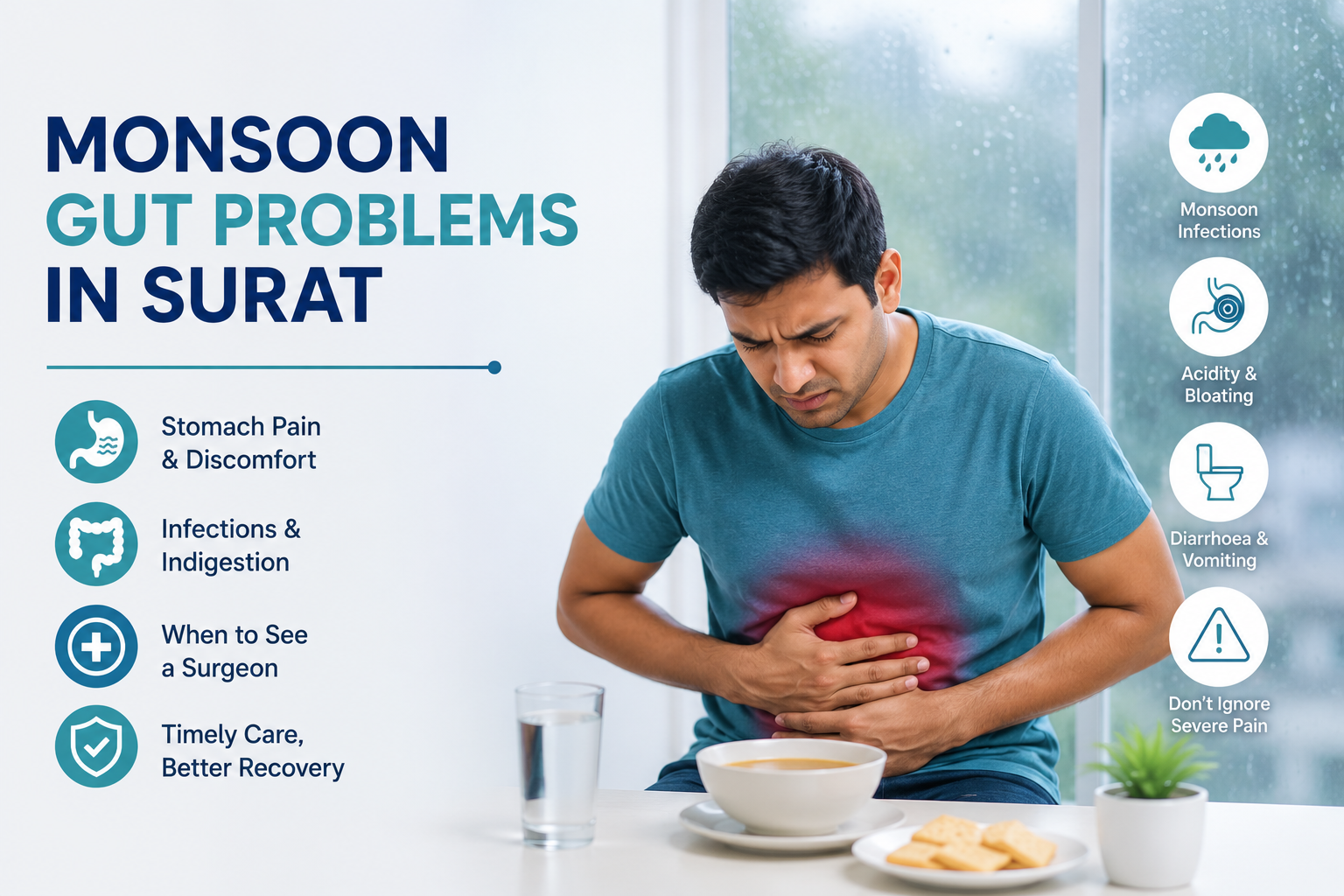
Monsoon brings relief from summer heat, but it can also bring a noticeable rise in digestive complaints. During the rainy season, people commonly experience stomach pain, vomiting, diarrhoea, bloating, fever, or loss of appetite. Most digestive upsets are not surgical emergencies. However, the problem is that symptoms of appendicitis, gallbladder inflammation, intestinal obstruction, and some anorectal conditions can initially resemble a simple stomach infection. For people searching for monsoon stomach problems Surat, the most important advice is to watch how symptoms develop. Severe, persistent, or localized abdominal symptoms should not automatically be blamed on contaminated food.
Why Are Stomach Problems Common During Monsoon in Surat?
Rainy weather itself does not directly cause every digestive problem. However, monsoon conditions can increase exposure to contaminated food and water.
Possible contributing factors include:
- Contaminated drinking water
- Improperly stored food
- Poor food hygiene
- Eating contaminated street food
- Gastrointestinal infections
- Changes in eating habits
- Inadequate fluid intake during illness
These factors can lead to gastroenteritis and other digestive problems that commonly cause diarrhoea, vomiting, cramps, and fever.
However, not every stomach ache during monsoon is an infection.
Which Symptoms Usually Suggest a Stomach Infection?
A gastrointestinal infection may cause:
- Loose stools
- Nausea
- Vomiting
- Abdominal cramps
- Bloating
- Reduced appetite
- Fever
- General weakness
Many mild illnesses improve with appropriate hydration, diet, rest, and medical treatment when necessary.
But symptoms that continue, become severe, or concentrate in one area of the abdomen require closer attention.
Which Monsoon Stomach Problems May Need Surgical Evaluation?
Some abdominal conditions need timely diagnosis and, in certain cases, surgical treatment.
Appendicitis
Appendicitis often causes abdominal pain that may initially feel vague and later become more prominent in the lower right side of the abdomen. Nausea, vomiting, reduced appetite, and fever can also occur.
Because these symptoms can resemble a stomach infection, patients may sometimes delay evaluation.
Gallbladder Problems
Gallstones or inflammation of the gallbladder can cause significant upper abdominal pain, often on the right side. Some patients also experience nausea or vomiting.
These symptoms should not simply be assumed to result from something eaten during the rainy season.
Intestinal Obstruction
An intestinal obstruction can cause abdominal swelling, cramping or pain, vomiting, and difficulty passing stool or gas.
Suspected obstruction needs prompt medical assessment.
Anorectal Problems
Frequent diarrhoea, constipation, straining, or changes in bowel habits may aggravate symptoms around the anal area. Pain or bleeding, however, should receive an appropriate diagnosis rather than automatically being labelled as piles.
Does Monsoon Cause Appendicitis or Gallbladder Disease?
Monsoon does not directly mean that a person will develop appendicitis or gallbladder disease. The important issue is symptom overlap.
A patient with abdominal pain, vomiting, and fever during monsoon may naturally assume they have food poisoning or a stomach infection. Similar symptoms, however, can occur with appendicitis, gallbladder inflammation, and other abdominal conditions.
Therefore, persistent or worsening symptoms deserve proper medical evaluation.
When Should You See a Surgeon for Stomach Pain?
Not every stomach ache requires a surgeon. However, seek medical attention if you experience:
- Severe or increasing abdominal pain
- Pain that becomes localized to one area
- Persistent vomiting
- Increasing abdominal swelling
- Inability to pass stool or gas
- Significant rectal bleeding
- Persistent or worsening fever
- Severe weakness or fainting
- Symptoms that continue despite initial treatment
Sudden or rapidly worsening symptoms may require urgent medical care.
How Do Doctors Diagnose the Cause?
The first step is a detailed medical history and physical examination.
A doctor may ask where the pain started, whether it moved, how long it has been present, whether vomiting or fever is present, and whether bowel habits have changed.
Depending on the suspected condition, investigations may include:
Blood tests: These can help assess infection, inflammation, dehydration, and other abnormalities.
Ultrasound: Doctors commonly use ultrasound when evaluating conditions such as gallstones and may use it for selected abdominal complaints.
CT scan: Some patients may need CT imaging when the diagnosis remains unclear or a more detailed abdominal assessment is necessary.
Not every patient needs every investigation. The doctor selects tests according to the symptoms and examination.
How Are Surgical Gut Problems Treated?
Treatment depends entirely on the diagnosis.
A simple gastrointestinal infection may need hydration, dietary management, and appropriate medicines rather than surgery.
Appendicitis may require surgical removal of the appendix when clinically indicated. Symptomatic gallbladder disease may require gallbladder surgery in suitable patients. Intestinal obstruction treatment varies depending on its cause and severity.
Surgeons can perform several abdominal operations using laparoscopic or minimally invasive techniques when appropriate.
The key is to establish the correct diagnosis before deciding on treatment.
What Is Recovery Like?
Recovery differs according to the illness and treatment.
Someone recovering from gastroenteritis will have a very different recovery period from someone undergoing appendix, gallbladder, or another abdominal operation.
After surgery, patients should follow their surgeon’s instructions regarding:
- Diet and hydration
- Medicines
- Wound care
- Walking and physical activity
- Lifting restrictions
- Returning to work
- Follow-up appointments
Avoid relying on a standard online recovery timeline for every procedure.
Why Consult Dr. Hitesh Arora in Surat?
Patients with persistent abdominal symptoms or conditions that may require surgical evaluation can consult Dr. Hitesh Arora at Arora Elite Care.
Dr. Hitesh Arora is an Advanced Laparoscopic and General Surgeon with 15+ years of surgical experience. He is an M.S. Gold Medalist, holds an FMAS (Fellowship in Minimal Access Surgery), and his professional profile reports experience across 10,000+ surgeries.
A surgical consultation can help distinguish a routine digestive illness from an abdominal condition that requires further investigation or surgical management.
Conclusion
Monsoon stomach problems Surat are often related to gastrointestinal infections and contaminated food or water, but not every episode of abdominal pain is simple food poisoning.
Appendicitis, gallbladder problems, intestinal obstruction, and other conditions can produce overlapping symptoms.
Pay particular attention to persistent or severe pain, localized abdominal pain, repeated vomiting, abdominal swelling, inability to pass stool or gas, significant bleeding, or worsening fever. Early medical assessment can help identify the actual cause and guide appropriate treatment.
FAQs
Why do stomach problems increase during monsoon?
Contaminated food or water and gastrointestinal infections can become important concerns during rainy weather. Food hygiene and safe drinking water are therefore particularly important.
Is every stomach ache during monsoon food poisoning?
No. Appendicitis, gallbladder disease, intestinal obstruction, and other conditions can also cause abdominal pain, vomiting, or fever.
When is stomach pain an emergency?
Severe or rapidly worsening pain, persistent vomiting, major abdominal swelling, fainting, significant bleeding, or inability to pass stool or gas requires prompt medical attention.
Can appendicitis feel like a stomach infection?
Yes. Early appendicitis can cause abdominal discomfort, nausea, vomiting, reduced appetite, and fever, which may initially resemble a digestive infection.
Can monsoon directly cause gallstones?
No. Monsoon itself should not be considered a direct cause of gallstones. However, gallbladder symptoms occurring during the rainy season can sometimes be mistaken for ordinary digestive upset.