If you are experiencing pain, bleeding, itching, swelling, or discomfort while passing stool, piles may be the underlying cause. Although piles are common, many people delay consulting a doctor because they feel embarrassed or hope the problem will disappear on its own. If you are searching for piles treatment near Bardoli, travelling to Surat can provide access to specialized evaluation and advanced treatment options. At Arora Elite Care provides treatment for piles and other anorectal conditions with an emphasis on accurate diagnosis, appropriate treatment, and patient comfort.
What Are Piles?
Piles, medically known as hemorrhoids, are swollen and enlarged veins around the anus or inside the lower rectum.
They are generally classified into two types:
- Internal piles: Develop inside the rectum and may cause painless bleeding or prolapse.
- External piles: Develop around the anal opening and may cause pain, swelling, itching, or discomfort.
The symptoms and severity can vary considerably between patients, so proper examination is important before deciding on treatment.
What Are the Common Symptoms of Piles?
Piles may cause different symptoms depending on their type and severity. Common signs include:
- Bright red blood after passing stool
- Pain or discomfort around the anus
- Itching or irritation
- Swelling near the anal opening
- A lump around the anus
- Mucus discharge
- A feeling of incomplete bowel emptying
- Tissue protruding during bowel movements
Rectal bleeding should not automatically be assumed to be piles. Other medical conditions can also cause bleeding, which makes proper diagnosis important.
Why Do Piles Develop?
Several factors can increase pressure on the veins around the anus and contribute to piles.
Common factors include chronic constipation, straining during bowel movements, prolonged sitting on the toilet, low-fibre diets, pregnancy, obesity, and repeated heavy lifting.
Improving bowel habits and addressing constipation can therefore play an important role in both treatment and prevention.
When Should You See a Doctor for Piles?
Occasional mild discomfort may improve with changes in diet and bowel habits. However, you should consider medical evaluation when symptoms continue, repeatedly return, or interfere with everyday activities.
Consult a doctor if you experience persistent rectal bleeding, significant pain, recurrent swelling, a protruding lump, or difficulty passing stool comfortably.
Seek prompt medical attention if bleeding is heavy, you feel faint or weak, or your symptoms suddenly become severe.
How Are Piles Diagnosed?
The first step in effective treatment is confirming that piles are actually causing your symptoms.
Your doctor will discuss your symptoms, bowel habits, duration of the problem, previous treatments, and medical history. Depending on your symptoms, a physical examination and additional anorectal evaluation may be recommended.
This assessment also helps determine the type and grade of piles, which can influence the treatment plan.
Can Piles Be Treated Without Surgery?
Yes. Not every patient with piles requires surgery.
For mild or early-stage piles, your doctor may recommend conservative measures such as:
- Increasing dietary fibre
- Drinking adequate fluids
- Avoiding excessive straining
- Treating constipation
- Maintaining regular bowel habits
- Avoiding prolonged sitting on the toilet
- Using prescribed medication when appropriate
These measures may reduce symptoms, particularly in early cases.
However, persistent, recurrent, prolapsing, or more advanced piles may require a procedure.
What Treatment Options Are Available for Piles?
The appropriate treatment depends on the grade of piles, severity of symptoms, bleeding, prolapse, previous treatment, and overall health.
Treatment may range from medication and lifestyle changes to minimally invasive procedures or surgery.
Rather than choosing a procedure based only on advertisements or online information, patients should undergo an examination first. A surgeon can then recommend an approach based on the actual condition.
Is Laser Treatment Available for Piles?
Modern anorectal care includes several procedural options, and laser-based techniques may be considered for selected patients.
However, laser treatment is not automatically the best option for every case of piles. The appropriate method depends on the type and grade of hemorrhoids, symptoms, anatomy, and the surgeon’s assessment.
Your doctor should explain why a particular technique is being recommended, its expected benefits, possible risks, and available alternatives.
Why Do Patients From Bardoli Visit Surat for Piles Treatment?
Bardoli and Surat are relatively close, making Surat a practical option for patients seeking specialized surgical care.
Patients searching for piles treatment near Bardoli may consider travelling to Surat for access to:
- Specialized anorectal evaluation
- Experienced surgical consultation
- Modern treatment techniques
- Treatment planning according to the grade of piles
- Pre- and post-treatment guidance
- Follow-up care
The best treatment is not simply the most advanced procedure; it is the procedure that appropriately matches the patient’s diagnosis.
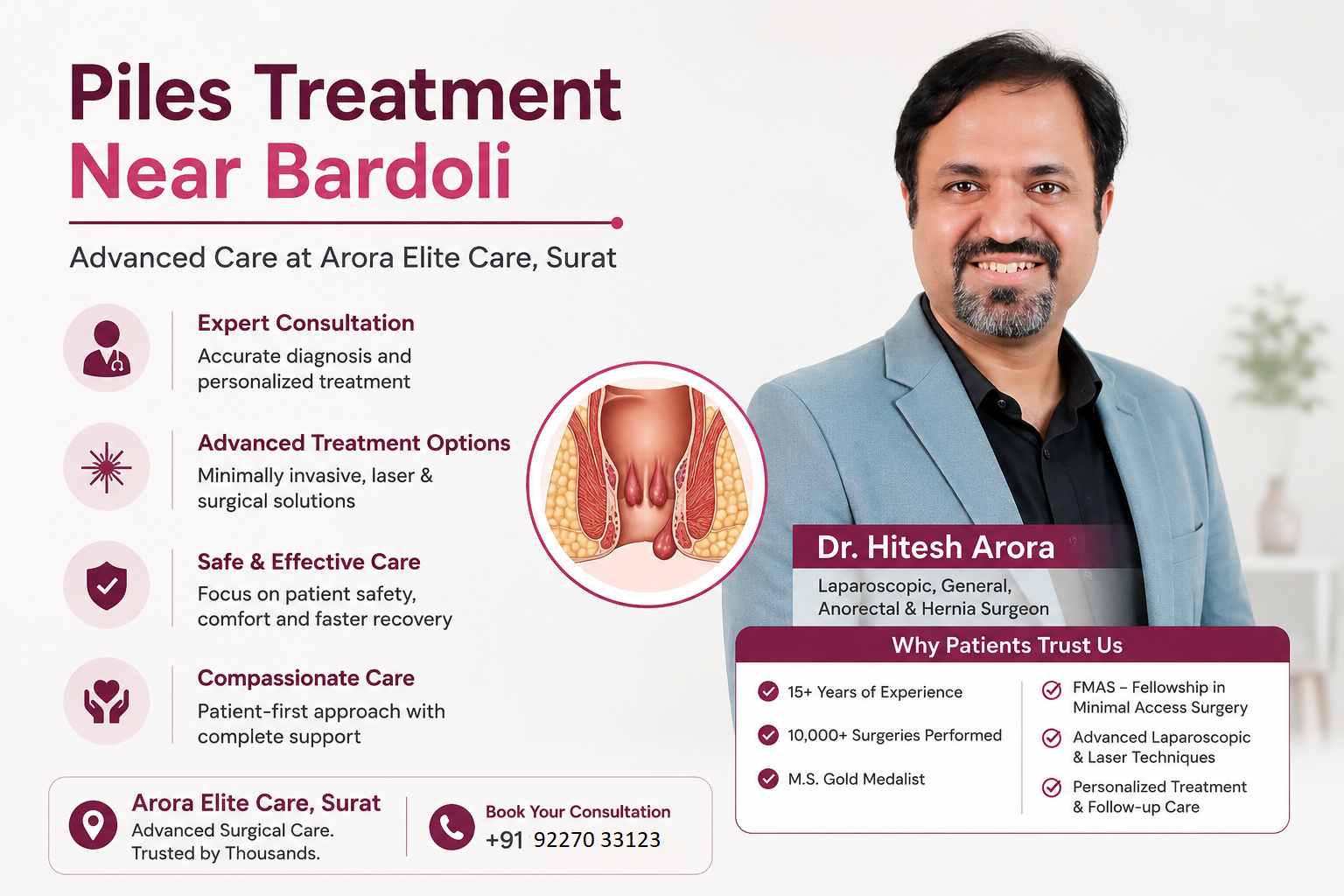
Why Patients Can Trust Dr. Hitesh Arora?
At Arora Elite Care, Surat, Dr. Hitesh Arora provides consultation and surgical care for piles and other anorectal conditions. Patients experiencing persistent bleeding, pain, swelling, or prolapse can undergo a detailed evaluation to identify the cause and understand suitable treatment options.
- 15+ years of medical experience
- 10,000+ surgeries successfully performed
- M.S. Gold Medalist
- FMAS Fellowship in Minimal Access Surgery
- Expertise in advanced laparoscopic, general, anorectal, and hernia surgery
- Focus on minimally invasive surgical techniques
- Personalized treatment planning with an emphasis on patient safety and recovery
- Advanced surgical care available at Arora Elite Care, Surat
This individualized approach helps patients make informed decisions rather than selecting treatment based solely on symptoms.
How Can You Reduce the Risk of Piles Returning?
Treatment addresses the existing problem, but healthy bowel habits remain important afterward.
Try to consume enough fibre through vegetables, fruits, whole grains, and other fibre-rich foods. Drink adequate water, stay physically active, and avoid unnecessary straining during bowel movements.
If constipation repeatedly occurs, discuss it with your doctor rather than relying continuously on self-medication.
Conclusion
Piles are common, but persistent bleeding, pain, itching, swelling, or prolapse should not be ignored. Early evaluation can help confirm the diagnosis and determine whether lifestyle measures, medication, a minimally invasive procedure, or surgery is appropriate.
If you are searching for piles treatment near Bardoli, you can consult Dr. Hitesh Arora for an individualized assessment and treatment plan.
The goal should be to treat the actual grade and type of piles while also addressing constipation and bowel habits that may contribute to recurring symptoms.
Frequently Asked Questions
Can piles go away without surgery?
Mild piles may improve with dietary changes, constipation management, better bowel habits, and appropriate medication. More advanced or persistent cases may require a procedure.
Is bleeding during stool always caused by piles?
No. Several conditions can cause rectal bleeding. A medical examination is important, especially when bleeding persists or repeatedly returns.
Do all piles require laser treatment?
No. Treatment depends on the type, grade, symptoms, and individual condition. Laser-based treatment may be appropriate for selected patients but is not necessary for everyone.
When should I consult a doctor for piles?
Consult a doctor if you have persistent bleeding, recurring pain, swelling, itching, prolapse, or symptoms that do not improve with basic measures.
Can I travel from Bardoli to Surat for piles treatment?
Yes. Patients from Bardoli can seek consultation and treatment in Surat when they want access to specialized anorectal and surgical care.