
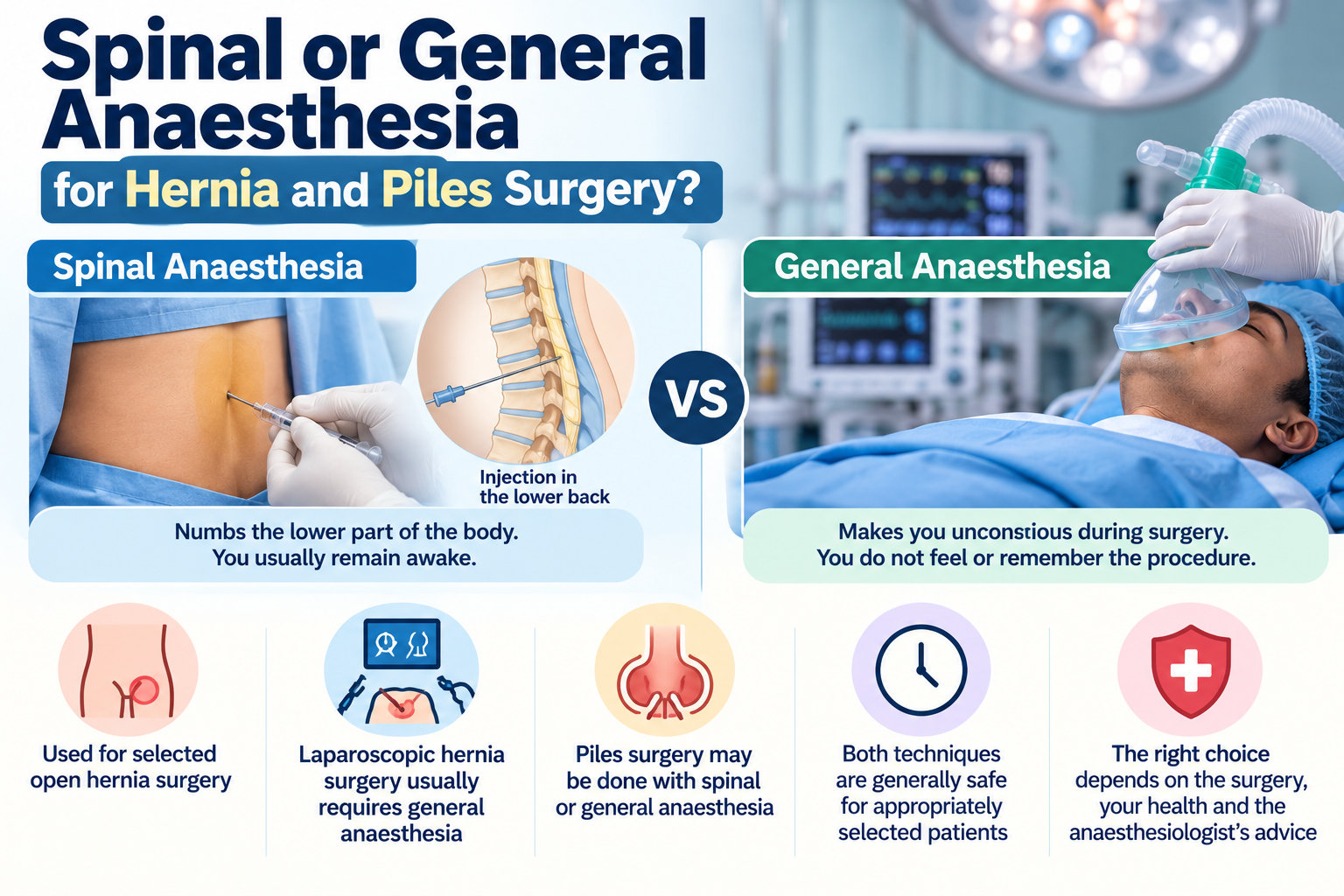
Spinal anaesthesia for hernia surgery is an option for selected patients undergoing open hernia repair. However, doctors usually recommend general anaesthesia for laparoscopic hernia surgery. The appropriate technique depends on the surgical procedure, the patient’s health, and the anaesthesiologist’s assessment.
Spinal anaesthesia numbs the lower part of the body, while general anaesthesia keeps the patient unconscious during surgery.
Many patients worry about pain, injections, breathing support, or how long anaesthesia takes to wear off. Understanding these differences can help patients prepare for surgery with greater confidence.
At Arora Elite Care, Surat, Dr. Hitesh Arora, Advanced Laparoscopic and General Surgeon, works with the anaesthesia team to plan surgical care according to each patient’s needs.
What Is Spinal Anaesthesia for Hernia Surgery?
Spinal anaesthesia is a regional anaesthesia technique in which an anaesthesiologist injects local anaesthetic medicine into the fluid surrounding the spinal nerves in the lower back.
The medicine temporarily blocks pain signals from the lower part of the body.
Doctors may recommend spinal anaesthesia for selected open inguinal hernia operations. Patients usually remain awake, although the anaesthesia team may provide sedation.
Is Spinal Anaesthesia Used for Hernia Surgery?
Yes. Spinal anaesthesia for hernia surgery is suitable for some open inguinal hernia repairs, but laparoscopic hernia repair usually requires general anaesthesia.
Open Hernia Surgery
Doctors may perform selected open groin hernia repairs under local, spinal or general anaesthesia.
The anaesthesiologist considers the patient’s health, surgical technique and individual risk factors before choosing an option.
Laparoscopic Hernia Surgery
Surgeons generally perform laparoscopic hernia repair under general anaesthesia.
General anaesthesia helps the medical team manage breathing and maintain suitable operating conditions during the procedure.
Learn more about laparoscopic hernia surgery in Surat.
What Are the Risks of Spinal Anaesthesia for Hernia Surgery?
Spinal anaesthesia can provide effective pain control during selected operations, but patients should understand its possible side effects.
These include:
- Temporary low blood pressure
- Headache after the spinal injection
- Nausea or dizziness
- Temporary difficulty passing urine
- Back discomfort near the injection site
- Temporary weakness or numbness in the legs
Serious complications, such as infection, bleeding around the spinal nerves or lasting nerve injury, are rare.
The anaesthesiologist evaluates medical conditions and medicines, especially blood thinners, before recommending spinal anaesthesia.
Is Spinal or General Anaesthesia Better for Hernia Surgery?
Neither technique is automatically better for every patient.
Spinal anaesthesia may suit selected open hernia operations, while general anaesthesia is generally appropriate for laparoscopic repairs.
The safest choice depends on the operation, the patient’s medical history and the anaesthesia team’s assessment.
Frequently Asked Questions
1. Is Spinal Anaesthesia for Hernia Surgery Safe?
Spinal anaesthesia can be appropriate for selected open hernia operations. However, it carries potential risks, and the anaesthesiologist must assess whether it suits the patient.
2. Is Spinal Anaesthesia Painful?
Patients may experience a brief sting or pressure during the injection. The anaesthesiologist usually numbs the skin first to reduce discomfort.
3. Can Doctors Perform Laparoscopic Hernia Surgery Under Spinal Anaesthesia?
Doctors usually perform laparoscopic hernia surgery under general anaesthesia. Specialised teams may use alternative techniques in selected circumstances, but these are not routine.
4. How Long Does Spinal Anaesthesia Last?
The numbness commonly lasts a few hours, depending on the medicine and dose. The medical team monitors patients until sensation and movement return sufficiently.
5. Can Spinal Anaesthesia Cause Permanent Paralysis?
Permanent neurological injury is extremely rare, but serious complications are possible. The anaesthesiologist evaluates individual risk factors and takes precautions.
6. Can I Choose Spinal Anaesthesia Instead of General Anaesthesia?
Patients can discuss their preferences with the anaesthesiologist. However, the surgical technique, medical condition and individual risks determine which option is appropriate.