
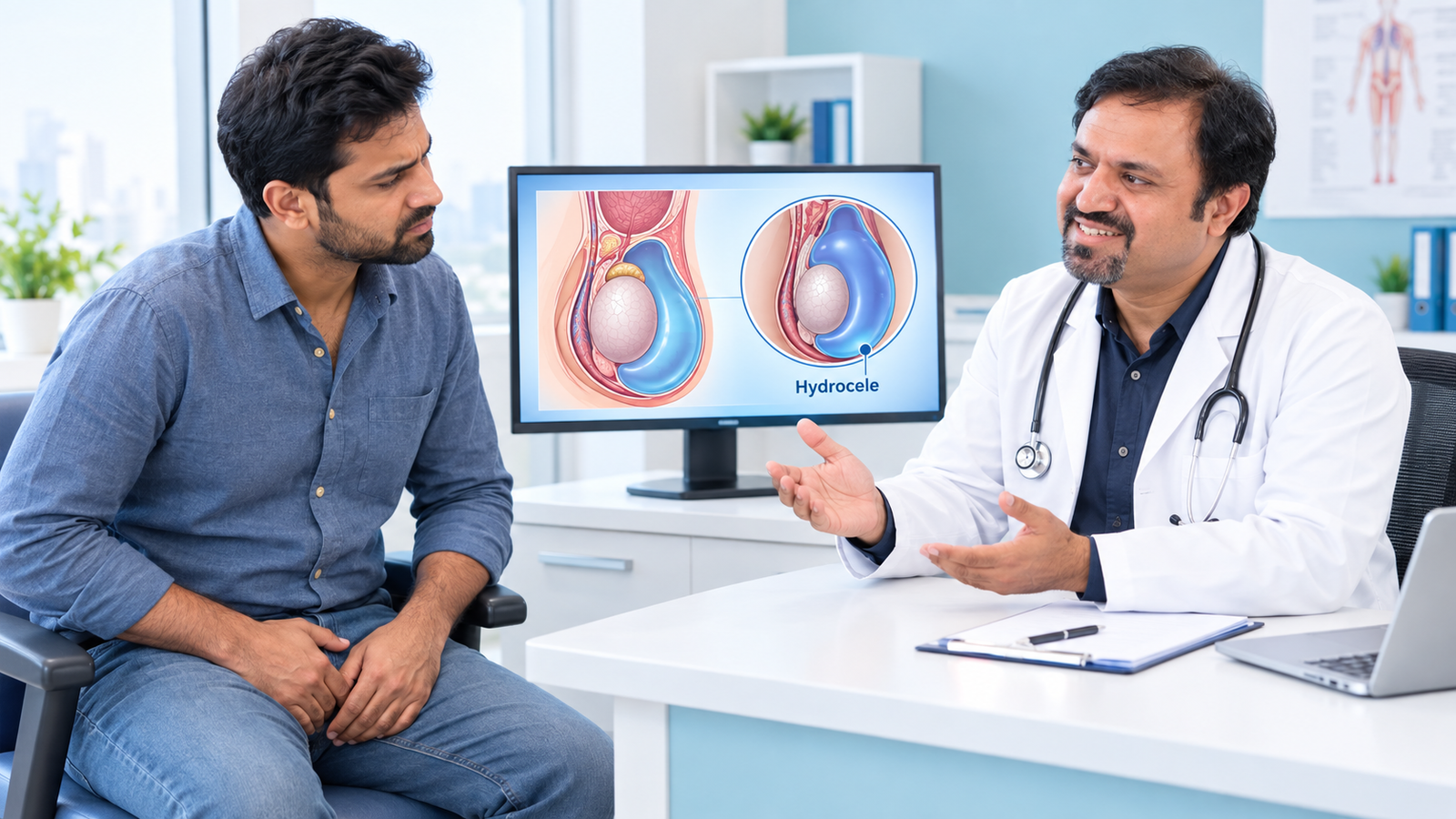
Sudden testicle pain can have several causes, and the symptoms can sometimes overlap. A hydrocele, inguinal hernia, infection, injury, or testicular torsion can all affect the scrotum or cause discomfort around the testicle. The key difference is urgency. Hydrocele pain is not usually the typical presentation of a simple hydrocele because hydroceles commonly cause painless swelling. In contrast, sudden severe pain can indicate testicular torsion, which requires immediate medical assessment.
If you suddenly develop severe testicle pain, do not try to diagnose the cause yourself or wait for the pain to settle.
What causes sudden testicle pain?
Sudden testicle pain can result from testicular torsion, injury, infection, an inguinal hernia, or other scrotal conditions. The timing, severity, swelling, associated symptoms, and physical examination help doctors determine the likely cause.
Testicular torsion deserves particular attention because the spermatic cord twists and reduces or cuts off blood flow to the testicle. Without rapid treatment, the testicle can suffer permanent damage.
Other possible causes include:
- Testicular torsion: sudden, severe pain, often on one side
- Hydrocele: fluid around the testicle, usually causing swelling rather than severe pain
- Inguinal hernia: groin swelling or a bulge that can extend toward the scrotum
- Epididymitis or infection: pain with swelling, fever, or urinary symptoms
- Injury: pain following trauma to the groin
- Other scrotal conditions: including cysts or enlarged veins
Because different conditions can produce similar symptoms, severe or sudden pain needs medical assessment rather than home diagnosis.
How do you tell torsion from a hydrocele?
Testicular torsion usually causes sudden, significant pain and may cause swelling, nausea, vomiting, abdominal pain, or a testicle that sits higher than usual. A hydrocele more commonly causes gradual or painless enlargement of the scrotum because fluid collects around the testicle.
Hydrocele
A hydrocele is a collection of fluid around a testicle. Many hydroceles cause swelling without significant pain. Some patients may experience heaviness, pressure, or discomfort as the swelling becomes larger.
Therefore, hydrocele pain alone does not confirm that a hydrocele caused the problem. Sudden severe pain requires assessment for other conditions, particularly torsion.
Testicular torsion
Torsion happens when the testicle twists around the spermatic cord and compromises its blood supply. It can occur suddenly, including during sleep or physical activity.
Typical warning signs include:
- Sudden severe pain in one testicle
- Scrotal swelling
- Nausea or vomiting
- Abdominal pain
- A testicle sitting higher than usual
- Significant tenderness
Testicular torsion is a surgical emergency. Treatment should happen as quickly as possible, with six hours commonly used as a critical treatment target.
What does an inguinal hernia in the groin feel like?
An inguinal hernia can cause a bulge or swelling in the groin and may produce aching, pressure, burning, or discomfort. The symptoms can become more noticeable while coughing, lifting, standing, or straining.
A hernia may sometimes extend toward the scrotum and create swelling that can be confused with other scrotal conditions.
If the bulge becomes suddenly very painful, firm, swollen, or difficult to push back, seek urgent medical attention because the hernia may have become trapped.
You can learn more from our inguinal hernia doctor in Surat page.
Which causes are emergencies?
Sudden severe testicle pain should be treated as an emergency until testicular torsion has been excluded. Waiting to see whether the pain improves can delay treatment during a time-critical condition.
| Symptom pattern | Likely cause | How urgent |
|---|---|---|
| Sudden severe one-sided pain | Testicular torsion | Emergency, seek immediate hospital assessment |
| Painless scrotal swelling | Hydrocele | Usually non-emergency, but needs assessment |
| Groin bulge that aches | Inguinal hernia | Medical assessment; urgent if painful, trapped, or difficult to reduce |
| Pain with fever and burning urine | Infection such as epididymitis | Urgent medical assessment; emergency if pain is sudden and severe |
This table provides general guidance, not a diagnosis. Testicular torsion can resemble other causes of acute scrotal pain, so examination by a healthcare professional remains essential.
How is the cause diagnosed?
Doctors diagnose testicular pain by taking a detailed history and performing an examination. They consider when the pain started, whether it appeared suddenly, whether one or both testicles hurt, and whether symptoms such as nausea, vomiting, fever, urinary problems, swelling, or groin pain are present.
Depending on the findings, the medical team may use a scrotal ultrasound to assess blood flow and look for other causes of swelling or pain.
However, suspected torsion requires urgent specialist assessment because delays in diagnosis and treatment can increase the risk of permanent testicular damage.
What is the treatment for each cause?
Treatment depends on the underlying cause.
Hydrocele treatment
A small hydrocele that causes little or no discomfort may only require monitoring. A larger or troublesome hydrocele may require surgical treatment after assessment.
If swelling is associated with significant pain or develops suddenly, the doctor must first consider other causes rather than assuming that the hydrocele explains the symptoms.
Hernia treatment
An inguinal hernia may require surgical repair when it causes significant symptoms, enlarges, or creates a risk of complications. The appropriate approach depends on the hernia and the patient’s individual circumstances.
Testicular torsion treatment
Testicular torsion requires emergency treatment to restore blood flow. Surgery generally involves untwisting the testicle and securing it to prevent future twisting. The opposite testicle may also require fixation to reduce the risk of torsion later.
Infection treatment
An infection such as epididymitis requires assessment to determine the cause and appropriate treatment. Symptoms can include testicle pain, swelling, urinary symptoms, and fever. Sudden unbearable pain still requires emergency assessment because torsion can present similarly.
What should you do right now if pain is severe?
If you have sudden or severe testicle pain, seek emergency medical care immediately. Do not wait for the pain to disappear and do not rely on painkillers, home remedies, or a support garment to determine whether the condition is serious.
The NHS recommends immediate emergency assessment for sudden severe testicle pain, testicle pain accompanied by nausea or vomiting, or pain that lasts more than an hour or continues while resting.
Do not attempt to diagnose testicular torsion yourself. A delay of several hours can affect the chance of saving the affected testicle.
Do not wait for an appointment if:
- The pain started suddenly
- The pain is severe
- One testicle is swollen or sits higher than usual
- You have nausea or vomiting
- You have significant abdominal pain
- The scrotum becomes very swollen or tender
- The pain continues while resting
These symptoms require urgent medical evaluation.
Emergency care at Arora Elite Care
At Arora Elite Care, Surat, Dr. Hitesh Arora evaluates and treats surgical conditions affecting the groin and scrotal region. The appropriate treatment depends on the cause of the pain, the examination findings, and the urgency of the condition.
For planned evaluation of scrotal conditions, you can learn more about our scrotal surgery doctor in Surat. Patients with groin symptoms can also explore our inguinal hernia doctor in Surat page.
However, do not delay emergency hospital care to contact a clinic if you have sudden severe testicle pain. Suspected testicular torsion needs immediate assessment because treatment is time-sensitive.
For non-emergency concerns, you can book an appointment for an evaluation.
Frequently Asked Questions
How do I know if testicle pain is serious?
Sudden, severe testicle pain is serious until a doctor rules out testicular torsion. Pain accompanied by nausea, vomiting, abdominal pain, swelling, or a high-riding testicle also needs urgent assessment. Do not wait for severe pain to improve on its own because torsion can permanently damage the testicle within hours.
How long can testicular torsion wait?
Testicular torsion should not wait for a routine appointment. It is a time-critical surgical emergency, and treatment within about six hours provides the best chance of saving the affected testicle. The exact outcome varies with the degree and duration of twisting, so patients should seek emergency care immediately.
Is a hydrocele painful?
A hydrocele commonly causes painless swelling around the testicle rather than sudden severe pain. Some larger hydroceles may cause heaviness, pressure, or discomfort. However, sudden severe pain should not automatically be attributed to a hydrocele because conditions such as testicular torsion require urgent assessment and treatment.
Can a hernia cause testicle pain?
Yes. An inguinal hernia can cause groin discomfort that extends toward the scrotum and may produce aching around the testicle. A hernia may also cause a visible groin or scrotal bulge. Sudden severe pain, a firm bulge, or difficulty pushing the hernia back requires urgent medical assessment.
What relieves testicle pain at home?
The appropriate treatment depends on the cause, so there is no single safe home remedy for unexplained testicle pain. If pain develops suddenly or becomes severe, seek emergency medical care rather than trying to relieve it at home. Testicular torsion requires urgent treatment to restore blood flow.
Should I go to emergency for testicle pain?
Go to emergency care immediately if the pain is sudden or severe, especially if it occurs with swelling, nausea, vomiting, abdominal pain, or a change in the position of the testicle. Even when the cause seems unclear, urgent assessment can help rule out testicular torsion and other serious conditions.