
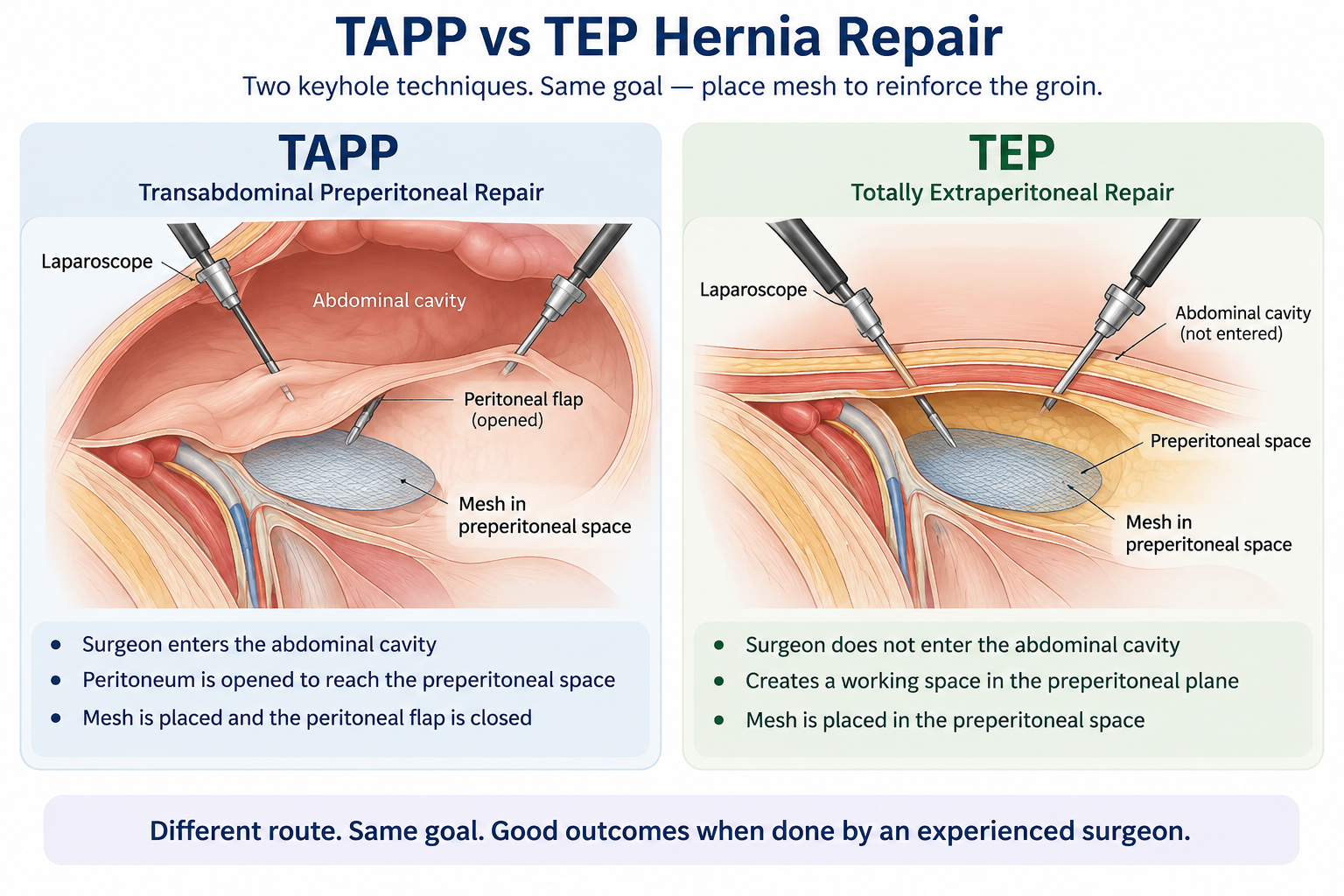
TAPP and TEP are two laparoscopic techniques used to repair an inguinal hernia. In TAPP vs TEP hernia repair, the main difference is how the surgeon reaches the space where the mesh is placed. TAPP involves entering the abdominal cavity, while TEP reaches the same repair area without intentionally entering the abdominal cavity. Both methods can be effective, and the right option depends on your hernia, medical history, and the surgeon’s expertise.
What Does TAPP Stand For?
TAPP stands for Transabdominal Preperitoneal repair. During this laparoscopic inguinal hernia operation, the surgeon enters the abdominal cavity through small incisions, creates an opening in the peritoneum, and places surgical mesh in the preperitoneal space to reinforce the weakened area. The peritoneum is then closed over the mesh.
TAPP gives the surgeon a view inside the abdominal cavity, which may help assess the opposite groin for an additional hernia when appropriate.
What Does TEP Stand For?
TEP stands for Totally Extraperitoneal repair. In this technique, the surgeon creates a working space outside the abdominal cavity and places the mesh in the preperitoneal space without intentionally entering the abdominal cavity.
This approach avoids entering the abdominal cavity, but creating and working within the correct tissue plane requires specific surgical skill.
TAPP vs TEP Hernia Repair: Key Differences
| Feature | TAPP Repair | TEP Repair |
|---|---|---|
| Full form | Transabdominal Preperitoneal | Totally Extraperitoneal |
| Surgical approach | Enters the abdominal cavity before reaching the repair area | Works outside the abdominal cavity |
| Mesh placement | Mesh is placed in the preperitoneal space | Mesh is placed in the preperitoneal space |
| View of the opposite groin | May allow inspection of the opposite side | Does not provide the same direct view from inside the abdominal cavity |
| Operating time | Varies with hernia complexity and surgeon experience | Varies with hernia complexity and surgeon experience |
| Pain and recovery | Generally similar overall outcomes to TEP in many comparisons | Generally similar overall outcomes to TAPP in many comparisons |
| Recurrence | Depends on technique, patient factors, and surgical expertise | Depends on technique, patient factors, and surgical expertise |
| Cost | Depends on hospital, anaesthesia, equipment, and other charges | Depends on hospital, anaesthesia, equipment, and other charges |
Neither technique is best for every patient. Research generally supports both as effective options when performed by appropriately trained surgeons.
Is TAPP Better Than TEP?
TAPP is not automatically better than TEP, and TEP is not automatically better than TAPP. Both are accepted laparoscopic approaches for inguinal hernia repair. The choice depends on the type of hernia, previous operations, patient health, and the surgeon’s experience with each technique.
TAPP may be useful when visual assessment of the abdominal cavity or opposite groin is important. TEP avoids intentionally entering the abdominal cavity, but it can be technically challenging in some patients.
Your surgeon should explain why one approach is more suitable for your individual case and discuss whether open repair is another reasonable option.
Does TAPP or TEP Cause Less Pain?
Both techniques use small incisions and place mesh in the preperitoneal space. Studies have not consistently shown one method to cause less pain than the other in every situation.
Pain after surgery can depend on the hernia, the surgical technique, mesh handling, anaesthesia, and individual healing. Some discomfort, bruising, or swelling can occur during recovery.
Follow your surgeon’s advice about pain relief, walking, wound care, and returning to normal activities. Seek medical advice if pain becomes severe or progressively worsens.
Recovery After TAPP vs TEP Hernia Repair
Recovery varies from person to person, so there is no single timeline that applies to every patient. Many patients are encouraged to walk soon after surgery and gradually resume daily activities as comfort allows.
Your recovery plan may depend on:
- Whether the hernia is on one side or both sides.
- Whether it is a first-time or recurrent hernia.
- Your overall health and any other medical conditions.
- The type of work and physical activity you do.
- Your surgeon’s instructions and how you heal.
Avoid heavy lifting or strenuous exercise until your surgeon advises that it is safe. Contact your care team if you develop fever, persistent vomiting, increasing redness around the wounds, significant swelling, or worsening pain.
Recurrence After TAPP vs TEP
A hernia can recur after either TAPP or TEP repair, but recurrence is not inevitable. Available evidence does not establish that one technique consistently prevents recurrence better for every patient.
The outcome may depend on correct diagnosis, the repair technique, the surgeon’s experience, the patient’s anatomy, and postoperative factors. If you have had a previous hernia repair, tell your surgeon because the best approach may differ from that used for a first-time hernia.
TAPP vs TEP Hernia Repair Cost
The cost of TAPP or TEP surgery varies by hospital and individual treatment requirements. There is no reliable single price that applies to every patient.
The final estimate may include:
- Surgeon and anaesthesia fees.
- Operating room and hospital charges.
- Mesh and other surgical supplies.
- Preoperative tests and consultation.
- Medication and follow-up visits.
- Additional care required because of the patient’s medical condition.
Ask the hospital for an itemised estimate and confirm what is included. If you are comparing options in Surat, you can learn more about laparoscopic hernia treatment at Arora Elite Care.
Watch a TAPP Hernia Repair Video
See the TAPP laparoscopic left inguinal hernia repair video by Dr. Hitesh Arora. The video can help you understand the procedure; it is an educational example and does not determine which technique is suitable for every patient.
TAPP and TEP Hernia Repair at Arora Elite Care, Surat
At Arora Elite Care, Dr. Hitesh Arora provides general and laparoscopic surgical care. Patients with an inguinal hernia can discuss the available repair options, including laparoscopic approaches where appropriate.
The consultation should consider the hernia’s location, whether it has recurred, previous abdominal or pelvic operations, general health, and the surgeon’s expertise. The recommended procedure should be individualised rather than chosen based on the technique’s name alone.
Learn more about laparoscopic hernia treatment in Surat or review Dr. Hitesh Arora’s surgical profile.
Conclusion
In TAPP vs TEP hernia repair, TAPP reaches the repair area through the abdominal cavity, while TEP works outside it. Both approaches can provide effective inguinal hernia repair when appropriately selected and performed by an experienced surgeon. Recovery, pain, recurrence risk, and cost depend on individual circumstances. Discuss the benefits and limitations of each option with your surgeon before deciding.
Frequently Asked Questions
What does TAPP stand for?
TAPP stands for Transabdominal Preperitoneal repair. The surgeon enters the abdominal cavity, then places mesh in the preperitoneal space to repair an inguinal hernia.
What is TAPP surgery?
TAPP is a type of laparoscopic inguinal hernia repair performed through small incisions. The surgeon accesses the repair area through the abdominal cavity and places mesh behind the abdominal wall.
What is the difference between TAPP and TEP?
TAPP enters the abdominal cavity to reach the repair area. TEP works outside the abdominal cavity. Both place mesh in the preperitoneal space, and either may be appropriate depending on the patient and surgeon.
Which is better, TAPP or TEP?
Neither technique is best for everyone. The choice depends on the hernia, previous surgery, the patient’s health, and the surgeon’s training and experience.
Is TAPP surgery more expensive than TEP?
Not necessarily. The cost of either procedure depends on the hospital, surgeon, anaesthesia, equipment, mesh, and other care requirements. Ask for an itemised estimate before surgery.