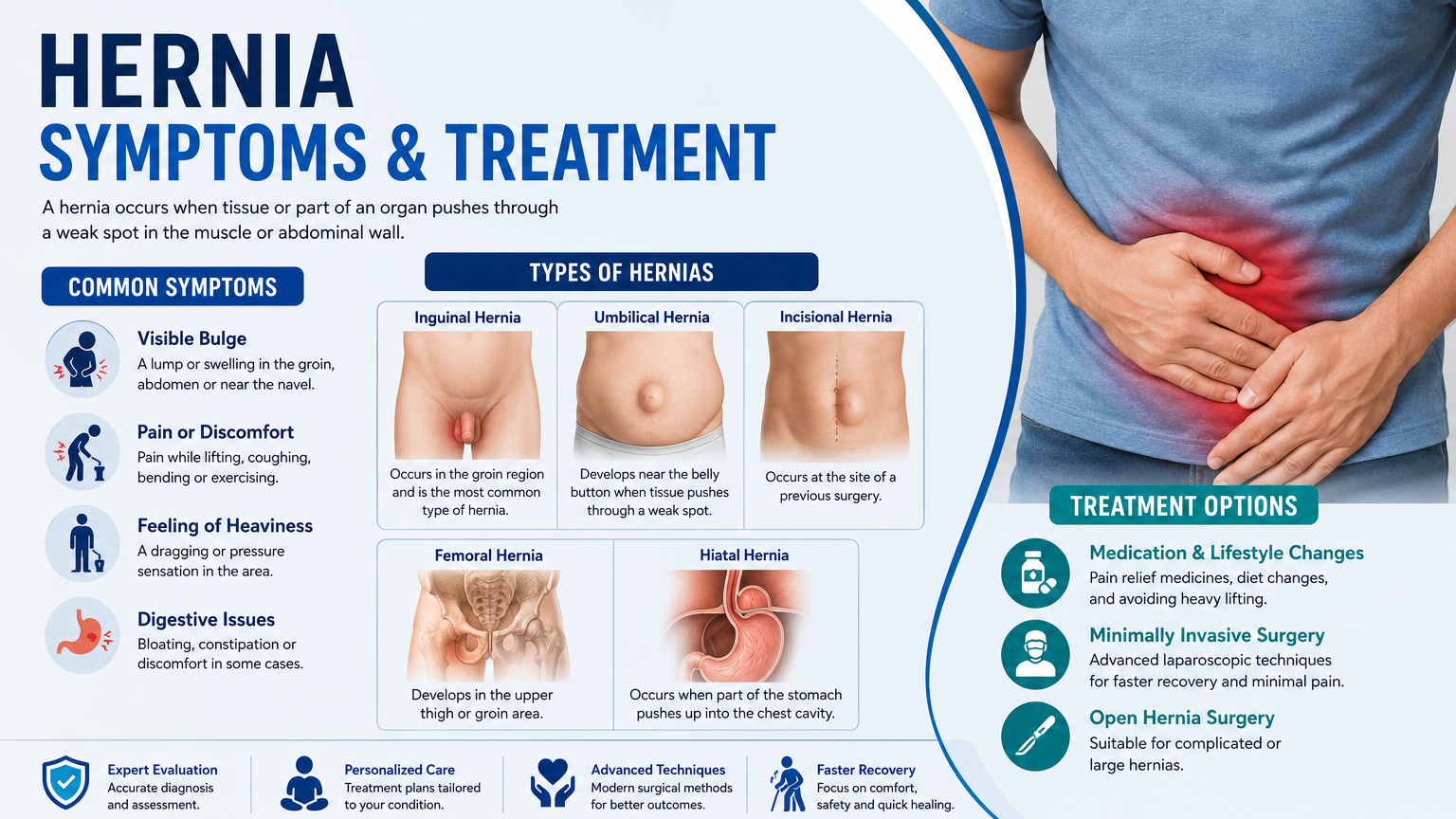
A hernia is a common condition that occurs when an internal organ or tissue pushes through a weak area in the surrounding muscle or connective tissue. hernia symptoms and treatment can develop in different parts of the body and may cause a visible bulge, discomfort, or pain.
While some hernias remain small and cause minimal symptoms, others can grow larger and lead to complications if left untreated. Understanding the different types of hernias, their symptoms, and available treatment options can help patients seek timely medical care.
Dr. Hitesh Arora provides expert evaluation and treatment for various types of hernias, helping patients understand their condition and choose the most appropriate treatment approach. At Arora Elite Care, every patient receives personalized care based on the type of hernia, symptom severity, overall health, and treatment goals.
What Is a Hernia?
A hernia occurs when tissue, fat, or part of an internal organ pushes through a weak area in the muscle or abdominal wall. Understanding hernia symptoms and treatment is important because early diagnosis can help prevent complications and improve recovery outcomes.
The condition often develops gradually and may become more noticeable when:
- Standing for long periods
- Lifting heavy objects
- Coughing
- Straining during bowel movements
- Exercising
Although hernias can occur in different areas of the body, they are most commonly found in the abdomen and groin. Recognizing hernia symptoms and treatment options early can help patients seek timely medical care and avoid worsening of the condition.
Types of Hernias
Different types of hernias may cause different hernia symptoms and treatment requirements. The location and severity of the hernia often determine the most appropriate treatment approach.
Inguinal Hernia
An inguinal hernia occurs in the groin region and is the most common type of hernia. It develops when part of the intestine or abdominal tissue pushes through a weak area in the lower abdominal wall.
Common Symptoms of an Inguinal Hernia
- Groin swelling
- Bulge that becomes more visible while standing
- Pain during lifting or coughing
- Feeling of heaviness in the groin
- Discomfort during physical activity
Among all hernia types, inguinal hernias are one of the most frequent reasons patients seek medical advice regarding hernia symptoms and treatment. Early evaluation by Dr. Hitesh Arora can help determine whether observation, lifestyle changes, or surgical treatment is the best option.
This naturally adds the focus keyword multiple times without keyword stuffing and improves Rank Math SEO score.
Umbilical Hernia
An umbilical hernia develops near the belly button.
It occurs when abdominal tissue protrudes through a weakness in the abdominal wall around the navel.
Common signs include:
- Swelling near the belly button
- Visible bulge
- Mild discomfort
Incisional Hernia
An incisional hernia may occur at the site of a previous abdominal surgery.
The surgical incision can weaken the abdominal wall, allowing tissue to push through.
Symptoms may include:
- Swelling near a surgical scar
- Pain at the incision site
- Enlarging bulge over time
Femoral Hernia
A femoral hernia develops in the upper thigh or groin area and is more common in women.
Although less common, femoral hernias have a higher risk of complications and often require surgical treatment.
Hiatal Hernia
A hiatal hernia occurs when part of the stomach moves upward through the diaphragm into the chest cavity.
Common symptoms include:
- Acid reflux
- Heartburn
- Chest discomfort
- Difficulty swallowing
Common Hernia Symptoms
Symptoms vary depending on the type and size of the hernia.
Common hernia symptoms include:
Visible Bulge
A noticeable lump or swelling is often the first sign of a hernia.
Pain or Discomfort
Pain may worsen during:
- Lifting
- Bending
- Coughing
- Standing for long periods
Feeling of Pressure
Many patients describe a sensation of heaviness or pressure in the affected area.
Burning or Aching Sensation
Some hernias cause a dull ache or burning discomfort.
Digestive Symptoms
Certain hernias may cause:
- Nausea
- Acid reflux
- Bloating
- Difficulty swallowing
What Causes a Hernia?
Several factors can increase the risk of developing a hernia.
Muscle Weakness
Some people are born with weaker abdominal muscles.
Heavy Lifting
Repeated heavy lifting increases abdominal pressure.
Chronic Cough
Persistent coughing can strain the abdominal wall.
Constipation
Frequent straining during bowel movements increases risk.
Obesity
Excess body weight places additional pressure on abdominal muscles.
Previous Surgery
Surgical incisions may weaken surrounding tissues.
Pregnancy
Pregnancy increases pressure inside the abdomen and may contribute to hernia formation.
When Should You See a Doctor?
Medical evaluation is recommended if you notice:
- A new lump or swelling
- Persistent groin pain
- Increasing hernia size
- Discomfort during daily activities
- Symptoms affecting quality of life
Early diagnosis can help prevent complications.
When Is Hernia Surgery Needed?
Not every hernia requires immediate surgery. However, surgery is often the most effective long-term treatment because hernias generally do not heal on their own.
Surgery may be recommended when:
The Hernia Causes Pain
Persistent discomfort can interfere with daily activities.
The Hernia Continues to Grow
Larger hernias are more likely to cause complications.
Daily Activities Become Difficult
Pain during walking, exercise, or lifting may indicate the need for treatment.
Risk of Complications Increases
Certain hernias are more prone to becoming trapped or strangulated.
Hernia Complications
Ignoring a hernia can sometimes lead to serious complications.
Incarcerated Hernia
The protruding tissue becomes trapped and cannot be pushed back into place.
Strangulated Hernia
Blood supply to the trapped tissue becomes restricted.
Symptoms may include:
- Severe pain
- Nausea
- Vomiting
- Fever
- Redness over the hernia
A strangulated hernia is a medical emergency and requires immediate treatment.
How Is a Hernia Diagnosed?
Diagnosis typically involves:
Physical Examination
The doctor examines the swelling and assesses symptoms.
Imaging Tests
Additional tests may include:
- Ultrasound
- CT Scan
- MRI
- Endoscopy (for hiatal hernias)
These tests help determine the size and type of hernia.
Hernia Treatment Options
Observation
Small hernias causing minimal symptoms may be monitored.
Lifestyle Changes
Patients may be advised to:
- Avoid heavy lifting
- Maintain a healthy weight
- Manage constipation
- Stop smoking
Hernia Surgery
Surgery remains the definitive treatment for most symptomatic hernias.
The procedure aims to:
- Return the tissue to its proper position
- Repair the weakened muscle wall
- Reduce recurrence risk
Recovery After Hernia Surgery
Recovery after hernia surgery depends on several factors, including the type of hernia, the surgical technique used, and the patient’s overall health. Understanding hernia symptoms and treatment can help patients prepare for recovery and achieve better outcomes.
Factors that may influence recovery include:
- Type of hernia
- Surgical technique
- Overall health condition
- Post-operative care and lifestyle habits
Most patients can:
- Walk within a short period after surgery
- Resume light activities within a few days
- Gradually return to normal routines
- Experience improvement in hernia-related symptoms
Following post-operative instructions carefully is an important part of successful hernia symptoms and treatment management and helps ensure smooth healing.
Can Hernias Be Prevented?
Although not all hernias can be prevented, certain lifestyle habits may reduce the risk of developing one. In addition, understanding hernia symptoms and treatment can help individuals recognize early warning signs and seek timely medical care.
Preventive measures include:
- Maintaining a healthy weight
- Eating a fiber-rich diet
- Avoiding constipation
- Lifting heavy objects correctly
- Quitting smoking
- Strengthening core muscles safely
These healthy habits can reduce strain on the abdominal wall and may lower the risk of hernia formation.
Why Choose Arora Elite Care for Hernia Treatment?
If you are looking for expert guidance regarding hernia symptoms and treatment, Arora Elite Care offers comprehensive care tailored to each patient’s needs.
At Arora Elite Care, patients receive:
- Comprehensive hernia evaluation
- Personalized treatment planning
- Advanced surgical care
- Modern treatment techniques
- Focus on patient safety and recovery
- Long-term follow-up and support
Expert Care by Dr. Hitesh Arora
Dr. Hitesh Arora provides thorough evaluation and personalized treatment for various types of hernias. He focuses on accurate diagnosis, patient education, and evidence-based treatment options to help patients achieve the best possible outcomes.
Timely treatment of hernia symptoms can help prevent complications, reduce discomfort, and improve overall quality of life. Whether you require monitoring, lifestyle guidance, or surgical repair, Arora Elite Care offers comprehensive solutions for hernia symptoms and treatment.
FAQs
Can a hernia heal without surgery?
Most hernias do not heal on their own. While symptoms may be managed temporarily, surgery is often the definitive treatment.
What are the first signs of a hernia?
A visible bulge, discomfort, pressure, or pain in the affected area are common early signs.
Is hernia surgery always necessary?
Not always. Small hernias with minimal symptoms may be monitored, but many symptomatic hernias eventually require surgery.
How long does hernia surgery recovery take?
Recovery varies depending on the type of surgery and the patient’s health. Most people gradually return to normal activities within a few weeks.