Rectal prolapse surgery treatment when part or all of the rectum slips out through the anus. While mild cases may improve temporarily with lifestyle changes, many patients eventually require surgery to restore normal anatomy and prevent worsening symptoms.
The biggest question most people ask is:
“When is rectal prolapse surgery actually necessary?”
The answer depends on the severity of the prolapse, your symptoms, your overall health, and whether the condition affects your daily life. This guide explains when surgery is recommended, available procedures, recovery expectations, and frequently asked questions.
What Is Rectal Prolapse?
Rectal prolapse surgery treatment is a condition in which the rectum loses its normal support and protrudes outside the anus.
It may begin as a small bulge during bowel movements and gradually progress until the rectum remains outside even while standing or walking.
Rectal prolapse is more common in:
- Older adults
- Women after childbirth
- People with chronic constipation
- Individuals who strain frequently
- Patients with weakened pelvic floor muscles
Although it isn’t always a medical emergency, it usually requires professional evaluation.
Symptoms of Rectal Prolapse
Common symptoms include:
- A reddish lump protruding from the anus
- Difficulty controlling bowel movements
- Leakage of stool
- Mucus discharge
- Rectal bleeding
- Feeling of incomplete bowel emptying
- Chronic constipation
- Pain or discomfort while sitting
If these symptoms become persistent, medical treatment is recommended.
Can Rectal Prolapse Heal Without Surgery?
Early or minor prolapse may be managed with:
- High-fiber diet
- Increased water intake
- Stool softeners
- Treating constipation
- Pelvic floor exercises
However, these measures do not repair the prolapse itself.
Complete rectal prolapse surgery treatment generally requires surgery because the supporting tissues have already weakened significantly.
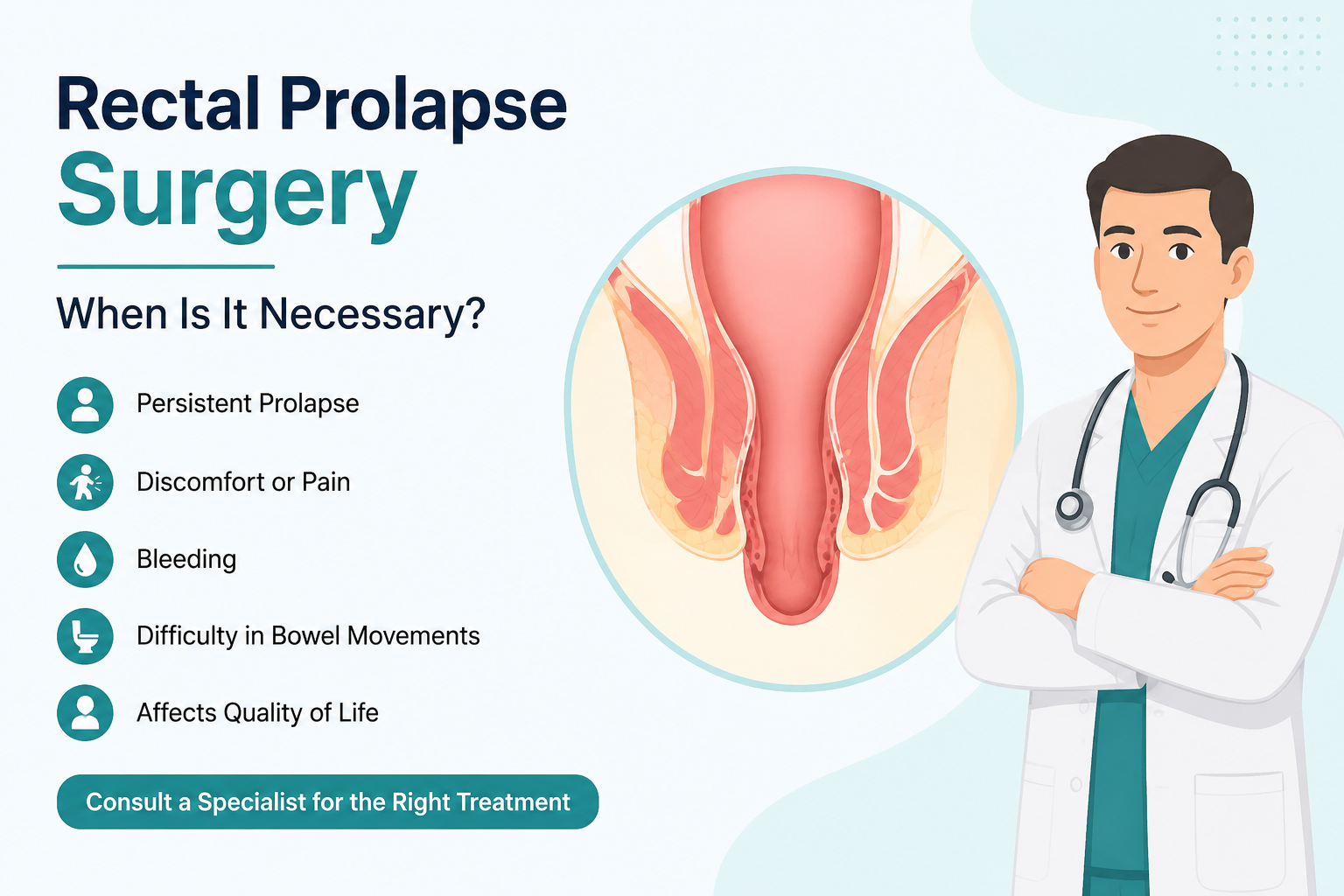
When Is Rectal Prolapse Surgery Necessary?
Doctors usually recommend surgery when:
1. The Rectum Protrudes Frequently
If the prolapse occurs every time you pass stool or while walking, surgery is often the most effective treatment.
2. The Prolapse Cannot Be Pushed Back
A prolapse that remains outside the body can become swollen and painful.
Persistent prolapse increases the risk of tissue damage.
3. Stool Leakage Is Affecting Daily Life
Weakening of the anal muscles can lead to:
- Fecal incontinence
- Difficulty controlling gas
- Constant leakage
Surgery may improve bowel control.
4. Chronic Constipation Continues
Long-term prolapse often worsens constipation because the rectum cannot empty properly.
Correcting the prolapse can improve bowel function.
5. Bleeding or Ulcer Formation
Repeated friction may cause:
- Bleeding
- Ulcers
- Infection
These complications often indicate the need for surgical repair.
6. Reduced Quality of Life
Many patients avoid:
- Social gatherings
- Travel
- Exercise
because of embarrassment or discomfort.
When symptoms interfere with daily activities, surgery becomes an appropriate option.
Types of Rectal Prolapse Surgery
The most suitable procedure depends on your age, overall health, and severity of the prolapse.
Abdominal Rectopexy
Often recommended for healthier adults.
The surgeon repositions the rectum and secures it inside the pelvis.
Benefits include:
- Lower recurrence
- Better long-term results
- Often performed laparoscopically
Perineal Procedures
These surgeries are performed through the anus and may be preferred for older or medically fragile patients.
Advantages include:
- Shorter operation
- Less surgical stress
- Suitable for selected patients
Laparoscopic Rectal Prolapse Surgery
Minimally invasive surgery uses small incisions and specialized instruments.
Benefits include:
- Less pain
- Smaller scars
- Faster recovery
- Shorter hospital stay
Recovery After Rectal Prolapse Surgery
Recovery varies depending on the procedure performed.
Many patients can expect:
- Hospital stay: 1–5 days
- Light walking within a day
- Return to desk work in 2–4 weeks
- Avoid heavy lifting for several weeks
Doctors usually recommend:
- High-fiber diet
- Plenty of fluids
- Stool softeners
- Avoiding excessive straining
Following postoperative instructions helps reduce recurrence.
Risks of Delaying Surgery
Ignoring significant rectal prolapse may lead to:
- Larger prolapse
- Ongoing bleeding
- Ulcer formation
- Worsening incontinence
- Difficulty passing stool
- Rarely, strangulation of the prolapsed tissue requiring emergency treatment
Early evaluation can help avoid complications.
How Doctors Decide If Surgery Is Right
Your surgeon may recommend:
- Physical examination
- Medical history review
- Colonoscopy (when indicated)
- Defecography
- Anal manometry
- Imaging studies if necessary
Treatment is tailored to each patient’s condition.
Why Choose an Experienced Colorectal or General Surgeon?
Successful rectal prolapse surgery depends on:
- Accurate diagnosis
- Appropriate procedure selection
- Modern surgical techniques
- Comprehensive postoperative care
Choosing an experienced surgeon helps optimize outcomes and recovery. Dr. Hitesh Arora is an Advanced Laparoscopic and General Surgeon, rectal prolapse surgery treatment, who leads the surgical team at Arora Elite Care. According to the clinic, he has performed 10,000+ surgeries and specializes in minimally invasive surgery for gastrointestinal, colorectal, anorectal, gallbladder, appendix, and hernia conditions.
Frequently Asked Questions
Is rectal prolapse surgery always necessary?
Not always. Mild cases may initially be managed conservatively, but complete rectal prolapse typically requires surgery.
Is rectal prolapse surgery painful?
Discomfort is expected after surgery, but pain is generally managed with medications. Minimally invasive procedures often result in less postoperative pain.
How long does recovery take?
Most patients return to routine activities within 2–6 weeks, depending on the procedure and individual recovery.
Can rectal prolapse come back after surgery?
Recurrence is possible, but the risk depends on the surgical technique, patient health, and adherence to postoperative advice.
Is laparoscopic surgery better?
For many suitable patients, laparoscopic rectopexy offers smaller incisions, quicker recovery, and good long-term outcomes. However, the best approach depends on individual factors.
When should I see a doctor?
Consult a specialist if you notice:
- Tissue protruding from the anus
- Persistent rectal bleeding
- Difficulty controlling bowel movements
- Chronic constipation with prolapse
- Pain or swelling around the rectum
Prompt evaluation allows timely treatment.
Conclusion
Rectal prolapse surgery treatment is more than a temporary inconvenience; it can significantly affect bowel function and quality of life. While early symptoms may sometimes be managed conservatively, persistent or complete prolapse often requires surgery to restore normal anatomy and prevent complications.
If you experience symptoms such as a protruding rectum, bleeding, or difficulty controlling bowel movements, seek evaluation from an experienced colorectal or general surgeon. Early diagnosis and appropriate treatment can lead to better outcomes and a smoother recovery.