
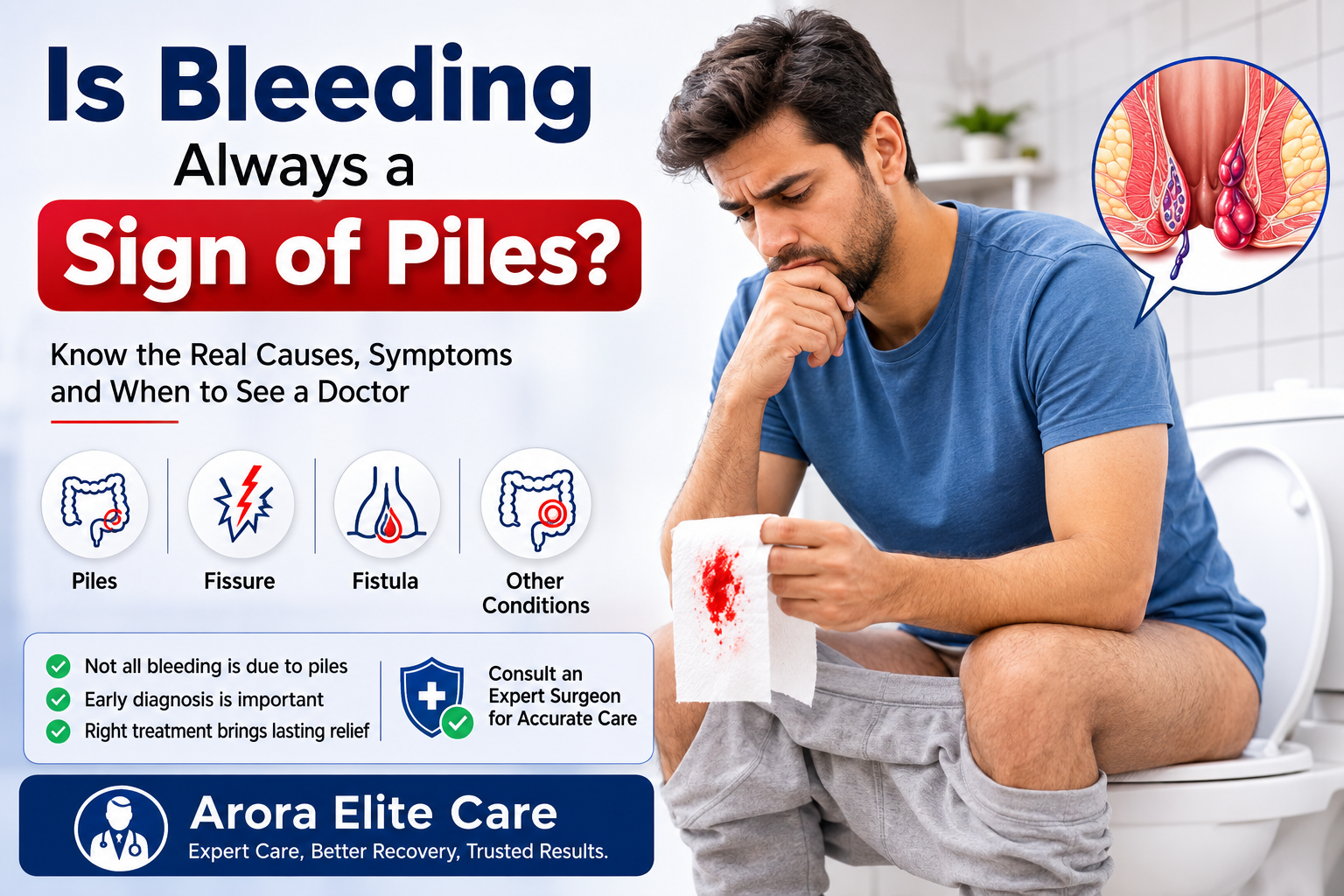
No, bleeding is not always a sign of piles. While piles (hemorrhoids) are one of the most common reasons for bright red blood during or after a bowel movement, rectal bleeding can also be caused by several other conditions. Some are minor and treatable, while others require immediate medical attention. This is why you should never assume that bleeding is due to piles without a proper medical evaluation.
At Arora Elite Care, Dr. Hitesh Arora, a highly experienced laparoscopic and general surgeon with over 15 years of expertise, emphasizes identifying the exact cause of rectal bleeding before recommending the most appropriate treatment.
What Does Bleeding From Piles Look Like?
Bleeding caused by piles usually has the following characteristics:
- Bright red blood on the toilet paper
- Blood dripping into the toilet bowl after passing stool
- Blood on the surface of the stool, not mixed inside it
- Little or no pain in most cases of internal piles
- Bleeding that occurs during or immediately after a bowel movement
Although these symptoms are common in piles, they are not enough to confirm the diagnosis.
What Other Conditions Can Cause Rectal Bleeding?
Several medical conditions can cause Sign of Piles bleeding that may look similar to piles.
Anal Fissure
An anal fissure is a small tear in the lining of the anus. Unlike piles, it usually causes severe pain or a burning sensation during bowel movements. Bright red bleeding may also occur.
Anal Fistula
An anal fistula is an abnormal tunnel between the anal canal and the skin around the anus. It may cause bleeding along with pus discharge, swelling, and recurring infections.
Inflammatory Bowel Disease
Conditions such as ulcerative colitis and Crohn’s disease can lead to bleeding, abdominal pain, diarrhea, and weight loss. These conditions require specialist treatment.
Colon Polyps
Polyps are growths inside the colon that may bleed without causing pain. Some polyps can develop into colorectal cancer if left untreated.
Colorectal Cancer
Rectal bleeding can sometimes be an early warning sign of colorectal cancer, especially in people over 45 years of age or those with a family history of the disease. If bleeding is persistent or accompanied by weight loss, fatigue, or changes in bowel habits, immediate medical evaluation is essential.
Diverticular Disease
Small pouches in the colon wall can bleed suddenly, causing painless rectal bleeding that may require urgent treatment.
When Should You Be Concerned?
Seek medical attention if you notice any Sign of Piles the following:
- Bleeding that continues for more than a few days
- Large amounts of blood during bowel movements
- Black or tarry stools
- Severe abdominal pain
- Unexplained weight loss
- Persistent constipation or diarrhea
- A lump around the anus that becomes increasingly painful
- Weakness, dizziness, or signs of anemia
These symptoms may indicate a condition more serious than piles.
How Is the Cause of Bleeding Diagnosed?
A surgeon will perform a detailed medical evaluation to determine the exact cause. This may include:
- Medical history and symptom assessment
- Physical examination
- Digital rectal examination
- Proctoscopy or anoscopy
- Colonoscopy, if required
- Blood tests to check for anemia or infection
An accurate diagnosis ensures that you receive the most appropriate treatment.
Can Piles Be Treated Without Surgery?
Yes. Early-stage Sign of Piles often respond well to conservative treatment, including:
- Eating a high-fiber diet
- Drinking plenty of water
- Avoiding prolonged straining during bowel movements
- Taking prescribed medications
- Using stool softeners when recommended
If piles become large, prolapse, or bleed repeatedly, minimally invasive procedures such as laser piles surgery may be recommended. Laser treatment generally causes less pain, involves smaller wounds, and allows faster recovery compared to conventional surgery.
Why You Should Never Ignore Rectal Bleeding
Many people delay medical consultation because they assume every episode of rectal bleeding is caused by piles. This delay can lead to missed diagnoses of conditions such as colorectal cancer, inflammatory bowel disease, or severe anal disorders. Early diagnosis improves treatment outcomes and helps prevent complications.
Expert Care at Arora Elite Care, Surat
If you are experiencing rectal bleeding, it is important to consult an experienced laparoscopic and proctology surgeon. At Arora Elite Care in Surat, Dr. Hitesh Arora provides comprehensive evaluation and advanced treatment for piles, fissures, fistulas, and other anorectal conditions. Every patient receives a personalized diagnosis and treatment plan based on the underlying cause rather than symptoms alone.
Frequently Asked Questions
Is bright red blood always a sign of piles?
No. Bright red blood is common with piles, but it can also occur due to anal fissures, polyps, inflammatory bowel disease, or colorectal cancer. A medical examination is necessary to determine the exact cause.
Can piles bleed without causing pain?
Yes. Internal piles often bleed during bowel movements without causing pain, especially in the early stages.
When should I see a doctor for rectal bleeding?
You should consult a doctor if bleeding is persistent, heavy, recurrent, associated with pain, weight loss, changes in bowel habits, or if you are over 45 years of age.
Is rectal bleeding an emergency?
It can be. Heavy bleeding, dizziness, black stools, severe abdominal pain, or signs of anemia require immediate medical attention.
Can laser surgery stop bleeding from piles?
Yes. Laser piles surgery effectively treats bleeding caused by advanced hemorrhoids and usually offers faster recovery with less postoperative discomfort compared to traditional surgery.