If you’ve been diagnosed with a hernia, you may be wondering whether laparoscopic hernia surgery is a better option than open hernia surgery. The answer isn’t the same for everyone. Both procedures are safe and effective, but the best choice depends on the type of hernia, its size, your medical history, and your overall health.
For many patients, laparoscopic surgery offers advantages such as smaller incisions, less postoperative discomfort, faster recovery, and minimal scarring. However, open surgery continues to be the preferred approach in certain situations and can provide excellent long-term results.
If you’re experiencing symptoms such as a bulge, pain, or discomfort in the groin or abdomen, it’s important not to delay evaluation. A timely consultation can help you understand your treatment options and prevent complications.
What Is Laparoscopic Hernia Surgery?
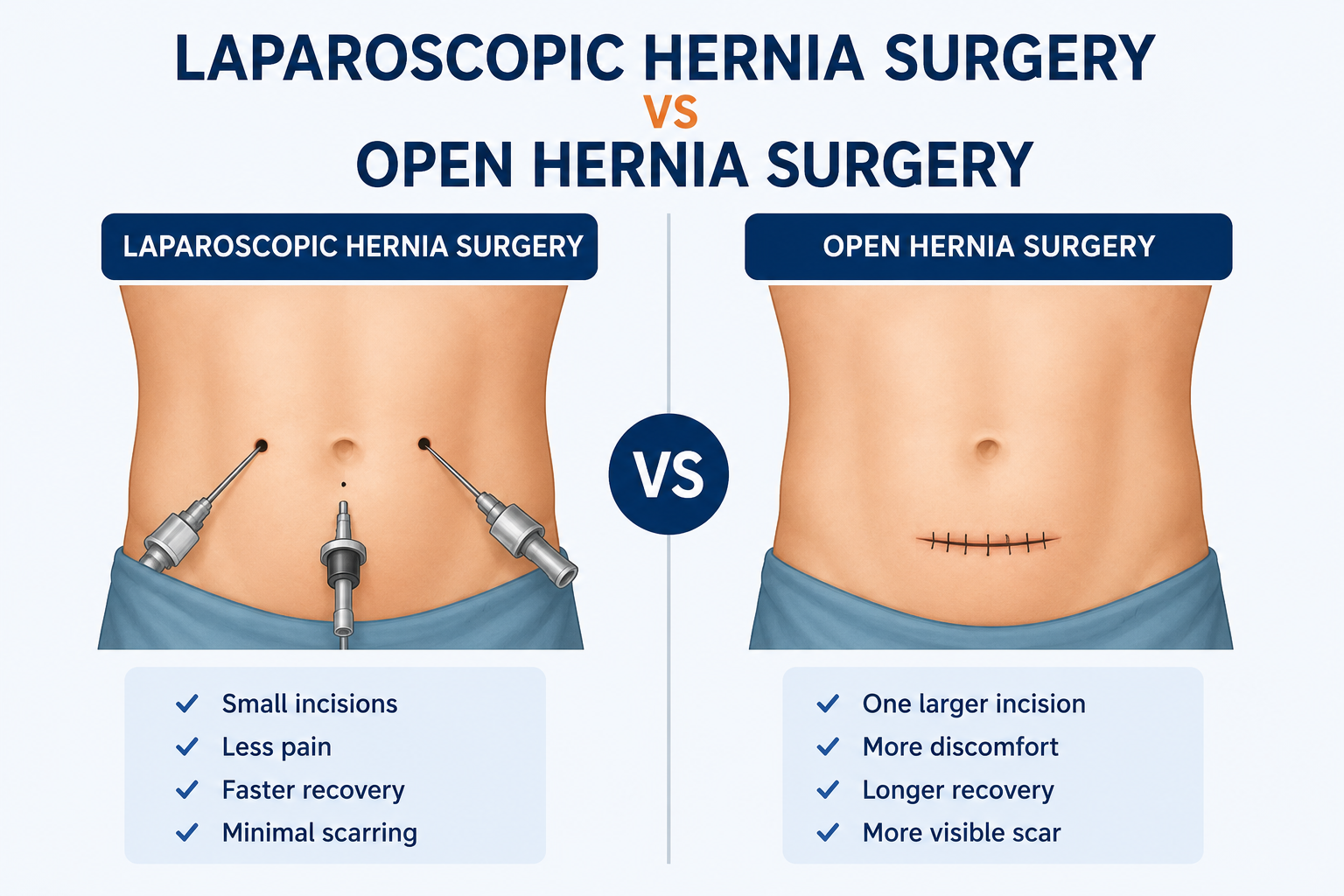
Laparoscopic hernia surgery is a minimally invasive procedure performed through a few small incisions. A tiny camera (laparoscope) and specialized surgical instruments are used to repair the weakened area of the abdominal wall. In many cases, a surgical mesh is placed to strengthen the repair and reduce the chance of recurrence.
Because the incisions are much smaller than those used in traditional surgery, many patients experience less pain after surgery and return to their normal routine sooner.
What Is Open Hernia Surgery?
Open hernia surgery involves making a single incision directly over the hernia. The surgeon repairs the weakened tissue and may reinforce the area with surgical mesh when appropriate.
Although this method requires a larger incision, it remains a highly effective treatment and may be the most suitable option for larger, complicated, or emergency hernias.
Your surgeon will recommend the approach that offers the safest and most effective outcome based on your individual condition.
Benefits of Laparoscopic Hernia Surgery
Many patients choose laparoscopic surgery because it offers several potential benefits, including:
- Smaller incisions
- Less postoperative discomfort
- Minimal scarring
- Faster recovery
- Earlier return to work and daily activities
- Lower risk of wound-related complications
- Better visualization of both sides of the abdominal wall
- Suitable for many bilateral and recurrent hernias
While these benefits are common, recovery and outcomes vary from person to person.
When Is Open Hernia Surgery a Better Choice?
Despite the advantages of laparoscopic surgery, open surgery may be recommended in situations such as:
- Very large or complex hernias
- Emergency hernia repairs
- Significant scar tissue from previous abdominal surgeries
- Certain medical conditions that make laparoscopy less suitable
- Cases where local anesthesia is preferred
Choosing the right procedure is based on careful clinical evaluation rather than a one-size-fits-all approach.
Laparoscopic vs Open Hernia Surgery: Recovery Comparison
| Laparoscopic Surgery | Open Surgery |
|---|---|
| Small incisions | One larger incision |
| Usually less postoperative discomfort | May have more discomfort initially |
| Faster recovery for many patients | Recovery may take longer |
| Minimal scarring | More noticeable scar |
| Earlier return to normal activities | Longer recovery in some cases |
Recovery depends on factors such as your age, overall health, the size of the hernia, and how closely you follow your surgeon’s postoperative instructions.
Is Laparoscopic Hernia Surgery Always Better?
Not always.
Although laparoscopic surgery provides several advantages for many patients, it is not automatically the best option for everyone. Open surgery continues to deliver excellent results, especially for patients with certain types of hernias or complex medical conditions.
The most important factor is selecting the procedure that is best suited to your specific diagnosis.
Who Is a Good Candidate for Laparoscopic Hernia Surgery?
You may be a suitable candidate if you:
- Have a small or moderate-sized hernia
- Have hernias on both sides of the body
- Need treatment for a recurrent hernia
- Want a quicker recovery and earlier return to daily activities
- Are medically fit for general anesthesia
A detailed consultation and physical examination are essential before deciding on the most appropriate surgical approach.
Why You Shouldn’t Ignore a Hernia
A hernia won’t heal on its own. Over time, it often grows larger, causes more discomfort, and increases the risk of complications.
Getting medical advice early helps your surgeon evaluate the hernia, discuss your treatment options, and determine the right time for surgery.
If you notice a persistent bulge or experience pain that gets worse when lifting, coughing, or being physically active, seek medical attention without delay. Early treatment can help prevent the hernia from worsening and support a smoother recovery.
Why Choose Arora Elite Care?
At Arora Elite Care, every patient receives a personalized treatment plan based on their condition, lifestyle, and medical history. Dr. Hitesh Arora focuses on evidence-based surgical care and recommends the treatment approach that best suits each patient’s needs.
Whether laparoscopic or open surgery is appropriate, the goal is always a safe procedure, smooth recovery, and durable long-term results.
Final Thoughts
So, is laparoscopic hernia surgery better than open surgery? For many patients, the answer is yes because it often offers less postoperative discomfort, faster recovery, and smaller scars. However, open surgery remains an excellent option for many hernias and continues to provide outstanding long-term outcomes.
The best decision is one that’s made after a proper evaluation by an experienced surgeon. If you’re experiencing hernia symptoms or have questions about your treatment options, seeking professional advice is the first step toward effective care.
If you’d like personalized guidance or want to discuss the most suitable treatment for your condition, book a consultation with Dr. Hitesh Arora.
Frequently Asked Questions
1. Is laparoscopic hernia surgery better than open surgery?
For many patients, yes. Laparoscopic hernia surgery often involves smaller incisions, less postoperative discomfort, faster recovery, and minimal scarring. However, open surgery may be the better option for large, complex, or emergency hernias. The right choice depends on your condition and your surgeon’s recommendation.
2. How long does it take to recover from laparoscopic hernia surgery?
Many people can return to light daily activities within a few days and resume most normal activities within 2 to 4 weeks. Recovery varies depending on the type of hernia, the surgical approach, and your overall health.
3. Is laparoscopic hernia surgery painful?
Most patients experience less discomfort after laparoscopic hernia surgery compared to open surgery because it uses smaller incisions. Any pain is usually temporary and improves as the body heals.
4. Can a hernia heal without surgery?
No. A hernia does not heal on its own because the weakened muscle or tissue cannot repair itself naturally. Without treatment, the hernia may grow larger or lead to complications. A medical evaluation can help determine the best treatment plan.
5. Who is a good candidate for laparoscopic hernia surgery?
Laparoscopic hernia surgery is often recommended for people with small to moderate hernias, bilateral hernias, or recurrent hernias. Your surgeon will assess your medical history, overall health, and the type of hernia to decide whether this approach is suitable for you.