
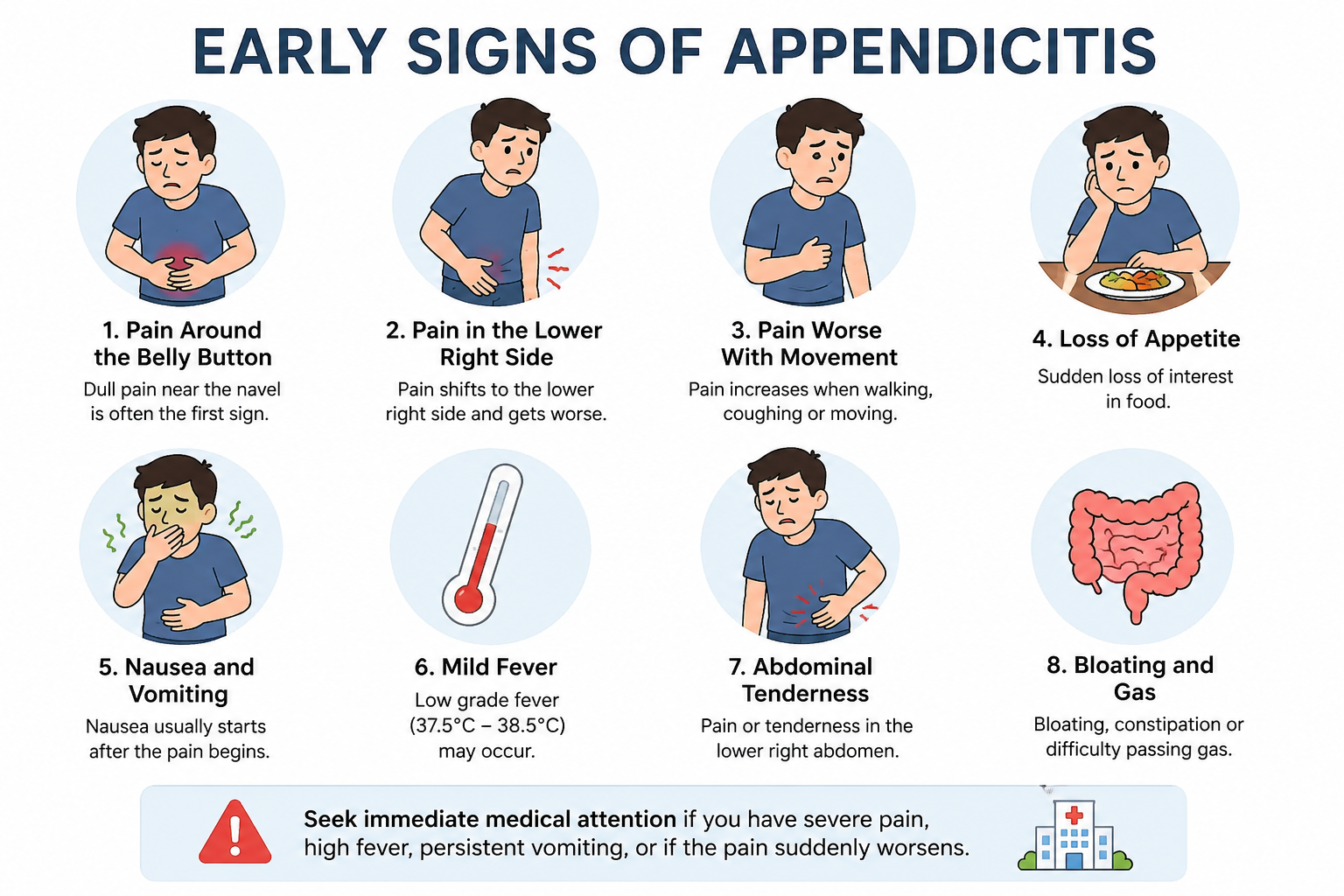
Abdominal pain is one of the most common reasons people visit the emergency department. While many stomach aches are harmless and improve with rest, some can indicate a serious medical condition that requires immediate attention. One such condition is appendicitis, an inflammation of the appendix that can quickly become life-threatening if left untreated. Recognizing the early signs of appendicitis is essential because prompt treatment can prevent complications such as a ruptured appendix, severe infection, and prolonged hospitalization. Many people mistake the initial symptoms for indigestion, food poisoning, gas, or acidity, delaying medical care until the condition becomes more serious.
At Arora Elite Care, Dr. Hitesh Arora, an experienced laparoscopic and general surgeon, regularly treats patients with appendicitis using advanced minimally invasive surgical techniques. Early diagnosis, accurate evaluation, and timely surgery are the key factors that help patients recover faster and avoid complications.
If you experience persistent abdominal pain, especially pain that shifts to the lower right side of the abdomen, do not ignore it. Seeking medical attention early can make a significant difference in your recovery.
What Is Appendicitis?
The appendix is a small, finger-shaped pouch attached to the beginning of the large intestine. Although it has no essential role in digestion, it can become blocked by stool, infection, swollen lymph tissue, or, in rare cases, a tumor. When this blockage occurs, bacteria multiply inside the appendix, causing inflammation and infection.
Without treatment, the pressure inside the appendix increases, reducing its blood supply. Eventually, the appendix may burst, allowing infected material to spread throughout the abdomen. This condition, known as peritonitis, is a medical emergency that requires urgent treatment.
Fortunately, when appendicitis is diagnosed early, treatment is highly successful, and most patients recover completely after surgery.
What Are the Early Signs of Appendicitis?
The symptoms of appendicitis often develop gradually over several hours. Although every patient is different, several warning signs should never be ignored.
1. Pain Around the Belly Button
The first symptom of appendicitis is usually a dull ache around the belly button. At this stage, many people think they have a minor stomach problem or indigestion.
Unlike ordinary stomach pain, this discomfort does not improve after eating, resting, or taking antacids.
2. Pain That Moves to the Lower Right Side
Within a few hours, the pain usually moves from the center of the abdomen to the lower right side. This happens because the inflamed appendix begins irritating the lining of the abdominal wall.
The pain becomes:
- Sharper
- Constant
- More intense
- Easier to locate
This is one of the most characteristic signs of appendicitis.
3. Pain That Gets Worse With Movement
As inflammation increases, even small movements can become painful.
Many patients notice that the pain becomes worse when they:
- Walk
- Cough
- Laugh
- Climb stairs
- Take deep breaths
- Ride over speed bumps
Because movement increases discomfort, patients often prefer lying still.
4. Loss of Appetite
A sudden loss of appetite is another common early symptom.
If abdominal pain is accompanied by an inability to eat or drink, it should not be ignored.
5. Nausea and Vomiting
Many patients develop nausea shortly after the pain begins.
Vomiting usually occurs after the abdominal pain starts.
If vomiting appears before abdominal pain, another condition may be responsible, although medical evaluation is still recommended.
6. Mild Fever
As the infection progresses, the body’s immune system responds by producing a low-grade fever.
Typical temperature:
- Between 37.5°C and 38.5°C
If the appendix ruptures, the fever often becomes significantly higher.
7. Abdominal Tenderness
Pressing on the lower right side of the abdomen often causes pain.
Doctors use this symptom during a physical examination to help diagnose appendicitis.
Some patients also experience pain when pressure is released, a finding known as rebound tenderness.
8. Bloating and Difficulty Passing Gas
Although less common, appendicitis may also cause:
- Abdominal bloating
- Feeling unusually full
- Constipation
- Diarrhea
- Difficulty passing gas
These symptoms should always be considered together with abdominal pain rather than in isolation.
Symptoms That Should Never Be Ignored
Seek immediate medical attention if you experience:
- Severe pain in the lower right abdomen
- Pain that suddenly becomes much worse
- High fever
- Persistent vomiting
- A swollen abdomen
- Difficulty standing upright because of pain
- Fainting or dizziness
These symptoms may indicate that the appendix has ruptured and require emergency surgery.
Why Early Diagnosis Is So Important
Many patients delay treatment because they believe the pain will go away on its own.
Unfortunately, appendicitis does not usually improve without medical treatment.
Waiting too long can result in:
- Appendix rupture
- Infection spreading throughout the abdomen
- Longer surgery
- Increased hospital stay
- Slower recovery
- Greater risk of complications
At Arora Elite Care, Dr. Hitesh Arora emphasizes early evaluation for patients with persistent abdominal pain because prompt diagnosis often allows minimally invasive laparoscopic surgery before complications develop.
Can Appendicitis Be Mistaken for Other Conditions?
Yes.
In its Early signs of appendicitis, appendicitis often resembles several other medical conditions, including:
- Food poisoning
- Acidity
- Gastritis
- Kidney stones
- Urinary tract infection
- Ovarian cysts
- Menstrual pain
- Constipation
- Viral stomach infection
Frequently Asked Questions
1. What are the first signs of appendicitis?
The first signs of appendicitis usually include pain around the belly button that gradually moves to the lower right side of the abdomen. Other early symptoms may include nausea, vomiting, loss of appetite, mild fever, and abdominal tenderness. Prompt medical evaluation is important to avoid complications.
2. How do I know if my abdominal pain is appendicitis?
Appendicitis pain typically starts near the belly button before shifting to the lower right abdomen. The pain becomes more intense over time and may be accompanied by fever, nausea, vomiting, or pain that worsens with movement. These symptoms require immediate medical attention.
3. Can appendicitis go away without surgery?
In some mild cases, antibiotics may temporarily reduce inflammation. However, surgery is generally the most effective treatment because it removes the inflamed appendix and prevents the risk of rupture or recurrent appendicitis.
4. Is laparoscopic appendix surgery safe?
Yes. Laparoscopic appendix surgery is considered a safe and effective treatment for most patients. It involves small incisions, causes less postoperative pain, reduces the risk of infection, and usually allows a quicker recovery than traditional open surgery.
5. What happens if appendicitis is left untreated?
If appendicitis is left untreated, the appendix may rupture, allowing infection to spread throughout the abdomen. This can lead to a serious condition called peritonitis, which requires emergency surgery and immediate medical care. Early diagnosis and treatment significantly reduce the risk of complications.