
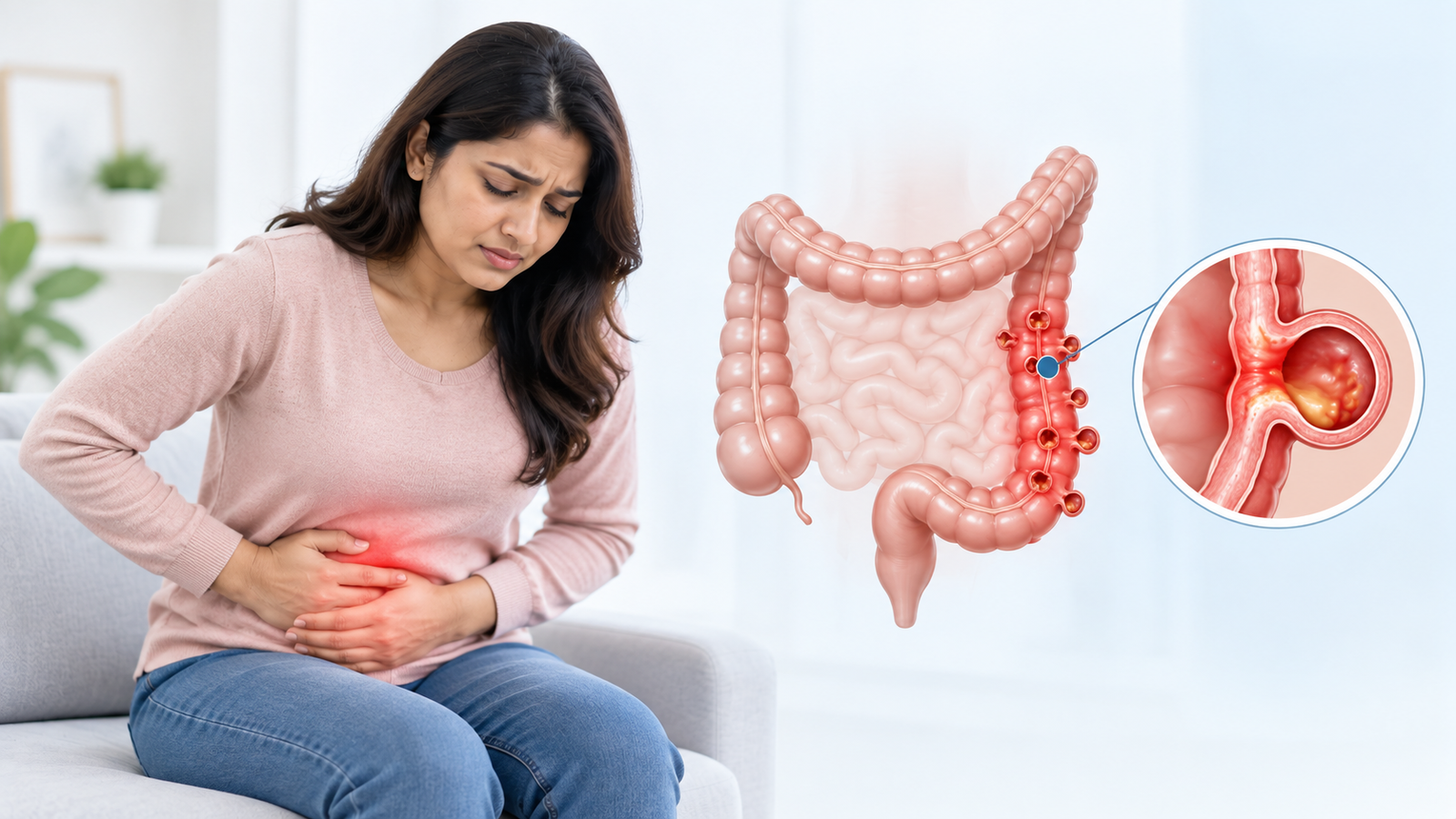
Diverticulitis surgery is usually considered when the condition causes serious complications, does not improve with appropriate treatment, or significantly affects a patient’s quality of life. Many uncomplicated cases recover without surgery. When an operation is necessary, surgeons may remove the affected portion of the colon using laparoscopic or open surgery.
Recovery depends on the type of operation, the severity of infection, whether surgery was planned or performed as an emergency, and the patient’s overall health.
Diverticulitis occurs when small pouches in the wall of the colon, called diverticula, become inflamed. Some patients experience mild abdominal symptoms, while others develop complications requiring hospital care.
At Arora Elite Care, Surat, patients with abdominal and colorectal surgical concerns can consult Dr. Hitesh Arora, an Advanced Laparoscopic and General Surgeon.
This guide explains when diverticulitis surgery is needed, how the procedure works, the expected recovery timeline, possible complications, and when to seek medical attention.
When Is Surgery Needed for Diverticulitis?
Surgery may be necessary when diverticulitis causes bowel perforation, widespread abdominal infection, obstruction, certain fistulas, or complications that cannot be controlled with non-surgical treatment.
Doctors may also recommend planned surgery for selected patients with recurrent or persistent symptoms that significantly affect daily life.
However, not every episode of diverticulitis requires an operation.
Diverticulitis Treatment: When Is Surgery Required?
| Clinical Situation | Is Surgery Usually Needed? |
|---|---|
| Mild uncomplicated diverticulitis | Usually not |
| Recurrent uncomplicated diverticulitis | Individual decision based on symptoms and quality of life |
| Small contained abscess | Often managed with medicines and monitoring |
| Larger abscess | May require antibiotics and image-guided drainage |
| Bowel perforation with widespread peritonitis | Emergency surgery is often required |
| Bowel obstruction | Surgery may be necessary |
| Fistula involving the bowel | Surgery is often considered |
| Persistent symptoms despite treatment | Further assessment; surgery in selected cases |
The number of previous diverticulitis attacks alone should not determine whether surgery is necessary.
Surgeons consider the severity of disease, previous complications, quality of life, medical history, and individual surgical risks.
What Is Diverticulitis?
Diverticula are small pouches that can develop in the wall of the large intestine.
Having these pouches is called diverticulosis.
When one or more diverticula become inflamed, the condition is known as diverticulitis.
Diverticulitis can be classified as uncomplicated or complicated.
Uncomplicated vs Complicated Diverticulitis
| Feature | Uncomplicated Diverticulitis | Complicated Diverticulitis |
|---|---|---|
| Condition | Localised inflammation without major complications | Inflammation associated with an abscess, perforation, fistula or obstruction |
| Symptoms | Abdominal pain, tenderness and possible fever | May involve severe pain, fever, vomiting or abdominal swelling |
| Treatment | Often managed without surgery | May require hospital care, drainage or surgery |
| Hospitalisation | Not always necessary | More likely |
| Surgery | Usually unnecessary | Required in selected or emergencies |
An accurate diagnosis helps doctors choose the most appropriate treatment.
What Are the Common Symptoms of Diverticulitis?
Diverticulitis commonly causes pain in the lower-left abdomen, although pain location can vary.
Other symptoms may include:
- Persistent abdominal tenderness
- Fever
- Nausea
- Vomiting
- Bloating
- Constipation
- Diarrhoea
- Changes in bowel habits
- Reduced appetite
These symptoms can overlap with appendicitis, bowel infections, inflammatory bowel disease, and other abdominal conditions.
Persistent or severe abdominal pain requires medical evaluation rather than self-diagnosis.
Can Diverticulitis Heal Without Surgery?
Yes. Many patients with uncomplicated diverticulitis recover without surgery.
Treatment depends on symptom severity, general health, ability to eat and drink, and examination or imaging findings.
Doctors may recommend:
- Rest and symptom monitoring
- Appropriate pain relief
- Temporary dietary adjustments
- Adequate hydration
- Antibiotics in selected cases
- Follow-up assessment
Antibiotics are not necessary for every otherwise healthy patient with mild uncomplicated diverticulitis.
Patients with more severe illness, certain medical conditions, or complications may require antibiotics or hospital treatment.
A doctor should decide the treatment approach after evaluating the patient.
What Complications Can Make Diverticulitis Serious?
Some patients develop complications requiring urgent medical or surgical care.
1. Diverticular Abscess
An abscess is a collection of infected fluid near the affected bowel.
Small abscesses may respond to antibiotics and monitoring.
Larger or difficult-to-treat abscesses may require image-guided drainage or surgery.
2. Bowel Perforation
A perforation occurs when a hole develops in the bowel wall.
This may allow intestinal contents to leak into the abdomen.
A perforation with widespread contamination can become a surgical emergency.
3. Peritonitis
Peritonitis is inflammation or infection involving the lining of the abdominal cavity.
It can cause severe pain, abdominal tenderness, and serious illness.
Emergency treatment may be necessary.
4. Intestinal Obstruction
Inflammation or scarring can narrow the bowel and interfere with the movement of intestinal contents.
Symptoms may include abdominal swelling, vomiting, and difficulty passing stool or gas.
5. Fistula Formation
A fistula is an abnormal connection between the bowel and another organ or nearby tissue.
Some diverticular fistulas require planned surgical treatment.
How Do Doctors Diagnose Diverticulitis?
Doctors begin with a medical history and physical examination.
They may recommend investigations such as:
Blood Tests
Blood tests may help identify inflammation, infection, or dehydration.
A complete blood count and other investigations may be ordered according to the clinical situation.
CT Scan
A CT scan is commonly used when doctors need to confirm suspected diverticulitis or assess complications.
It may help identify:
- Inflamed bowel segments
- Abscesses
- Perforation
- Obstruction
- Other possible causes of abdominal pain
Additional Investigations
Further tests may be recommended depending on symptoms, previous investigations and medical history.
Colonoscopy may be advised after recovery in selected patients, particularly when further evaluation of the colon is needed. It is generally not performed during an acute severe episode.
How Is Diverticulitis Surgery Performed?
Diverticulitis surgery commonly involves removing the affected section of the colon, usually the sigmoid colon, when the disease is located there.
The surgeon selects the operation based on the extent of inflammation, bowel condition, infection, and overall health.
Colon Resection
During a colon resection, the surgeon removes the diseased section of the bowel.
When conditions are suitable, the healthy ends may be reconnected. This connection is called an anastomosis.
Surgery With a Stoma
In some situations, particularly during emergency surgery or severe infection, reconnecting the bowel immediately may be unsafe.
The surgeon may create a stoma, allowing stool to pass into a collection bag attached to the abdomen.
A stoma may be temporary or, less commonly, permanent.
Not every patient undergoing diverticulitis surgery requires a stoma.
Laparoscopic vs Open Diverticulitis Surgery
Surgeons may perform colon surgery using laparoscopic or open techniques.
| Factor | Laparoscopic Surgery | Open Surgery |
|---|---|---|
| Incisions | Several smaller incisions | One larger abdominal incision |
| Technique | Camera and specialised instruments | Direct surgical access |
| Suitable cases | Selected planned and emergency cases | May be needed in complex or emergencies |
| Hospital recovery | Often shorter in suitable patients | May require a longer recovery |
| Wound discomfort | Often less | May be greater |
| Return to activity | Often earlier | May take longer |
| Limitations | Not suitable for every patient | May be necessary for complex disease |
Laparoscopic surgery is not automatically appropriate for every patient.
Previous abdominal operations, severe infection, bowel condition, and other medical factors can influence the safest approach.
Patients can learn more about colorectal surgery in Surat and advanced bowel surgery.
Diverticulitis Surgery Recovery Timeline
Recovery after diverticulitis surgery varies, but many patients undergoing uncomplicated planned laparoscopic colon surgery gradually return towards normal activities over approximately four to six weeks.
Emergency surgery, open surgery, complications, or stoma formation may require a longer recovery period.
Week-by-Week Recovery Guide
| Recovery Period | What Patients May Expect |
|---|---|
| First 1–3 days | Pain management, monitoring, early walking and gradual food intake as advised |
| Days 4–7 | Improving mobility and bowel function; some patients may be ready for discharge |
| Weeks 2–3 | Gradual return to light daily activities, wound healing and follow-up |
| Weeks 4–6 | Many patients resume more routine activities after uncomplicated laparoscopic surgery |
| Weeks 6–8 and beyond | Continued recovery, particularly after open surgery or complications |
These timelines are general estimates, not guaranteed recovery periods.
What Happens Immediately After Surgery?
After surgery, the medical team monitors:
- Blood pressure and other vital signs
- Pain
- Hydration
- Bowel function
- Wound healing
- Signs of infection
- Ability to eat and drink
Patients are usually encouraged to begin gentle movement when medically safe.
Walking can support circulation and recovery.
When Can You Return to Work?
The return-to-work timeline depends on the type of operation and job requirements.
Patients with desk-based jobs may return earlier than those performing heavy physical labour.
The surgeon should advise when it is safe to resume work, exercise, and lifting.
What Should You Eat After Diverticulitis Surgery?
Diet after colon surgery should follow the surgical team’s instructions and progress according to bowel recovery and individual tolerance.
During early recovery, patients may begin with small portions and gradually increase food variety.
Possible foods include:
- Soft khichdi
- Rice
- Dal, if tolerated
- Soft roti
- Light soups
- Cooked vegetables
- Eggs or other suitable protein sources
- Adequate fluids
Some patients may temporarily need a lower-fibre diet after bowel surgery, depending on the procedure and their surgeon’s recommendations.
Do not begin a high-fibre diet immediately after surgery unless your medical team advises it.
As healing progresses, the surgeon or dietitian can guide the return to a balanced diet.
Read more about diet before and after surgery.
What Are the Risks of Diverticulitis Surgery?
Like other major abdominal operations, diverticulitis surgery carries potential risks.
These may include:
- Bleeding
- Infection
- Wound complications
- Blood clots
- Bowel injury
- Leakage from the bowel connection
- Temporary bowel dysfunction
- Scar tissue and adhesions
- Need for a stoma
- Anaesthesia-related complications
The risk depends on the patient’s health, severity of infection, type of surgery, and whether the procedure is performed as an emergency.
The surgeon should explain the expected benefits and individual risks before an operation.
What Are the Warning Signs During Recovery?
Contact your surgical team if you experience:
- Increasing abdominal pain
- Fever
- Persistent vomiting
- Increasing abdominal swelling
- Significant wound redness or discharge
- Inability to tolerate food or fluids
- Persistent bowel problems
- Unexpected worsening of symptoms
Seek urgent medical attention for severe abdominal pain, breathing difficulty, fainting, or rapidly worsening illness.
Follow the specific discharge instructions provided by your surgeon.
For additional recovery guidance, read about wound care after surgery.
Can Diverticulitis Return After Surgery?
Yes. Diverticulitis can recur after surgery, although removing the affected bowel segment may reduce the risk of further attacks.
Surgery does not remove every diverticulum from the remaining colon.
Long-term outcomes depend on the extent of disease, type of operation, and individual health factors.
Patients should continue appropriate follow-up and discuss persistent or recurrent symptoms with their doctor.
Diverticulitis and Colorectal Surgery Consultation in Surat
Patients with persistent abdominal symptoms or suspected complications can seek surgical evaluation at Arora Elite Care, Surat.
Dr. Hitesh Arora is an Advanced Laparoscopic and General Surgeon, an M.S. Gold Medalist, and an FMAS-qualified surgeon.
His professional profile reports more than 15 years of surgical experience and experience across over 10,000 surgical procedures.
During a consultation, the doctor can:
- Review abdominal symptoms.
- Assess previous treatment.
- Examine available CT scans and medical reports.
- Determine whether further investigations are needed.
- Discuss surgical options when appropriate.
- Explain possible recovery expectations.
- Recommend specialist referral when necessary.
Treatment should be based on the severity of diverticulitis and the patient’s individual condition.
Clinic: Arora Elite Care
Address: Solaris Kode 202–203, VIP Road, Surat, Gujarat 395007
Book a Surgery Consultation in Surat
Conclusion
Diverticulitis surgery is not necessary for every patient. Many uncomplicated cases improve with appropriate non-surgical care.
Surgery may be recommended when diverticulitis causes serious complications, persistent disease, or symptoms that significantly affect quality of life.
When an operation is required, recovery depends on the surgical approach, severity of disease, and overall health.
Patients undergoing uncomplicated laparoscopic surgery may return towards normal activities over several weeks, while emergency or open procedures may require longer recovery.
If you experience persistent abdominal pain, fever, vomiting, or worsening symptoms, seek medical evaluation.
Frequently Asked Questions
1. When Should You Have Surgery for Diverticulitis?
Surgery may be needed when diverticulitis causes perforation, widespread infection, obstruction, certain fistulas, or complications that do not improve with appropriate treatment. Planned surgery may also be considered for selected patients with recurrent or persistent symptoms.
2. Can Diverticulitis Heal Without Surgery?
Yes. Many uncomplicated cases improve without surgery. Treatment may include symptom monitoring, pain relief, hydration, and antibiotics when appropriate. Complicated cases may require hospital care or surgery.
3. How Long Does Diverticulitis Surgery Take to Recover From?
Recovery varies. Many patients gradually return to normal activities within four to six weeks after uncomplicated planned laparoscopic surgery. Open surgery, emergency operations, and complications may require longer recovery.
4. Is Laparoscopic Surgery Possible for Diverticulitis?
Yes. Surgeons can perform selected diverticulitis operations laparoscopically. However, severe infection, previous surgery, anatomy, or other complications may make open surgery more appropriate.
5. Will I Need a Colostomy Bag After Diverticulitis Surgery?
Not necessarily. Many patients undergo bowel resection without a stoma. A temporary or permanent stoma may be necessary in selected cases, particularly during emergency surgery or severe infection.
6. Can Diverticulitis Return After Colon Surgery?
Yes. Surgery removes the affected section of the colon but cannot guarantee that diverticulitis will never recur elsewhere. Your surgeon can explain your individual risk and follow-up needs.