
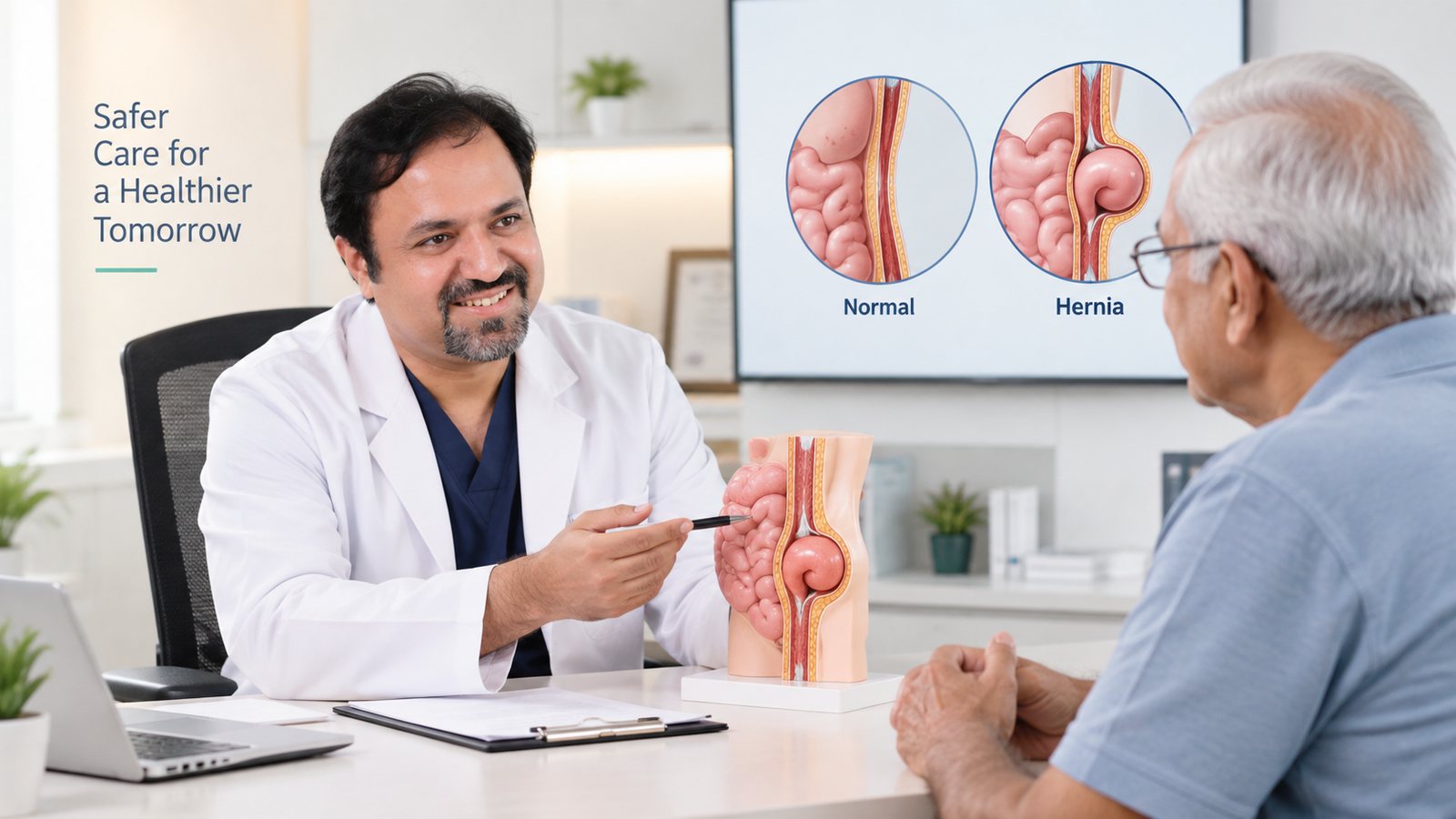
A hernia can occur at any age, but treating it in an older adult requires careful planning. Families often worry about anaesthesia, existing medical conditions, medicines, and recovery. Hernia surgery in elderly patients can be a suitable option after age 70 or 80, but age alone does not determine whether surgery is safe. Doctors assess overall health, frailty, heart and lung function, diabetes, medications, the type of hernia, and the risks of surgery compared with leaving the hernia untreated.
Is Hernia Surgery Dangerous for Elderly Patients?
Hernia surgery is not automatically dangerous for older adults. Many appropriately selected patients can undergo planned repair, but the risks vary according to their health, the hernia, and the procedure.
A healthy 70-year-old may have a different surgical risk from someone of the same age with significant heart, lung, kidney, or mobility problems.
Before recommending surgery, the surgical and anaesthesia teams may assess:
- Overall physical health and frailty
- Heart and lung conditions
- Diabetes and blood pressure
- Kidney function, when relevant
- Current medicines and allergies
- Previous abdominal operations
- Type, size, and symptoms of the hernia
- Mobility and support needed during recovery
The aim is to balance the benefits of repair against the risks of surgery and the potential complications of leaving the hernia untreated.
Is Hernia Surgery Advisable for an 80-Year-Old?
Hernia surgery may be advisable for an 80-year-old if the expected benefits outweigh the individual risks. Some older adults remain active and medically stable, while others may need additional assessment or medical optimisation before surgery.
The decision depends on whether the hernia causes pain, affects daily activities, is growing, or may lead to complications. Observation may be suitable for selected patients, depending on the type of hernia and symptoms, but it should be discussed with a surgeon.
If a hernia suddenly becomes very painful, firm, discoloured, or cannot be pushed back when it previously could, seek emergency medical care. Vomiting, abdominal swelling, or inability to pass stool or gas may indicate a serious complication.
Preoperative Checklist for Elderly Patients
Preoperative assessment helps the medical team plan surgery and anaesthesia according to the patient’s needs. Not every patient requires every test; the team decides based on medical history and the planned procedure.
| Assessment | What the team checks | Why it matters |
|---|---|---|
| Medical history | Existing conditions, allergies, and previous operations | Identifies potential risks |
| Heart health | Symptoms, history, and tests when indicated | Helps assess cardiovascular risk |
| Lung health | Breathing problems and respiratory conditions | Supports anaesthesia planning |
| Diabetes and kidney function | Blood sugar control and relevant blood tests | Helps guide medication and perioperative care |
| Medication review | Blood thinners, diabetes medicines, and other regular medicines | Reduces medication-related risks |
| Frailty and mobility | Walking ability, falls, strength, and independence | Helps plan recovery and home support |
| Nutrition | Diet, weight changes, and general physical condition | Identifies issues that may need attention |
| Anaesthesia assessment | Medical history and appropriate anaesthesia options | Helps the team plan care |
| Home support | Transport, caregiver availability, and daily needs | Supports a safer recovery after discharge |
Tests may include blood investigations, an ECG, blood sugar assessment, kidney function tests, or other investigations when clinically indicated. A chest X-ray is not automatically necessary for every older patient.
Open vs Laparoscopic Hernia Surgery in Elderly Patients
Many hernias can be repaired using an open or laparoscopic approach. The most appropriate option depends on the hernia, the patient’s health, previous operations, anaesthesia suitability, and the surgeon’s experience.
Open Hernia Repair
Open surgery uses an incision near the hernia. Depending on the hernia and patient, it may be performed under local, regional, or general anaesthesia. For selected older adults, open repair under local anaesthesia may be an option when appropriate and performed by an experienced team.
Laparoscopic Hernia Repair
Laparoscopic surgery uses small incisions, a camera, and specialised instruments. It may offer benefits for selected patients, such as smaller incisions or recovery advantages, but it commonly requires general anaesthesia.
Laparoscopic surgery is not automatically better for every senior citizen. The surgeon should explain the expected benefits, risks, anaesthesia requirements, and alternatives before recommending an approach.
Learn more about laparoscopic hernia treatment in Surat.
What About Blood Thinners, Diabetes, and Other Medicines?
Medication management is especially important for older adults who take several medicines each day.
Tell the surgical team about all:
- Prescription medicines
- Blood-thinning or antiplatelet medicines
- Diabetes medicines
- Blood pressure and heart medicines
- Vitamins and supplements
- Herbal products
Never stop blood thinners or other prescribed medicines on your own before surgery. The surgeon, physician, or anaesthesia team will explain which medicines to continue, adjust, or temporarily stop.
Diabetes may require a specific plan for fasting, medication, and blood sugar monitoring before and after surgery.
What Is Recovery Like After Hernia Surgery in Senior Citizens?
Recovery depends on the patient’s health, the type of hernia, the surgical technique, and whether complications occur. Some patients return home on the day of surgery or after a short stay, while others need longer monitoring or additional assistance.
Families can help by supporting the patient’s recovery plan, including:
- Taking prescribed pain medicines correctly
- Following wound-care instructions
- Maintaining appropriate nutrition and hydration
- Preventing constipation as advised by the care team
- Walking and gradually increasing activity as recommended
- Following lifting and exercise restrictions
- Attending follow-up appointments
Older adults may need extra help with daily activities during early recovery. The care team should provide individual advice about walking, bathing, driving, and returning to usual activities.
Seek medical advice for fever, worsening wound redness, increasing pain, persistent vomiting, or difficulty passing urine. Sudden severe hernia pain or a firm, discoloured swelling requires urgent assessment.
When Does a Hernia Need Urgent Attention?
A hernia can occasionally become an emergency, regardless of the patient’s age.
Seek emergency medical care if an older adult develops:
- Sudden or severe pain around the hernia
- A swelling that becomes hard or cannot be pushed back
- Repeated vomiting
- Increasing abdominal swelling
- Inability to pass stool or gas
- Fever or significant weakness with worsening symptoms
- Red, dark, or otherwise concerning skin changes over the swelling
These signs can indicate a trapped hernia, bowel obstruction, or compromised blood supply. Do not wait for a routine appointment if these symptoms occur.
Hernia Surgery With Dr. Hitesh Arora in Surat
At Arora Elite Care, patients and families can consult Dr. Hitesh Arora for evaluation of hernias and other general or laparoscopic surgical conditions.
Dr. Hitesh Arora is an Advanced Laparoscopic and General Surgeon with 15+ years of surgical experience. His professional profile lists an M.S. Gold Medalist qualification, FMAS (Fellowship in Minimal Access Surgery), and experience across 10,000+ surgeries.
For an elderly patient, the consultation should consider both the hernia and the patient’s overall health. The doctor can discuss whether planned repair, further medical assessment, or observation may be appropriate.
For an appointment, visit Arora Elite Care’s contact page.
Conclusion
Hernia surgery in elderly patients may be appropriate after age 70 or 80, but the decision depends on overall fitness, frailty, medical conditions, medicines, hernia symptoms, and the risks of surgery compared with waiting.
A planned evaluation helps the surgical and anaesthesia teams assess risks and prepare for recovery. Families should seek urgent medical attention if an older adult develops severe hernia pain, vomiting, an irreducible swelling, abdominal distension, or concerning skin changes.
Frequently Asked Questions
Is 70 or 80 too old for hernia surgery?
Not necessarily. Doctors consider overall fitness, medical conditions, frailty, hernia characteristics, and anaesthesia risk rather than using age alone to decide whether surgery is suitable.
Can elderly patients have laparoscopic hernia surgery?
Yes, some older adults may be suitable for laparoscopic repair. The surgeon considers the hernia, previous operations, general health, anaesthesia requirements, and surgical expertise.
Does every hernia in an elderly person require surgery?
No. Treatment depends on the type of hernia, symptoms, progression, overall health, and risk of complications. A surgical assessment helps determine whether repair or observation is appropriate.
How long does recovery take after hernia surgery?
Recovery varies according to the procedure and the patient’s health. The surgeon provides individual advice about walking, lifting, driving, and returning to daily activities.
What happens if an elderly patient delays hernia treatment?
Some hernias may remain stable, while others enlarge or become more painful. A hernia can occasionally trap bowel or compromise its blood supply, requiring urgent treatment. A doctor can explain the risks of observation for the specific hernia.