
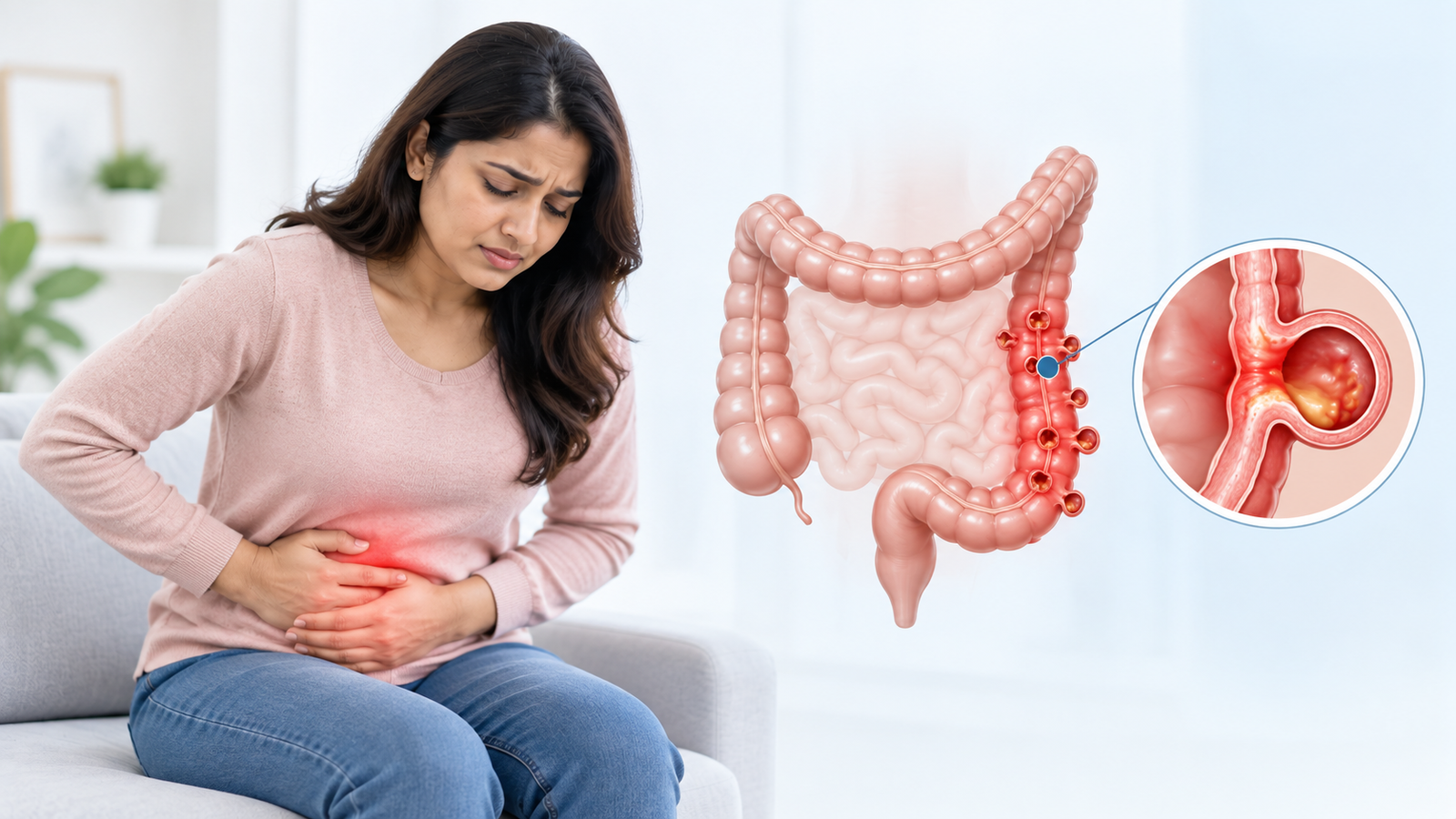
Diverticulitis occurs when small pouches in the wall of the colon, called diverticula, become inflamed or infected. Some people have mild symptoms, while others can develop complications that require hospital treatment or surgery. Not everyone with diverticulitis needs an operation. When surgery becomes necessary, understanding diverticulitis surgery recovery, the procedure, and possible warning signs can help patients and families prepare for treatment.
What Is Diverticulitis?
Diverticula are small pouches that can develop in the wall of the large intestine. Having these pouches is known as diverticulosis.
When one or more diverticula become inflamed or infected, doctors call the condition diverticulitis.
The severity varies considerably. Some episodes remain uncomplicated, while others can lead to an abscess, bowel perforation, obstruction, fistula, or infection within the abdominal cavity.
This difference is important because treatment depends on the severity and complications rather than the diagnosis alone.
What Are the Symptoms of Diverticulitis?
Diverticulitis commonly causes abdominal pain, often in the lower left side of the abdomen.
Other possible symptoms include:
- Persistent abdominal tenderness
- Fever
- Nausea or vomiting
- Bloating
- Constipation
- Diarrhoea
- Changes in bowel habits
- Reduced appetite
Symptoms can overlap with several other abdominal and bowel conditions. Persistent or severe abdominal pain therefore needs proper medical evaluation rather than self-diagnosis.
When Can Diverticulitis Become Serious?
Complicated diverticulitis requires closer medical or surgical attention.
Possible complications include:
Abscess: A collection of infected fluid can develop near the affected colon.
Perforation: A hole can develop in the bowel wall and allow intestinal contents to leak.
Peritonitis: Infection can spread within the abdominal cavity and become a medical emergency.
Fistula: An abnormal connection may form between the bowel and another organ.
Intestinal obstruction: Inflammation or scarring can narrow the bowel and interfere with the passage of intestinal contents.
Severe or rapidly worsening abdominal pain, significant abdominal swelling, persistent vomiting, high fever, or marked weakness warrants prompt medical assessment.
How Is Diverticulitis Diagnosed?
Doctors begin by discussing the symptoms and performing a physical examination.
They may recommend blood tests to look for signs of infection or inflammation and assess the patient’s general condition.
A CT scan can help identify inflammation, an abscess, perforation, obstruction, and other complications when clinically appropriate.
Additional investigations may be recommended depending on the patient’s symptoms and medical history.
The aim is not simply to confirm diverticulitis but also to determine whether it is uncomplicated or complicated.
Does Every Patient With Diverticulitis Need Surgery?
No. Many patients with uncomplicated diverticulitis do not need surgery.
Treatment depends on symptom severity, overall health, ability to eat and drink, complications, and clinical findings.
Some patients can receive non-surgical treatment and monitoring. More severe cases may require hospital care.
Having more than one episode does not automatically mean that every patient needs an operation.
Doctors consider the frequency and severity of episodes, complications, effect on quality of life, overall health, and individual surgical risks.
When Is Diverticulitis Surgery Necessary?
Surgery may become necessary when diverticulitis causes serious complications or when non-surgical management cannot adequately control the problem.
A surgeon may consider an operation for situations such as:
- Bowel perforation
- Generalized abdominal infection
- Intestinal obstruction
- Certain fistulas
- Severe disease that does not improve with appropriate treatment
- Selected recurrent or complicated cases
Emergency surgery and planned surgery are different situations. When possible, a planned operation allows the surgical team to assess the patient’s health and prepare appropriately.
How Is Diverticulitis Surgery Performed?
The exact operation depends on the location and severity of the disease.
The surgeon may remove the affected portion of the colon. When conditions allow, the surgeon can reconnect the healthy ends of the bowel.
In some circumstances, particularly with severe infection or an emergency, creating a stoma may be necessary. A stoma allows stool to leave the body through an opening in the abdomen into a collection bag.
Depending on the clinical situation, a stoma may be temporary or, less commonly, permanent.
Surgeons may use an open or laparoscopic approach depending on disease severity, previous operations, anatomy, overall health, and whether the procedure is planned or an emergency.
What Is Diverticulitis Surgery Recovery Like?
Diverticulitis surgery recovery varies from patient to patient. Someone undergoing planned minimally invasive surgery may have a different recovery from a patient requiring emergency surgery for perforation or severe infection.
After surgery, the healthcare team monitors pain, hydration, bowel function, wound healing, and signs of complications.
Food and fluids are gradually introduced according to bowel function and the surgeon’s instructions.
Patients may also receive guidance about:
- Pain medicines
- Walking and gradual physical activity
- Wound care
- Diet and hydration
- Bowel habits
- Heavy lifting
- Returning to work
- Follow-up appointments
Early appropriate movement is often encouraged when the medical team considers it safe.
Do not compare your recovery timeline with another patient’s. The extent of surgery and your overall health can significantly affect recovery.
What Should You Watch for During Recovery?
Contact your surgical team if you develop concerning symptoms after surgery, particularly symptoms highlighted in your discharge instructions.
These may include:
- Increasing abdominal pain
- Persistent vomiting
- Fever
- Increasing wound redness or swelling
- Significant wound discharge or bleeding
- Increasing abdominal swelling
- Breathing difficulty
- Inability to tolerate food or fluids
Seek urgent medical attention for severe or rapidly worsening symptoms.
Why Is Surgical Evaluation Important?
Diverticulitis can range from a relatively uncomplicated illness to a serious abdominal emergency. Correct assessment helps determine whether conservative treatment, hospital management, drainage of a complication, or surgery is appropriate.
At Arora Elite Care, Surat, patients with relevant general and abdominal surgical concerns can consult Dr. Hitesh Arora, an Advanced Laparoscopic and General Surgeon.
Dr. Hitesh Arora has 15+ years of surgical experience, is an M.S. Gold Medalist, holds an FMAS (Fellowship in Minimal Access Surgery), and his professional profile reports experience across 10,000+ surgeries.
For suspected diverticulitis, the priority is an accurate diagnosis and an individualized treatment plan rather than assuming that surgery is necessary.
Conclusion
Diverticulitis does not automatically mean surgery. Many uncomplicated cases can be managed without an operation, while complicated disease may require surgical intervention.
When an operation is necessary, diverticulitis surgery recovery depends on whether surgery was planned or performed as an emergency, the extent of bowel involvement, the surgical technique, complications, and the patient’s overall health.
Persistent or severe abdominal pain, fever, repeated vomiting, increasing abdominal swelling, or rapidly worsening symptoms should receive prompt medical attention.
If you have persistent abdominal symptoms or have been advised to consider surgery, consult Dr. Hitesh Arora at Arora Elite Care, Surat, for a surgical evaluation and individualized treatment guidance. You can also visit the Contact page to book a consultation.
FAQs
How long does diverticulitis surgery recovery take?
There is no single recovery time. It depends on the procedure, whether surgery was planned or emergency, the patient’s health, complications, and whether a stoma was required.
Does every case of diverticulitis need surgery?
No. Many uncomplicated cases do not require surgery. Doctors usually reserve surgery for selected patients with complications, persistent disease, or other specific indications.
Can diverticulitis cause an intestinal obstruction?
Yes. Inflammation or scarring associated with diverticular disease can sometimes narrow the bowel and contribute to obstruction.
Is diverticulitis surgery laparoscopic?
Surgeons can perform selected operations laparoscopically. However, severe infection, previous surgery, anatomy, or an emergency may influence which approach is safest.
Will I need a stoma after diverticulitis surgery?
Not every patient requires a stoma. Whether one is needed depends on the severity of disease, bowel condition, infection, and type of operation.
Can diverticulitis return after surgery?
Surgery removes the diseased bowel segment being treated, but it cannot guarantee that diverticular problems will never occur elsewhere. Your surgeon can explain your individual long-term outlook.