
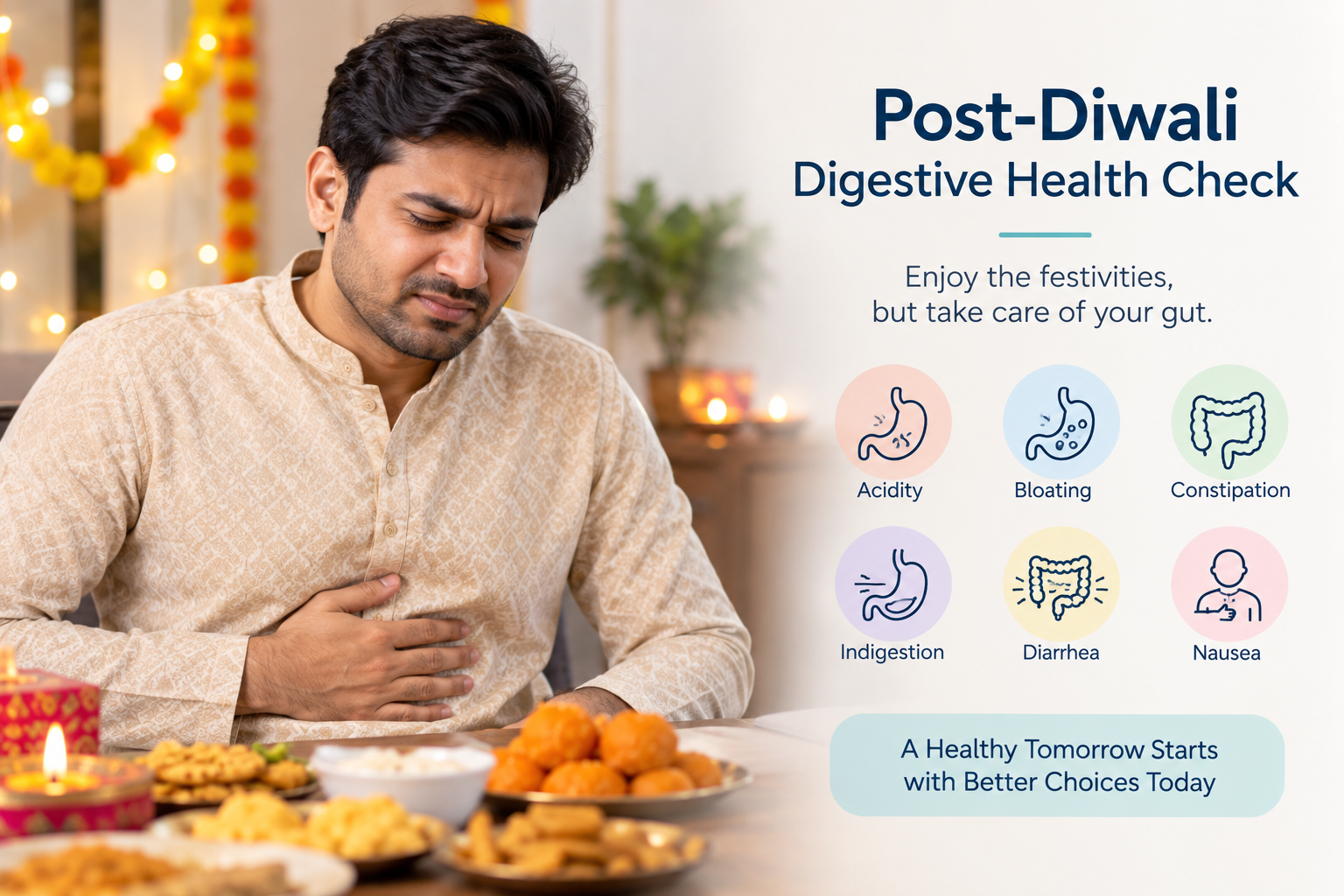
Diwali often brings family gatherings, sweets, fried snacks, restaurant meals, late-night eating, and changes in the usual daily routine. After the celebrations, some people notice acidity, bloating, constipation, loose stools, or abdominal discomfort. Most post-Diwali digestive health problems are temporary and improve as eating and activity patterns return to normal. However, persistent or severe symptoms should not automatically be blamed on festive food. Sometimes, a heavy meal may bring attention to an underlying gallbladder problem, while abdominal pain from appendicitis or another condition may simply occur around the same time.
Knowing which symptoms can be watched at home and which require medical evaluation is important.
Why Are Digestive Problems Common After Diwali?
During the festive period, several habits may change at the same time.
Common factors include:
- Eating larger portions than usual
- Frequent sweets and fried foods
- High-fat meals
- Irregular meal timings
- Eating late at night
- Reduced fibre intake
- Not drinking enough water
- Reduced physical activity
- Eating frequently outside the home
- Sudden changes from the normal diet
These changes can contribute to indigestion, reflux, bloating, and altered bowel habits.
However, the festival itself does not cause every digestive condition. Persistent or unusual symptoms need to be considered separately.
Common Post-Diwali Digestive Health Problems
1. Acidity and Heartburn
Heavy, spicy, or fatty meals may worsen reflux in susceptible people. Symptoms can include burning behind the chest, sour-tasting fluid in the mouth, burping, and discomfort after eating.
Returning to smaller, regular meals and avoiding lying down immediately after eating may help.
2. Bloating and Indigestion
Feeling unusually full, gassy, or uncomfortable after eating can occur after several days of larger meals.
Eating slowly and returning to normal portion sizes can help. Persistent bloating, especially when accompanied by significant pain or vomiting, deserves evaluation.
3. Constipation
Changes in routine, dehydration, reduced fibre and inactivity may contribute to harder or less frequent stools.
Constipation can also increase straining during bowel movements and aggravate existing piles or an anal fissure.
4. Diarrhea or Vomiting
Loose stools, nausea, and vomiting can sometimes follow gastrointestinal infection or food contamination.
Hydration is particularly important. Repeated vomiting, dehydration, blood in the stool, high fever, or severe abdominal pain requires medical attention.
When Is Stomach Pain More Than Indigestion?
Mild discomfort after overeating may settle as digestion improves. But significant abdominal pain should not automatically be labelled as “gas” or acidity.
Seek medical evaluation if pain is:
- Severe or progressively worsening
- Persistently localized to one area
- Associated with repeated vomiting
- Accompanied by fever
- Associated with significant abdominal swelling
- Accompanied by inability to pass stool or gas
- Associated with blood in the stool or black stools
- Continuing despite basic dietary measures
Some surgical abdominal conditions can initially resemble ordinary indigestion.
Could Fatty Diwali Food Trigger Gallbladder Pain?
Fatty food does not necessarily create gallstones overnight. However, a rich or fatty meal can sometimes trigger symptoms in a person who already has gallstones or gallbladder disease.
Gallbladder-related symptoms may include pain in the upper-right or upper-middle abdomen, nausea, vomiting, or discomfort after fatty meals. Pain can sometimes spread toward the back or right shoulder area.
Persistent pain, fever, or yellowing of the eyes or skin needs prompt assessment.
Patients with suspected gallstone symptoms can learn more about Gallbladder Surgery at Arora Elite Care.
Could Abdominal Pain Be Appendicitis?
Appendicitis should not be confused with routine post-festival indigestion.
Importantly, overeating or eating sweets does not directly cause appendicitis.
Appendicitis commonly causes abdominal pain that becomes progressively worse. Pain may eventually become more noticeable in the lower-right side of the abdomen. Other symptoms can include nausea, vomiting, reduced appetite, and fever.
The pattern is not identical in every patient, so persistent or worsening abdominal pain should be evaluated rather than self-diagnosed.
Arora Elite Care also provides information about Appendix Surgery in Surat.
Constipation, Piles and Fissure After Festival Eating
Constipation is another common concern after changes in diet and routine.
Hard stools and repeated straining can aggravate existing anorectal problems such as piles or anal fissure.
Simple measures may include adequate hydration, gradually returning to fibre-rich foods, avoiding unnecessary straining and resuming regular physical activity.
Rectal bleeding should not automatically be assumed to be piles. Bleeding can have different causes and may require examination, particularly when it is recurrent, significant or accompanied by other symptoms.
For persistent fissure-related symptoms, patients can review the clinic’s information about Anal Fissure Treatment in Surat.
Post-Diwali Digestive Warning Signs You Should Not Ignore
Some symptoms require more attention than ordinary bloating or indigestion.
Seek timely medical care if you develop:
- Severe or rapidly worsening abdominal pain
- Persistent vomiting or inability to keep fluids down
- High or persistent fever with abdominal symptoms
- Significant rectal bleeding or black stools
- Increasing abdominal swelling
- Inability to pass stool or gas with pain or distension
- Yellowing of the eyes or skin
- Fainting, confusion, or marked weakness
- Signs of significant dehydration
- Severe localized abdominal tenderness
If symptoms are severe or rapidly worsening, seek urgent medical care rather than waiting for a routine appointment.
How to Recover After Festive Eating
If your symptoms are mild and there are no warning signs, gradually returning to your normal routine may help.
Start with regular portion sizes instead of extreme fasting or restrictive “detox” diets. Drink adequate fluids and gradually restore fibre from vegetables, fruits, whole grains and other foods that normally suit you.
Reduce repeated fried, very fatty and excessively spicy meals for a few days if they worsen your symptoms.
Gentle regular physical activity may also support normal bowel habits.
Avoid taking antibiotics, strong laxatives, or other medicines unnecessarily without appropriate medical advice. If you already have a medical condition or take regular medication, follow the advice given by your healthcare professional.
When Should You Consult a Surgeon in Surat?
Most mild post-Diwali digestive health problems do not require surgery.
A surgical opinion becomes more relevant when symptoms or investigations suggest conditions such as gallbladder disease, appendicitis, hernia, intestinal obstruction, persistent anorectal disease, or another abdominal problem that may require surgical management.
At Arora Elite Care in Surat, patients with relevant general and laparoscopic surgical concerns can consult Dr. Hitesh Arora, an Advanced Laparoscopic and General Surgeon.
The purpose of the consultation is not automatically to schedule an operation. It is to understand the diagnosis, review investigations where necessary, and decide whether observation, medical management, or surgical treatment is appropriate.
You can explore General Surgery services at Arora Elite Care or book a consultation if symptoms need surgical evaluation.
Conclusion
A few days of acidity, bloating or altered bowel habits can occur when festive eating changes your normal routine. In many cases, symptoms settle after hydration, regular meals, adequate fibre, and a return to normal activity.
But not every stomach problem after Diwali is simply the result of overeating.
Persistent upper abdominal pain after meals may need gallbladder evaluation, while worsening localized pain may require assessment for appendicitis or another abdominal condition. Significant bleeding, repeated vomiting, abdominal distension, or inability to pass stool or gas should also not be ignored.
If your symptoms are persistent, recurrent, or concerning, contact Arora Elite Care for an appropriate surgical consultation in Surat.
FAQs
How long can indigestion last after heavy festival food?
Mild indigestion may improve after returning to normal eating patterns. If symptoms persist, repeatedly return, become severe, or are associated with warning signs, medical evaluation is appropriate.
Can oily food trigger gallbladder pain?
A fatty meal can trigger symptoms in some people who already have gallstones or gallbladder disease. It does not mean that a single oily meal suddenly created gallstones.
When should abdominal pain be checked by a doctor?
Pain should be assessed when it is severe, persistent, worsening, localized, or associated with fever, repeated vomiting, bleeding, jaundice, or significant abdominal swelling.
Can overeating during Diwali cause appendicitis?
There is no simple cause-and-effect relationship in which overeating during Diwali directly causes appendicitis. New or worsening abdominal pain should therefore not automatically be dismissed as overeating.
Why can constipation get worse during festivals?
Lower fibre intake, inadequate fluids, reduced activity, irregular meal timings and changes in daily routine can all contribute to constipation.
When is vomiting with stomach pain an emergency?
Repeated vomiting with severe or worsening abdominal pain, abdominal swelling, inability to keep fluids down, significant weakness, bleeding, high fever or inability to pass stool or gas warrants prompt medical assessment.