
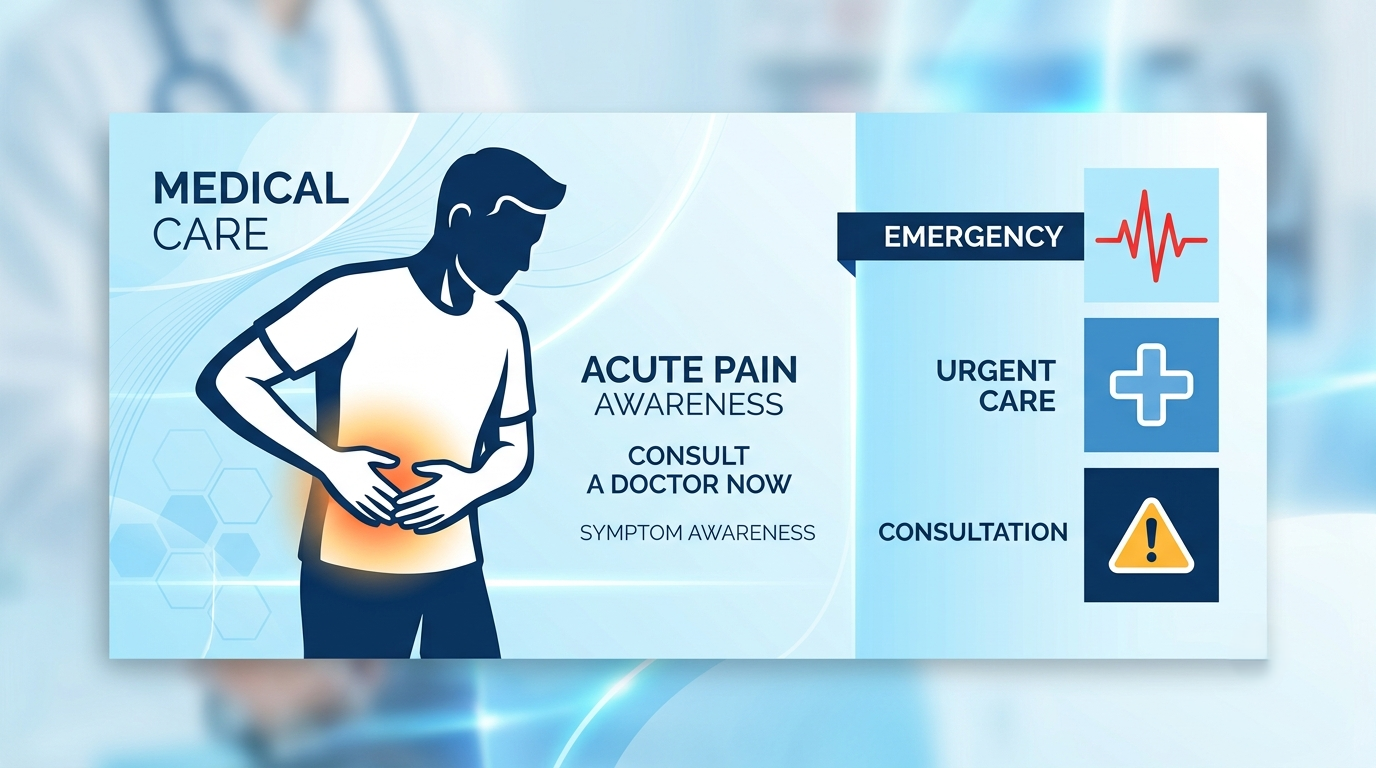
Abdominal pain is common, but knowing when is abdominal pain an emergency can help you recognise symptoms that need immediate medical attention. Sudden or severe stomach pain, persistent vomiting, blood in the stool, or a swollen and tender abdomen may indicate appendicitis, bowel obstruction, internal bleeding, or another serious condition. Do not ignore these warning signs or delay emergency care.
When Is Abdominal Pain an Emergency?
Abdominal pain may be a medical emergency when it is sudden, severe, persistent, or rapidly worsening, particularly when accompanied by other concerning symptoms.
Seek emergency medical care immediately if you experience any of these abdominal pain emergency signs:
- Sudden or severe abdominal pain
- A hard, swollen, or extremely tender abdomen
- Vomiting blood or passing black, tar-like stools
- Persistent vomiting with severe abdominal pain
- Fever or chills with worsening abdominal pain
- Fainting, confusion, or severe weakness
- Difficulty breathing or chest pain
- Abdominal pain with an inability to pass stool or gas, especially with vomiting
- Severe pain after an injury or accident
- Severe abdominal pain during pregnancy or when pregnancy is possible
These symptoms may indicate a serious condition requiring urgent investigation or treatment. Call your local emergency number or go to the nearest emergency department. Do not drive yourself if you feel faint or seriously unwell.
What Causes Emergency Abdominal Pain?
Abdominal pain can result from minor digestive problems or conditions that require urgent medical or surgical treatment. The symptoms and their progression can help doctors determine what investigations are needed.
1. Appendicitis
Appendicitis occurs when the appendix becomes inflamed. Pain may begin near the belly button and move towards the lower-right abdomen. Other symptoms can include nausea, vomiting, loss of appetite, and fever.
If appendicitis is suspected, prompt medical assessment is important because complications can develop if treatment is delayed.
Read more about the warning signs of a possible ruptured appendix.
2. Gallbladder Problems
Gallstones or gallbladder inflammation may cause pain in the upper-right or upper abdomen, sometimes after eating. Nausea, vomiting, fever, or yellowing of the skin and eyes may also occur.
Severe or persistent pain, particularly with fever or jaundice, needs urgent medical assessment.
3. Bowel Obstruction
A bowel obstruction occurs when the movement of intestinal contents becomes blocked. Symptoms may include abdominal pain, swelling, vomiting, and difficulty passing stool or gas.
These symptoms require prompt assessment because some obstructions can lead to serious complications.
4. Acute Pancreatitis
Acute pancreatitis is inflammation of the pancreas. It can cause severe upper-abdominal pain that may spread to the back, together with nausea, vomiting, or abdominal tenderness.
Severe or persistent symptoms require urgent medical evaluation.
5. Perforation or Internal Bleeding
A hole in the digestive tract or internal bleeding can cause sudden or severe abdominal pain and may be accompanied by weakness, dizziness, fainting, or a rigid abdomen.
These conditions can be life-threatening and require emergency treatment.
Does the Location of Abdominal Pain Matter?
The location of pain can provide useful clues, but it cannot confirm the cause on its own.
- Lower-right abdominal pain: May occur with appendicitis.
- Upper-right abdominal pain: May occur with gallbladder disease.
- Upper-abdominal pain spreading to the back: May occur with pancreatitis.
- Cramping pain with swelling and vomiting: May indicate bowel obstruction.
- Sudden, widespread abdominal pain: Can occur with several serious conditions, including perforation.
Do not rely on the location of pain alone to decide whether you need medical care. The severity, duration, associated symptoms, and medical history also matter.
What Should You Do During an Abdominal Pain Emergency?
If you suspect a medical emergency, seek help rather than trying to manage severe symptoms at home.
- Call your local emergency number or arrange urgent transport to an emergency department.
- Explain when the pain began, where it is located, and whether it is getting worse.
- Tell the medical team about vomiting, fever, bleeding, fainting, pregnancy, recent injuries, and any medicines you take.
- Avoid taking new medicines or home remedies to delay assessment.
- Follow instructions from emergency medical professionals.
Do not wait for a clinic appointment if you have severe or sudden pain, signs of internal bleeding, fainting, or other emergency symptoms.
What Happens During an Emergency Evaluation?
The medical team will assess your symptoms, medical history, and physical examination findings. Depending on the suspected cause, investigations may include:
- Physical examination and vital-sign monitoring
- Blood and urine tests
- Abdominal ultrasound
- CT scan or other imaging when appropriate
- Surgical consultation if a surgical condition is suspected
Treatment depends on the diagnosis. Some conditions may require medicines and monitoring, while others may need a procedure or emergency surgery.
When Should You See a General Surgeon?
A surgical assessment may be needed if abdominal pain persists, repeatedly returns, progressively worsens, or is associated with vomiting, fever, swelling, bowel changes, or localised tenderness.
Conditions such as appendicitis, complicated gallbladder disease, bowel obstruction, and certain hernia complications may require surgical treatment. However, abdominal pain can also arise from non-surgical conditions, so an appropriate medical assessment is essential.
For information about symptoms that may need surgical evaluation, read our guide to stomach pain after eating and possible surgical causes.
Abdominal Pain Evaluation at Arora Elite Care, Surat
At Arora Elite Care in Surat, Dr. Hitesh Arora provides surgical consultations for appropriate abdominal and general surgery concerns. Assessment may help determine whether further investigations, specialist referral, or surgical treatment is required.
For ongoing or non-emergency abdominal symptoms, you can learn more about abdominal conditions and treatment or visit the Dr. Hitesh Arora profile.
If you have sudden severe abdominal pain, fainting, vomiting blood, black stools, or difficulty breathing, seek emergency care immediately rather than waiting for a routine clinic appointment.
Frequently Asked Questions
1. When is abdominal pain an emergency?
Abdominal pain is an emergency when it is sudden, severe, rapidly worsening, or accompanied by symptoms such as fainting, a rigid abdomen, vomiting blood, black stools, difficulty breathing, or persistent vomiting. Seek emergency medical care if these warning signs occur.
2. When should I go to the emergency room for stomach pain?
Go to an emergency department for severe or sudden pain, significant abdominal swelling, persistent vomiting, bleeding, fainting, or pain that worsens rapidly. Severe abdominal pain during pregnancy or after an injury also requires urgent assessment.
3. Can gas cause severe abdominal pain?
Gas can cause bloating and cramping. However, severe, persistent, or worsening abdominal pain should not automatically be attributed to gas, especially if other warning signs are present.
4. When should I worry about lower-right abdominal pain?
Lower-right abdominal pain may indicate appendicitis, particularly when it worsens or occurs with nausea, vomiting, fever, or loss of appetite. Seek prompt medical assessment if these symptoms develop.
5. Can abdominal pain require emergency surgery?
Yes. Appendicitis, certain bowel obstructions, perforations, complicated gallbladder disease, and some hernia complications may require urgent surgery. The need for surgery depends on the underlying diagnosis and clinical assessment.
Final Takeaway
Knowing when is abdominal pain an emergency can help you respond quickly to potentially serious symptoms. Sudden or severe pain, persistent vomiting, blood in vomit or stool, a rigid or swollen abdomen, fainting, and difficulty breathing require urgent attention. Do not assume that severe abdominal pain is caused by gas or indigestion. Seek appropriate medical care to identify the cause and receive timely treatment.
1 Comment
Signs Appendix About to Burst | Arora Elite Care
September 11, 2026[…] can also learn about other abdominal pain emergency signs that may require urgent medical or surgical […]