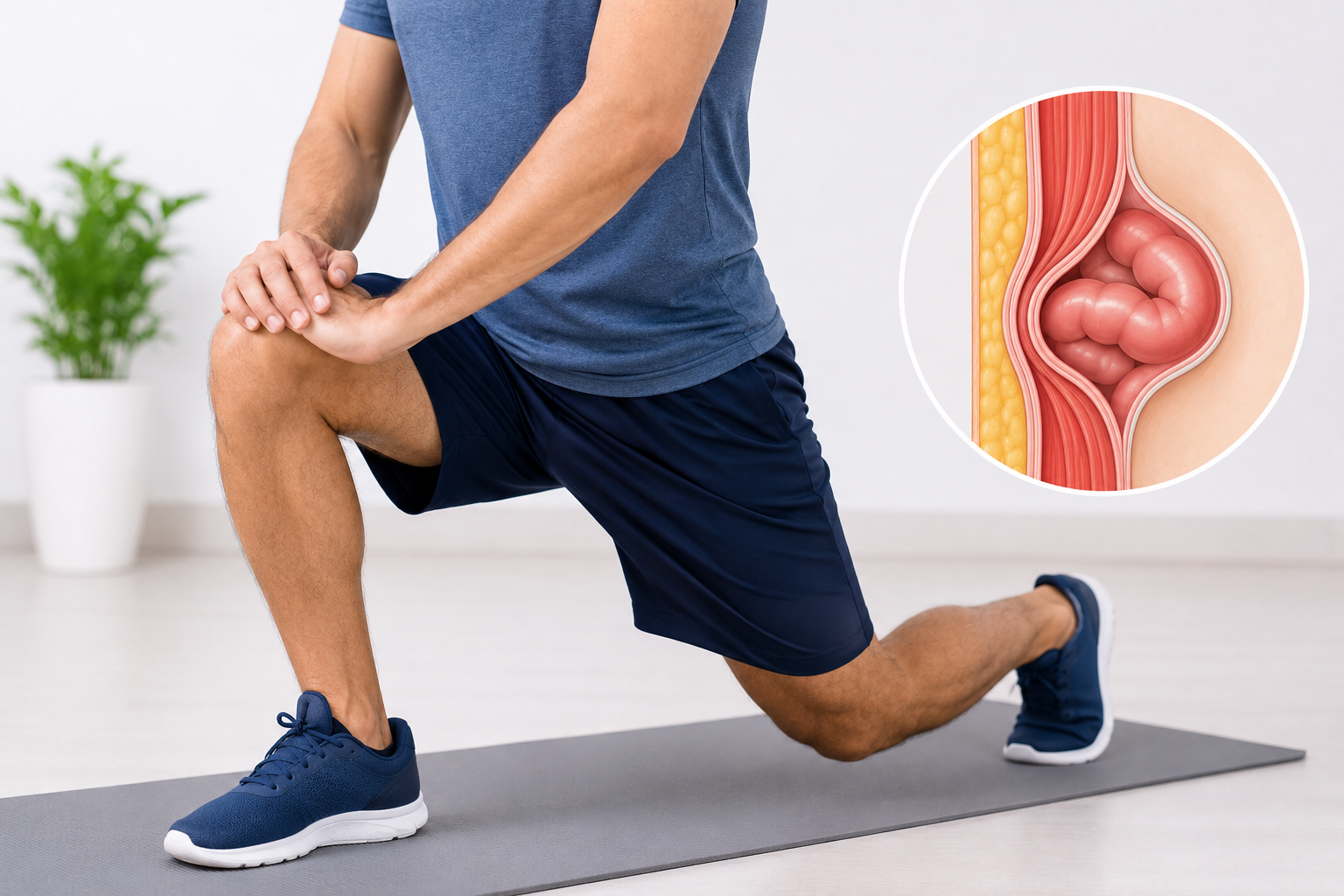
Yes, exercise with a hernia can be safe in some cases, but only if you choose low-impact activities and avoid movements that increase pressure inside the abdomen. Heavy lifting, intense core workouts, and straining can worsen a hernia or increase the risk of complications. If your hernia causes pain or continues to grow, consult a surgeon before exercising.
Can You Continue Exercising With a Hernia?
Many people with a small, uncomplicated hernia can remain active. However, not every workout is safe.
Whether you should continue exercising depends on:
- The type of hernia
- Its size
- Your symptoms
- The activity you perform
- Your surgeon’s advice
Ignoring pain or continuing strenuous workouts may make the hernia worse.
Exercises That Are Generally Safer
Low-impact activities usually place less pressure on the abdominal wall.
These include:
- Walking
- Light cycling
- Gentle stretching
- Swimming
- Controlled breathing exercises
- Gentle yoga (with medical advice)
Stop immediately if any exercise causes pain or increases the size of the bulge.
Exercises You Should Avoid
Certain movements can increase pressure in the abdomen and may worsen a hernia.
Avoid:
- Heavy weightlifting
- Deadlifts
- Heavy squats
- Sit-ups
- Crunches
- Leg raises
- High-intensity interval training (HIIT)
- Contact sports
- Exercises that require forceful straining
Warning Signs During Exercise
Stop exercising and seek medical advice if you notice:
- Severe pain
- A larger bulge
- Nausea or vomiting
- Redness over the hernia
- Fever
- Difficulty pushing the hernia back in
- Sudden abdominal tenderness
These symptoms may require urgent evaluation.
Can Exercise With a Hernia Be Safe Without Surgery?
No. Exercise may improve your overall fitness, but it cannot repair the weakness in the abdominal wall. Surgery remains the only definitive treatment for most abdominal hernias.
When Should You Consider Surgery?
If exercise with a hernia becomes painful or increasingly difficult, it may be time to consider surgical treatment. Your surgeon may recommend hernia repair if:
- The bulge becomes larger.
- Pain affects your daily activities.
- Exercise becomes uncomfortable.
- The hernia frequently protrudes.
- There is a risk of obstruction or strangulation.
Early treatment often helps prevent complications and allows many patients to return to their normal activities sooner.
Benefits of Laparoscopic Hernia Surgery
Many patients are suitable candidates for minimally invasive surgery.
Potential benefits include:
- Smaller incisions
- Less postoperative discomfort
- Faster recovery
- Shorter hospital stay
- Earlier return to work
- Minimal scarring
Returning to Exercise After Surgery
Recovery depends on the procedure and your overall health.
Many patients can:
- Walk within a day
- Resume light activities in 1–2 weeks
- Return to exercise gradually under medical guidance
- Restart strenuous workouts only after surgeon approval
Why Choose Dr. Hitesh Arora?
If exercise causes pain or your hernia is affecting daily life, consult Dr. Hitesh Arora, Advanced Laparoscopic & General Surgeon at Arora Elite Care.
Patients choose Arora Elite Care for:
- Advanced laparoscopic hernia repair
- Personalized treatment plans
- Modern surgical facilities
- Comprehensive pre- and post-operative care
- Evidence-based treatment approach
Conclusion
Staying active is important, but exercise with a hernia requires the right approach. Choosing safe activities and avoiding movements that strain the abdominal wall can help reduce discomfort while preventing the condition from worsening. If your symptoms persist or limit your daily routine, consult an experienced hernia surgeon to discuss the most appropriate treatment.
Frequently Asked Questions
Is walking safe with a hernia?
Walking is generally considered a low-impact activity and may be suitable for many people, provided it does not increase pain or swelling.
Can I lift weights with a hernia?
Heavy weightlifting is usually discouraged because it increases intra-abdominal pressure.
Can exercise cure a hernia?
No. Exercise cannot close the defect in the abdominal wall.
Should I stop exercising completely?
Not always. Many people can continue selected low-impact activities after medical evaluation.
When should I see a surgeon?
Seek medical advice if your hernia becomes painful, grows larger, interferes with daily life, or cannot be pushed back.