
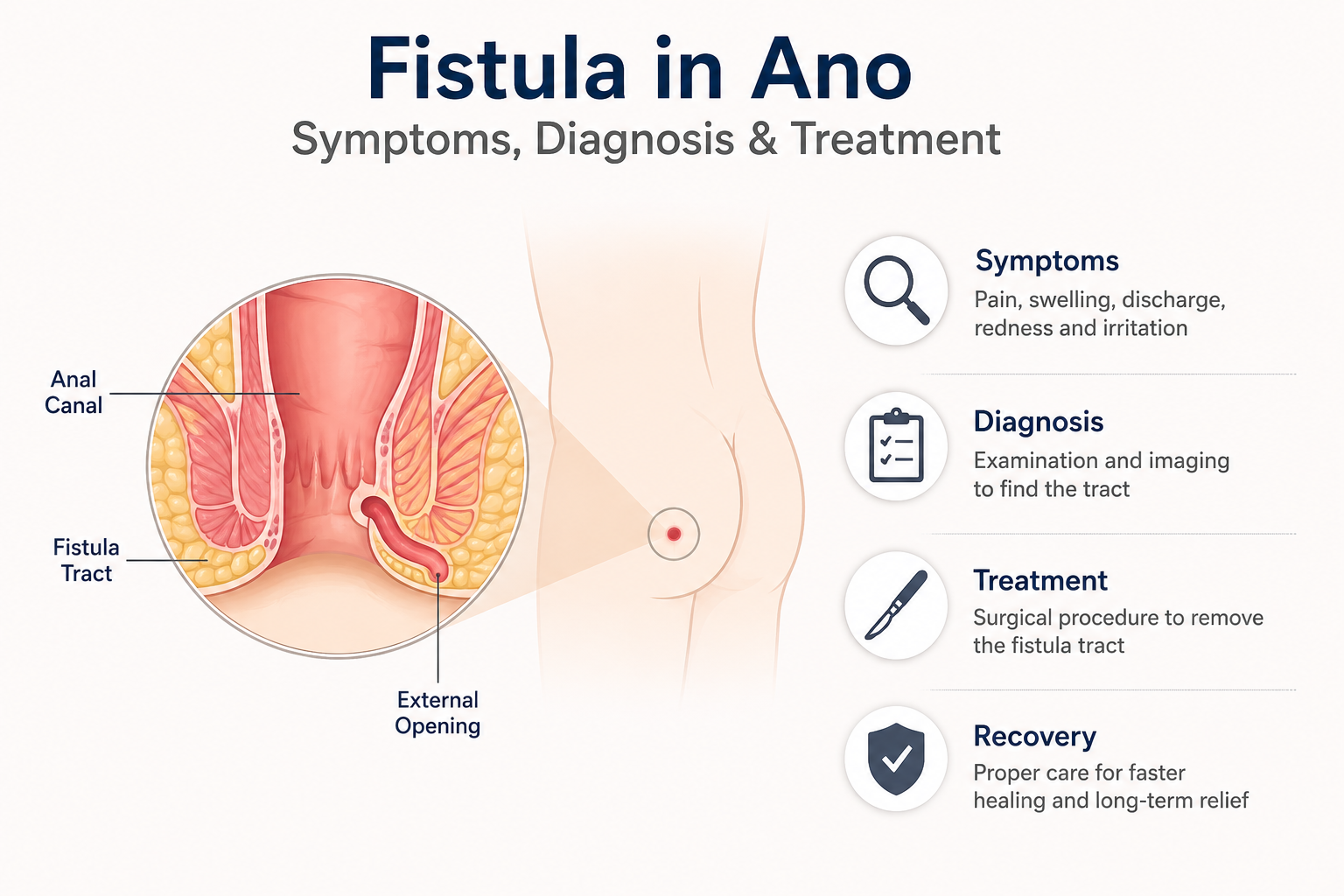
Fistula in ano, commonly called an anal fistula, is an abnormal tunnel that develops between the anal canal and the skin around the anus. It can cause repeated swelling, pain, pus discharge, irritation, and recurrent infection. Symptoms may temporarily improve after drainage but can return if the fistula tract remains. The goal of fistula in ano treatment is to identify and appropriately treat the fistula tract while protecting the muscles responsible for bowel control. Although patients often search for a “permanent cure,” no treatment can guarantee that a fistula will never recur, especially in complex cases.
What Is Fistula in Ano?
A fistula in ano often develops following an infection of glands inside the anal canal. The infection may form an abscess, and after the abscess drains, an abnormal tract can remain between the anal canal and surrounding skin.
Fistulas vary considerably. Some follow a relatively simple path, while others have multiple branches or pass through important anal sphincter muscles.
This difference makes proper diagnosis important before choosing treatment.
What Are the Symptoms of Fistula in Ano?
Common symptoms can include:
- Recurrent pain or swelling around the anus
- Pus or fluid discharge
- A small opening near the anus
- Skin irritation or itching
- Repeated anal abscesses
- Pain while sitting or during bowel movements
- Foul-smelling discharge
- Fever when active infection develops
Symptoms can improve after an abscess drains and then return later. Repeated episodes of swelling and discharge should prompt a surgical evaluation.
What Causes an Anal Fistula?
A previous anal abscess or infection causes many anal fistulas. When an abscess drains naturally or through treatment, a tract may remain.
Other medical conditions can occasionally contribute to fistula formation, so patients with recurrent or complex fistulas may require additional investigation.
Piles, fissures, and fistulas are different anorectal conditions even though they can cause overlapping symptoms. An accurate diagnosis helps prevent inappropriate treatment.
How Do Doctors Diagnose Fistula in Ano?
Diagnosis starts with discussing your symptoms and examining the anal area. The surgeon looks for an external opening, discharge, swelling, previous scars, or signs of infection.
The doctor also assesses the likely direction and complexity of the tract.
For selected patients, particularly those with recurrent or complex fistulas, the surgeon may recommend imaging such as an MRI to understand the fistula pathway and identify branches or associated abscesses.
A detailed assessment helps the surgeon choose a treatment that addresses the fistula while minimizing unnecessary injury to surrounding muscles.
What Is the Treatment for Fistula in Ano?
A persistent anal fistula generally requires surgical assessment because medicines alone usually cannot eliminate an established fistula tract.
The exact fistula in ano treatment depends on:
- Location of the fistula
- Number of tracts or branches
- Relationship with sphincter muscles
- Previous fistula surgery
- Presence of infection or abscess
- Overall health of the patient
For suitable simple fistulas, a surgeon may consider fistulotomy, which involves opening the tract so it can heal appropriately.
For fistulas involving more sphincter muscle or complex pathways, the surgeon may consider other sphincter-preserving approaches. Treatment selection should prioritize both fistula healing and preservation of bowel-control function.
Is There a Permanent Cure for Fistula in Ano?
Surgery aims to achieve long-term fistula healing, but doctors cannot responsibly guarantee a permanent cure in every patient.
Simple fistulas may have a different prognosis from complex, branching, recurrent, or high fistulas. Recurrence can occur even after appropriate treatment.
Successful management therefore depends on accurately identifying the tract, selecting a suitable procedure, treating associated infection, and completing appropriate follow-up.
Patients should be cautious about treatments advertised as providing a guaranteed “100% permanent cure.”
What Is Recovery Like After Fistula Surgery?
Recovery depends on the fistula and procedure performed.
Your surgeon may provide instructions regarding:
- Wound hygiene and dressing
- Prescribed pain medicines
- Diet and hydration
- Comfortable bowel movements
- Constipation prevention
- Physical activity
- Return to work
- Follow-up appointments
Some discharge or discomfort may occur during healing depending on the procedure. Contact your surgeon if you develop increasing pain, fever, significant bleeding, worsening swelling, or foul-smelling discharge.
Follow-up remains important because the surgeon needs to monitor wound healing and watch for signs of persistent or recurrent fistula.
When Should You See a Surgeon?
Consult a surgeon if you experience repeated anal swelling, pus discharge, a persistent opening near the anus, recurrent abscesses, or pain that repeatedly improves and returns.
Do not assume these symptoms represent piles. Piles, fissures, abscesses, and fistulas require different treatment approaches.
Early assessment can help identify the actual condition and determine whether you need further investigations or surgery.
Fistula in Ano Treatment With Dr. Hitesh Arora
Patients seeking fistula in ano treatment in Surat can consult Dr. Hitesh Arora at Arora Elite Care, Surat. Dr. Hitesh Arora is an Advanced Laparoscopic and General Surgeon with 15+ years of experience, an M.S. Gold Medalist, and holds an FMAS (Fellowship in Minimal Access Surgery).
During consultation, Dr. Arora can evaluate the fistula’s symptoms, previous infections or procedures, examination findings, and relevant investigations before discussing an appropriate treatment approach.
The objective is not simply to close the visible external opening but to understand the underlying fistula tract and choose treatment according to its complexity.
Conclusion
A fistula in ano can cause recurring pain, swelling, discharge, and infection. Because an established fistula tract generally does not resolve through dietary changes or medicines alone, proper surgical assessment plays an important role.
Effective fistula in ano treatment focuses on identifying the tract, choosing an appropriate procedure, protecting bowel-control muscles, and monitoring recovery. While treatment aims for long-term healing, recurrence remains possible, particularly in complex fistulas.
FAQs
Can fistula in ano heal without surgery?
An established anal fistula generally requires surgical assessment. Medicines may help control associated infection or symptoms but usually do not eliminate the fistula tract itself.
Is fistula surgery painful?
Some postoperative discomfort can occur. The amount varies according to the procedure, fistula complexity, and individual recovery.
Can a fistula come back after surgery?
Yes. Recurrence can occur, particularly with complex, branching, or previously treated fistulas.
Is fistula the same as piles?
No. Piles involve swollen blood vessels, while a fistula is an abnormal tract between the anal canal and nearby skin.
Which doctor treats fistula in ano?
A surgeon with experience in anorectal conditions can evaluate an anal fistula and determine the appropriate treatment.